

Why Mattress Covers Matter for Safety and Health
A mattress cover is defined as a protective layer placed over a mattress to block allergens, moisture, and contaminants from penetrating the sleep surface. Understanding why mattress covers matter for safety starts with one fact: the average person loses roughly 1 liter of sweat each night. Without a barrier, that moisture soaks into foam layers, accelerates breakdown, and creates conditions where dust mites and mold thrive. A quality mattress protector costing $30–$100 protects a mattress investment valued at $300 to $2,000 or more. That math alone makes the case. Add allergen control, warranty protection, and infant safety, and a mattress cover becomes one of the most cost-effective health tools in your bedroom.
Why mattress covers matter for safety: the core case
Mattress covers serve as the first line of defense between your body and a surface you spend roughly one-third of your life on. Without one, your mattress absorbs sweat, skin cells, body oils, and airborne particles every single night. Over time, those materials create a breeding ground for biological hazards that directly affect your respiratory health and sleep quality.
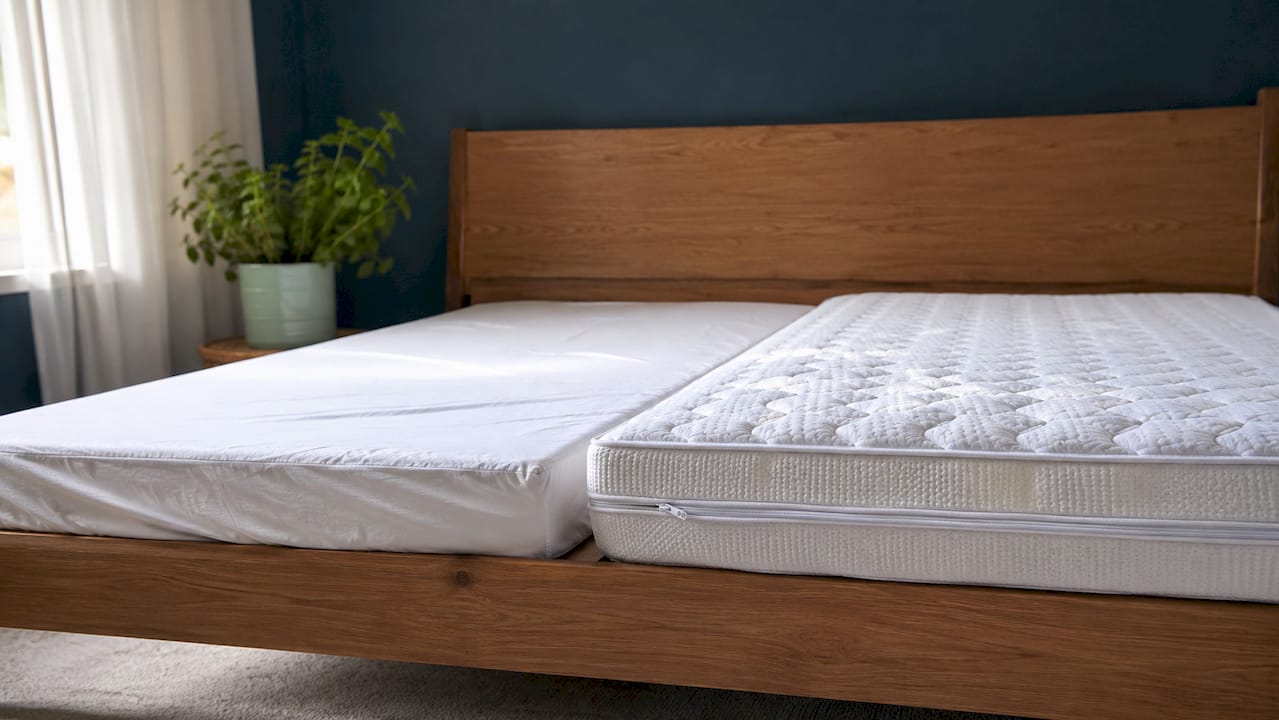
The industry distinguishes between two main product types: surface protectors and full encasements. Surface protectors resemble fitted sheets and cover only the top of the mattress. Full encasements wrap all six sides with a zipper closure. The difference matters enormously for safety. Standard fitted-sheet protectors leave the mattress bottom and sides exposed, making them ineffective for deep allergen or pest containment. Full encasements are the standard recommended by allergists and pest management professionals alike.
Certifications like OEKO-TEX Standard 100 and endorsements from the Asthma and Allergy Foundation of America (AAFA) signal that a protector has been tested for harmful substances and allergen effectiveness. These are not marketing labels. They are third-party verifications that a product meets specific safety thresholds. When you shop for a mattress protector, these certifications are the clearest signal of genuine protection.
How do mattress covers protect against allergens and improve sleep health?
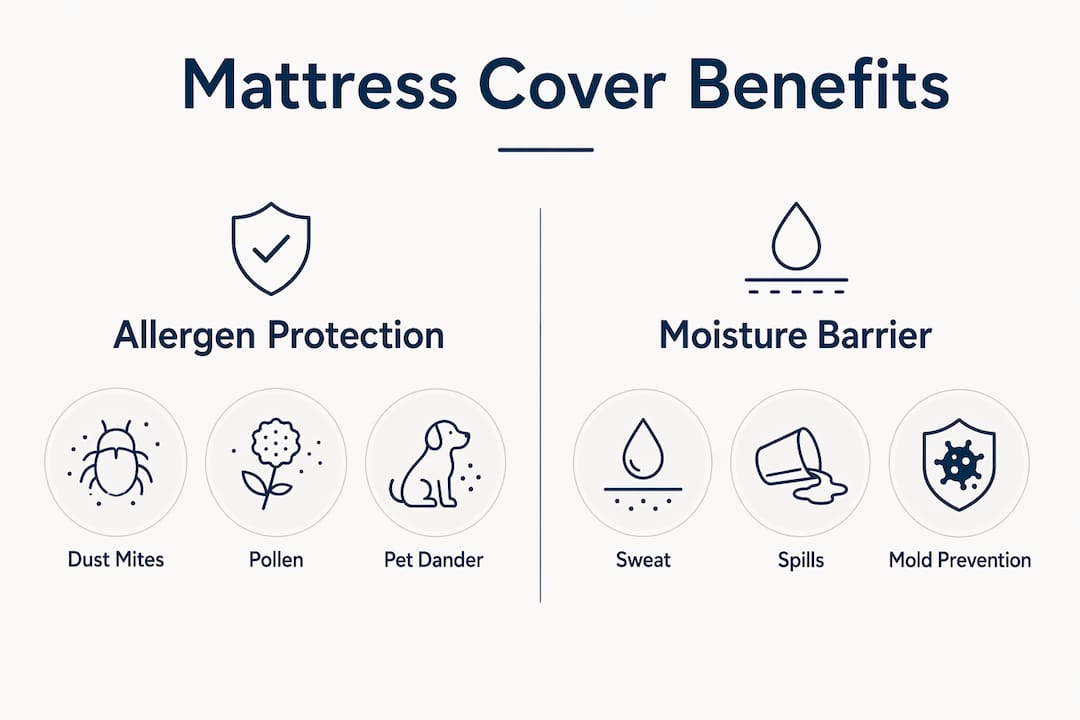
Mattresses can harbor 100,000 to 10 million dust mites per square meter within two years without protection. That number is not a scare statistic. It reflects the reality of an unprotected mattress in a normal home environment. Dust mite fecal particles are potent triggers for allergic rhinitis and asthma, and they fragment sleep architecture by causing nighttime congestion, coughing, and airway inflammation.
Full-encasement protectors address this directly. Research shows they can trap over 99% of allergens, dramatically reducing exposure for people with asthma or dust mite sensitivities. That figure applies specifically to full encasements, not surface-only protectors. Mattress encasements also reduce allergen exposure by up to 80% when they fully cover all mattress surfaces, producing measurable symptom improvement for allergy sufferers.
The role of mattress cover in safety extends to how you maintain it. Washing your protector every two to four weeks preserves the barrier properties of the fabric. A dirty protector accumulates allergens on its surface and loses its filtering effectiveness over time. Regular washing is not optional for allergy management. It is the maintenance step that keeps the protection active.
| Protector type | Allergen coverage | Pest containment | Best for |
|---|---|---|---|
| Surface protector (fitted style) | Top surface only | None | Basic moisture and stain protection |
| Full encasement (six-sided zipper) | All six sides | Yes, with rated zipper | Allergy, asthma, and pest management |
Pro Tip: Look for AAFA-certified encasements with a pore size of 6 microns or smaller. That pore size blocks dust mite allergens, which are typically 10–40 microns in diameter, while still allowing airflow through the fabric.
What role do mattress covers play in moisture and liquid protection?
Moisture is the primary cause of premature mattress degradation. The human body releases approximately 1 liter of sweat per night, and without a waterproof barrier, that liquid works its way into foam and spring layers. Foam absorbs moisture, softens unevenly, and loses its support structure faster than it should. The result is a mattress that feels worn out years before its time.
Modern waterproof protectors use thermoplastic polyurethane (TPU) membranes to solve this problem without sacrificing comfort. TPU membranes provide waterproofing and breathability with moisture vapor transmission rates (MVTR) ranging from 3,000 to 8,000 g/m²/24h. That range means the membrane blocks liquid from passing through while still allowing water vapor, meaning body heat and humidity, to escape. Older PVC-backed protectors could not do this. They trapped heat, caused sweating, and made sleep uncomfortable.
The practical difference between TPU and PVC is significant for anyone who runs warm at night. A PVC protector can raise the perceived surface temperature enough to disrupt sleep. A TPU protector with a high MVTR rating maintains a neutral sleep temperature while still blocking spills, accidents, and sweat penetration. Understanding how mattress materials affect breathing and temperature regulation helps you choose a protector that complements your mattress rather than working against it.
How do mattress covers help in bed bug prevention and pest management?
Bed bugs are one of the most difficult household pests to eliminate once established. A full six-sided zippered encasement is the single most effective non-chemical tool for managing them. The logic is straightforward: bugs already inside the mattress cannot escape to feed, and bugs outside cannot enter to nest. Over time, trapped bugs die from starvation.
Encasements must remain on for at least one year to contain bed bugs effectively. Bed bugs can survive for months without a blood meal, so removing the encasement too early releases the problem back into your home. This is a commitment, not a short-term fix.
Bed bug encasements are critical in integrated pest management strategies endorsed by EPA guidelines. They create permanently sealed barriers that simplify treatment and inspection while reducing the need for pesticide applications. Pest management professionals recommend encasing both the mattress and the box spring, since box springs provide an equally hospitable nesting environment.
Key points for effective bed bug encasement use:
- Choose encasements specifically rated for bed bugs, not just allergen control. Bed bug-rated products have reinforced seams and bite-proof zipper closures.
- Cover both the mattress and box spring. Covering only the mattress leaves the box spring as an active infestation site.
- Inspect the encasement monthly for tears, zipper failures, or gaps. Any breach compromises the barrier.
- Do not remove the encasement for at least 12 months after a confirmed infestation.
- Replace encasements that show wear, since a damaged encasement provides no protection.
Are mattress covers safe for infants and children?
Infant sleep safety is one of the most researched areas in pediatric medicine, and mattress covers play a specific role in it. The American Academy of Pediatrics (AAP) endorses firm, flat, non-inclined sleep surfaces covered by tightly fitting sheets and waterproof protectors. The Canadian Pediatric Society (CPS) holds the same position. Both organizations are explicit that loose or ill-fitting protectors pose a suffocation risk for infants.
The safety requirement for infant protectors is a snug fit with no excess fabric. A protector that bunches, shifts, or creates folds around an infant’s face is a hazard, not a safety measure. This is why crib-specific protectors exist as a separate product category from standard mattress protectors. Fitting a standard protector to a crib mattress is not an acceptable substitute.
The benefits of using a properly fitted waterproof protector on a crib mattress are real and significant. Infants produce a high volume of moisture through sweat, drool, and accidents. Without protection, a crib mattress absorbs those fluids and becomes a source of mold and bacterial growth within months. A waterproof protector keeps the mattress dry and extends its usable life while protecting the infant from allergen exposure.
Follow these steps when selecting and using a crib mattress protector:
- Measure the crib mattress dimensions before purchasing. Standard crib mattresses are 28 inches by 52 inches, but sizes vary.
- Choose a protector labeled specifically for crib use. These are designed to fit snugly without excess material.
- Confirm the protector is waterproof and breathable. TPU-backed fabric is the current standard for infant safety.
- Check that the protector lies completely flat with no raised edges or bunching after installation.
- Wash the protector weekly or after any accident. Infants are more vulnerable to allergen and bacterial exposure than adults.
Pro Tip: Look for crib protectors that carry OEKO-TEX Standard 100 certification. This confirms the fabric contains no harmful chemicals, which matters especially for infants who spend up to 16 hours per day on the sleep surface.
How do mattress covers preserve warranties and extend mattress lifespan?
Mattress warranties are more fragile than most people realize. Manufacturers commonly void coverage if there is even a single stain on the mattress, regardless of how the stain occurred. This is not a loophole. It is standard language in most warranty agreements. A waterproof protector is the only reliable way to prevent stains from reaching the mattress surface and triggering a warranty void.
The financial case for using a protector from day one is clear. A protector costing $30–$100 protects a mattress worth $300 to $2,000 or more. If a stain voids your warranty in year two of a ten-year coverage period, you absorb the full replacement cost. A protector eliminates that risk entirely. Guestlysleep recommends pairing every new mattress with a waterproof protector from the first night of use, not as an afterthought.
Beyond warranty protection, a cover extends the physical lifespan of the mattress. Foam layers degrade faster when exposed to moisture, oils, and particulate matter. A protector keeps those materials off the foam, slowing the breakdown process and preserving the support structure that makes a mattress worth sleeping on. Guestlysleep recommends replacing mattresses every 2–4 years for optimal sleep health, and a quality protector helps you get the most out of each mattress during that window.
Care tips to maximize protector lifespan:
- Wash in warm water on a gentle cycle. High heat damages TPU membranes and reduces waterproofing effectiveness.
- Tumble dry on low heat or air dry. High dryer temperatures degrade the waterproof layer faster than washing does.
- Inspect the protector every six months for thinning fabric, peeling membrane, or zipper wear.
- Replace the protector every two to three years, or sooner if waterproofing fails the water-bead test.
Key takeaways
A mattress cover is the single most cost-effective safety upgrade you can make to your sleep environment, protecting against allergens, moisture damage, pests, and warranty loss simultaneously.
| Point | Details |
|---|---|
| Full encasements outperform surface protectors | Six-sided zippered encasements block allergens, pests, and moisture on all sides, not just the top. |
| Moisture protection preserves mattress lifespan | TPU-backed waterproof protectors prevent foam degradation caused by nightly sweat exposure. |
| Stains void most mattress warranties | A $30–$100 protector prevents stains that would void coverage on a $300–$2,000 mattress. |
| Infant protectors require a snug fit | Loose or ill-fitting crib protectors create suffocation risks; AAP guidelines require tight-fitting, flat surfaces. |
| Bed bug encasements need 12+ months of use | Removing an encasement before one year releases surviving bed bugs back into the home. |
What I’ve learned about mattress covers that most people skip over
Most people treat a mattress cover as a nice-to-have, something they add to a cart without much thought. After spending years looking at sleep health research and talking to people about their sleep problems, I’ve come to see that as a real mistake.
The allergen issue is the one that surprises people most. You cannot see dust mites, and you cannot feel them. But if you wake up congested, sneeze in the morning, or have asthma that flares at night, your mattress is a likely contributor. A full encasement is one of the cheapest interventions available for that problem, and most people with allergies have never tried one.
The other thing I see constantly is people buying surface protectors and thinking they have full protection. They do not. A surface protector is better than nothing for moisture, but it does nothing for allergens living in the sides and bottom of the mattress. If you have allergy or asthma concerns, only a full encasement addresses the problem. The fiberglass-free mattress benefits conversation is similar. The right materials matter, and so does the right protection layer on top of them.
Replace your protector every two to three years. Most people never do this, and a worn-out protector with a degraded membrane provides no waterproofing and reduced allergen filtration. Treat it like a filter, because that is exactly what it is.
Safe sleep starts with the right mattress at Guestlysleep
Guestly Sleep builds fiberglass-free mattresses in the United States using certified, non-toxic materials. Every mattress ships free, comes with a 60-night sleep trial, and is priced to make regular replacement practical. Pairing a Guestly Sleep mattress with a quality waterproof protector from day one gives you a sleep surface that stays clean, safe, and covered under warranty. Explore the full range of American-made mattresses at Guestly Sleep and find the comfort level that fits your sleep position and budget. Your mattress is where your health recovery happens every night. Start it right.
FAQ
What is the difference between a mattress protector and an encasement?
A mattress protector covers only the top surface like a fitted sheet, while a full encasement wraps all six sides with a zipper. Only encasements provide complete allergen and pest containment.
Do mattress covers actually prevent allergens?
Full-encasement protectors can trap over 99% of allergens and reduce overall allergen exposure by up to 80%, making them effective for asthma and dust mite allergy management.
Can a mattress cover void my warranty?
No. A mattress cover protects your warranty. Manufacturers commonly void coverage if any stain reaches the mattress surface, and a waterproof protector prevents that from happening.
Are waterproof mattress covers safe for infants?
Yes, when they fit snugly with no loose fabric. The AAP endorses tightly fitting waterproof protectors for crib mattresses. Loose or ill-fitting protectors pose a suffocation risk and must be avoided.
How often should I replace my mattress protector?
Replace your mattress protector every two to three years, or sooner if the waterproof membrane fails. A simple water-bead test on the surface tells you whether the waterproofing is still active.