

Fiberglass Free Mattress Benefits: 9 Reasons to Switch
A fiberglass-free mattress is defined as a mattress that meets federal fire safety standards without using fiberglass particles as a flame barrier, delivering a cleaner, safer sleep environment. Most budget mattresses sold in the United States contain a hidden fiberglass sock beneath the cover, and the fiberglass free mattress benefits go far beyond simple peace of mind. Choosing a non-toxic mattress alternative means eliminating exposure to skin-irritating, lung-damaging glass particles while still meeting strict federal flammability codes. Certifications like GOTS, OEKO-TEX, and CertiPUR-US now make it straightforward to verify exactly what is inside your mattress before you buy.
1. what is fiberglass in mattresses and why is it used?
Fiberglass is a synthetic material made from extremely fine glass fibers. In mattresses, it serves as a low-cost flame barrier layer positioned just beneath the outer fabric cover. When exposed to heat, fiberglass melts into a protective glass coating that slows fire spread, which is why manufacturers favor it.
Federal law requires every mattress sold in the U.S. to pass a 70-second open-flame blowtorch test under 16 CFR 1633 flammability standards. That regulation exists for good reason. The NFPA reports over 2,000 deaths and 11,000 injuries annually from home fires, making flame resistance a genuine public safety requirement, not just a legal formality.
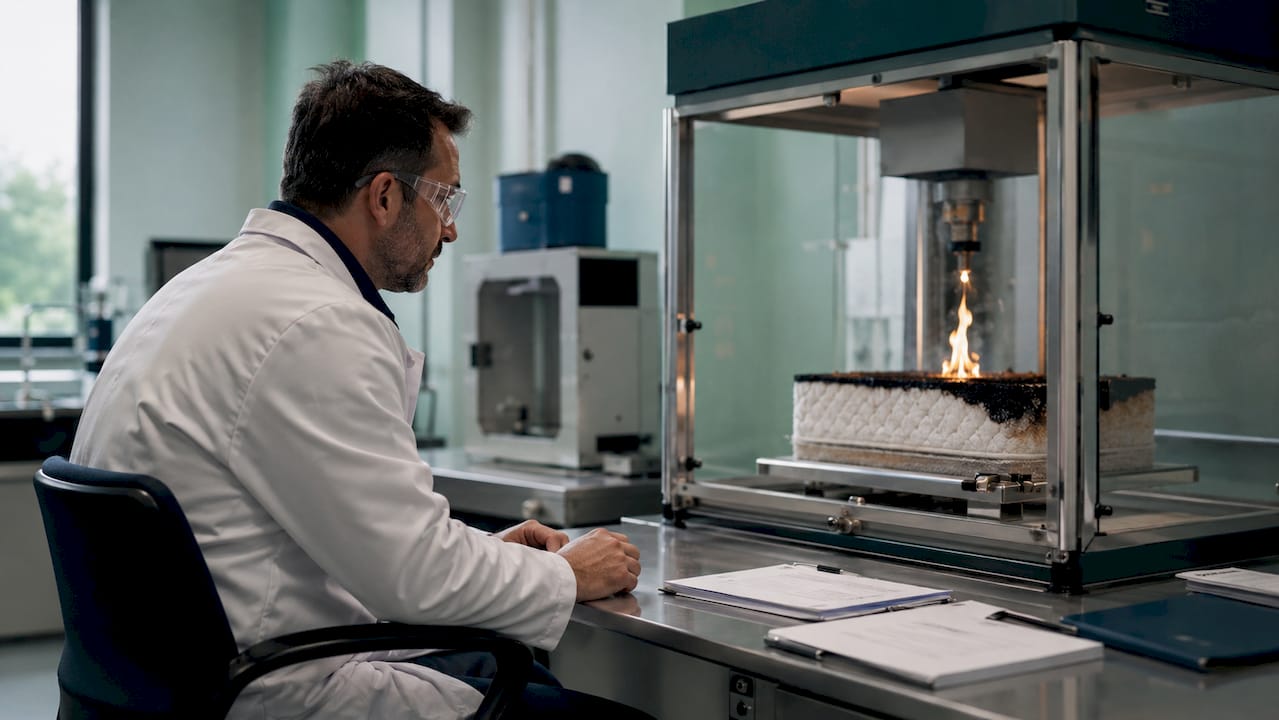
Fiberglass became the go-to solution for budget manufacturers because it is inexpensive, lightweight, and easy to install. Budget memory foam mattresses use fiberglass far more often than premium models, which tend to use safer alternatives. The problem is containment. Fiberglass is only safe when the mattress cover stays completely intact.
Here is what makes fiberglass risky in everyday use:
- The outer cover is the only thing keeping glass fibers inside the mattress.
- Removing, washing, or damaging the cover releases particles into your bedroom air and bedding.
- Once fiberglass contaminates a room, it is extremely difficult to fully remove from carpets, furniture, and HVAC systems.
- Manufacturers often avoid the word “fiberglass” on labels, using terms like “glass fiber,” “glass wool,” or “silica” instead.
Pro Tip: Never remove your mattress cover for washing unless the manufacturer explicitly states it is safe to do so. Most budget mattress covers are not designed to be removed, and doing so can release fiberglass particles throughout your bedroom.
You can learn more about how US mattress manufacturing standards shape these material choices and what fire safety compliance actually requires.
2. why fiberglass mattresses are dangerous
The health risks from fiberglass exposure fall into two categories: short-term irritation and long-term organ damage. Both are serious, and both are entirely avoidable with the right mattress choice.
Short-term fiberglass exposure causes skin rashes, intense itching, blisters, eye redness, coughing, wheezing, and lung inflammation. These symptoms appear quickly after contact with loose fiberglass particles and can persist for days if the source is not removed.
“Prolonged inhalation of fiberglass particles is linked to pulmonary fibrosis and chronic lung disease, conditions that cause permanent, progressive damage to lung tissue.”
The most vulnerable groups face the greatest risk:
- Children whose immune and respiratory systems are still developing
- People with asthma who already have inflamed airways
- Immunocompromised individuals who cannot recover from repeated irritant exposure as easily
- Light sleepers who spend more hours in direct contact with their mattress surface
Long-term fiberglass inhalation is linked to pulmonary fibrosis and chronic lung disease. These are not reversible conditions. The risk is not theoretical. It is the reason health-conscious consumers and pediatricians increasingly recommend fiberglass-free options for nurseries and children’s bedrooms first.
Mattress materials directly affect breathing and sleep health in ways most people underestimate. A mattress is the one surface you spend 7–9 hours in contact with every single night.
3. how fiberglass escapes mattresses
Understanding the escape routes makes the risk concrete. Fiberglass does not stay put on its own. It relies entirely on the integrity of the mattress cover to stay contained.
If the cover is damaged or removed, fiberglass particles shed freely into the air, onto bedding, and into carpet fibers. A single compromised seam is enough to start contamination. Particles are microscopic and invisible to the naked eye, which means contamination often goes undetected until symptoms appear.
The most common escape routes are washing the cover, using a mattress without a protective encasement, physical wear along seams over time, and children or pets puncturing the fabric. Once particles escape, they become airborne and circulate through your bedroom’s air supply. Standard vacuuming does not remove them effectively. Professional remediation is sometimes required, which costs far more than a replacement mattress.
4. top fiberglass free mattress benefits
Switching to a fiberglass-free mattress delivers concrete, measurable improvements to your sleep environment and your health. These are not marketing claims. They are the direct result of removing a known irritant from your bedroom.
| Benefit | Fiberglass Mattress | Fiberglass-Free Mattress |
|---|---|---|
| Skin and respiratory safety | High irritation risk if cover fails | No fiberglass particles to shed |
| Air quality | Particles can contaminate room air | Cleaner air, fewer airborne irritants |
| Allergy and asthma impact | Can trigger or worsen symptoms | Reduced particle load for sensitive sleepers |
| Fire barrier material | Fiberglass sock beneath cover | Wool, treated rayon, or silica-embedded fibers |
| Certification options | Rarely certified by GOTS or OEKO-TEX | Commonly certified by GOTS, OEKO-TEX, CertiPUR-US |
| Long-term health risk | Linked to pulmonary fibrosis | No known equivalent risk from safe alternatives |
Natural fire barriers like wool provide fire resistance without any of the health concerns tied to fiberglass. Wool is naturally flame-resistant, breathable, and hypoallergenic. Treated rayon and silica-embedded fibers offer similar fire protection with no particle shedding risk.
Third-party certifications like GOTS are the most reliable way to verify that an entire mattress is free from fiberglass and harmful chemical fillers. GOTS certification covers the full supply chain, not just the final product. OEKO-TEX Standard 100 tests for over 100 harmful substances. CertiPUR-US certifies foam content specifically.
Better indoor air quality is one of the most underrated non-toxic mattress advantages. Pairing a fiberglass-free mattress with allergen filters in your bedroom creates a genuinely low-irritant sleep space, which matters most for allergy and asthma sufferers.
5. how to spot fiberglass in mattresses
Reading a mattress label correctly is a skill most consumers have never been taught. Manufacturers are not required to use the word “fiberglass” on their law tags, and many deliberately avoid it.
Terms like “glass fiber,” “glass wool,” or “silica” on a mattress law tag indicate fiberglass presence even when the word “fiberglass” never appears. This is not accidental. It is a labeling practice that obscures the material from consumers who do not know what to look for.
Here is a practical checklist for spotting fiberglass before you buy:
- Read the law tag and look for “glass fiber,” “glass wool,” “silica,” or “fiberglass” in the materials list.
- Check the product listing online for any warning like “do not remove cover” or “inner cover not removable.”
- Search the brand name plus “fiberglass” before purchasing. Consumer complaints about contamination are often documented in product reviews.
- Look for third-party certifications displayed on the product page. GOTS, OEKO-TEX, and CertiPUR-US are the most credible.
- Contact the manufacturer directly and ask what fire barrier material is used. A reputable brand will answer clearly.
Resources like NapLab maintain updated lists of mattresses confirmed to contain or exclude fiberglass, which makes the research step faster. Buying from brands that publish their full materials list removes the guesswork entirely.
An indoor air quality checklist for your home can also help you assess whether past mattress use may have already affected your bedroom environment.
6. fiberglass-free mattresses compared: materials and types
Not all fiberglass-free mattresses use the same fire barrier, and the differences matter for both safety and comfort. The three most common alternatives are wool, treated rayon, and silica-embedded fibers.
Wool is the gold standard. It is naturally flame-resistant, temperature-regulating, and hypoallergenic. Wool is used in organic and premium mattresses and is fully compatible with GOTS certification. The trade-off is cost. Wool-based fire barriers add to the price of the mattress.
Treated rayon is a plant-derived fiber treated with silica or boric acid to achieve flame resistance. It is less expensive than wool and performs well in standard flammability tests. It is the most common alternative in mid-range fiberglass-free mattresses.
Silica-embedded fibers are synthetic but do not shed particles the way fiberglass does. They are woven into the mattress fabric rather than layered as a loose sock, which eliminates the contamination risk that makes fiberglass dangerous.
Here is how mattress types align with fiberglass use:
- Budget memory foam mattresses are the most likely to contain fiberglass. The material is cheap and easy to incorporate into foam construction.
- Hybrid mattresses vary widely. Premium hybrids from certified brands typically use wool or treated rayon. Budget hybrids often use fiberglass.
- Organic latex mattresses are almost always fiberglass-free. Latex is naturally flame-resistant and pairs well with wool barriers.
- Innerspring mattresses from established American manufacturers tend to use traditional fire barriers like wool or treated cotton rather than fiberglass.
Exploring organic mattress alternatives gives you a clear picture of what certified, fiberglass-free construction actually looks like across different price points.
Key takeaways
Fiberglass-free mattresses eliminate the single most common source of hidden bedroom toxins by replacing a dangerous flame barrier with safe, certified alternatives like wool or treated rayon.
| Point | Details |
|---|---|
| Fiberglass is a hidden risk | Budget mattresses use fiberglass as a fire barrier that sheds particles if the cover is damaged. |
| Health consequences are serious | Short-term exposure causes rashes and respiratory distress; long-term inhalation links to pulmonary fibrosis. |
| Safe alternatives exist | Wool, treated rayon, and silica-embedded fibers meet federal fire standards without health risks. |
| Labels can mislead you | Terms like “glass fiber” or “glass wool” indicate fiberglass even when the word itself is absent. |
| Certifications are your best tool | GOTS, OEKO-TEX, and CertiPUR-US together provide the most complete verification of a safe mattress. |
Why i think most people underestimate this issue
I have spent years reading mattress specs, lab reports, and consumer complaint threads. The pattern is consistent: people discover fiberglass contamination after the fact, usually when they develop unexplained skin rashes or respiratory symptoms that disappear when they leave home for a few days.
The frustrating part is that the risk is entirely preventable. Fiberglass is not in mattresses because it is the safest option. It is there because it is the cheapest option that passes a federal test. That distinction matters. The industry has known about safer alternatives for decades. Wool has been used as a natural flame barrier in high-end mattresses for generations. The only reason fiberglass persists is price pressure on budget products.
What I tell anyone shopping for a new mattress is this: treat certifications the way you treat nutrition labels on food. You would not buy a product with unlisted ingredients. You should not buy a mattress without verified material disclosure. GOTS certification is the clearest signal that a manufacturer has nothing to hide. If a brand cannot tell you exactly what fire barrier they use, that silence is your answer.
The mattress industry is slowly moving toward greater transparency, driven by consumer pressure and platforms that document contamination cases publicly. That shift is real, but it is not complete. Until material disclosure becomes standard practice across all price points, the responsibility falls on you to ask the right questions before you buy.
Sleep safer tonight with Guestlysleep
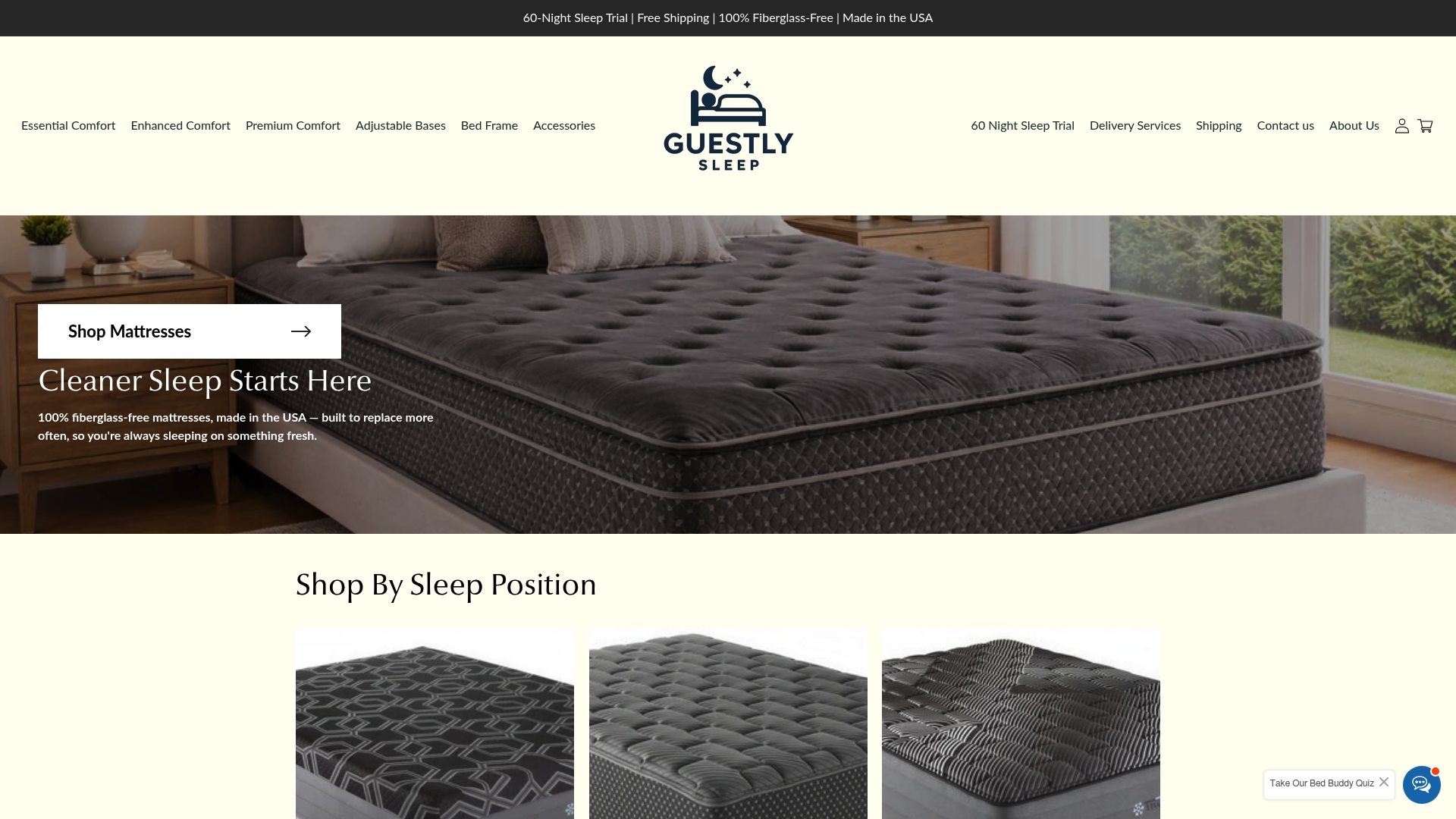
Every mattress in the Guestlysleep lineup is built in the United States without fiberglass, harmful chemical fillers, or deceptive labeling. The brand uses certified, safe fire barrier materials. Guestlysleep offers a 60-night sleep trial and free shipping, making it straightforward to try a genuinely non-toxic mattress without risk. If you are replacing an older mattress that may contain fiberglass, Guestlysleep also offers a mattress disposal service to handle safe removal. Use the mattress comparison chart to find the right comfort level for your sleep position.
FAQ
What does a fiberglass-free mattress mean?
A fiberglass-free mattress meets federal flammability standards using safe alternatives like wool or treated rayon instead of fiberglass particles. No glass fibers are present in the construction, eliminating the contamination and health risks associated with fiberglass shedding.
How do i spot fiberglass in a mattress before buying?
Check the law tag for terms like “glass fiber,” “glass wool,” or “silica,” and look for any warning against removing the cover. Third-party certifications like GOTS or OEKO-TEX confirm the mattress is fiberglass-free.
Why do cheap mattresses use fiberglass?
Budget mattresses use fiberglass because it is inexpensive and passes the federal 16 CFR 1633 open-flame test at a fraction of the cost of wool or treated rayon. Manufacturers prioritize low production costs, and fiberglass delivers compliance cheaply.
What are the main health risks of fiberglass in mattresses?
Short-term exposure causes skin rashes, eye irritation, coughing, and wheezing. Long-term inhalation of fiberglass particles is linked to pulmonary fibrosis and chronic lung disease, making it a serious concern for children and anyone with respiratory conditions.
Are fiberglass-free mattresses still fire safe?
Yes. Fiberglass-free mattresses use alternative fire barriers such as wool, treated rayon, or silica-embedded fibers that meet the same federal flammability standards. Safety is not compromised by removing fiberglass from the construction.