

Budget Mattress Tradeoffs: What You Need to Know
Budget mattresses are defined as sleep surfaces priced below $600 for a queen size, and the tradeoffs they carry are real, measurable, and worth understanding before you buy. Foam density, edge support, heat retention, durability, and certification coverage are the five areas where budget mattress pros and cons show up most clearly. Not every cheap mattress is the same, though. Some brands, including Guestlysleep, price low because of minimal markup rather than minimal materials, which changes the value equation entirely. This article breaks down exactly what you are trading away, what you are not, and how to buy smart.
What are budget mattress tradeoffs in foam density and durability?
The single biggest quality gap between a budget mattress and a premium one comes down to foam density. Budget foams typically measure 1.2 to 1.5 lb/ft³, while premium models use foams in the 3.0 to 5.0 lb/ft³ range. Lower density foam compresses faster under repeated body weight, which means the mattress loses its shape and support years earlier than a denser alternative.
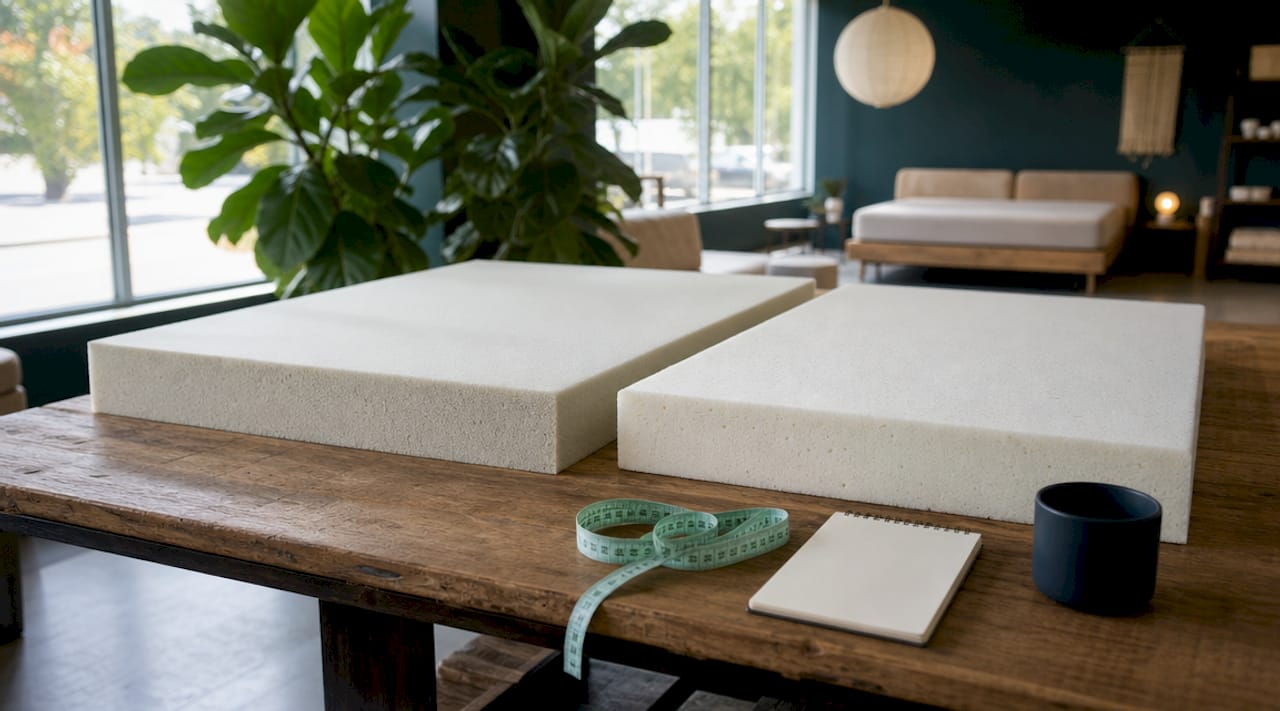
The practical result is sagging and body impressions appearing within three to five years on a budget polyfoam mattress. That timeline shortens further when the comfort layer is thin and the support core is lightweight. Sagging in budget mattresses results from a combination of weaknesses, not a single flaw. Swapping one component rarely fixes the problem because the entire construction is calibrated to hit a price point, not a performance target.
Here is what manufacturers typically cut to reach budget pricing:
- Foam density: Dropping from 3.0 lb/ft³ to 1.5 lb/ft³ reduces material cost significantly while making the mattress feel softer initially.
- Comfort layer thickness: Thinner layers reduce material volume and cost but accelerate wear at the surface.
- Support core weight: Lighter base foams or lower coil counts reduce structural integrity over time.
- Cover materials: Budget covers often use thinner, less breathable fabrics that contribute to heat retention.
The quality gap between budget and premium mattresses is primarily driven by foam density and coil count. Higher density foams and more coils enhance support and longevity substantially, which is why the price difference between tiers often reflects real performance differences rather than brand markup alone.
The chart below is what is expected according to material specifications. The failure rate is also affected by things like body weight and if a waterproof protector is used. After years of testing we have found the failure rate to be 3 to 5 years regardless of foam density.
| Foam density | Expected lifespan | Typical price tier |
|---|---|---|
| 1.2–1.5 lb/ft³ | 3–5 years | Budget (under $600) |
| 1.8–2.5 lb/ft³ | 5–7 years | Mid-range |
| 3.0–5.0 lb/ft³ | 7–10+ years | Premium |
What comfort compromises do budget mattresses commonly have?
Edge support is one of the most overlooked tradeoffs of low-cost mattresses, and it affects your usable sleep surface every single night. Budget mattresses often have softer edges and reduced perimeter support because reinforcing edges requires additional materials and construction steps. If you sit on the edge of the bed to put on shoes, or if you sleep near the perimeter, you will notice the difference within weeks.
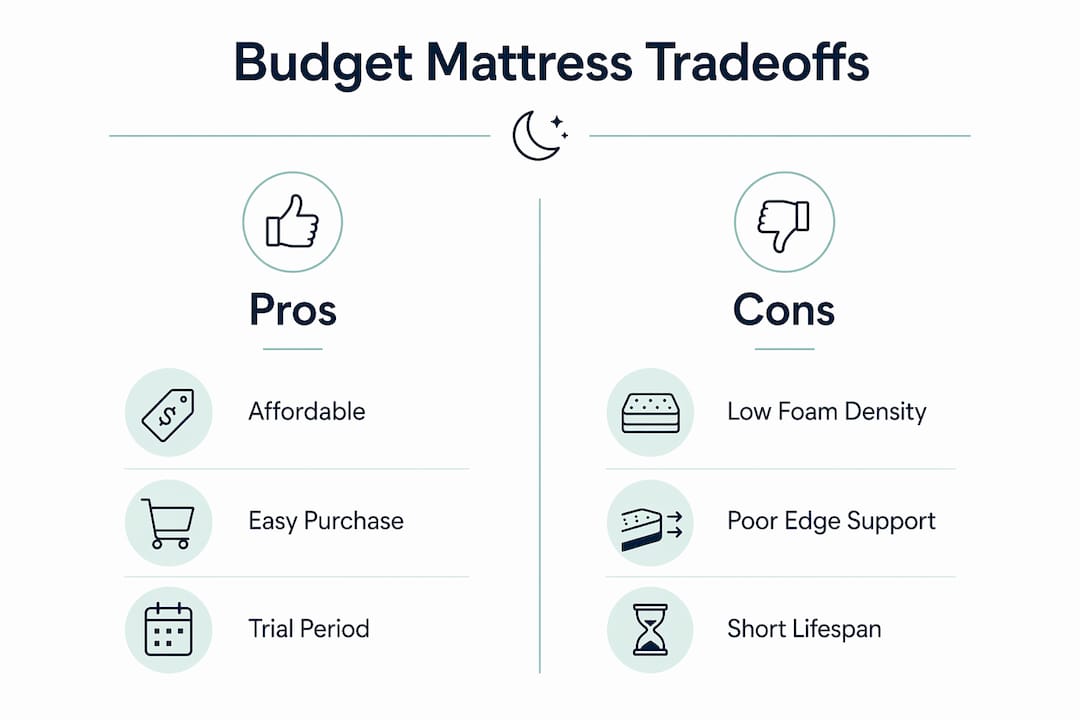
Edge perimeter behavior is a key weak point in budget all-foam mattresses. Simplified edge reinforcement accelerates edge sag, which shrinks the effective sleep area even when the center of the mattress still feels adequate. For couples sharing a queen, this matters more than most buyers anticipate.
Temperature regulation is the second major comfort tradeoff. All-foam budget mattresses retain more heat than hybrid or coil models because they lack the airflow channels that springs and open-cell foam structures create. If you sleep warm, a budget all-foam model will likely make that worse, not better. Understanding how mattress design affects thermal regulation helps you identify which construction choices actually move the needle on sleep temperature.
Common comfort tradeoffs to expect on affordable mattress options:
- Softer perimeter edges that compress under sitting weight
- Warmer sleep surface due to limited airflow in dense foam layers
- Less motion isolation consistency as foam compresses unevenly over time
- Off-gassing odor for 48 to 72 hours after unboxing, even on certified models
Pro Tip: If you sleep hot, look for a budget hybrid with individually wrapped coils rather than an all-foam model. The coil layer alone improves airflow measurably.
How do certifications like CertiPUR-US relate to budget mattress tradeoffs?
CertiPUR-US is the most widely cited certification in the mattress industry, and it does real work. CertiPUR-US limits VOC emissions to about 0.5 ppm in polyurethane foam and restricts chemicals including formaldehyde and PBDE flame retardants. That is meaningful protection for the foam component specifically.
The limitation is scope. CertiPUR-US covers only the polyurethane foam, not the mattress cover, adhesives, or fire barrier materials. CertiPUR-US certification alone does not guarantee no odor or no chemical exposure because other mattress components are not certified under that standard. Budget mattresses may still use adhesives or cover fabrics that contribute to off-gassing beyond what the foam certification addresses.
For health-conscious buyers, this means certification is a necessary starting point, not a complete answer. Understanding the full scope of mattress certifications and standards helps you ask the right questions about what is and is not covered. Practical steps to reduce chemical exposure include:
- Air out a new mattress in a ventilated room for at least 48 to 72 hours before sleeping on it
- Use a certified mattress encasement to reduce direct contact with cover materials
- Ask manufacturers specifically whether adhesives and fire barriers carry independent certifications
- Consider air purification in the bedroom during the first week, particularly for chemically sensitive sleepers
Fiberglass is a separate concern entirely. Many budget mattresses use fiberglass as a fire barrier inside the cover. Once the cover is removed or damaged, fiberglass particles can spread through a bedroom and are extremely difficult to remove. Choosing a fiberglass-free mattress, regardless of price tier, eliminates that risk entirely.
What are the practical tradeoffs when buying a budget mattress online?
Buying a budget mattress online shifts the risk profile compared to buying in a store. Trial periods and return policies become your primary safety net, and the details matter more than the headline number.
Here is how to evaluate the practical tradeoffs before you buy:
- Check the return shipping terms. Online budget mattress trials often last 100 nights, but return shipping fees over $100 are common. A $400 mattress with a $120 return fee carries real financial risk if the comfort fit is wrong.
- Read the warranty sag threshold. Most budget mattress warranties only cover sagging greater than 1.5 inches. Budget foams often develop noticeable body impressions at 0.75 to 1.0 inches, which falls below the warranty threshold and leaves you without recourse.
- Calculate the cost per year, not the sticker price. A $350 mattress lasting four years costs $87.50 per year. A $700 mattress lasting eight years costs the same. The budget option only wins if it actually reaches its expected lifespan.
- Prioritize trial periods over price alone. A strong 100-plus night trial shifts comfort risk from a brief store test to real home use evaluation. That is a genuine advantage of buying online, even at budget prices.
- Factor in disposal costs. Replacing a mattress every three to five years means paying for disposal repeatedly. Guestlysleep offers a mattress disposal service that simplifies this for buyers already planning for regular replacement.
The total cost of ownership on a budget mattress is almost always higher than the purchase price suggests. Buyers who account for replacement frequency, disposal, and potential return fees make better decisions than those who compare sticker prices alone.
How does Guestlysleep’s approach differ from typical budget mattresses?
Guestlysleep prices its mattresses low because of low markup, not because of low-quality materials. That distinction changes everything about the tradeoffs you are accepting. A typical budget mattress under $600 uses cheaper foam, simpler construction, and minimal certifications to hit its price. Guestlysleep mattresses would retail for two to four times their listed price if sold through traditional retail channels with standard markups.
The result is a mattress that avoids the core cheap mattress quality concerns: low foam density, poor edge support, and incomplete certifications. Every Guestlysleep mattress is fiberglass-free, made in the United States, and built with materials that meet the standards typically found in mid-range to premium products. You can review US mattress manufacturing standards to understand what those certifications actually require and why American manufacturing matters for material traceability.
The value of budget mattresses from Guestlysleep is not that they compromise less badly than competitors. It is that the compromises typical of the budget category do not apply in the same way when the price is low because of the business model, not the bill of materials.
Pro Tip: When evaluating any mattress brand’s budget pricing, ask one question: is the price low because of the materials, or because of the markup? The answer tells you everything about what you are actually buying.
Key takeaways
Budget mattress tradeoffs are primarily driven by foam density, edge support, and certification scope, and buyers who understand these factors make significantly better purchasing decisions.
| Point | Details |
|---|---|
| Foam density drives durability | Budget foams at 1.2 to 1.5 lb/ft³ typically last 3 to 5 years before sagging. |
| Edge support affects usable surface | Minimal perimeter reinforcement shrinks the effective sleep area, especially for couples. |
| CertiPUR-US covers foam only | Adhesives and covers may still off-gas; plan for 48 to 72 hours of ventilation. |
| Trial periods shift comfort risk | A 100-plus night trial helps with fit but does not extend the mattress’s physical lifespan. |
| Low price can mean low markup | Some brands price low through direct manufacturing, not material cuts, offering better real value. |
Why the sticker price is the wrong place to start
I have spent years looking at how people buy mattresses, and the pattern that leads to the most regret is simple: buyers compare prices without comparing what drives those prices. A $350 mattress and a $500 mattress can look identical in a product listing. The difference is almost always in the foam density spec buried in the fine print, or absent entirely because the brand does not want you to find it.
The trade-offs of low-cost mattresses are real, but they are not inevitable. The budget category exists on a spectrum. At one end, you have mattresses built to a price point where every material decision is a cost cut. At the other end, you have brands that have figured out how to remove retail markup from the equation and pass that savings to the buyer without touching the materials. Those two products can cost the same and perform very differently over three years.
My honest recommendation: treat foam density as a non-negotiable data point. If a brand will not publish it, move on. Treat fiberglass-free construction the same way. The risk of fiberglass contamination in a bedroom is not worth saving $50. And treat the warranty sag threshold as a red flag indicator. A threshold above 1.0 inches on a budget foam mattress is a brand telling you they expect the mattress to sag before they will honor the warranty.
Budget mattresses serve legitimate purposes. Guest rooms, temporary setups, and frequent replacement cycles all make sense in the right context. The goal is not to avoid the budget category. The goal is to buy within it with your eyes open.
— Justin
Guestlysleep: fiberglass-free quality at honest prices
If the tradeoffs described in this article concern you, Guestlysleep was built specifically to address them. Every mattress in the lineup is fiberglass-free, made in the United States, and priced based on a direct-to-buyer model that removes traditional retail markup.
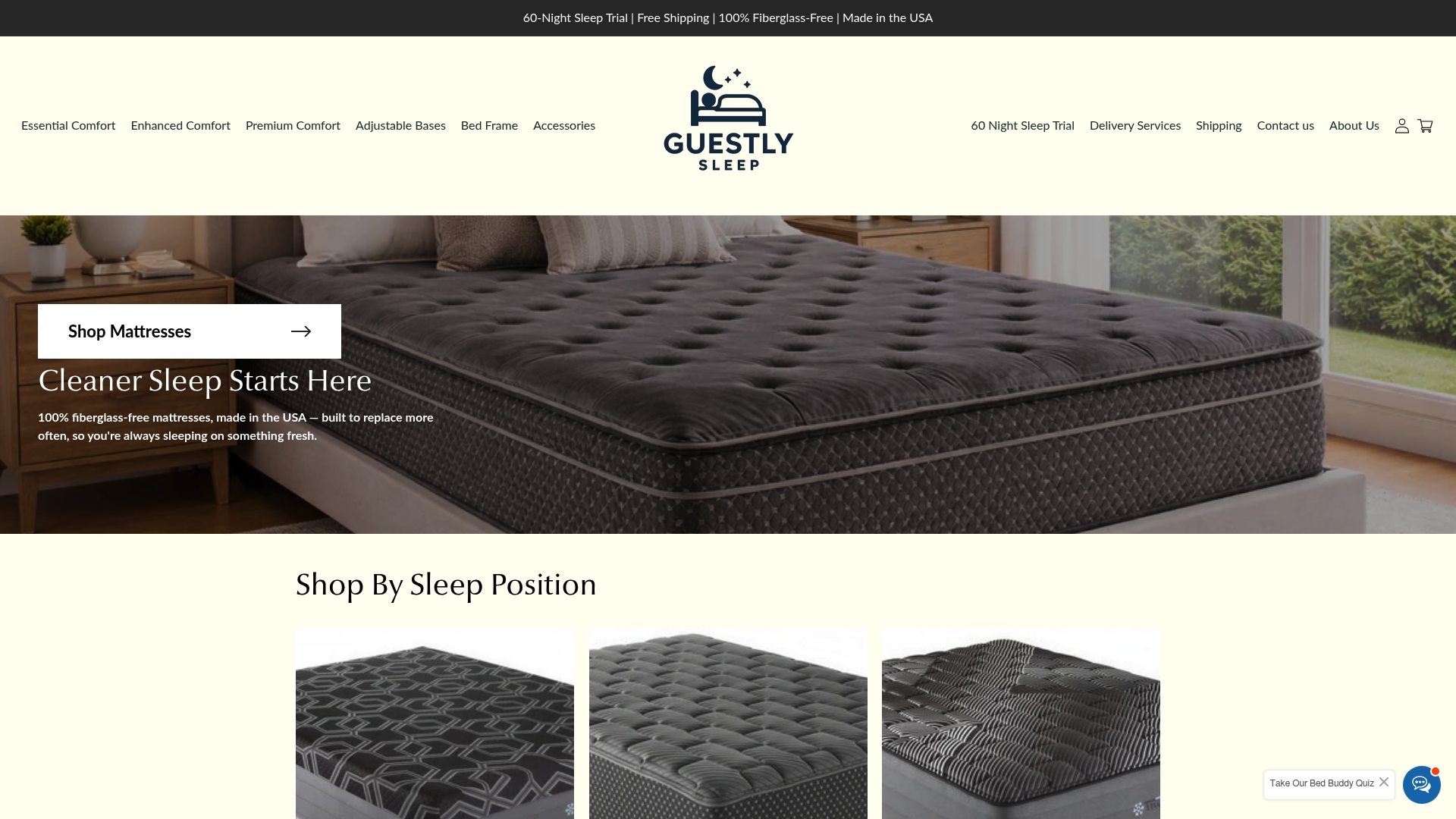
The 14" Lux Hybrid Firm combines individually wrapped coils with certified foam layers, solving the heat retention and edge support problems common in all-foam budget models. The 15" TRU Luxury Firm delivers premium material construction at a price that reflects low markup, not low quality. Both ship free with a 60-night sleep trial and no hidden return fees. Browse the full fiberglass-free mattress collection to find the right fit for your sleep position and comfort preference.
FAQ
What foam density should a budget mattress have?
A budget mattress should have at least 1.8 lb/ft³ in the comfort layer to provide reasonable durability. Most budget models use 1.2 to 1.5 lb/ft³, which compresses faster and typically shows sagging within three to five years.
Does CertiPUR-US mean a mattress is fully non-toxic?
CertiPUR-US certifies only the polyurethane foam component, limiting VOC emissions to about 0.5 ppm. Mattress covers, adhesives, and fire barriers are not covered by this certification, so off-gassing from other components can still occur.
Are budget mattress trial periods worth trusting?
A 100-plus night trial is genuinely useful for evaluating comfort fit, but it does not protect against long-term durability issues. Always check whether return shipping is free or fee-based before treating a trial period as a risk-free guarantee.
What is the real cost of a budget mattress over time?
A $350 mattress lasting four years costs about $87 per year. If durability tradeoffs cause early replacement at two years, that cost doubles. Calculating annual cost rather than purchase price gives a more accurate picture of value.
Why do some budget mattresses cost the same but perform very differently?
Price reflects both material quality and markup. Some brands price low by cutting foam density and construction quality. Others, like Guestlysleep, price low by reducing retail markup while maintaining material standards, which produces a meaningfully different product at the same price point.