

Essential Comfort Mattress Features That Improve Sleep
Essential comfort mattress features are the specific attributes that deliver pressure relief, spinal support, and temperature control for genuinely restorative sleep. These qualities, recognized by sleep researchers and consumer testing organizations alike, determine whether a mattress protects your health or quietly undermines it. Certifications like CertiPUR-US and construction choices like hybrid coil systems separate marketing claims from verified performance. This guide covers every feature that matters, ranked by impact, so you can match the right mattress to your body, position, and safety standards.
1. Pressure relief: the foundation of mattress comfort
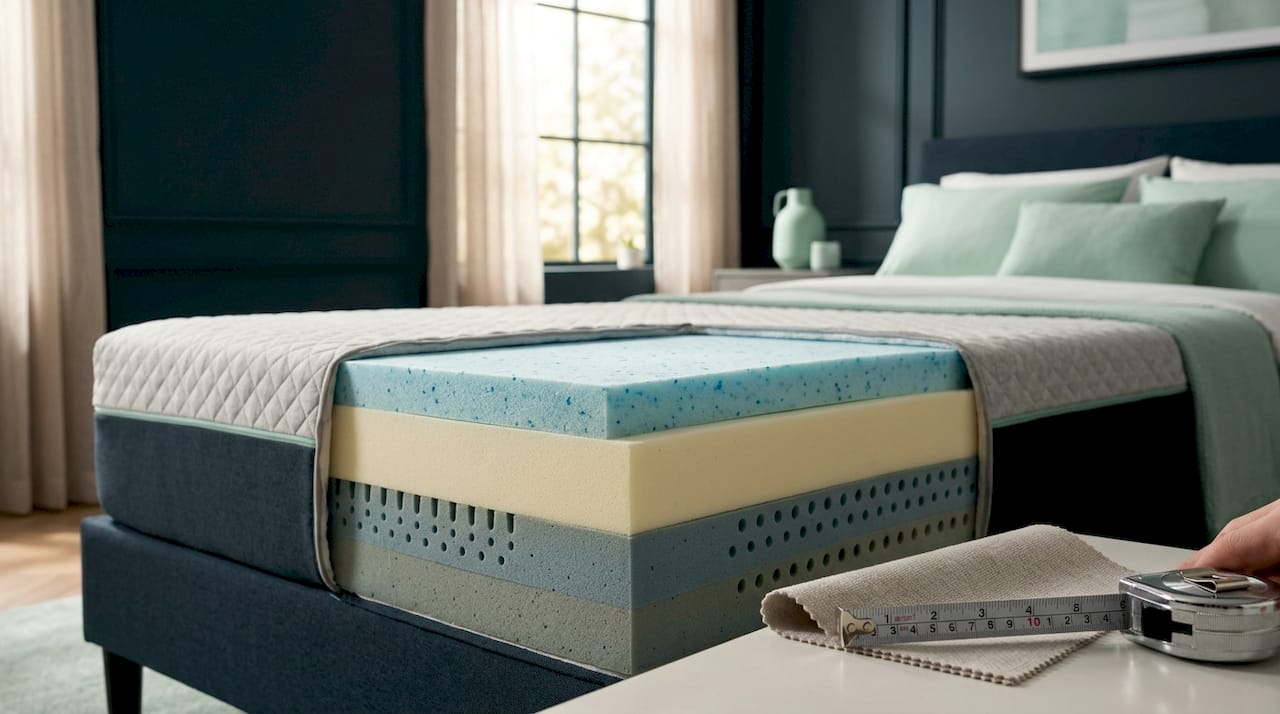
Pressure relief is defined as how well a mattress prevents pressure build-up at the shoulders, hips, and lower back. This is the single most important mattress comfort feature because inadequate relief at these points causes the aches and stiffness most people mistakenly blame on age or posture. Memory foam and zoned latex layers are the most effective materials for distributing body weight across a wider surface area, reducing peak pressure at vulnerable joints.
Zoned support systems divide the mattress into distinct firmness regions, typically softer under the shoulders and firmer under the hips. This targeted approach outperforms uniform foam layers for side sleepers, who generate the highest pressure at the shoulder and hip compared to back or stomach sleepers. Without zoning, a plush mattress that feels comfortable initially can allow the hip to sink too deeply, rotating the pelvis and pulling the lumbar spine out of neutral alignment.
- Side sleepers need the most pressure relief at the shoulder and outer hip.
- Back sleepers need moderate contouring at the lumbar curve without excessive sinkage.
- Stomach sleepers need minimal sinkage at the midsection to prevent hyperextension of the lower back.
Pro Tip: Lie on your side on a prospective mattress for at least five minutes. If you feel numbness or tingling in your shoulder or hip within that window, the mattress is not providing adequate pressure relief for your body weight.
2. Temperature regulation and how mattress materials control heat
Temperature regulation in mattresses is determined by the breathability of cover fabrics, the open-cell structure of foam layers, and the airflow created by coil systems. Overheating during sleep is one of the most common causes of nighttime waking, and the mattress surface is the primary driver. Breathable Tencel covers and hybrid coil constructions provide measurably cooler sleep surfaces through moisture wicking and passive air circulation.
A common misconception is that gel-infused foam actively cools the body throughout the night. Gel-infused foams feel cool to the touch initially but warm to body temperature within minutes of contact. True active cooling requires specialized technology like water-based systems or integrated fans, which are found in high-end adjustable bases rather than standard mattresses. For most sleepers, the practical solution is a hybrid mattress with a breathable cover rather than a foam mattress marketed with cooling gel as its primary feature.
| Feature | Cooling mechanism | Effectiveness |
|---|---|---|
| Tencel or cotton cover | Moisture wicking, breathability | High for surface temperature |
| Gel-infused foam | Initial heat absorption | Moderate, fades quickly |
| Open-cell foam | Passive airflow through foam structure | Moderate |
| Pocketed coil layer | Active air circulation through mattress core | High for sustained cooling |
| Phase-change material cover | Absorbs and releases heat | High but cost-dependent |
Pro Tip: If you sleep hot, prioritize a cooling hybrid mattress with a pocketed coil core over a foam mattress with a cooling cover. The coil layer provides sustained airflow that no cover material can replicate on its own.
3. Spinal support and firmness matched to your sleep position
Mattress support is defined as the mattress’s ability to keep the spine in a neutral, aligned position throughout the night, regardless of sleep position. This is distinct from firmness. A mattress can feel soft and still provide excellent support, or feel firm and allow the spine to sag. The difference lies in the support core, typically high-density foam or a coil system, beneath the comfort layers.
Consumer Reports advises that back sleepers need their hips and shoulders cradled while maintaining a neutral lumbar curve. Side sleepers require neck and spine alignment with cushioning at the shoulder and hip. Stomach sleepers need the firmest support to prevent the pelvis from dropping and hyperextending the lumbar spine. Getting this wrong is not a minor inconvenience. A mattress that is too soft for a stomach sleeper or too firm for a side sleeper generates chronic mechanical stress on the spine that accumulates over months.
NapLab’s firmness scale places side sleepers in the 5 to 6 range, back sleepers between 5 and 7, and stomach sleepers between 6 and 8 on a 10-point scale. Heavier sleepers, generally those over 230 pounds, compress comfort layers more deeply and typically need one to two firmness points higher than the standard recommendation for their position. This is the most frequently overlooked variable in mattress selection.
Two additional support features that most buyers ignore are edge support and motion isolation. Sturdy edges allow you to sit on the perimeter of the mattress without sliding off, which matters for people who get in and out of bed frequently or sit on the edge to dress. Motion isolation, the ability to absorb movement without transferring it across the mattress, directly affects sleep quality for couples. Foam and hybrid mattresses with individually wrapped coils outperform traditional innersprings on both metrics.
4. Material safety certifications worth verifying
CertiPUR-US certification confirms that polyurethane foam meets limits on heavy metals, formaldehyde, flame retardants, and VOC emissions below 0.5 parts per million. Certification requires annual retesting and site audits, which means it is not a one-time label. This is the baseline certification to verify for any foam mattress or foam comfort layer in a hybrid.
What CertiPUR-US does not cover is equally important. The certification applies only to foam components. A mattress labeled CertiPUR-US certified may still contain uncertified fabric, adhesives, or fire barrier materials. Consumers who want whole-mattress chemical safety need to look for additional certifications covering every component.
- GOTS (Global Organic Textile Standard): Requires 95% organic fiber content and prohibits harmful dyes. Applies to fabric covers and textile layers.
- GOLS (Global Organic Latex Standard): Mandates 95% organic latex content with limits on synthetic additives. Applies to latex comfort or support layers.
- OEKO-TEX Standard 100: Tests finished textile products for harmful substances, covering a broader range of chemicals than fiber-origin standards alone.
- Fiberglass-free construction: Not a certification but a verifiable manufacturing claim. Fiberglass is used as a fire barrier in many budget mattresses and can contaminate bedding and living spaces if the cover is removed.
Certifications limit chemical hazards but do not eliminate off-gassing odors. Consumers sensitive to smells should ventilate any new foam mattress for 24 to 72 hours regardless of certification status. Off-gassing odor and chemical safety compliance are separate issues.
5. Comparing mattress types for comfort, support, and safety
Foam, hybrid, and innerspring mattresses each deliver a different balance of comfort, support, temperature control, and motion isolation. No single type is universally superior. The right choice depends on your sleep position, body weight, temperature sensitivity, and whether you share the bed.
| Mattress type | Pressure relief | Temperature control | Motion isolation | Durability |
|---|---|---|---|---|
| All-foam | Excellent | Below average | Excellent | Moderate |
| Hybrid (foam + coils) | Very good | Very good | Good | High |
| Innerspring | Moderate | Excellent | Poor | High |
| Latex | Very good | Good | Good | Very high |
Foam mattresses contour closely to the body, making them the strongest performers for pressure relief and motion isolation. The trade-off is heat retention, since dense foam restricts airflow. Hybrid mattresses combine foam comfort layers with a pocketed coil support core, delivering the contouring benefits of foam with the airflow and edge support of a coil system. Durable support cores with reinforced edges and high-density foams extend mattress life and maintain alignment over years of use. Innersprings run coolest but transfer motion freely and provide less targeted pressure relief than foam or hybrid options.
For health-conscious buyers, the material composition of each type also affects certification scope. A hybrid mattress requires CertiPUR-US certification for its foam layers and ideally OEKO-TEX or GOTS certification for its cover fabric to achieve whole-mattress chemical safety. An all-foam mattress with a single CertiPUR-US label covers more of its total material volume than a hybrid with the same label, simply because foam makes up a larger proportion of the product.
Key takeaways
Mattress comfort is determined by pressure relief, spinal support, temperature regulation, and verified material safety working together, not by any single feature in isolation.
| Point | Details |
|---|---|
| Pressure relief drives comfort | Zoned foam layers reduce peak pressure at shoulders and hips, preventing aches and spinal misalignment. |
| Firmness must match position and weight | Side sleepers need a 5 to 6 firmness; stomach sleepers need 6 to 8; heavier sleepers should add one to two points. |
| Cooling requires airflow, not just gel | Hybrid coil systems provide sustained temperature regulation; gel foam cools briefly then warms to body temperature. |
| Certifications cover specific components | CertiPUR-US applies only to foam; full mattress safety requires GOTS, GOLS, or OEKO-TEX for other materials. |
| Edge support and motion isolation matter | These underrated features affect daily usability and sleep quality for couples sharing a bed. |
What I’ve learned from testing mattresses most buyers overlook
After spending years evaluating mattresses across every price point and construction type, the pattern I see most often is buyers optimizing for the wrong variable. They focus on firmness feel during a brief showroom test and ignore the support core entirely. A thick comfort layer can feel luxurious in five minutes and create midsection sinkage that compromises spinal alignment for back sleepers over a full night. That sinkage is invisible during a quick test but shows up as lower back pain within weeks.
The certification piece is where I see the most confusion. Shoppers treat a CertiPUR-US label as a whole-mattress safety guarantee, but it only covers foam. If the cover fabric or fire barrier is not separately certified, you do not have a fully verified product. I always recommend asking manufacturers specifically which components carry which certifications, not just whether the mattress is “certified.”
The features I find most underrated are edge support and motion isolation. Both are easy to test in person and almost never mentioned in advertising. Sit on the edge of any mattress you are considering. If it compresses more than a few inches under your weight, that edge will degrade faster and reduce the usable sleep surface over time. For couples, run a motion isolation test by placing a glass of water on one side while a partner moves on the other. The results are immediate and revealing.
My practical advice: use a 60-night trial period as a real test, not a safety net. Sleep in your normal position every night for the first two weeks and note any new aches or pressure points. Mattresses do require a brief acclimation period, but genuine discomfort that persists past two weeks is a signal, not an adjustment phase.
— Justin
Sleep better with Guestlysleep’s certified comfort collection
Guestlysleep builds every mattress in the United States without fiberglass, using CertiPUR-US certified foams and construction methods that meet the comfort criteria covered in this article. The Essential Comfort collection includes hybrid and memory foam options designed for pressure relief, temperature control, and verified material safety at an accessible price point.
The RZ Cool Pro 14" features dual cooling foam layers and a fiberglass-free construction, making it one of the most practical options for hot sleepers who want certified safety without the premium price. Every Guestlysleep mattress ships free with a 60-night sleep trial, so you can test pressure relief and support in your actual sleep environment before committing.
FAQ
What are the most important mattress comfort features?
Pressure relief, spinal support, and temperature regulation are the three core mattress comfort features. Material safety certifications like CertiPUR-US add a health dimension that softness or firmness ratings alone cannot capture.
How do I know if a mattress has enough pressure relief?
Lie on your side for five minutes and check for numbness or tingling at the shoulder or hip. Persistent pressure in those areas indicates the mattress is not distributing your body weight effectively for your sleep position.
Does a CertiPUR-US label mean the whole mattress is safe?
No. CertiPUR-US certification applies only to polyurethane foam components. Cover fabrics, adhesives, and fire barriers require separate certifications like GOTS or OEKO-TEX for full mattress chemical safety verification.
What firmness level should side sleepers choose?
Side sleepers generally perform best on a mattress rated 5 to 6 on a 10-point firmness scale. Heavier side sleepers above 230 pounds typically need a 6 to 7 to prevent excessive hip sinkage that rotates the pelvis out of alignment.
Do cooling gel mattresses actually keep you cool all night?
Gel-infused foam provides an initial cool-to-touch sensation but warms to body temperature within minutes. Sustained overnight cooling requires a hybrid mattress with a pocketed coil core that allows continuous airflow through the mattress structure.