

How Mattress Materials Affect Breathing and Sleep Health
Mattress materials directly affect breathing by harboring biological allergens and emitting volatile organic compounds, or VOCs, that irritate the respiratory system during sleep. The industry term for this chemical release process is off-gassing, and it occurs in nearly every new synthetic foam mattress. Materials like memory foam, polyurethane, and certain adhesives release compounds including toluene and formaldehyde into your bedroom air. Certifications like GREENGUARD Gold and CertiPUR-US exist specifically to limit these emissions. If you wake up congested, with a dry throat, or with unexplained headaches, your mattress may be the source.
How mattress materials affect breathing during sleep
The connection between mattress construction and respiratory health runs through two distinct channels: biological allergens and chemical emissions. Both operate simultaneously, and both can disrupt breathing without you ever identifying the cause.
Dust mites are the most common biological trigger. They thrive in the warm, humid environment that a mattress provides, feeding on shed skin cells. Mattresses can harbor dust mites, mold spores, pet dander, and VOC chemicals that directly affect asthma and breathing quality. This matters because you spend roughly a third of your life with your face inches from these materials.
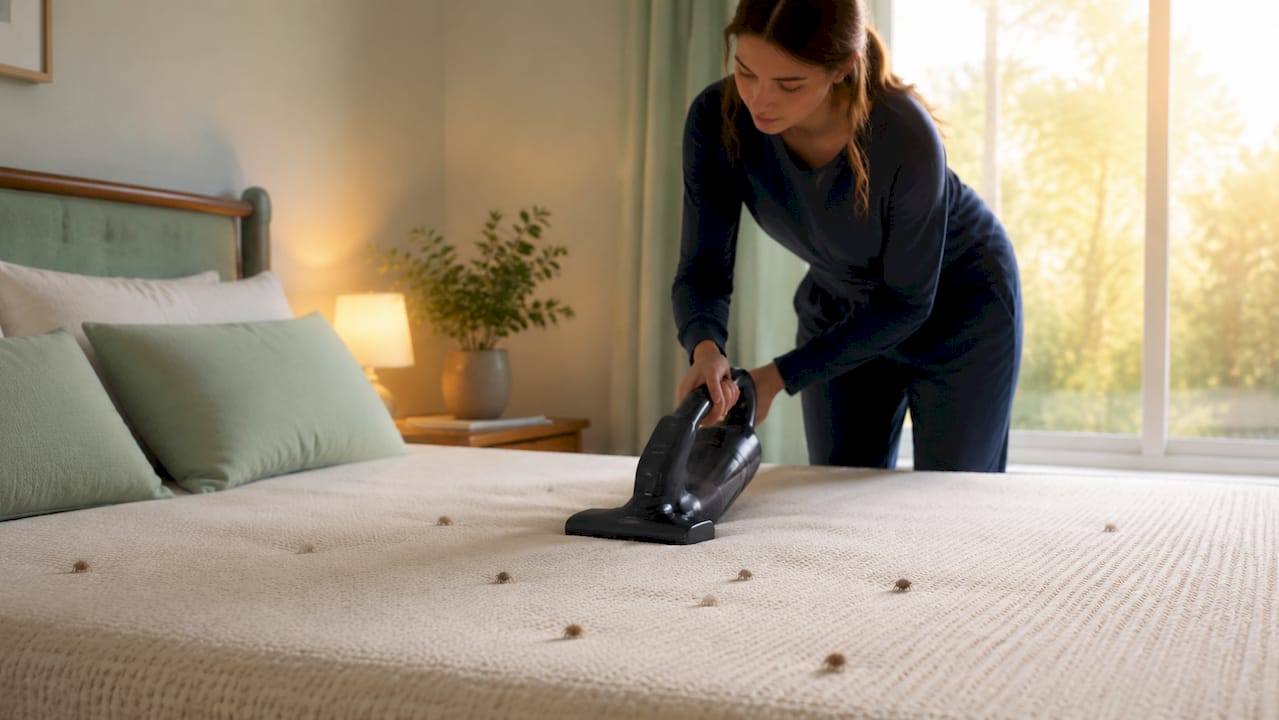
Mold growth is a secondary concern that most people underestimate. Moisture from sweat and humidity accumulates inside mattress layers over time, creating conditions where mold spores multiply. Poor ventilation and irritants cause nasal irritation, mouth breathing, coughing, dry throat, and restless sleep. These symptoms are often misattributed to seasonal allergies or a cold.
Pet dander and outdoor pollen also settle into mattress fibers and foam layers, compounding the allergen load. The mattress acts as a reservoir, accumulating these particles over months and years. Replacing a mattress every two to four years, as Guestlysleep recommends, limits this accumulation before it becomes a chronic respiratory burden.
How allergens build up inside your mattress
Understanding where allergens concentrate helps you target the right interventions. The problem is not just surface dust. It is what lives deep inside the mattress structure.
- Dust mites colonize foam and fiber layers where humidity exceeds 50%. A single gram of mattress dust can contain thousands of mite fecal particles, which are the actual allergen.
- Mold spores grow in compressed foam cores where airflow is restricted and moisture cannot escape. Memory foam, with its dense closed-cell structure, is particularly susceptible.
- Pet dander penetrates mattress covers and embeds in foam cells, where standard vacuuming cannot reach it.
- Pollen enters through open windows and settles on bedding and mattress surfaces, accumulating across seasons.
Allergen-proof covers and hot-washing bedding reduces these triggers significantly. Covers with a pore size under 10 microns block dust mite allergens at the surface level. Washing bedding weekly at 130°F or higher kills mites and removes dander.
Pro Tip: Keep bedroom humidity between 40% and 50% using a hygrometer and a dehumidifier. Dust mites cannot survive below 50% relative humidity, which makes humidity control one of the most cost-effective allergen reduction strategies available.
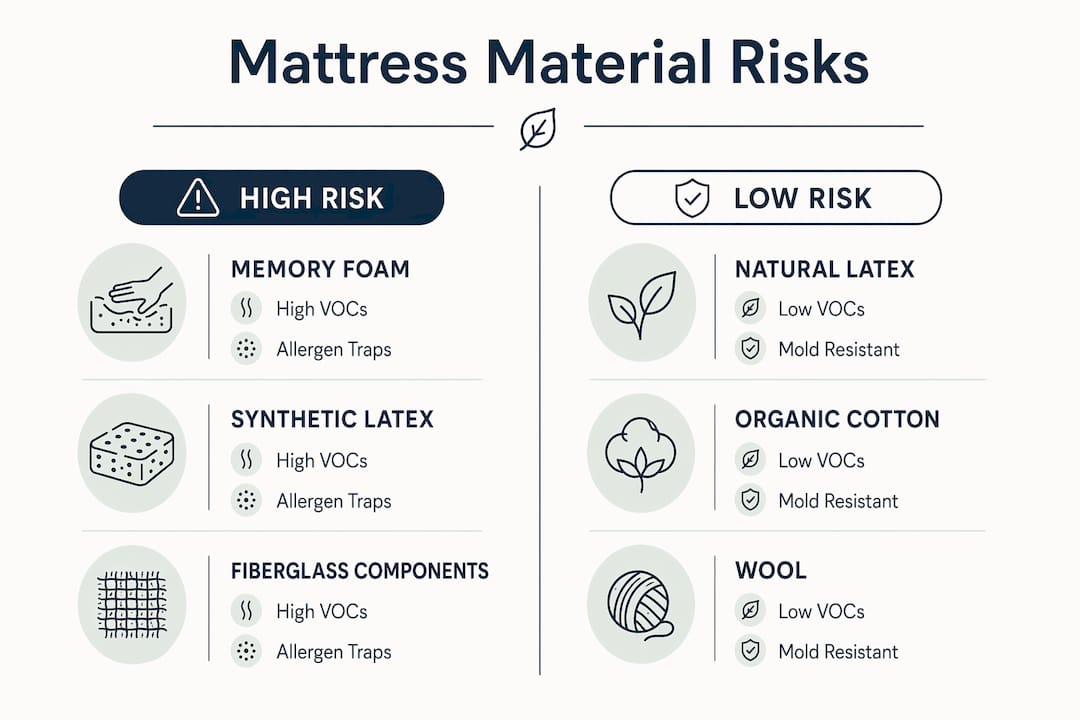
Effective allergen management requires combining allergen barriers with humidity and ventilation control. Mattress replacement alone does not solve the problem if the room environment remains damp and poorly ventilated.
What is mattress off-gassing and why does it matter?
Off-gassing is the release of VOCs from synthetic materials as they break down at room temperature. New foam mattresses are the primary source in most bedrooms, and the process begins the moment you unpack the mattress.
- Unboxing triggers peak emissions. VOC concentrations are highest in the first 24 to 72 hours after unpacking. New foam mattresses emit VOCs including toluene and formaldehyde, with emissions peaking at 24 to 72 hours and tapering over weeks.
- Body heat accelerates the process. Elevated body temperatures during sleep increase VOC emission rates from foam mattresses, intensifying exposure beyond what ambient room testing would suggest. This is why off-gassing is more dangerous than it appears in laboratory conditions.
- Sensitive individuals face compounded risk. People with chemical sensitivities, asthma, or migraines can experience headaches, eye irritation, and throat discomfort from VOC exposure. Off-gassing exposure risk is highest during the initial 24 to 72 hours, and sensitive individuals need more precaution than just airing out by smell.
- Odor is not a reliable safety indicator. A mattress that no longer smells does not mean VOC emissions have stopped. Chemical concentrations can remain elevated well after the odor dissipates.
- Material type determines emission profile. Memory foam and polyurethane foam produce the highest VOC loads. Natural latex avoids synthetic off-gassing though it may carry a mild natural rubber odor that fades within days.
“Ventilating a new mattress for 48 to 72 hours before sleeping on it is the single most practical step a chemically sensitive person can take. But ventilation reduces exposure. It does not eliminate it.” — National Mattress Authority
The practical implication is clear: if you or someone in your household has asthma, migraines, or chemical sensitivities, material selection matters more than airing time alone.
Comparing mattress materials for respiratory health
Not all mattresses carry the same respiratory risk. The material composition determines both the allergen profile and the chemical emission load.
| Material | VOC emission level | Allergen risk | Key consideration |
|---|---|---|---|
| Memory foam | High | Moderate to high | Dense structure traps moisture; high off-gassing at unboxing |
| Polyurethane foam | High | Moderate | Common in budget mattresses; significant VOC output |
| Natural latex | Low | Low to moderate | No synthetic off-gassing; mild natural odor; naturally resistant to mold and dust mites |
| Innerspring | Low | Moderate | Open coil structure improves airflow; fabric layers can still harbor allergens |
| Hybrid (foam + coil) | Moderate | Moderate | Coil layer improves ventilation; foam layers still off-gas |
Natural latex stands out as the lowest-risk option for respiratory health. Its open-cell structure resists mold and dust mite colonization, and it does not emit synthetic VOCs. Innerspring mattresses perform well for airflow but their fabric and padding layers still accumulate allergens over time.
Certification programs like GREENGUARD Gold focus on low VOC emissions from the finished product under bedroom conditions, but do not assess organic content or allergen resistance. This is a critical distinction. A GREENGUARD Gold certified memory foam mattress has passed VOC limits. It has not been tested for dust mite resistance or mold prevention. CertiPUR-US certification, explained in detail in Guestlysleep’s guide on finding a certified mattress, covers foam content and emissions but similarly does not address allergen barriers.
Pro Tip: Look for mattresses that combine a CertiPUR-US certified foam core with a natural latex comfort layer. This pairing reduces VOC output from the core while the latex layer resists biological allergens at the sleep surface.
Fiberglass components in some mattresses may aggravate asthma or bronchitis, and chemical fumes can trigger asthma attacks or migraines. Choosing fiberglass-free mattresses with CertiPUR-US certified foam reduces these respiratory risks directly.
Practical steps to reduce breathing irritants from your mattress
Improving your sleep environment does not require replacing everything at once. These steps address both allergen and chemical exposure in order of impact.
- Air out new mattresses for 48 to 72 hours in a well-ventilated room before sleeping on them. Structured airing out is a practical mitigation for chemically sensitive sleepers, though it reduces rather than eliminates VOC exposure.
- Install an allergen-impermeable mattress cover with a pore size under 10 microns. This single step blocks dust mite allergens, pet dander, and mold spores from reaching the sleep surface.
- Wash all bedding weekly at 130°F or higher. Hot water kills dust mites and removes accumulated allergens from pillowcases, sheets, and duvet covers.
- Keep bedroom humidity between 40% and 50%. Use a dehumidifier in humid climates and a hygrometer to monitor levels. Dust mites and mold both require humidity above 50% to thrive.
- Improve bedroom ventilation. Open windows when outdoor air quality permits, or use an air purifier with a HEPA filter. Resources like Coway’s allergen air quality guide explain how indoor allergen loads build up and how air filtration reduces them.
- Replace mattresses every two to four years. Older mattresses accumulate allergens beyond what covers and cleaning can manage, and their foam layers degrade in ways that increase off-gassing of breakdown products.
- Choose certified, fiberglass-free mattresses when purchasing new. Certifications reduce chemical exposure at the source, which is more effective than mitigation after purchase.
Bedroom air quality management integrates allergen-proof covers, moisture control, ventilation, and careful mattress material selection. No single step is sufficient on its own.
Key takeaways
Mattress materials affect breathing through two simultaneous pathways: biological allergen accumulation and chemical VOC off-gassing, and addressing both is required for meaningful respiratory improvement during sleep.
| Point | Details |
|---|---|
| VOC off-gassing peaks early | Emissions from synthetic foam are highest in the first 24 to 72 hours; body heat intensifies exposure at night. |
| Allergens accumulate over time | Dust mites, mold, and dander build up in foam layers; allergen-proof covers and humidity control are the primary defenses. |
| Material choice matters most | Natural latex and innerspring constructions carry lower VOC and allergen risk than memory foam or polyurethane foam. |
| Certifications have limits | GREENGUARD Gold and CertiPUR-US reduce VOC exposure but do not address allergen resistance or organic content. |
| Replacement frequency counts | Replacing mattresses every two to four years prevents allergen accumulation from exceeding what covers and cleaning can manage. |
What I’ve learned about mattresses and breathing the hard way
I spent years recommending memory foam to people who complained about back pain, without thinking much about what those same people were breathing in every night. The off-gassing conversation was always treated as a minor footnote. “Air it out for a day or two and you’ll be fine.” That advice is incomplete.
The detail that changed my thinking was learning that body heat accelerates VOC emissions. You are not just sleeping near a foam mattress. You are sleeping on it, warming it, and drawing those emissions directly toward your face for seven or eight hours. A mattress that tested fine at room temperature in a lab is a different product at 98°F under a sleeping body.
What I now tell people is this: certifications matter, but they are a floor, not a ceiling. A CertiPUR-US label means the foam passed a minimum standard. It does not mean the mattress is the best choice for someone with asthma or chemical sensitivities. Natural latex and fiberglass-free constructions consistently outperform certified foam in real-world respiratory outcomes, particularly for people who already know their airways are reactive.
The other thing most articles miss is the allergen accumulation timeline. People focus on new mattress off-gassing and forget that a five-year-old mattress is a biological ecosystem. The mattress features that improve sleep are not just about comfort. They are about what you are breathing in for a third of your life. Treat mattress replacement as a health decision, not just a comfort upgrade.
— Justin
Sleep cleaner with Guestlysleep’s fiberglass-free mattresses
If this article has you reconsidering what you are sleeping on, Guestlysleep builds mattresses specifically designed to reduce the respiratory risks covered here.
Every mattress in the Guestlysleep lineup is fiberglass-free and made in the United States, using certified materials that minimize VOC emissions and eliminate the fiberglass particles that can aggravate asthma and bronchitis. The 14" Lux Hybrid Firm combines a coil support system for airflow with a certified foam comfort layer, while the 15" TRU Luxury Firm offers a premium option for sleepers who prioritize material safety above all else. Every order ships free, includes a 60-night sleep trial, and comes with the confidence that you are not introducing new respiratory irritants into your bedroom.
FAQ
Does mattress material really affect breathing?
Yes. Mattress materials affect breathing by emitting VOCs from synthetic foams and by harboring biological allergens like dust mites, mold spores, and pet dander. Both pathways irritate the respiratory system during sleep.
What is the best mattress for asthma?
Natural latex and fiberglass-free innerspring or hybrid mattresses carry the lowest respiratory risk for asthma sufferers. Look for CertiPUR-US or GREENGUARD Gold certification to confirm low VOC emissions, and pair any mattress with an allergen-impermeable cover.
How long does mattress off-gassing last?
VOC emissions from new foam mattresses peak at 24 to 72 hours and taper over several weeks. Airing the mattress in a ventilated room for 48 to 72 hours before use reduces initial exposure, but emissions continue at lower levels for weeks afterward.
Are hypoallergenic mattresses actually effective?
Hypoallergenic mattress materials like natural latex resist dust mite colonization and mold growth better than synthetic foam. However, no mattress is fully allergen-proof without an allergen-impermeable cover and consistent bedding hygiene.
How often should you replace a mattress for better breathing?
Guestlysleep recommends replacing mattresses every two to four years. Older mattresses accumulate allergens beyond what cleaning can address, and degrading foam layers can increase off-gassing of breakdown compounds over time.