

Why Mattress Washing Releases Fiberglass: Safety Guide
Washing a mattress cover releases fiberglass because it breaks the sealed containment layer that keeps tiny fire-retardant fibers locked inside. Fiberglass is used in many budget and mid-range mattresses as a low-cost way to meet federal fire safety standards. The cover is the only barrier between those fibers and your home. When you wash, unzip, or agitate that cover, the fiberglass shards escape into your washing machine, your laundry, and the air you breathe. Understanding why mattress washing releases fiberglass is the first step to protecting your household from a contamination problem that is far harder to fix than it is to prevent.
Why is fiberglass in mattresses in the first place?
Fiberglass is in mattresses because federal law requires every mattress sold in the United States to pass a flammability test. The Consumer Product Safety Commission standard, known as 16 CFR Part 1633, does not specify which fire barrier material manufacturers must use. It only requires that the mattress resist catching fire. Fiberglass fire sleeves sit just beneath the outer cover and act as a heat shield that slows ignition.
Manufacturers choose fiberglass because it is inexpensive and effective. A fiberglass fire sleeve costs a fraction of what wool, silica, or Kevlar barriers cost. That cost difference gets passed to consumers as a lower retail price, which is why fiberglass shows up most often in budget and value-tier mattresses.
The outer cover is not decorative. It is the containment layer that keeps fiberglass sealed away from skin, air, and fabric. The fiberglass layer is never meant to be touched, washed, or exposed. It is engineered to stay sealed for the life of the mattress.
- Fiberglass fire barriers are common in foam mattresses priced under $800.
- The cover’s zipper is not an invitation to remove it. Most manufacturers explicitly warn against unzipping.
- Fiberglass particles are microscopic. You cannot see them escaping, which makes accidental exposure easy.
- Mattresses with fiberglass often carry a label that reads “do not remove cover” or “inner cover not removable.”
Pro Tip: Check your mattress tag and any paperwork that came with it. If the label says “do not remove cover,” treat that as a hard rule, not a suggestion.
How does washing a mattress cover release fiberglass fibers?
Washing releases fiberglass because the agitation of a washing machine physically breaks the fiberglass layer apart. Fiberglass is made of spun glass strands. When those strands are flexed, twisted, and tumbled in water, they fracture into smaller shards. Those shards are light enough to become airborne once the cover is removed from the machine.
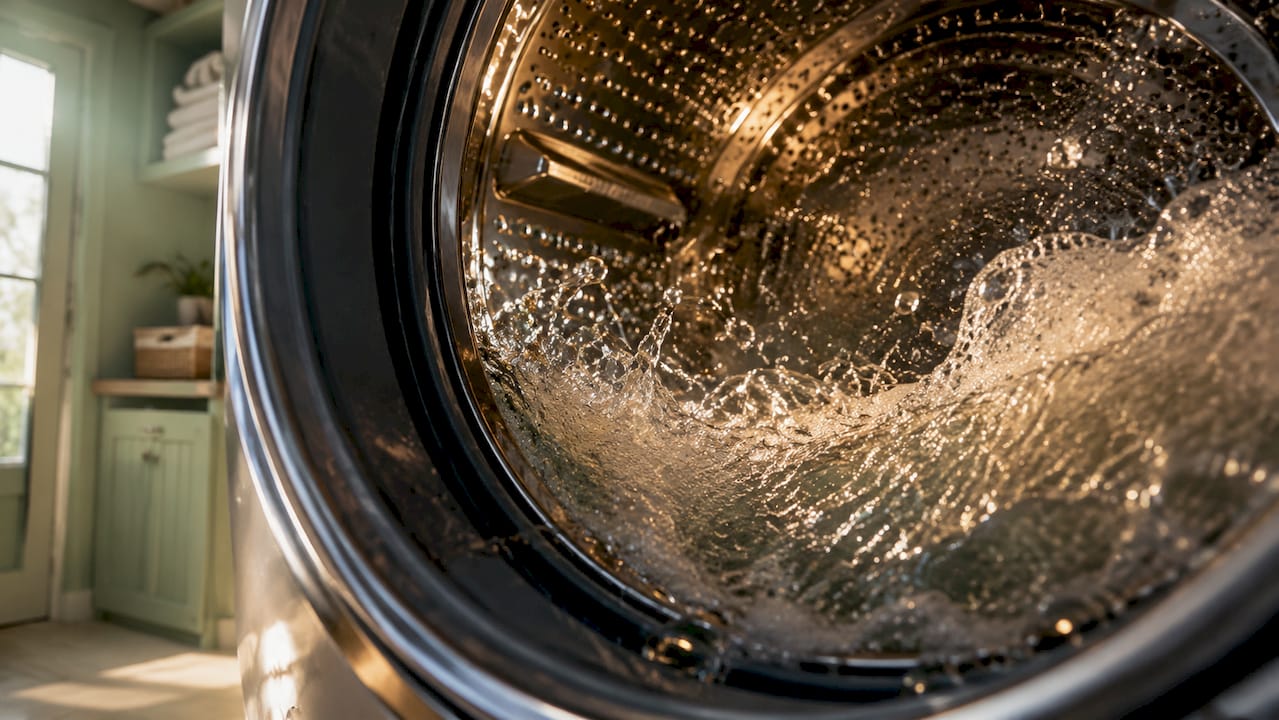
The contamination does not stop at the cover itself. The washing machine drum, the drum seal, and the drain filter all collect fiberglass particles during the wash cycle. Every load of laundry you run afterward picks up those particles and carries them onto your clothes, sheets, and towels. This is why a single washing mistake can contaminate an entire household’s laundry supply.
Removing the cover without washing it causes the same problem. Unzipping the cover and pulling it off the mattress releases fibers into the air just as effectively as a wash cycle. Shaking the cover, folding it roughly, or even carrying it through the house spreads fibers to floors, furniture, and HVAC systems.
Here is the sequence of events that happens when a fiberglass-containing cover is washed:
- The cover enters the washing machine and the agitation cycle begins.
- Flexing and friction fracture the fiberglass strands into microscopic shards.
- Water carries shards into the drum lining, the door seal, and the drain.
- The cover is removed wet, and airborne fibers release into the laundry room.
- Subsequent laundry loads pick up fibers left in the drum and spread them to other fabrics.
- Fibers settle on floors, countertops, and soft furnishings throughout the home.
The washing machine becomes a secondary contamination source. Fibers deposited in the drum during one cycle spread to every load of laundry that follows, meaning the problem grows with each wash until the machine is thoroughly cleaned.
What are the health risks of fiberglass exposure from mattress cleaning?
Fiberglass exposure causes skin rashes, eye irritation, and respiratory problems when fibers become airborne in the home. The fibers are sharp at a microscopic level. They embed in skin and mucous membranes, causing itching and redness that can persist for days. Eye exposure causes redness and a gritty sensation that requires flushing to relieve.
Respiratory irritation is the most serious concern. Inhaled fiberglass particles irritate the lining of the airways. People with asthma, allergies, or existing lung conditions face a higher risk of a significant reaction. Children and elderly adults are also more vulnerable because their airways are more sensitive to particulate irritants.
Cleanup after fiberglass contamination is genuinely difficult. Standard vacuuming with a regular vacuum cleaner can make the problem worse by blowing fine particles back into the air. Effective cleanup requires a HEPA-filter vacuum, disposable gloves, safety glasses, and a respirator mask. Hard surfaces need to be wiped with a damp cloth, not a dry one, to avoid re-aerosolizing particles.
- Skin contact: wash the affected area with cold water and soap. Do not rub, as rubbing drives fibers deeper.
- Eye contact: flush with clean water for at least 15 minutes and seek medical advice if irritation continues.
- Respiratory exposure: move to fresh air immediately and contact a doctor if breathing difficulty develops.
- Severe contamination: professional remediation is the safest option when fibers have spread to HVAC ducts or multiple rooms.
Handling covers causes fibers to become airborne and resettle on surfaces throughout the home, making a localized problem into a whole-room cleanup project.
Safe mattress maintenance: how to avoid releasing fibers
The safest maintenance rule for a fiberglass-containing mattress is simple. Do not unzip or remove the cover unless the manufacturer explicitly states in writing that the cover is machine washable. That instruction is rare. Most manufacturers do not include it because the cover is not designed for laundering.
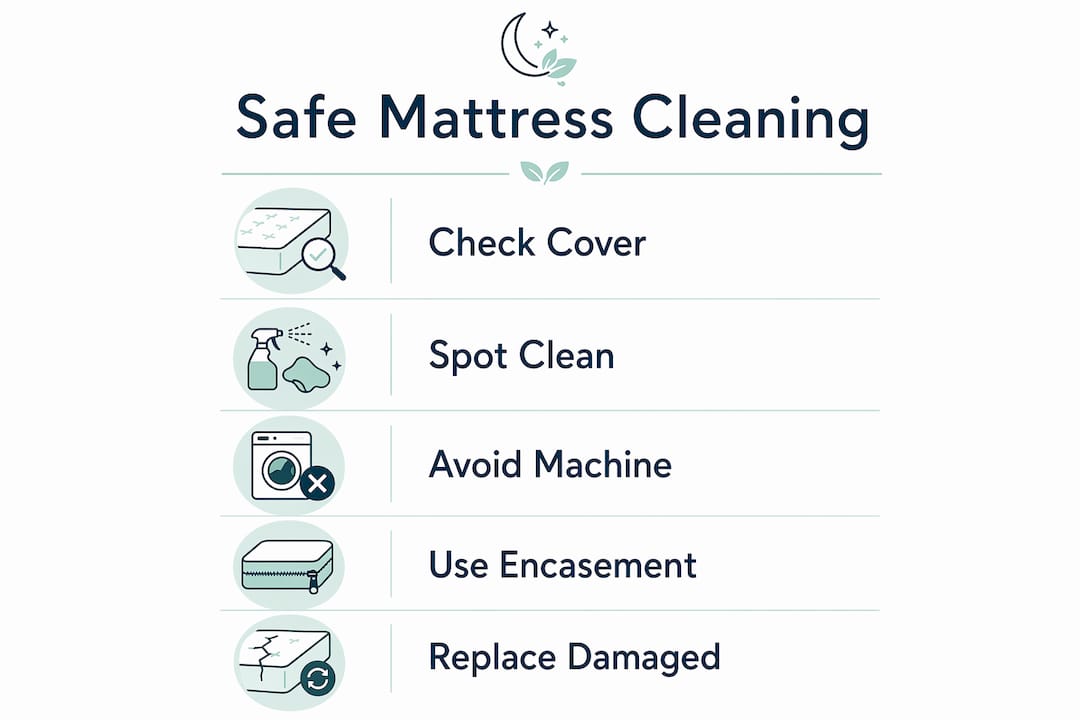
For routine cleaning, spot-treat the outer surface of the cover with a damp cloth and mild detergent. Never saturate the cover, and never put it in a washing machine. Vacuuming the surface with an upholstery attachment is safe as long as the cover is intact and undamaged.
| Maintenance task | Safe for fiberglass mattresses? | Notes |
|---|---|---|
| Spot cleaning the outer cover | Yes | Use a damp cloth and mild soap only |
| Machine washing the cover | No | Releases fibers into the drum and air |
| Unzipping the cover | No | Exposes the fiberglass layer directly |
| Vacuuming the surface | Yes | Only if the cover is fully intact |
| Using a mattress encasement | Yes | Adds a protective barrier over the cover |
| Replacing a damaged mattress | Recommended | Damaged covers cannot be safely repaired |
A zippered mattress encasement placed over the original cover adds a washable outer layer that you can launder freely. The encasement takes the wear and the washing while the original cover stays sealed underneath. This is the most practical solution for consumers who want a cleanable surface without disturbing the fiberglass layer.
When the original cover is torn, frayed, or visibly damaged, the mattress should be replaced. A damaged cover cannot be repaired in a way that restores containment. Taping or patching the cover is not a reliable fix because fibers can escape through microscopic gaps around any patch.
Pro Tip: When shopping for a new mattress, look for fiberglass-free mattress benefits before you buy. Choosing a mattress without fiberglass eliminates the containment risk entirely and gives you a cover you can actually clean.
Fiberglass-free mattresses use alternative fire barriers such as wool, silica, or plant-based materials. These barriers do not shed harmful particles when the cover is washed or handled. You can learn more about how mattress materials affect breathing and overall sleep health before making a purchase decision.
Key Takeaways
Fiberglass in mattresses is a containment problem. The cover is the only barrier between the fire-retardant layer and your home, and washing or removing it breaks that barrier permanently.
| Point | Details |
|---|---|
| Fiberglass serves a legal purpose | Manufacturers use it to meet the 16 CFR Part 1633 flammability standard at low cost. |
| Washing breaks containment | Agitation fractures fiberglass strands into airborne shards that spread through the home. |
| Washing machines spread fibers | A contaminated drum transfers fiberglass particles to every subsequent laundry load. |
| Health risks are real | Skin rashes, eye irritation, and respiratory problems result from airborne fiber exposure. |
| Fiberglass-free mattresses eliminate the risk | Choosing a mattress without fiberglass means the cover can be cleaned without hazard. |
My honest take on fiberglass mattresses after years of watching this play out
The most common mistake I see is consumers assuming that a zippered cover is meant to be removed and washed. The zipper is there for manufacturing, not for maintenance. Manufacturers put it on so the cover can be fitted over the foam core during production. It was never intended to be a laundry feature.
What frustrates me is that this information is buried in fine print. A warning tag on the mattress is easy to miss, especially years after purchase when the original paperwork is long gone. By the time someone washes the cover and realizes what happened, the contamination is already spread across their laundry room.
The practical answer is to buy a mattress that does not contain fiberglass. The transition away from a fiberglass mattress is straightforward, and the long-term benefit is a sleep surface you can actually maintain without risk. Fiberglass-free mattresses cost more upfront in some cases, but the ability to clean the cover, replace the mattress every 2–4 years without a hazmat concern, and sleep without worrying about fiber exposure is worth the difference.
Containment is the entire safety equation with fiberglass. Once it is broken, the problem is expensive and time-consuming to fix. Prevention is the only reliable strategy.
Fiberglass-free mattresses from Guestlysleep: a safer choice
If you have a mattress with fiberglass, the safest long-term decision is to replace it with one that does not contain it. Guestlysleep sells fiberglass-free mattresses made in the United States, using certified materials that meet fire safety standards without glass fibers. Every cover is designed to be maintained without the contamination risk described in this article.
Guestlysleep offers options across comfort levels and sleep positions, from the 15" TRU Luxury Plush Mattress to more affordable tiers, all with free shipping and a 60-night sleep trial. Each mattress ships directly from the manufacturer, which keeps prices lower without cutting corners on materials. If you are ready to stop worrying about what is inside your mattress, Guestlysleep is a practical place to start.
FAQ
Why does washing a mattress cover release fiberglass?
Washing agitates the fiberglass fire barrier beneath the cover, fracturing the glass strands into microscopic shards that escape into the washing machine and air. The cover is a containment layer, not a washable fabric, so laundering it breaks the only barrier keeping fibers sealed inside.
Can washing a mattress release fibers into my other laundry?
Yes. A washing machine exposed to fiberglass from a mattress cover becomes a contamination source that transfers fibers to every subsequent load of laundry until the drum is thoroughly cleaned with a HEPA-capable process.
How do I know if my mattress contains fiberglass?
Check the mattress label for warnings like “do not remove cover” or “inner cover not removable.” Budget foam mattresses priced under $800 are the most likely to use fiberglass fire sleeves, and the fiberglass containment risk is highest when the cover is damaged or removed.
What should I do if I already washed a fiberglass mattress cover?
Stop using the washing machine for other laundry immediately. Wipe the drum interior with a damp cloth, run an empty hot cycle, and clean the door seal carefully. Wear gloves and a mask during cleanup, and consider professional appliance cleaning if contamination is severe.
Are fiberglass-free mattresses safer to clean?
Fiberglass-free mattresses use alternative fire barriers such as wool or silica that do not shed harmful particles when the cover is handled or washed. This makes routine mattress maintenance straightforward and eliminates the contamination risk entirely.