

Silica Fiber in Mattresses: What You Need to Know
Silica fiber is a mineral-based fire barrier material used inside mattresses to meet federal flame resistance requirements without the health risks linked to fiberglass. If you have ever flipped a mattress tag and seen terms like “silica fiber,” “glass fiber,” or “silica-infused rayon,” you were looking at the fire barrier layer. Most shoppers never think about what sits between them and a potential flame. Understanding what is silica fiber in mattresses, how it differs from fiberglass, and what it means for your health gives you a real advantage when buying your next bed.
What is silica fiber in mattresses and how does it work?
Silica fiber is a cellulose-polysilicic acid hybrid fiber that is both flexible and thermally stable. The industry term for the most common form is silica-infused rayon, though “silica fiber” appears on most consumer labels. The material wraps around the mattress core as a sock or layer, acting as a fire barrier between the foam and the outer fabric.
The thermal performance of silica fiber is significant. Silica fabrics resist temperatures above 1000°C in industrial applications, which translates directly to reliable flame resistance in a sleep product. When exposed to an open flame, the silica layer chars rather than melts or ignites, slowing fire spread long enough to meet federal standards.
Federal law under 16 CFR Part 1633 requires mattresses to limit char length to 2 inches under open flame exposure. Silica fiber meets this standard without requiring fiberglass at all. That distinction matters because the two materials behave very differently when a mattress cover is damaged.
Unlike fiberglass, silica fiber does not shatter into sharp, airborne particles. Its hybrid structure keeps fibers intact even under mechanical stress. That flexibility is the core advantage silica fiber holds over traditional fiberglass fire barriers.

Pro Tip: Check your mattress law tag for the words “silica fiber” or “silica-infused rayon.” Either term signals a safer fire barrier than “glass fiber” or “glass wool.”
Key properties of silica fiber in mattresses:
- Thermal resistance: Withstands extreme heat without melting or releasing toxic gases
- Flexibility: Bends without fragmenting, unlike brittle fiberglass strands
- Non-toxic composition: Lightweight and non-toxic, with no airborne particle risk under normal use
- Regulatory compliance: Meets 16 CFR Part 1633 fire safety standards
- Stability: Remains intact if the mattress cover is breached
How does silica fiber compare to fiberglass and other fire barriers?
The fire barrier inside your mattress is not visible, but its material choice has real consequences. Three main options appear across the market: fiberglass, silica fiber or silica-infused rayon, and natural alternatives like wool.
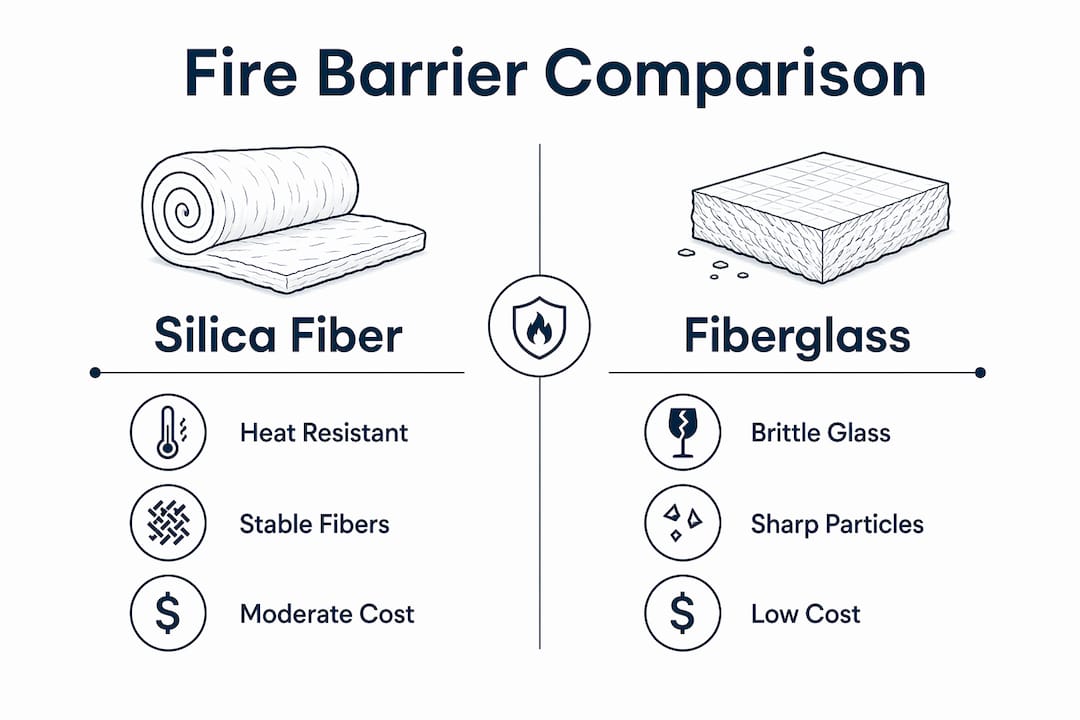
Fiberglass is the cheapest option and the most widely used in budget mattresses. It works by creating a glass-based barrier that chars under heat. The problem is structural. Fiberglass is brittle. When a mattress cover is breached, fiberglass fibers can escape, causing skin irritation and respiratory issues. Incidents involving zippered covers that consumers remove for washing have led to widespread contamination of bedrooms and HVAC systems.
Silica fiber solves the brittleness problem. Because it is a hybrid mineral fiber rather than pure glass, it does not fragment under stress. Health experts recommend wool, rayon, and silica-based barriers over fiberglass precisely because these alternatives meet the same fire safety standards with far less contamination risk.
Wool is the most natural option. It is inherently flame resistant due to its high nitrogen and moisture content. Wool fire barriers are common in organic and luxury mattresses but add cost. They are also effective and safe, though less common in mid-range products.
| Fire barrier material | Heat resistance | Fragmentation risk | Health safety | Cost level |
|---|---|---|---|---|
| Fiberglass | High | High if cover breached | Low (contamination risk) | Low |
| Silica fiber / silica-infused rayon | Very high | Low | High | Moderate |
| Wool | High | None | High | High |
| Natural rayon (no silica) | Moderate | None | High | Moderate |
Pro Tip: Never unzip and remove a mattress cover for washing unless the manufacturer explicitly states it is safe to do so. Removing the cover on a fiberglass mattress is the most common cause of fiber contamination in the home.
The table above shows that silica fiber sits in the middle ground: it delivers the thermal performance of fiberglass without the contamination risk, at a cost below wool. For health-conscious buyers, that combination is the practical sweet spot.
Are silica fibers safe to have in or around your mattress?
Silica fiber in mattresses is safe under normal sleeping conditions. The fiber does not become airborne during regular use, and its non-toxic composition means no harmful off-gassing. The risk profile changes only if the mattress cover is physically damaged or removed.
The contrast with fiberglass is sharp. Fiberglass exposure causes skin rashes, eye irritation, and respiratory distress when particles become airborne. Silica fiber does not share these risks. Silica fiber fire barriers reduce contamination risk compared to fiberglass barriers, even when the mattress cover is damaged.
A common myth is that any silica-containing material poses the same lung risk as crystalline silica dust in industrial settings. That comparison is inaccurate. Industrial silica dust hazards come from cutting or grinding raw silica rock, which releases fine respirable particles. Silica fiber in a mattress is a processed, bound material. It does not release free crystalline silica under normal use or even under most damage scenarios.
Practical precautions for silica fiber mattresses:
- Do not cut, tear, or puncture the mattress cover
- Follow the manufacturer’s care instructions for the cover
- If the cover is damaged, replace it before continuing use
- When disposing of an old mattress, handle it intact rather than cutting it apart
- Check the US mattress manufacturing standards that apply to your mattress before purchase
The bottom line is straightforward. Silica fiber is a well-engineered material that performs its fire barrier function without the health trade-offs of fiberglass. Keeping the cover intact is the only meaningful precaution required.
How to identify silica fiber and fiberglass on mattress labels
Reading a mattress law tag takes less than a minute and tells you exactly what fire barrier material is inside. Federal law requires manufacturers to list all materials, including the fire barrier layer. Knowing which terms to look for separates a safe purchase from a risky one.
Consumer confusion increases because brands use inconsistent terminology and sometimes omit fire barrier details entirely. The terms below appear most often.
- “Silica fiber” or “silica-infused rayon” signals a safer, flexible fire barrier. This is the material covered throughout this article.
- “Glass fiber” or “glass wool” indicates fiberglass. These terms signal fiberglass presence and warrant extra caution about cover integrity.
- “Fiberglass” is the most direct label. Some brands use it plainly; others bury it under technical synonyms.
- “Rayon” or “viscose” without a silica qualifier usually indicates a natural rayon fire barrier, which is safe but offers lower thermal resistance than silica-infused versions.
- No fire barrier listed is a red flag. Every mattress sold in the United States must meet 16 CFR Part 1633. If the tag does not list a fire barrier material, contact the manufacturer directly before buying.
When shopping online, look for brands that explicitly state “fiberglass-free” in their product descriptions. That phrase has become a meaningful signal of transparency. Brands that use silica fiber or wool and say so clearly are making a deliberate choice to communicate safety to buyers. A mattress materials health comparison can help you evaluate specific products side by side before committing to a purchase.
Pro Tip: Search the brand name plus “fire barrier material” or “fiberglass” before buying. Consumer forums and product reviews often surface label details that the official product page omits.
Key Takeaways
Silica fiber is the safest widely available fire barrier in mattresses, meeting federal standards without the contamination risks that make fiberglass a health concern.
| Point | Details |
|---|---|
| Silica fiber definition | A flexible, mineral-based hybrid fiber used as a flame barrier inside mattresses. |
| Safety vs. fiberglass | Silica fiber does not fragment or become airborne, making it far safer if the cover is damaged. |
| Federal compliance | Both silica fiber and fiberglass meet 16 CFR Part 1633 standards; fiberglass is not required. |
| Label reading | Look for “silica fiber” or “silica-infused rayon” and avoid mattresses labeled “glass fiber” or “glass wool.” |
| Cover integrity | Keeping the mattress cover intact is the single most important precaution for any fire barrier material. |
Why I think most shoppers are asking the wrong question about mattress safety
Most people shopping for a new mattress ask about firmness, foam type, or price. Almost nobody asks about the fire barrier. That gap is where real health risk hides.
I have spent years reading mattress specifications and talking to people who discovered fiberglass in their bedrooms after washing a mattress cover. The damage is not subtle. Glass particles embed in carpet, upholstery, and clothing. Cleaning it out takes days. The frustrating part is that fiberglass is not the only way to pass a federal fire test. Silica fiber and wool do the same job without the contamination risk.
What surprises me most is how easy it is to avoid the problem. The law tag tells you everything. Two minutes of reading before you buy is all it takes. Yet most consumers never look. Brands that use fiberglass know this, which is why the labeling stays vague.
My advice is direct: treat “fiberglass-free” as a non-negotiable feature, not a premium upgrade. The advantages of silica bedding are not theoretical. They show up the moment something goes wrong with the cover. Choose a mattress that uses silica fiber or wool, verify it on the law tag, and sleep without that particular worry.
Sleep safer with a fiberglass-free mattress from Guestly Sleep
If this article has you reconsidering what is inside your current mattress, you are not alone. Guestly Sleep specializes in American-made mattresses using a Rayon fire barrier. Every product in the Guestly Sleep lineup is built without fiberglass, tested to meet federal fire safety standards, and designed for people who want clean, non-toxic sleep.
Guestly Sleep offers free shipping, a 60-night sleep trial, and direct pricing that keeps costs down without cutting corners on materials. Whether you sleep on your side, back, or stomach, there is a fiberglass-free mattress built for your comfort level. Replacing your mattress every 2–4 years is the standard Guestly Sleep recommends for optimal sleep hygiene. Starting that cycle with a safer material is the right move.
FAQ
What is silica fiber in a mattress?
Silica fiber is a mineral-based, flexible fire barrier material used inside mattresses to meet federal flame resistance standards. It is typically applied as silica-infused rayon and does not fragment or become airborne under normal use.
Is silica fiber the same as fiberglass?
No. Silica fiber is a hybrid cellulose-mineral material that is flexible and stable, while fiberglass is made from pure glass strands that can fragment and become airborne if the mattress cover is breached.
Can silica fiber in a mattress harm your lungs?
Silica fiber in a mattress does not release free crystalline silica particles under normal use. The lung hazards associated with silica come from industrial cutting of raw silica rock, not from processed mattress fiber materials.
How do I know if my mattress has silica fiber or fiberglass?
Read the law tag sewn to your mattress. “Silica fiber” or “silica-infused rayon” indicates a safer barrier. “Glass fiber,” “glass wool,” or “fiberglass” indicates fiberglass is present.
Do all mattresses need a fire barrier?
Yes. Federal regulation 16 CFR Part 1633 requires all mattresses sold in the United States to pass open flame fire tests. Manufacturers choose the barrier material, and silica fiber, wool, and fiberglass are all compliant options.