

How to Transition Away From a Fiberglass Mattress
A fiberglass mattress is defined as any mattress that uses spun glass fibers as a fire barrier between the outer ticking fabric and the inner foam layers. Millions of Americans sleep on one right now without knowing it. The decision to transition away from a fiberglass mattress is not just about personal preference. It is a health decision backed by real exposure risks, and the good news is that safer, certified alternatives exist today at every price point. This guide walks you through identifying fiberglass in your current mattress, understanding what replaces it, and making the switch without sacrificing comfort or compliance.
How to identify if your mattress contains fiberglass
The first thing to understand is why fiberglass ended up in mattresses at all. Federal flammability standards under 16 CFR Part 1632 and 1633 require all U.S. mattresses to resist ignition. Manufacturers needed a cost-effective fire barrier, and fiberglass fit the bill. The problem is that most consumers never knew it was there.
Reading your mattress law tag
Every mattress sold in the United States carries a law tag, the white label sewn into the side or bottom of the mattress. This tag lists materials used in construction. Law tags may state terms like “fiberglass,” “glass fiber,” or “glass wool” in the fill materials section. If you see any of those terms, your mattress uses a fiberglass fire barrier.
What makes this tricky is that some tags use vague language like “inorganic fiber” or simply list the outer fabric without specifying the barrier layer. In those cases, contact the manufacturer directly and ask for a material specification sheet. You are entitled to that information before making any decisions.
Here is what to look for when checking your mattress:
- “Fiberglass,” “glass fiber,” or “glass wool” anywhere in the materials list
- “Inorganic fiber” as a vague catch-all term that may indicate glass content
- A “do not remove cover” warning printed on the mattress itself, which often signals a fiberglass barrier underneath
- Country of origin labels from manufacturers known to use fiberglass as a budget fire-barrier solution
Pro Tip: Never remove or wash your mattress cover if you suspect fiberglass is present. Exposed fiberglass fibers can aerosolize and spread through your bedroom, causing skin irritation and respiratory risk that is difficult to remediate.
What materials replace fiberglass in safer mattresses?
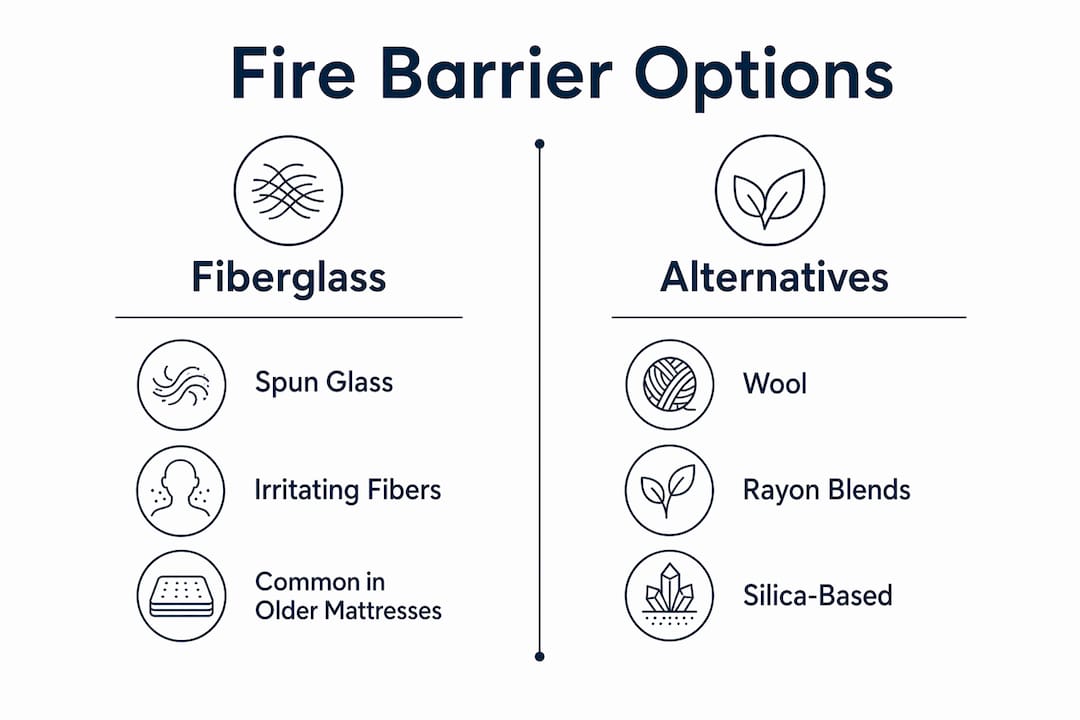
Fiberglass is not the only way to meet federal flammability requirements. Several natural and synthetic alternatives pass the same 16 CFR tests without the exposure risk. Knowing these options is the foundation of any smart mattress switch.
Natural fire-barrier options
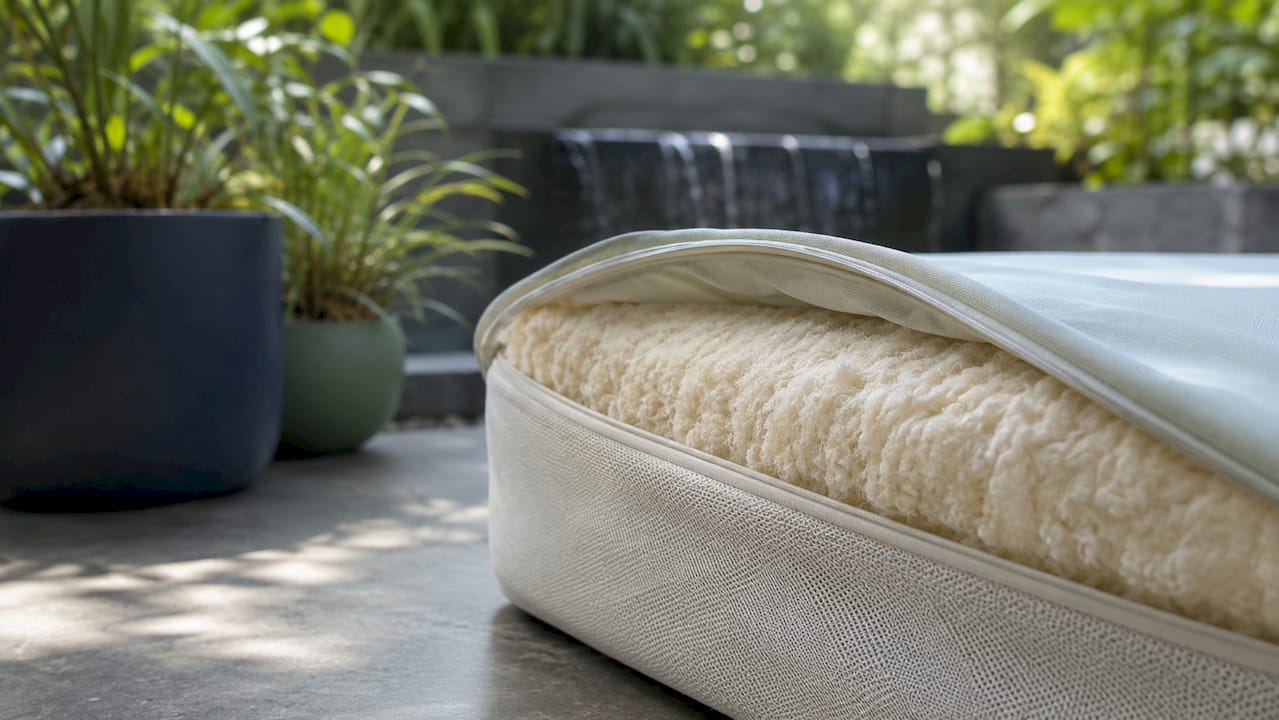
Wool is the gold standard among natural fire barriers. It is naturally flame-resistant, does not require chemical treatment, and is biodegradable. Organic mattresses with wool fire barriers often pair it with certified organic cotton and Dunlop latex, creating a fully non-toxic sleep surface. Silica-based barriers are another option. They use a mineral compound rather than glass fibers, offering flame resistance without the same aerosolization risk.
Rayon blends have become increasingly common as a mid-tier alternative. Nectar, one of the larger online mattress brands, discontinued fiberglass use by the end of 2023 and shifted to rayon-based fire barriers for models produced after 2022. That shift signals a broader industry move away from glass-based barriers.
Certifications that confirm non-toxic construction
Certifications are your fastest verification tool. Here is what each one actually tells you:
| Certification | What it covers | What it does not cover |
|---|---|---|
| CertiPUR-US | Foam free of ozone depleters, heavy metals, and formaldehyde | Does not address fire-barrier materials specifically |
| GOTS (Global Organic Textile Standard) | Organic fiber content and processing chemicals | Applies to fabric layers, not always the full mattress |
| GOLS (Global Organic Latex Standard) | Organic latex content and purity | Specific to latex components only |
| OEKO-TEX Standard 100 | Tests finished product for harmful substances | Broad coverage including fire-barrier fabrics |
CertiPUR-US is the most widely recognized certification for foam mattresses, but it does not specifically address the fire barrier. For a fully certified safe mattress, look for a combination of CertiPUR-US foam and a separately verified natural fire barrier like wool or a silica blend.
Step-by-step guide to switching mattresses safely
A safe transition away from a fiberglass mattress has four distinct phases: removal, selection, testing, and documentation. Skipping any one of them increases the chance of either exposure during removal or disappointment with your new purchase.
Phase 1: Remove the old mattress safely
- Do not flip or drag the mattress across carpet. Friction can dislodge fibers from a compromised cover. Slide it onto a plastic mattress bag before moving it through your home.
- Seal the mattress in a heavy-duty plastic bag before disposal. This contains any loose fibers and protects disposal workers.
- Use a specialized removal service when possible. Some mattress companies offer free old mattress pickup. Municipal bulk waste programs also handle mattress disposal in most U.S. cities.
- Vacuum the bed frame and surrounding floor with a HEPA-filter vacuum after removal. Standard vacuums can spread fine particles rather than capture them.
- Wash all bedding that was in contact with the old mattress before placing it on your new one.
Phase 2: Select your replacement
Start with the mattress materials comparison process before you walk into a store or browse online. Decide on your fire-barrier preference first, then filter by comfort type. Side sleepers generally need more pressure relief at the shoulder and hip. Back and stomach sleepers need firmer support to maintain spinal alignment.
Phase 3: Test before you commit
Consumer Reports recommends spending at least 10 minutes testing a mattress in multiple sleep positions, focusing on spinal alignment, firmness, and edge stability. That guidance exists because most people spend less than two minutes on a mattress in a showroom and then spend years regretting the decision. If you are buying online, a sleep trial of at least 60 nights gives you the real-world equivalent of that in-store test.
“The best mattress for your health is one you will actually sleep on consistently. A mattress that is certified non-toxic but keeps you awake from discomfort defeats the purpose entirely.” — Consumer Reports buying guide framework
Phase 4: Document the fire-barrier composition
Request written confirmation from the seller specifying the exact fire-barrier material used. Written confirmation from sellers specifying fire-barrier materials protects you if a warranty dispute arises later. Save that email or order note with your purchase records.
Common mistakes when switching from a fiberglass mattress
The most frequent error consumers make is removing the mattress cover to inspect the interior. The toxicity of fiberglass relates directly to exposure levels. An intact cover prevents dangerous fiber escape. Removing it transforms a manageable situation into a contamination event.
Here are the other mistakes worth avoiding:
- Trusting marketing language alone. “Fiberglass-free” claims on product pages are not regulated. Always cross-reference with the law tag and a written material spec.
- Ignoring warranty terms. Many mattress warranties are voided if the cover is removed. Read the terms before you do anything to the mattress.
- Rushing the replacement. Buying the first certified mattress you find without testing it for comfort leads to returns and a second transition. Take the time to compare mattress options properly.
- Skipping the mattress protector. During the first weeks on a new mattress, a waterproof, breathable protector adds a physical barrier and extends the life of your investment.
- Dismissing skin irritation. If you develop unexplained itching or a rash after handling your old mattress, wash all exposed skin thoroughly and change clothes immediately. Persistent symptoms warrant a call to a physician.
If fiberglass contamination has already occurred in your bedroom, the remediation process involves HEPA vacuuming all surfaces, washing all fabric items in the room, and improving air circulation. A bedroom air purifier with a HEPA filter can help capture airborne particles during and after the cleanup process.
Pro Tip: Keep a photo of your new mattress law tag on your phone. If you ever need to file a warranty claim or verify materials for a future buyer, that photo saves significant time.
Key takeaways
Switching to a fiberglass-free mattress requires verifying fire-barrier materials through law tags and written seller confirmation, then selecting a certified alternative and testing it properly before committing.
| Point | Details |
|---|---|
| Identify fiberglass first | Check the law tag for “glass fiber,” “fiberglass,” or “glass wool” before taking any action. |
| Never remove the cover | Intact covers contain fibers; removing them causes aerosolization and contamination. |
| Seek certified alternatives | Wool, silica blends, and rayon barriers all meet 16 CFR standards without fiberglass. |
| Get written confirmation | Request a material spec sheet from the seller to verify fire-barrier composition in writing. |
| Test for comfort, not just safety | Spend at least 10 minutes in multiple positions; a non-toxic mattress that disrupts sleep is not a solution. |
Why I think most people get this transition backwards
Most consumers I have seen approach this process start with the wrong question. They ask “Is my mattress fiberglass-free?” when the better first question is “Do I know what my fire barrier is made of?” Those are not the same thing. A mattress can be labeled fiberglass-free and still contain a synthetic barrier that has not been independently tested or certified.
The industry shift is real. Brands like Nectar moving away from fiberglass by 2023 shows that manufacturers respond to consumer pressure. But that pressure only works when buyers ask specific questions and demand written answers, not just website copy.
What I have also noticed is that people often overcorrect. They find a certified organic mattress, fall in love with the materials list, and then discover after 30 nights that the firmness level is wrong for their sleep position. They return it, feel burned by the process, and sometimes end up back on a cheaper mattress with a questionable fire barrier. The benefits of a fiberglass-free mattress are real and long-term, but they only pay off if you also get the comfort right.
My honest advice: treat the fire-barrier verification and the comfort testing as equally important steps. Neither one is optional.
How Guestlysleep makes your switch straightforward
Guestlysleep builds every mattress in the United States using certified, fiberglass-free construction. Each model uses Rayon fire barriers verified by material specification, not just marketing language. The product range covers side, back, and stomach sleepers across Essential Comfort, Enhanced Comfort, and Premium Comfort tiers, so you can match both your health requirements and your budget. Every purchase includes free shipping and a 60-night sleep trial, which gives you the real-world testing window that Consumer Reports recommends. If you are ready to make the switch, browse the full selection of fiberglass-free mattresses at Guestlysleep.com.
FAQ
What is a fiberglass mattress?
A fiberglass mattress uses spun glass fibers as a fire barrier between the outer fabric cover and the inner foam layers. This construction meets federal flammability standards under 16 CFR Part 1632 and 1633 but poses exposure risks if the cover is damaged or removed.
How do I know if my mattress has fiberglass?
Check the law tag sewn into your mattress for terms like “fiberglass,” “glass fiber,” or “glass wool.” If the tag is unclear, contact the manufacturer and request a written material specification sheet for the fire-barrier layer.
What are the safest fire-barrier alternatives to fiberglass?
Wool, silica-based barriers, and rayon blends all meet federal flammability requirements without fiberglass. Organic wool barriers are the most widely recommended natural option and are often paired with GOTS-certified cotton in non-toxic mattress construction.
Is it dangerous to remove my old fiberglass mattress cover?
Yes. Removing or damaging the cover of a fiberglass mattress causes glass fibers to aerosolize and spread, leading to skin irritation and potential respiratory exposure. Always seal the mattress in a plastic bag before moving or disposing of it.
Do certifications like CertiPUR-US guarantee a mattress is fiberglass-free?
CertiPUR-US certifies that foam layers are free of specific harmful chemicals, but it does not address fire-barrier materials. To confirm a mattress is fiberglass-free, request written confirmation of the fire-barrier composition in addition to checking foam certifications.