

Mattress Comparison Shopping: Best Practices 2026
The best practices for mattress comparison shopping require testing by sleep position, evaluating trial and return policies, and calculating the true delivered cost before committing. Most buyers skip at least one of these steps and end up with a mattress that feels wrong within weeks. Sources like Consumer Reports and Tom’s Guide both confirm that deliberate, structured testing beats quick impressions every time. This guide gives you a concrete mattress shopping guide built around the decisions that actually determine whether you sleep well or regret the purchase.
1. best practices mattress comparison shopping: start with sleep position
The best mattress for you is the one that supports your body in the position you actually sleep in, not the one with the most marketing behind it. Consumer Reports recommends spending at least 10 minutes testing each mattress in a store after narrowing your choices to 1–3 options. That 10-minute minimum matters because your body needs time to settle and reveal real pressure points.
Test each mattress in your primary sleep position first. Back sleepers need a surface that keeps the spine neutral without letting the hips sink too deep. Side sleepers need cushioning at the shoulders and hips to prevent pressure buildup. Stomach sleepers need a firmer surface to prevent the midsection from collapsing and straining the lower back.
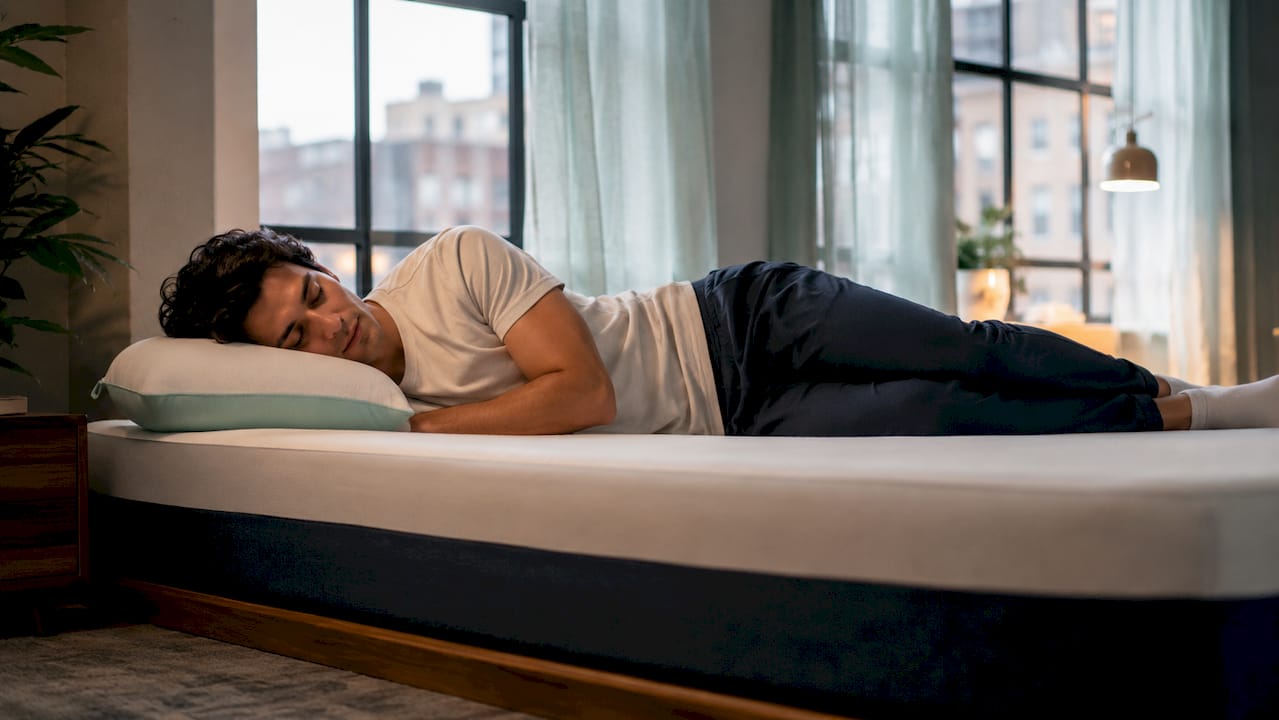
Bring your own pillow to the store. Pillow height changes your spinal alignment significantly, and testing without it gives you an inaccurate read on how the mattress will actually perform at home.
Pro Tip: Lie in your sleep position for a full 5 minutes without moving. Then shift positions twice. If you feel pressure building at your hips or shoulders before the 5 minutes are up, that mattress is too firm for your body type.
2. how to compare mattress types: foam vs. hybrid vs. innerspring
Mattress type determines how a bed performs across several key categories, including motion isolation, edge support, and temperature regulation. Tom’s Guide notes that foam mattresses tend to isolate motion better, while hybrids generally offer stronger edge support and cooler sleep. These are not minor differences. They directly affect whether you and your partner sleep through the night.
Memory foam excels at contouring to the body and absorbing movement. If your partner shifts frequently, foam is worth prioritizing. Innerspring mattresses offer more bounce and airflow but transfer motion more readily. Hybrids combine a coil base with foam or latex comfort layers, giving you a middle ground on most performance metrics.
Check the mattress comparison chart for a side-by-side breakdown of hybrid versus memory foam performance before you finalize your shortlist.
3. how to test motion isolation as a couple
Motion isolation is a system property, not a feel preference. Consumer Reports recommends testing with your partner present and evaluating how much movement transfers when one person shifts positions. A mattress that feels great solo can still destroy your sleep if your partner’s movement wakes you up.
The standard in-store test is simple. One person lies still while the other rolls over or gets up. If the lying person feels the movement clearly, the mattress fails the motion isolation test for couples. Foam mattresses consistently outperform innerspring models on this metric.
Pro Tip: If your partner cannot come to the store, bring a full water bottle and set it on the mattress near your hip. Roll over. If the bottle tips or wobbles noticeably, motion transfer is high.
4. what to look for in sleep trials and return policies
A sleep trial is the single most important policy to verify before buying a mattress online. Tom’s Guide flags that sleep trials should last at least 30 days, with 60-365 days being the standard for confident online purchases. A short trial period means you cannot test the mattress across different seasons or after your body fully adjusts.
Before buying, confirm these specific details:
- Trial length: Is it 30 days, 90 days, or longer? Longer is always better.
- Return cost: Is pickup free, or do you pay a fee? Some brands charge $100 or more for returns.
- Condition requirements: Does the mattress need to be in original packaging, or just undamaged?
- Refund type: Do you get a full cash refund, or only store credit?
- Warranty length: A meaningful warranty covers at least 10 years and specifies what defects are included.
Pro Tip: Screenshot the trial and return policy page before you buy. Policies change, and having a dated record protects you if a dispute arises.
5. how to compare mattress prices and calculate true cost
The headline price on a mattress listing rarely reflects what you will actually pay. Bargains.news advises comparing the final delivered cart total, including taxes, shipping, setup fees, and old mattress removal, rather than the advertised discount. A mattress listed at $200 less than a competitor can end up costing more once fees are added.
Here is a simple framework for normalizing cost across three options:
| Cost Component | Option A | Option B | Option C |
|---|---|---|---|
| Base mattress price | $900 | $750 | $1,050 |
| Shipping fee | $0 | $99 | $0 |
| Setup/removal fee | $75 | $0 | $150 |
| Estimated tax | $72 | $68 | $84 |
| Total delivered cost | $1,047 | $917 | $1,284 |
This table shows how Option B, despite a lower sticker price, delivers the best total value once all fees are counted. Always build this comparison before deciding.
Also watch for conditional discounts. Some promotions apply only to specific sizes or collections. Tom’s Guide notes that similar-priced mattresses can differ significantly in trial length, return ease, and added fees, which changes the effective value of the deal entirely.
Pro Tip: Compare at least three mattresses side by side using this total cost method. Comparing only two options creates a false binary and often leads to overpaying.
6. how to read mattress reviews without getting misled
Mattress reviews comparison requires reading with a filter. Most five-star reviews come from buyers within the first 30 days of ownership, before the mattress has been fully broken in or before comfort issues emerge. Look specifically for reviews from buyers who have owned the mattress for 6 months or longer.
Filter reviews by your sleep position. A review from a back sleeper tells you almost nothing useful if you sleep on your side. Many review platforms, including those on sites like Tom’s Guide, organize feedback by sleep position, weight range, and firmness preference. Use those filters.
Pay attention to reviews that mention the return process. A brand with a generous trial period but a difficult return process is not actually offering you protection. Negative return experience reviews are the most predictive signal of post-purchase regret.
7. mattress topper considerations during comparison shopping
A mattress topper changes the comfort and support profile of any mattress, so planning for one affects your comparison decisions. Consumer Reports notes that toppers typically add 1–4 inches to mattress height, which affects whether your current sheets will still fit. A deep-pocket sheet set rated for up to 18 inches may not accommodate a 14-inch mattress plus a 4-inch topper.
Key topper factors to consider before buying:
- Return policy: Topper return windows are uncommon. Consumer Reports highlights that Saatva offers a 180-day trial for toppers, which is exceptional. Most brands do not.
- Cleaning: Most foam and latex toppers cannot be machine washed. Spot cleaning is the standard care method.
- Timing: Buy the mattress first and sleep on it for at least 30 days before adding a topper. Adding one immediately masks whether the mattress itself is the right fit.
- Support interaction: A soft topper on a firm mattress creates a different feel than a medium mattress alone. Plan the combination deliberately, not as an afterthought.
8. using a mattress shopping checklist before you buy
A structured checklist prevents the most common buying mistakes. The affordable mattress features checklist from Guestlysleep covers body alignment, pressure relief, and support criteria organized by sleep position. Using a checklist forces you to evaluate each mattress on the same criteria rather than relying on gut feel after a 2-minute lie-down.
Your checklist should cover comfort testing, policy verification, and total cost calculation as three separate phases. Complete each phase before moving to the next. Skipping the policy phase because you liked how a mattress felt is the most common source of buyer regret in the mattress category.
Also factor in how often you plan to replace your mattress. Guestlysleep recommends replacement every 2–4 years for optimal sleep hygiene. That frequency changes your cost-per-year math and may shift your decision toward a more affordable option rather than a premium model.
Key takeaways
Smart mattress comparison shopping combines position-specific comfort testing, policy verification, and total cost analysis to avoid the most common and costly buying mistakes.
| Point | Details |
|---|---|
| Test by sleep position | Spend at least 10 minutes in your primary sleep position to reveal real pressure points. |
| Verify trial and return terms | Confirm trial length, return cost, and refund type before purchasing any mattress online. |
| Calculate total delivered cost | Add shipping, setup, removal, and tax to compare true cost across at least three options. |
| Test motion isolation with a partner | Evaluate movement transfer in real scenarios, not just solo feel, before buying as a couple. |
| Plan topper use deliberately | Buy the mattress first, sleep on it 30 days, then decide if a topper is needed. |
Why most shoppers shortchange themselves on mattress testing
I have watched a lot of people rush through mattress decisions, and the pattern is almost always the same. They spend 90 seconds on a mattress in a store, decide it feels fine, and buy it. Two months later, they are waking up with lower back pain and wondering what went wrong.
The uncomfortable truth is that a quick impression is nearly useless. Consumer Reports is explicit about this: the best mattress is the one that supports your body properly in your actual sleep positions, not the one that feels plush when you sit on the edge for a minute. Your body needs time to settle, and your spine needs to be in the position it holds for 7 hours a night, not the polite upright posture you use in a showroom.
For couples, the motion isolation test is the one I see skipped most often. People test separately and then buy together. That is backwards. A mattress that works for both of you as a shared system is a completely different evaluation than two individual comfort checks.
On pricing, I have seen buyers celebrate a $300 discount only to pay $150 in setup and removal fees they did not read about. The effective value calculation matters more than the headline number. Always build the full cost picture before you feel good about a deal.
The 90-day sleep trial exists for a reason. Use it. Sleep on the mattress through a full month before you decide whether it is working. Your body adapts, and what feels slightly off in week one often resolves by week three. Or it gets worse. Either way, you need that data before the return window closes.
Find your match with guestlysleep’s fiberglass-free mattresses
Applying these comparison methods works best when you have quality options to compare. Guestlysleep carries a full range of fiberglass-free mattresses made in the United States, organized by comfort level and sleep position so you can filter by what actually matters to your body.
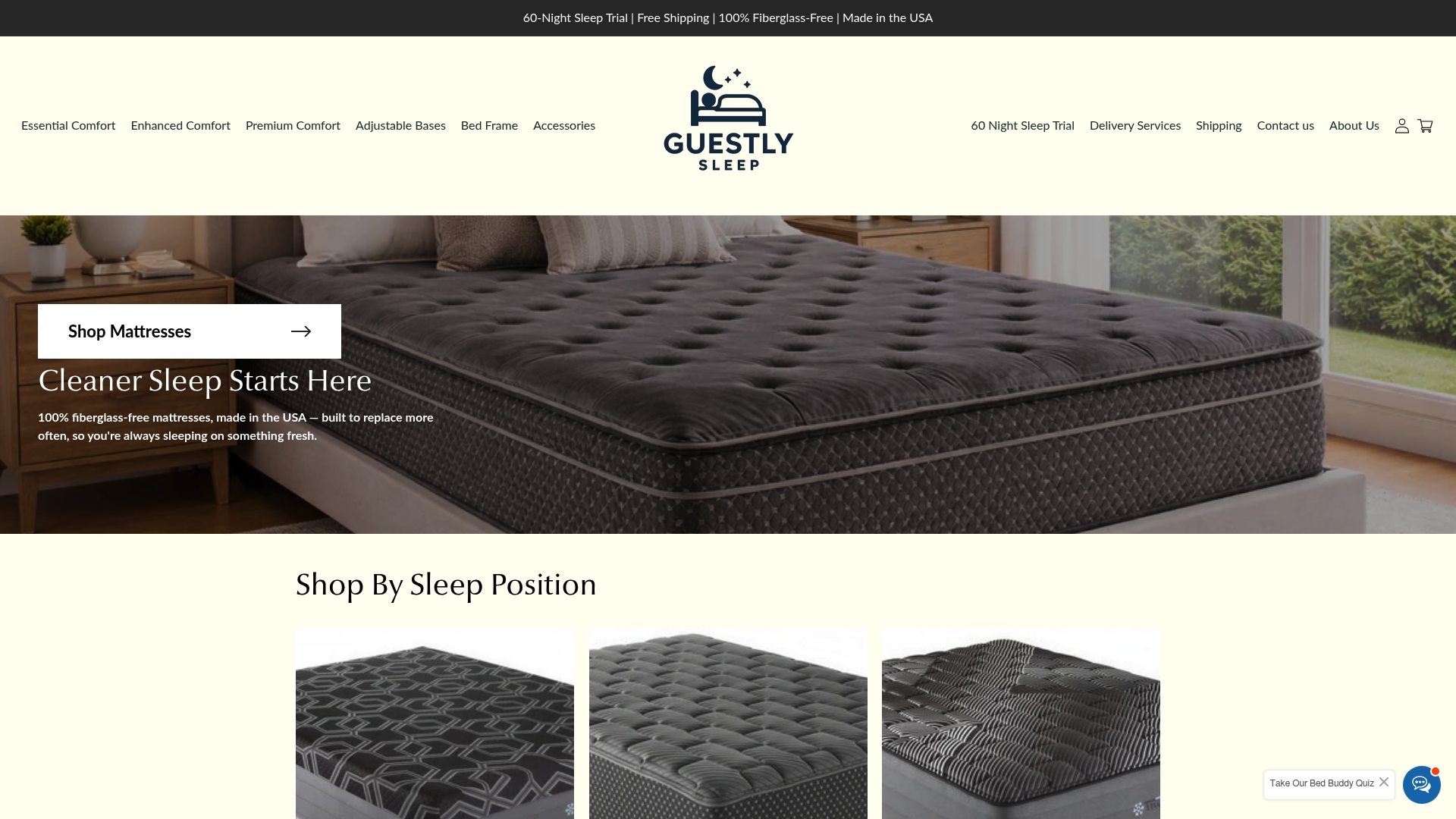
The hybrid vs. memory foam comparison chart on Guestlysleep lets you apply the type comparison framework from this article directly to real products. Every mattress ships free and comes with a 60-night sleep trial, giving you the trial length that Consumer Reports and Tom’s Guide both recommend as a minimum for confident online purchases. For side sleepers specifically, the side sleeper mattress collection narrows the field to options built for shoulder and hip pressure relief.
FAQ
How long should a mattress sleep trial be?
A sleep trial should last at least 30 days, with 60-365 days being the standard recommended for online purchases. Longer trials let you test the mattress across different sleep conditions and confirm long-term comfort.
What is the best way to compare mattress prices?
Calculate the full delivered cost for each option, including shipping, setup, removal fees, and tax. Comparing at least three options using this total cost method gives you an accurate picture of real value rather than headline discounts.
Does mattress type matter for sleep position?
Mattress type directly affects support and pressure relief by sleep position. Foam mattresses offer better motion isolation and contouring for side sleepers, while hybrids provide firmer edge support and better airflow for back and stomach sleepers.
Should i buy a mattress topper at the same time as a mattress?
Buy the mattress first and sleep on it for at least 30 days before adding a topper. Adding a topper immediately prevents you from accurately evaluating whether the mattress itself provides the right support for your body.
What warranty length should i look for in a mattress?
A meaningful mattress warranty covers at least 10 years and specifies which defects are included. Shorter warranties or vague coverage terms are a signal to look more carefully at the product’s quality and the brand’s confidence in it.