The Best Mattress Under Budget: What to Look For and What to Skip
The best mattress under budget is a mattress that delivers verified comfort, support, and clean materials at a queen-size price that makes regular replacement financially realistic. That last part matters more than most buyers realize. A mattress you can afford to replace every two to four years is a better long-term investment than one you overpay for and keep long past the point where it is still healthy to sleep on. This guide covers the price tiers that matter, the features worth paying for, and the exact steps to buy quality on a budget without regret.
What price ranges define budget mattresses and their trade-offs
Budget mattresses fall into two clear categories when you shop by queen size. The first is the true budget tier, priced below $500, and the second is the value sweet spot between $500 and $700. Understanding where each tier performs and where it fails is the fastest way to avoid a costly mistake.
| Price Tier |
Queen Size Range |
What You Get |
| Entry-level budget |
Under $250 |
Thin foam layers, short warranties, limited trial periods |
| Mid-budget |
$300–$500 |
Certified foam, hybrid options
|
| Value sweet spot |
$500–$900 |
Certified foam, hybrid options, 60+ night trials, stronger warranties |
| Premium-range |
$900+ |
Name brand pricing, high mark-ups |
The value sweet spot is where most shoppers will find the best balance of quality, certification, and affordability. Direct-to-consumer brands that sell fiberglass-free, CertiPUR-US certified mattresses in this range eliminate the showroom overhead that drives prices up at traditional retailers — which means you are paying for the mattress, not the marketing.
One thing worth reframing: the industry talks about durability as though a mattress you keep for ten years is the goal. It is not. A mattress accumulates dead skin cells, dust mites, moisture, and allergens over time regardless of brand or price. The health argument for replacing your mattress every two to four years is the same argument you make for replacing a water filter or an air purifier. The goal is not a mattress that lasts a decade. The goal is a clean, comfortable mattress you can actually afford to replace when it matters.
When you run the math that way, a quality mattress priced between $355 and $695 that you replace every three years often costs less per night than a $2,400 mattress kept for ten — and it provides a cleaner sleep surface for its entire lifespan.
How to choose a budget mattress by type and features
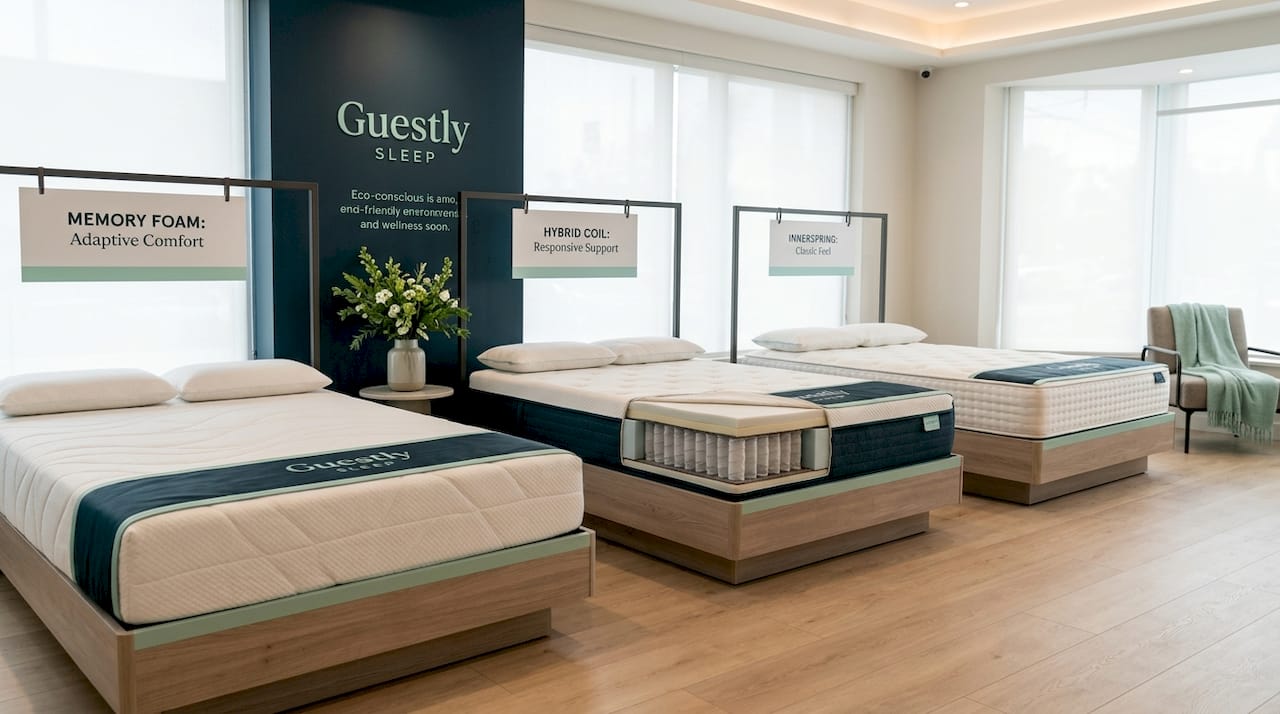
Mattress type determines how a budget mattress performs across pressure relief, cooling, and motion transfer. Three types dominate the affordable segment: all-foam, hybrid, and innerspring.
All-foam mattresses are the most common in the budget category. They absorb motion well, conform closely to the body, and cost less to manufacture. The trade-off is heat retention, which is why cooling gel layers matter in foam models priced under $700. An all-foam option with an active cooling layer can perform comparably to a hybrid at a lower price point — a good fit for back and combination sleepers who do not run hot.
Hybrid mattresses combine foam comfort layers with a pocketed coil support core. The coil system improves airflow, edge support, and motion isolation compared to all-foam options at similar price points. Direct-to-consumer hybrids delivered as a bed-in-box cut overhead significantly, which is why you can find a well-built 13-inch or 14-inch hybrid in the $350–$600 range from brands that manufacture in the United States and use certified, fiberglass-free materials.
Innerspring mattresses are the most affordable to produce but offer the least pressure relief. They work for stomach sleepers and those who prefer a firm, bouncy feel, but they rarely compete with foam or hybrid models on comfort scores in independent testing.
Firmness ratings and sleep position
Firmness is rated on a scale from 1 (softest) to 10 (firmest), with medium-firm (5 to 7) being the most versatile for budget shoppers. Side sleepers need a softer surface (3 to 5) to relieve shoulder and hip pressure. Back sleepers perform best on medium-firm (5 to 6). Stomach sleepers need firm support (7 to 8) to prevent lumbar sag.
If you share the bed with a partner who has different firmness preferences, look for a medium or medium plush model, or consider a dual-sided mattress you can flip between firm and plush as needs change.
Certifications worth knowing
CertiPUR-US is the most widely referenced foam certification in the budget mattress market. It certifies polyurethane foam for prohibited substances and low VOC emissions through annual lab testing and onsite audits. That certification is a meaningful safety baseline, especially for health-conscious buyers.
Equally important — and less often discussed — is fiberglass-free construction. Fiberglass is used as a fire barrier in many low-cost mattresses and can escape the cover during normal use, contaminating your home and causing skin and respiratory irritation. A fiberglass-free mattress uses safer fire barrier alternatives and is the construction standard every buyer should require, not treat as a premium feature. Verify this claim directly on the product page or brand FAQ before purchasing.
Pro Tip: CertiPUR-US certification and fiberglass-free construction are both baseline standards. Neither one alone tells you the mattress is well-built — but the absence of either should end your consideration immediately.
How to verify warranties and trial policies before you buy
The sleep trial period is your primary risk protection when buying a mattress online. Warranties cover manufacturing defects, not comfort preferences or normal wear. That distinction is the most misunderstood aspect of mattress buying, and it costs shoppers money every year.
A sleep trial lets you test the mattress at home and return it if comfort does not meet your needs. A warranty does not. If you sleep on a mattress for three months and decide it is too firm, the warranty will not help you. The trial period is your only window for a comfort-based return.
Key questions to ask before purchasing:
- Does the trial period require a break-in period before returns are accepted?
- Are there restocking fees or return shipping costs that reduce your net refund?
- Does the warranty cover sagging below a specific depth (typically 1 to 1.5 inches)?
- Is the warranty prorated, meaning coverage decreases over time?
- Does the warranty transfer if you move or sell the mattress?
Return policy details can change the true cost of buying a budget mattress online. Many mattresses marketed as "free returns" include restocking fees or require you to arrange pickup, which can cost $150 to $250. That fee erases the savings from choosing a cheaper model. A 60-night sleep trial structured without hidden costs gives you enough time to make an informed decision — roughly two full months of real-world testing across seasons, sleep positions, and physical recovery.
Pro Tip: Screenshot the trial and return policy page on the day you order. Policies can change, and having a dated record protects you if a dispute arises.
Step-by-step process to find the best mattress under budget
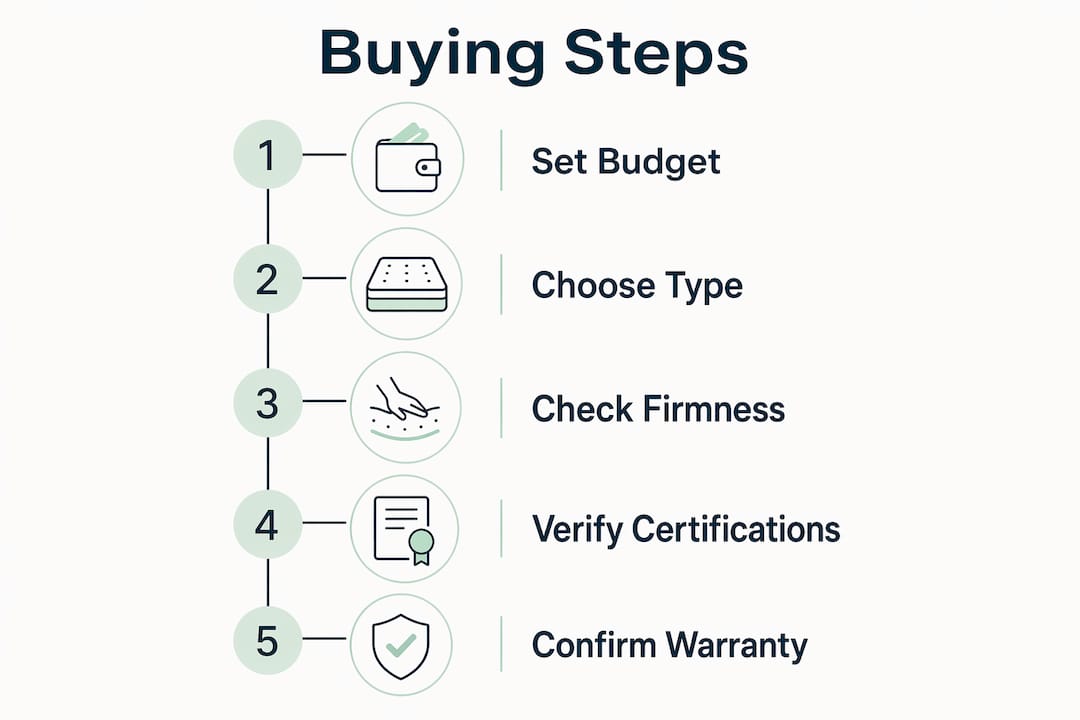
A structured approach separates confident buyers from those who end up with a mattress they regret. Follow this process to maximize value within your price range.
-
Set your hard budget ceiling. Decide your maximum spend before browsing. The $400–$700 range gives you access to well-built, certified mattresses with meaningful trial periods and warranties — without paying for showroom markup or celebrity campaigns.
-
Identify your sleep position and firmness preference. Side sleepers need softer foam. Back and stomach sleepers need firmer support. This narrows your options before you read a single review.
-
Verify fiberglass-free construction first. Check the product page or FAQ. If the brand does not explicitly confirm fiberglass-free materials, ask before you buy. This is non-negotiable.
-
Confirm CertiPUR-US certification. Certified foam has been independently tested for harmful substances and emissions. Skip any mattress that cannot point to this certification.
-
Compare trial periods and return policies side by side. A 60-night trial gives you real-world testing time. Review the fine print for restocking fees, required break-in periods, and return logistics before purchasing.
-
Think about replacement cycle, not just purchase price. A $355 mattress you replace every three years costs less per night than a $2,000 mattress you keep for a decade — and delivers a cleaner sleep surface across its entire life.
-
Time your purchase. Major sales events like Memorial Day, Labor Day, and Black Friday consistently produce the deepest discounts. Signing up for brand email lists often unlocks early access to those deals.
-
Use the full trial period. Sleep on the mattress for at least 30 nights before deciding. Your body needs time to adjust, and first impressions are often misleading.
Certifications worth knowing
CertiPUR-US is the most widely referenced foam certification in the budget mattress market. It certifies polyurethane foam for prohibited substances and low VOC emissions through annual lab testing and onsite audits. That certification is a meaningful safety baseline, especially for health-conscious buyers. Guestlysleep builds its entire lineup around fiberglass-free, certified materials for exactly this reason. If you want to understand how to identify certified options before you buy, this guide to CertiPUR-US mattresses breaks down the process clearly.
Common mistakes budget shoppers make and how to avoid them
Budget mattress shopping has predictable failure points. Knowing them in advance saves you money and sleep quality.
Prioritizing longevity over health. The mattress industry has spent decades telling consumers that a mattress lasting ten years is a sign of quality. But a mattress that is eight years old is carrying years of accumulated allergens, moisture, and dust mites regardless of how well it was built. Choosing an affordable mattress you can realistically replace every two to four years is a healthier decision than overpaying for one you keep indefinitely.
Ignoring fiberglass-free construction. Fiberglass fire barriers are common in low-cost mattresses and can become a real health hazard if the cover is ever removed or damaged. Verify the mattress is explicitly fiberglass-free. If the brand does not address this directly, choose a brand that does.
Treating CertiPUR-US as a comfort guarantee. CertiPUR-US certification validates foam chemical safety and emissions, not durability or comfort. Durability depends on foam density, coil gauge in hybrids, and construction quality. A certified mattress can still be poorly built — use certification as your safety floor, not your only quality check.
Ignoring trial policy fine print. Many buyers assume "free trial" means free return. It often does not. Restocking fees and shipping charges are buried in the terms and can total $150 or more. That fee erases the savings from choosing a cheaper model.
Shopping by brand name alone. A well-known brand does not guarantee value at every price point. Cross-reference brand claims with independent test scores and verified buyer reviews before committing.
Choosing firmness based on feel in a showroom. Showroom conditions do not replicate your actual sleep position, body weight, or temperature. Always use the at-home trial period as your real test.
Skipping the warranty review. A 10-year warranty that only covers defects above 1.5 inches of sagging offers less protection than it appears. Read the threshold, the proration schedule, and the exclusions before you buy.
terms before purchasing.
| Point |
Details |
| Target the $500–$900 range |
Performance drops sharply below $300; the value sweet spot delivers certified foam and longer trials. |
| Trial period beats warranty for comfort |
Warranties cover defects only; use the full trial period to test comfort at home before committing. |
| CertiPUR-US is safety, not quality |
Foam certification confirms safe materials but does not predict durability or comfort scores. |
| Read return policy fine print |
Restocking and shipping fees can cost $150 or more, erasing savings from a cheaper mattress. |
| Match firmness to sleep position |
Side sleepers need softer foam (3–5); back and stomach sleepers need medium-firm to firm (5–8). |
What I've learned from testing affordable mattresses
I've spent time evaluating mattresses across the $400 to $800 range, and the pattern is consistent: shoppers who focus on the lowest price almost always end up buying twice. The models that perform well in independent testing share a few traits — certified foam, fiberglass-free construction, coil systems that actually deliver on airflow and support, and brands confident enough in their product to offer a genuine trial period.
The marketing around budget mattresses is aggressive and often misleading. Phrases like "luxury feel" and "premium materials" appear on $250 mattresses with no supporting data.
Trial periods are the most underused tool in budget mattress shopping. A 60-night trial is two full months of real-world testing. Most shoppers return mattresses within the first two weeks based on first impressions. Give the mattress 30 nights minimum. Your spine adjusts, your sleep position adapts, and your real verdict becomes clear. The brands that offer genuine, sleep trials are usually the ones confident enough in their product to let the mattress speak for itself.
One more thing worth saying directly: fiberglass-free construction is not a premium feature. It is a baseline standard that every mattress should meet. If a brand does not explicitly state its mattress is fiberglass-free, ask before you buy.
Sleep better for less with Guestlysleep
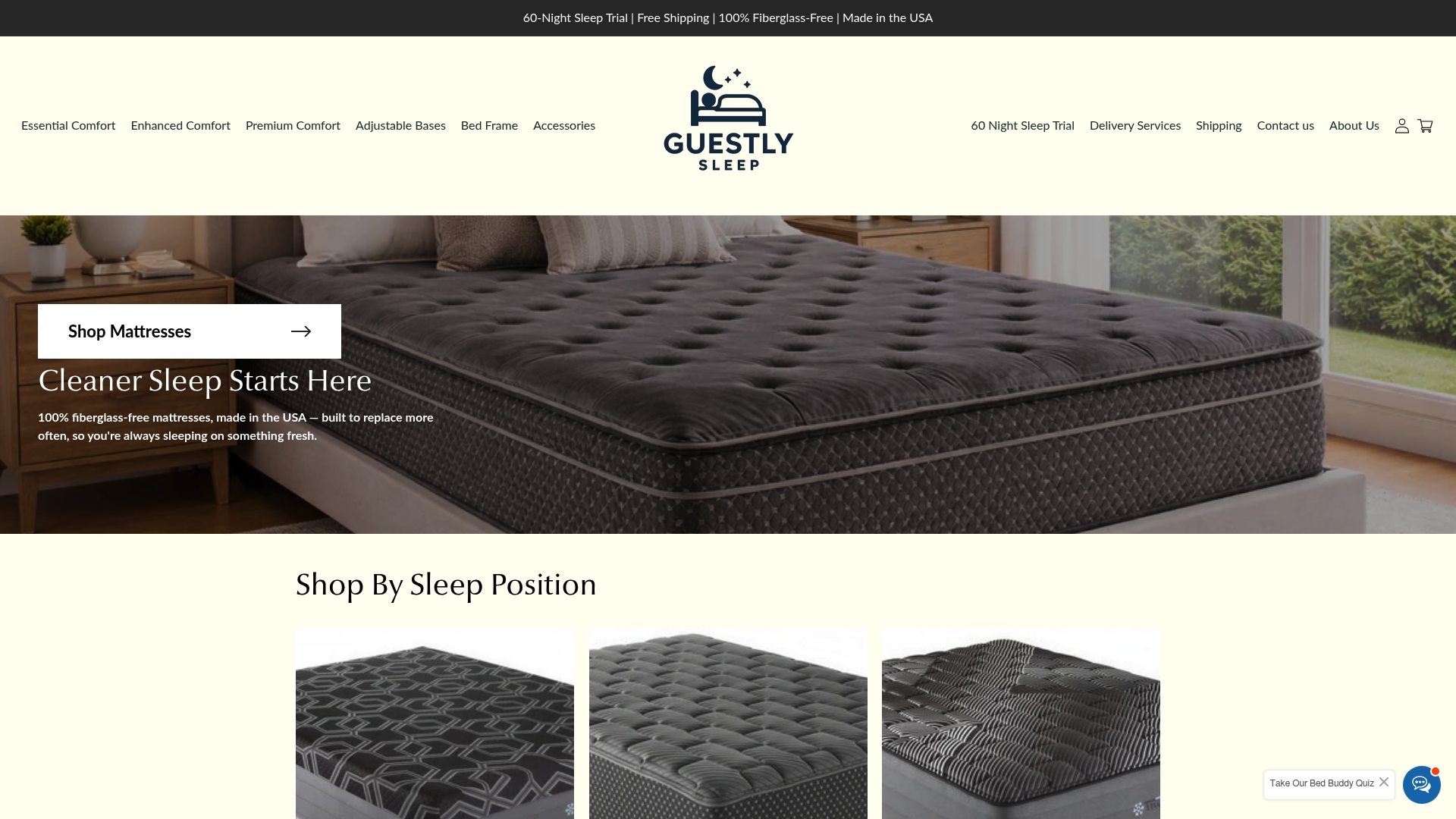
Guestlysleep builds fiberglass-free, American-made mattresses designed specifically for shoppers who want quality sleep without overspending. Every mattress in the lineup uses certified, non-toxic materials and comes with free shipping and a 60-night sleep trial so you can test your choice at home with zero financial risk. The product range covers side, back, and stomach sleeper preferences across Essential Comfort, Enhanced Comfort, and Premium Comfort tiers. If you want a firm hybrid option, the 14" Lux Hybrid delivers durable support at a price that fits a real budget. Browse the full fiberglass-free mattress collection and find the right fit for your sleep style and spending limit today.
FAQ
What is the minimum price for a quality queen mattress? Direct-to-consumer brands that manufacture in the United States and use certified, fiberglass-free materials can deliver a quality queen mattress starting around $355. The key factors are material certification, construction quality, and a trial period — not the price tier.
Does CertiPUR-US certification mean a mattress is durable? No. CertiPUR-US certifies that polyurethane foam meets safety and low-emission standards, but it does not evaluate comfort or durability. Check construction details and buyer reviews to assess long-term quality.
How long should a budget mattress sleep trial be? A trial of at least 60 nights gives you enough time to accurately evaluate comfort and support across different sleep conditions. Give the mattress a minimum of 30 nights before drawing conclusions — your body takes time to adjust.
Are there hidden costs when returning a budget mattress? Yes. Many online mattress brands charge restocking fees or require you to arrange return shipping, which can cost $150 to $250. Always read the return policy in full before purchasing.
Is a hybrid or foam mattress better for budget shoppers? It depends on your sleep position and temperature preferences. Hybrids sleep cooler and offer more edge support. All-foam models provide better motion isolation. Both can deliver strong value in the $400–$700 range when built with certified, fiberglass-free materials.
How often should I replace my mattress? Every two to four years is the health-first standard. Mattresses accumulate allergens, dust mites, and moisture over time regardless of brand. Choosing an affordable, well-built mattress you can realistically replace on that cycle is a better long-term decision than overpaying for one you keep for a decade.
Recommended

