

Why Affordable Mattresses Can Be Quality: 2026 Guide
Affordable mattresses can be quality mattresses when they use certified foams, proper support systems, and transparent manufacturing. The idea that you must spend thousands to sleep well is a myth the data has already dismantled. No statistically significant difference exists in user satisfaction between mattresses priced under $1,500 and those costing $2,000–$5,000. That finding reframes the entire buying decision. The real quality indicators are material density, construction standards, and certifications, not the price tag. The industry term for this concept is value-tier performance, and it is reshaping how smart buyers shop in 2026.
Why affordable mattresses can be quality: the material truth
Price is not a proxy for quality in the mattress industry. Material costs represent only 30–40% of a mattress’s retail price. The rest covers retail markup, advertising, and brand positioning. That means a $2,000 mattress at a traditional furniture store may contain the same certified foam as a $900 direct-to-consumer model.
The objective quality indicators to check are specific and measurable:
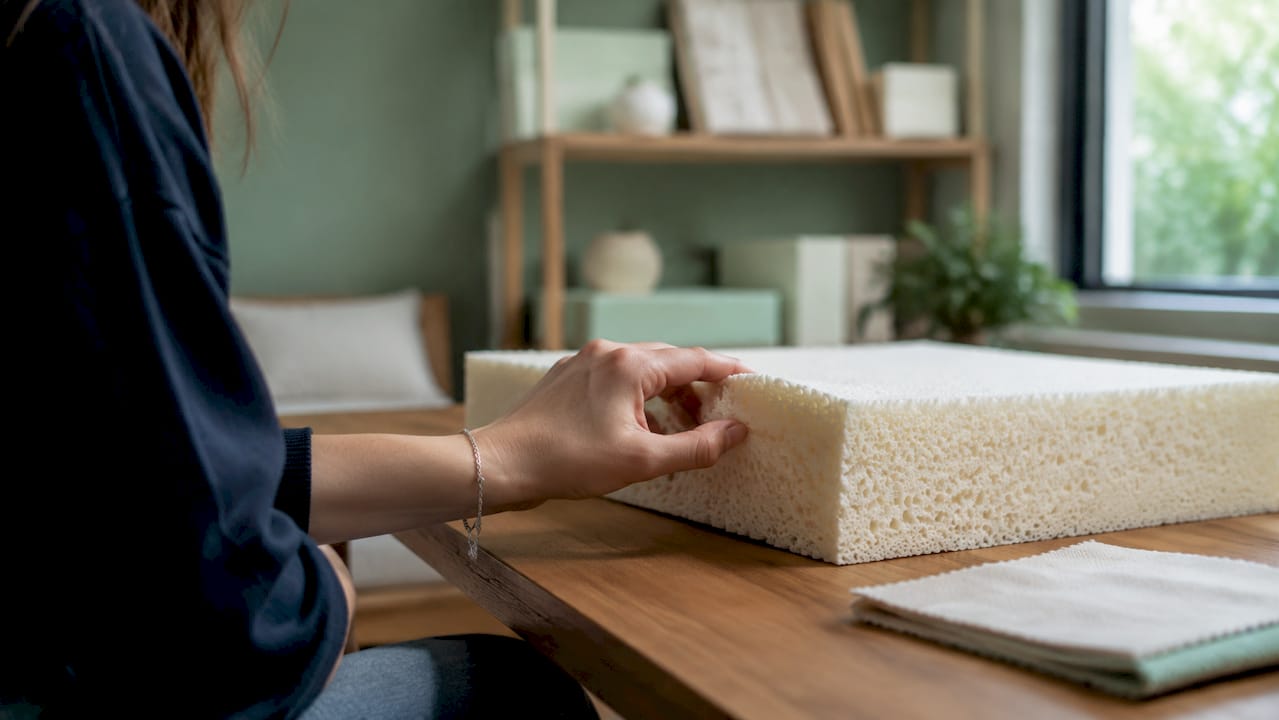
- Memory foam density: Quality comfort layers use foam rated at 3.5–5 PCF (pounds per cubic foot). Anything below that compresses faster and develops body impressions within two to three years.
- Support core density: Polyfoam support cores should be at least 1.8 PCF. This is the layer that keeps your spine aligned night after night.
- Coil count and gauge: In hybrid and innerspring mattresses, individually wrapped coils with a lower gauge number (thicker wire) provide better support and longer durability.
- CertiPUR-US certification: This certification confirms the foam is free from harmful chemicals, heavy metals, and excessive off-gassing. It is a non-negotiable baseline for any mattress you plan to sleep on long-term.
Foam density measurement is the single most objective predictor of mattress longevity, outweighing brand reputation or warranty claims. A mattress with a 10-year warranty but low-density foam will still sag before a certified, high-density model with a 5-year warranty.
How 2026 market trends have made budget mattresses better
The mattress market has changed structurally in ways that directly benefit budget buyers. Direct-to-consumer sales eliminate retail markups and pass those savings to you while maintaining material quality. Brands that sell online and ship directly can use zoned support systems and CertiPUR-US certified foams at prices that would have been impossible through traditional retail channels five years ago.
Here is how the 2026 market has shifted in your favor:
- The $700–$1,000 sweet spot is now well-stocked. High-quality beds with certified foams and durable support systems now cluster in this price range. You no longer have to spend more to access these materials.
- Returns above $1,600 diminish sharply. Material density and coil quality improve most between the $300–$900 and $900–$1,600 price bands. After $1,600, gains are marginal. You are mostly paying for branding and luxury aesthetics.
- Trial periods reduce purchase risk. Brands now routinely offer 60-night to 120-night sleep trials. This means you can test an affordable mattress in your own home without financial risk.
- Transparency has increased. Brands like Amerisleep publish their foam density specs, certifications, and manufacturing details publicly. That transparency lets you compare quality budget mattresses on objective terms rather than marketing language.
Pro Tip: Use a brand’s trial period as your real test. If a mattress doesn’t feel right after 45 days, return it. The best affordable mattress is the one that works for your body, not the one with the best ad campaign.
How to choose an affordable mattress that will actually last
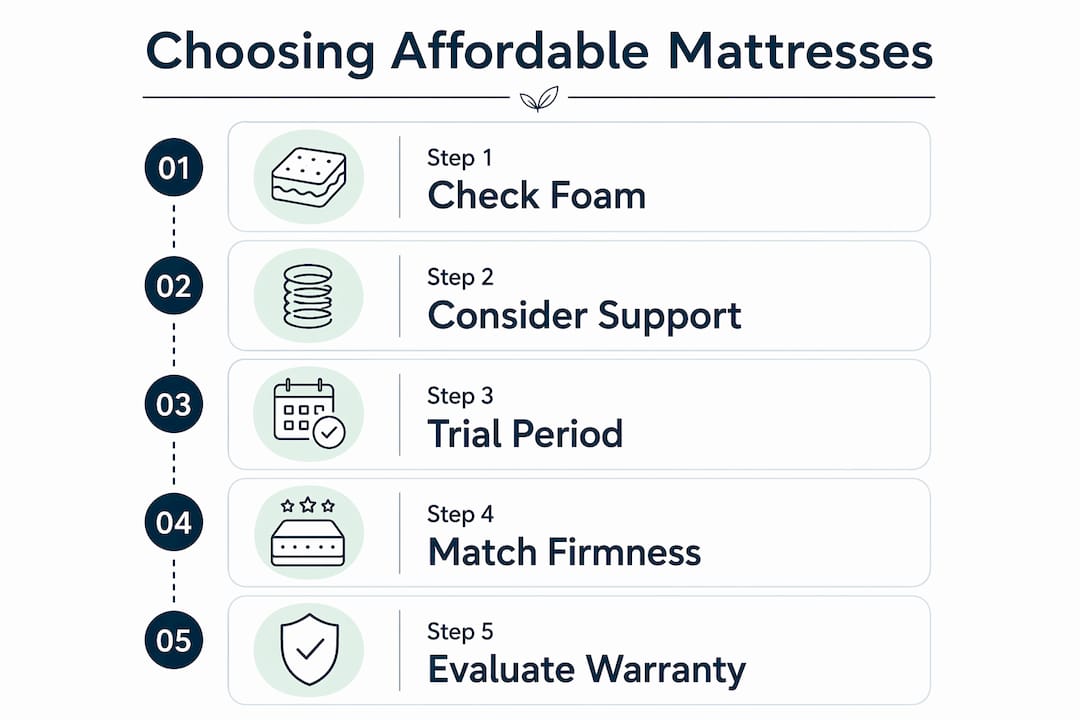
Knowing how to choose affordable mattresses correctly separates a smart purchase from a frustrating one. The process starts with your body, not the brand.
Match firmness to your sleep position
Side sleepers need a softer surface (firmness level 3–5 on a 10-point scale) to relieve pressure on hips and shoulders. Back and stomach sleepers need firmer support (firmness level 5–7) to prevent lumbar sag. Body weight matters too. Heavier sleepers above 230 pounds need denser foams and stronger coil systems to avoid premature compression, regardless of price point. The essential comfort features that promote spinal alignment are the same whether you spend $800 or $2,000.
Understand the break-in period
Initial firmness equalizes within 30–60 days for any mattress, regardless of price. Many buyers return an affordable mattress after two weeks because it feels too firm, then spend twice as much on a premium model that would have felt identical after the same break-in period. Give your mattress the full trial window before making a judgment.
Compare foam vs. hybrid options
| Feature | Foam Mattress | Hybrid Mattress |
|---|---|---|
| Motion isolation | Excellent | Moderate |
| Edge support | Moderate | Strong |
| Cooling | Varies by foam type | Generally better |
| Price range (budget) | $500–$900 | $700–$1,100 |
| Best for | Side sleepers, couples | Back/stomach sleepers, hot sleepers |
The budget mattress tradeoffs between foam and hybrid options come down to your specific sleep needs. Neither type is universally superior at the budget price point.
What to check before you buy
- Edge support: Sit on the side of the mattress. It should hold your weight without collapsing more than an inch or two.
- Motion isolation: If you share a bed, foam layers between coils (in hybrids) reduce partner disturbance significantly.
- Cover materials: Organic cotton or Tencel covers breathe better than polyester blends and signal attention to material quality throughout the mattress.
Are cheap mattresses good? debunking the biggest myths
The word “cheap” carries assumptions that the data does not support. Affordable beds compete directly with luxury models in comfort and durability when constructed with quality foams and support cores. The problem is not price. The problem is buying without checking specifications.
“Value is not about the lowest price. It is about durable, supportive mattresses that provide years of comfort.” — Sleep Foundation, 2026
The most common myths about budget mattresses, and the reality behind each:
- Myth: A longer warranty means a better mattress. Reality: Warranty length does not reliably predict mattress longevity. A 25-year warranty on a low-density foam mattress is worth less than a 5-year warranty on a high-density certified model.
- Myth: Premium brands use better materials. Reality: Material costs are only 30–40% of retail price. Premium pricing often covers marketing and retail overhead, not superior foam or coil systems.
- Myth: Cheap mattresses always sag quickly. Reality: Low-density foams do sag in 2–3 years. But a budget mattress with 4 PCF memory foam and a 1.8 PCF support core will outlast a premium mattress with inferior specs.
- Myth: You get what you pay for. Reality: Above $1,600, you get diminishing material returns. You get more branding, better packaging, and a showroom experience. The sleep performance gap narrows to near zero.
The real trap is ultra-cheap mattresses priced below $300. These almost always use low-density foams without CertiPUR-US certification. They lack sufficient support cores and develop impressions fast. The mattress materials health comparison between certified and uncertified options shows clear differences in off-gassing, durability, and long-term comfort. Spending $700–$1,000 on a certified mattress is not a luxury purchase. It is the minimum investment for a product that will not harm your sleep or your health.
Replacing a sagging $300 mattress every two years costs more over a decade than buying one quality budget mattress at $800 and replacing it every four years. The math favors the smarter upfront spend every time.
Key takeaways
Affordable mattresses deliver quality sleep when material specifications, not price, guide the purchase decision.
| Point | Details |
|---|---|
| Satisfaction is price-independent | Users under $1,500 report satisfaction equal to those spending $2,000 or more. |
| The sweet spot is $700–$1,000 | Certified foams and durable support systems cluster in this range with diminishing returns after $1,600. |
| Foam density predicts longevity | Memory foam at 3.5–5 PCF and support cores at 1.8 PCF are the specs that matter most. |
| Warranties mislead buyers | Warranty length does not predict lifespan; material density does. |
| Direct-to-consumer models save money | Cutting out retail markup lets brands deliver certified materials at budget prices. |
What i’ve learned after testing mattresses at every price point
I have spent years comparing mattresses across price tiers, and the most surprising thing I found was how little the sleep experience changed above $1,200. The mattresses that impressed me most were not the ones with the thickest catalogs or the longest warranties. They were the ones that published their foam density specs upfront and backed them with real certifications.
The industry has gotten more transparent, and that transparency benefits you directly. Five years ago, finding a CertiPUR-US certified mattress under $900 required serious research. Today, it is the baseline expectation from any credible brand. That shift happened because direct-to-consumer companies forced traditional retailers to compete on material quality rather than showroom experience.
My honest advice: ignore the brand name and read the spec sheet. If the certifications are verifiable, and the trial period is at least 60 nights, you have a quality mattress candidate regardless of price. The affordable mattress features checklist approach, checking materials before marketing, is how I would shop today and how I recommend you shop.
Sleep access should not require a luxury budget. The data, the market trends, and the manufacturing improvements of 2026 all point to the same conclusion: quality sleep is available at an honest price.
Find a fiberglass-free mattress that fits your budget
Guestlysleep specializes in fiberglass-free, American-made mattresses built with certified, non-toxic materials. Every mattress in the Guestlysleep lineup is designed to meet the quality standards this article describes, with transparent material specs, CertiPUR-US certified foams, and a 60-night sleep trial so you can test your purchase without risk.
If you are comparing foam and hybrid options at budget-friendly prices, the mattress comparison chart breaks down each model by comfort level, sleep position, and material construction. For buyers ready to choose, the full range of fiberglass-free mattresses is organized by comfort level and sleep position, making it straightforward to find the right fit without overspending.
FAQ
Can a mattress under $1,000 really be high quality?
Yes. No statistically significant difference exists in satisfaction between mattresses under $1,500 and those priced at $2,000–$5,000. Quality depends on foam density and certifications, not price.
What foam density should i look for in an affordable mattress?
Memory foam comfort layers should be rated at 3.5–5 PCF, and polyfoam support cores should be at least 1.8 PCF. Foam below these thresholds develops body impressions within two to three years.
Is a longer warranty a sign of a better mattress?
No. Warranty length does not reliably predict how long a mattress will last. Focus on material density and CertiPUR-US certification instead.
How long does it take for an affordable mattress to feel right?
Most mattresses require a 30–60 day break-in period before reaching their true comfort level. Do not judge a mattress in the first two weeks.
What is the best price range to save money on a mattress without sacrificing quality?
The $700–$1,000 range offers the best balance of certified materials and durability. Quality improvements above $1,600 are marginal and mostly reflect branding rather than better sleep performance.