

American vs Imported Mattress Quality: A Buyer's Checklist
American-made mattresses generally deliver a higher regulatory baseline, clearer material disclosure, and more consistent workmanship than most imported alternatives. That said, a certified import from a well-documented manufacturer can match U.S. quality on the measures that matter most. The gap is real, but it is not absolute, and knowing where to look closes most of it.
When you compare American vs imported mattress quality, three things separate a safe, durable purchase from a gamble:
- Regulatory baseline and labeling. Every mattress sold in the U.S. must meet 16 CFR Part 1633 flammability requirements, but domestic manufacturers face additional OSHA and EPA-adjacent oversight that shapes what goes into the product, not just how it burns. The FTC’s “Made in USA” standard requires that a product be “all or virtually all” made domestically, but that is a marketing claim, not a government certification.
- Third-party certifications. CertiPUR-US, OEKO-TEX Standard 100, and GOTS are the fastest, most reliable ways to verify foam and fabric safety regardless of where a mattress was made. Certifications beat country-of-origin as a safety signal.
- Price delta and lifecycle trade-offs. American-made mattresses typically cost more than comparable imported models. Whether that premium pays off depends on lifespan, warranty strength, and how you calculate cost per year of use.
Table of Contents
- How do American and imported mattresses differ in workmanship?
- What material differences actually affect comfort, durability, and health?
- What U.S. regulations apply, and how do they affect your purchase?
- Which certifications actually reduce your risk?
- How do prices compare, and what does lifecycle cost actually look like?
- What should you expect for lifespan and warranty coverage?
- What are the environmental and health trade-offs between U.S. and imported mattresses?
- How do you evaluate any mattress listing before you buy?
- Who should choose American-made vs imported mattresses?
- Key Takeaways
- Why the “Made in USA” label is only half the story
- Guestlysleep: fiberglass-free, U.S.-made, and built to pass the checklist
- Useful sources and where to verify claims
How do American and imported mattresses differ in workmanship?
Build quality is not abstract. On a mattress, it shows up in specific, observable places: seam straightness, edge support firmness, foam density labeling, coil count disclosure, and the consistency of tufting or stitching across the cover. A domestic manufacturer running shorter production runs under U.S. labor law tends to inspect more frequently and catch defects before shipping. An overseas factory producing at high volume for multiple brands may not.
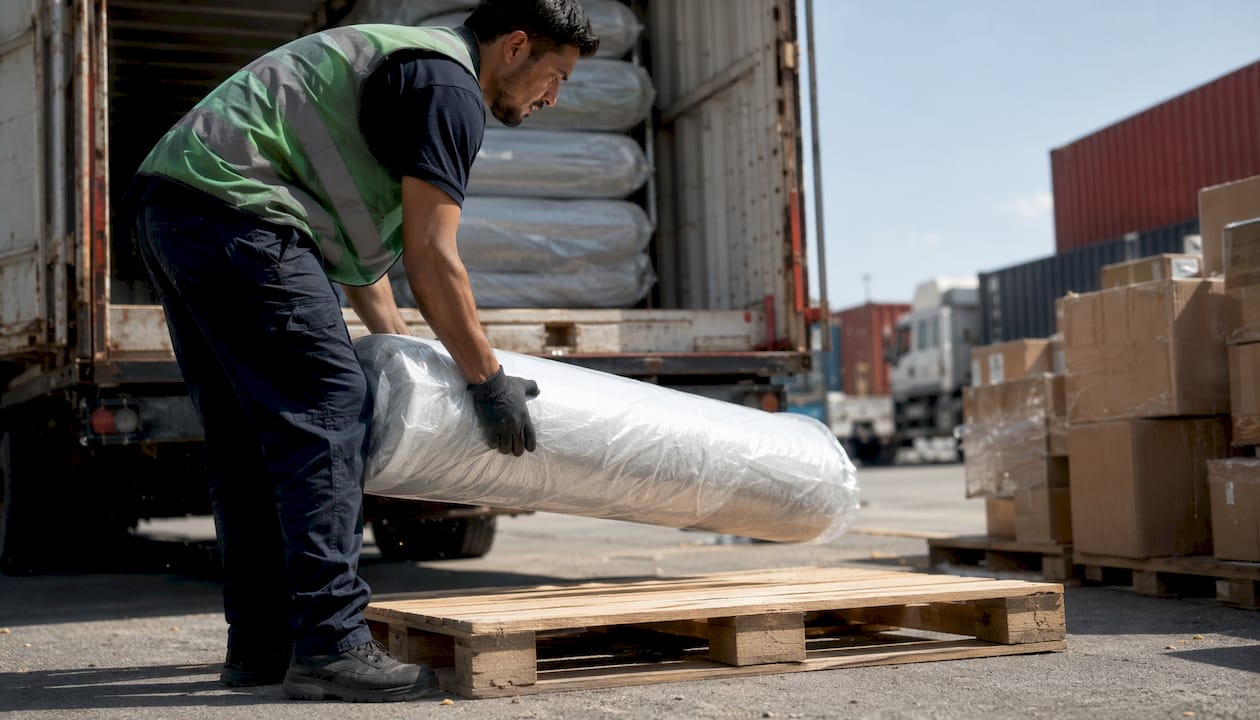
Shorter supply chains matter here in a practical way. Domestically made mattresses spend less time vacuum-packed in plastic during transit, which reduces the risk of shipping compression damage and limits the duration of off-gassing before the mattress reaches your bedroom. An imported mattress that crossed an ocean in a container may have been compressed for weeks or months.
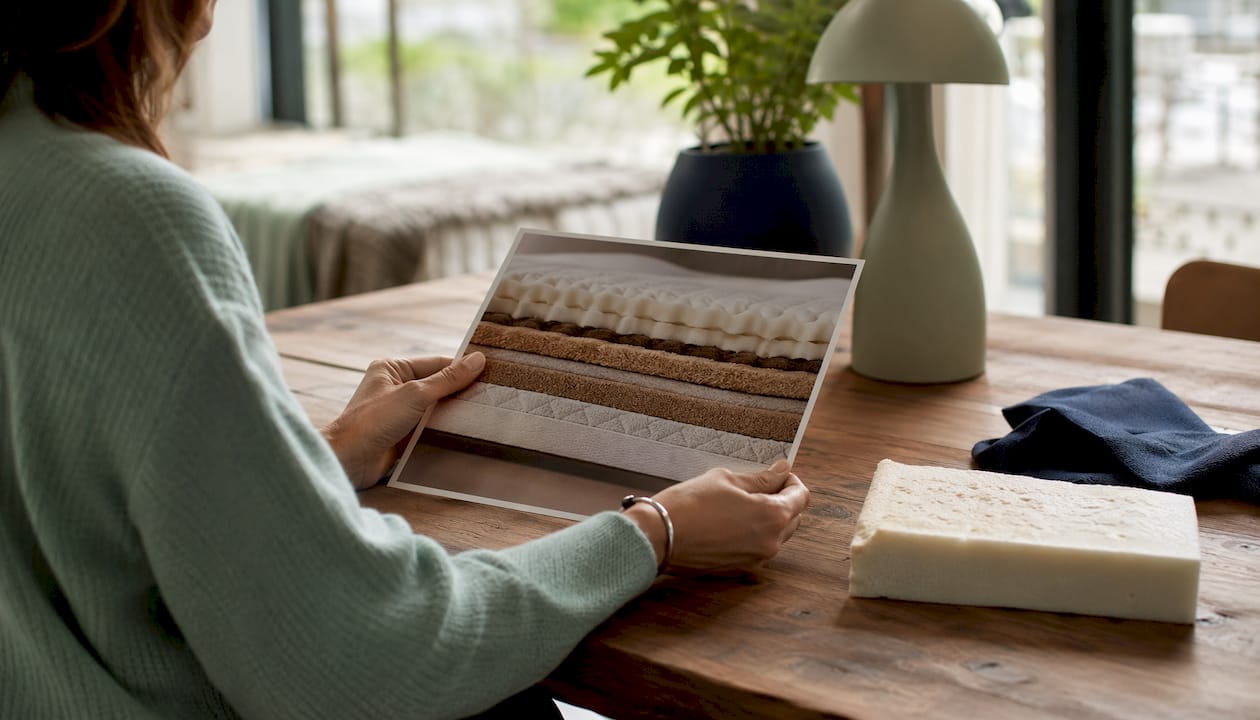
Pro Tip: Ask the retailer for a cross-section photo of the mattress layers and request the foam density spec in pounds per cubic foot (PCF). A quality all-foam or hybrid should list at least 1.8 PCF for support layers. If the seller cannot provide that number, treat it as unknown.
What material differences actually affect comfort, durability, and health?
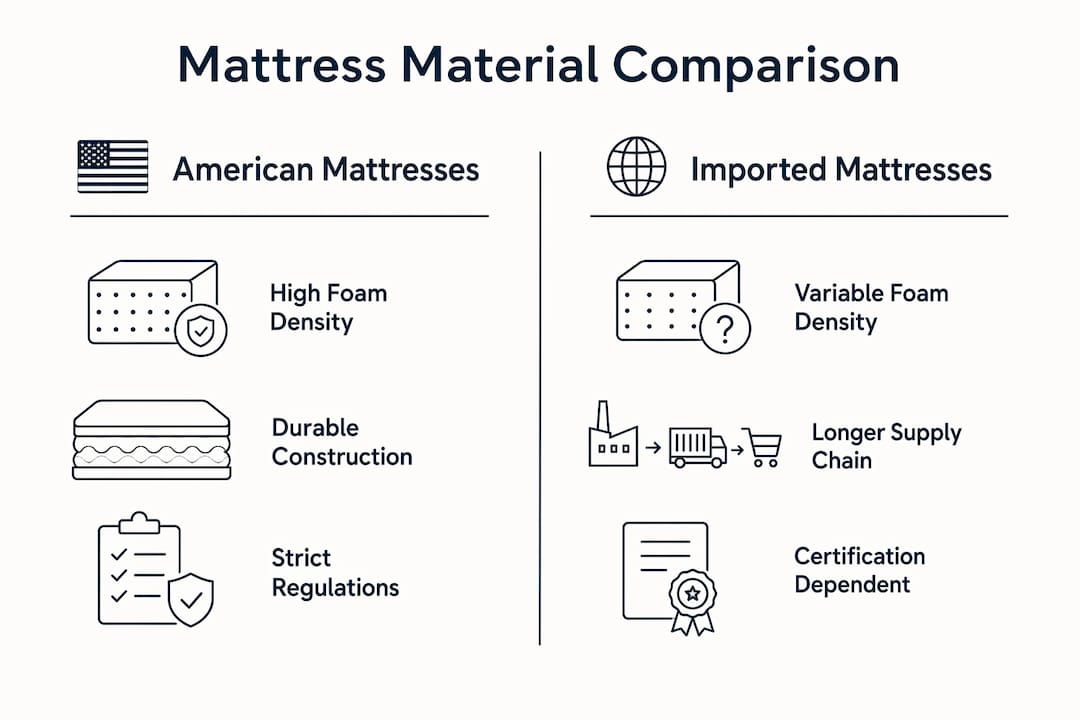
The materials inside a mattress determine how it feels in year one and whether it holds up in year five. The differences between domestic and imported options cluster around four categories.
| Dimension | Higher-quality construction | Lower-quality construction |
|---|---|---|
| Foam density | 1.8 PCF support foam; labeled and verified | Unlabeled or sub-1.5 PCF foam; sags faster |
| Coil quality | Individually pocketed, 14–16 gauge; labeled count | Continuous or Bonnell coils; gauge not disclosed |
| Natural fills | Certified organic latex, wool, or cotton; GOTS-verified | Synthetic substitutes or undisclosed blends |
| Flame barrier | Wool batting or non-toxic barrier; disclosed on label | Fiberglass sock or undisclosed chemical treatment |
Foam density is the single most predictive durability number. Support-layer foam below 1.5 PCF compresses faster, loses its shape, and contributes to the body impressions that make a mattress feel worn out. Many budget imported mattresses use sub-spec foam and do not publish density figures at all.
Coil quality follows a similar pattern. Individually pocketed coils in a 14–16 gauge range provide better motion isolation and edge support than continuous wire systems. Gauge is rarely disclosed on imported budget listings.
The fiberglass issue deserves its own attention. Some imported mattresses use a fiberglass sock as a cheap flame barrier hidden beneath the cover. When a cover is removed for washing or a mattress is returned, that fiberglass can shed microscopic particles throughout a room. Look for explicit “fiberglass-free” labeling and ask for the flame barrier material by name before buying. Guestlysleep publishes this information directly, which is the standard every mattress listing should meet.
- Adhesives used in foam lamination can off-gas VOCs; domestic manufacturers face stricter EPA-adjacent rules on adhesive formulations.
- Natural latex (Dunlop or Talalay process) is more durable than synthetic polyurethane foam and carries a lower chemical load when GOTS-certified.
- Wool batting used as a flame barrier is non-toxic and breathable; it is common in U.S.-made mattresses and rare in low-cost imports.
- Mattress cover materials affect both chemical exposure and long-term durability; organic cotton covers outperform polyester blends on both counts.
What U.S. regulations apply, and how do they affect your purchase?
Every mattress sold in the United States must comply with 16 CFR Part 1633, the federal flammability standard that requires mattresses to resist open-flame ignition for a defined period. This applies to both domestic and imported products sold here. The difference is enforcement proximity: a U.S. factory faces ongoing CPSC oversight and can be audited; an overseas factory submits test results that may be harder to independently verify.
The FTC’s “Made in USA” standard adds a layer of marketing accountability. A brand claiming “Made in USA” must be able to substantiate that the product is “all or virtually all” made domestically. The FTC does not pre-certify or issue a government stamp, so the claim is self-asserted and complaint-driven. That means “Made in USA” is a meaningful signal, but it is not a guarantee of any specific material quality.
U.S. workplace rules under OSHA and EPA-adjacent chemical regulations also shape what inputs manufacturers can use. Certain adhesives, flame retardants, and foam blowing agents restricted under U.S. law may still be used in overseas production. Those restrictions do not automatically transfer to an imported product just because it is sold here.
What to request before buying:
- Written confirmation that the mattress meets 16 CFR Part 1633 (ask for the test report number)
- Disclosure of the flame barrier material by name
- Country of manufacture and assembly location
- Material Safety Data Sheets or foam certification documents if available
Which certifications actually reduce your risk?
Third-party certifications are the fastest shortcut to verified safety, and they matter for both U.S.-made and imported mattresses. A certified import can be safer than an uncertified domestic product.
| Certification | What it covers | Where to verify |
|---|---|---|
| CertiPUR-US | Polyurethane foam: no heavy metals, restricted flame retardants, low VOC emissions | certipur.us — search by brand |
| OEKO-TEX Standard 100 | Textiles and covers: tested for harmful substances at every production stage | oeko-tex.com — label check tool |
| GOTS (Global Organic Textile Standard) | Organic fiber content and processing; covers social criteria too | global-standard.org — public database |
| GREENGUARD Gold | VOC and chemical emissions for finished products; stricter thresholds for sensitive populations | ul.com/resources/greenguard-certification |
CertiPUR-US tests foam for heavy metals, restricted flame retardants, and low VOC emissions. It is the most widely adopted foam certification in the U.S. market and the easiest to verify: the CertiPUR-US website lists every certified foam by manufacturer. OEKO-TEX Standard 100 covers the fabric and cover layers that CertiPUR-US does not. GOTS goes further by certifying the entire organic fiber supply chain, from field to finished textile. GREENGUARD Gold applies stricter chemical emission thresholds and is particularly relevant for children’s rooms and households with allergy or asthma concerns.
Pro Tip: When a seller lists a certification, ask for the registration or certificate number and look it up in the issuing body’s public database. A legitimate certification has a searchable record. If the seller cannot provide a number, the claim is unverified.
For parents and allergy-sensitive households, the safe mattress selection guide at Guestlysleep walks through exactly which certifications to prioritize by age and health profile.
How do prices compare, and what does lifecycle cost actually look like?
Most mattresses cost between a low to mid-range price level, with higher-end latex and luxury models costing more, with latex and luxury models pushing higher and basic foam options sitting at the low end. American-made mattresses at comparable specs tend to run 20–40% more than imported equivalents, reflecting higher labor costs, regulatory compliance overhead, and domestic material sourcing.
That premium looks different when you calculate cost per year. When calculated over a typical lifespan, the annual cost of a higher-priced U.S.-made mattress can sometimes be comparable to that of a less expensive imported mattress that wears out faster, and you absorb the hassle and cost of replacement sooner. The math shifts further when you factor in that Guestly Sleep recommends replacing mattresses every 2–4 years for optimal sleep hygiene, which changes how you should think about upfront price entirely.
- Tariffs and import duties can materially change the effective retail price of imported mattresses. Trade policy actions have historically targeted specific goods with high duty rates, and those costs often pass through to the consumer, narrowing the apparent price gap.
- Shipping and delivery costs for imported mattresses ordered directly can add $50–$200 depending on origin and weight class.
- Trial period and return logistics affect total cost: a mattress with no return option or a restocking fee carries hidden financial risk.
A cheaper imported mattress can be a reasonable value when it carries verified CertiPUR-US and OEKO-TEX certifications, the seller discloses foam density, and the warranty covers at least 5 years without pro-rating in year one. Without those three things, the lower price is not a deal; it is an unknown.
What should you expect for lifespan and warranty coverage?
Construction type sets the ceiling on how long a mattress can realistically last. Different mattress types have varying expected lifespans, with all-foam generally lasting less than innerspring and hybrid models, and latex mattresses often lasting the longest among common types. Consumer Reports simulates 8–10 years of use by running a 300-plus-pound roller across the surface 30,000 times, and their results consistently show that foam density and coil gauge predict durability better than brand name or price.
Manufacturing origin shifts these averages mainly through material quality. A domestic mattress built with 1.8 PCF support foam and 15-gauge pocketed coils will outlast an imported mattress using unlabeled sub-spec foam, regardless of what the warranty says.
Warranty red flags to watch for:
- Pro-rated coverage after year 2 or 3 (you pay a percentage of replacement cost)
- Required mattress foundation or base that voids coverage if not purchased together
- Impression depth threshold set at 1.5 inches or higher before a claim is valid (most bodies feel a 0.75-inch sag)
- Mandatory registration within 30 days with no confirmation system
- Warranty that covers “manufacturing defects” only, with no definition of what qualifies
- No clear process for filing a claim or no U.S.-based customer service contact
A full-replacement warranty for at least 10 years, with a 0.75-inch impression threshold and no pro-rating in the first 5 years, is the standard a quality mattress should meet.
What are the environmental and health trade-offs between U.S. and imported mattresses?
VOC off-gassing is the most immediate health concern for most buyers. New mattresses release volatile organic compounds from foam, adhesives, and fabric treatments during the first days or weeks after unboxing. GREENGUARD Gold certification sets stricter emission thresholds than standard GREENGUARD and is the most reliable signal that a finished mattress meets indoor air quality standards appropriate for sensitive individuals. Domestically made mattresses are more likely to carry this certification because U.S. manufacturers face stronger market pressure and regulatory proximity to pursue it.
The fiberglass issue is the most underreported health risk in the imported mattress category. Fiberglass is used as a cheap, lightweight flame barrier in many budget mattresses, typically sewn into a sock beneath the outer cover. When that cover is removed, fiberglass particles can contaminate bedding, carpet, and HVAC systems in ways that are difficult to remediate. The health implications of mattress materials extend well beyond the mattress surface itself.
Sustainability differences are driven by material sourcing. Organic latex certified under GOTS, responsibly sourced wool, and recycled steel coils represent a meaningfully lower environmental footprint than petroleum-based synthetic foam and virgin polyester covers. U.S. manufacturers are more likely to source certified organic materials because domestic buyers demand it and domestic certification bodies make verification easier.
- Air a new mattress in a well-ventilated room for 24–72 hours before sleeping on it, regardless of origin.
- Use a mattress protector from day one to reduce direct contact with cover materials and slow re-absorption of moisture.
- Prefer foam certified CertiPUR-US and covers certified OEKO-TEX Standard 100 to minimize chemical exposure over the mattress’s full lifespan.
- Check the label sewn into the mattress for flame barrier disclosure; “contains fiberglass” or “do not remove cover” language is a warning sign.
How do you evaluate any mattress listing before you buy?
A structured approach to any product page or in-store visit cuts through marketing language and gets to the facts that determine whether a mattress is worth the price.
- Confirm the manufacturing location. Ask specifically where the mattress is assembled and where the foam and coils are sourced. “Designed in the USA” is not the same as “Made in USA.”
- Request foam density specs. Support layers should be at least 1.8 PCF; comfort layers at least 1.5 PCF. If the seller cannot provide these numbers, the foam quality is unknown.
- Verify certifications by registration number. Look up CertiPUR-US at certipur.us and OEKO-TEX at oeko-tex.com. A certificate without a searchable number is unverified.
- Ask for the flame barrier material by name. Acceptable answers: wool batting, Kevlar, silica-based barrier, or a named proprietary non-fiberglass system. “Meets flammability standards” without naming the barrier is not an answer.
- Read the warranty in full before purchase. Confirm the impression threshold, pro-rating schedule, and claim process.
- Check the return and trial policy. A 60-night or longer sleep trial with free returns is the market standard for quality brands. Restocking fees or “exchange only” policies shift risk to you.
- Search for independent test coverage. Consumer Reports and Sleep Foundation publish testing summaries that flag construction quality issues not visible on product pages.
- Save all seller communications. Screenshot or email-confirm any material claims, certification numbers, or warranty terms the seller provides verbally or via chat.
Questions to ask any seller directly:
- What is the exact foam density in PCF for each layer?
- What is the flame barrier material?
- Is the mattress CertiPUR-US certified? What is the certificate number?
- What is the warranty impression threshold, and is coverage full or pro-rated?
- What are the return logistics, and who pays for pickup?
Delivery timelines for U.S.-made mattresses are generally shorter than for imported mattresses, which may take several weeks longer to arrive. Professional setup and disposal services, where offered, typically add $50–$150 to the total cost but are worth factoring in when comparing total price.
Who should choose American-made vs imported mattresses?
The right choice depends on what you are optimizing for, and three buyer profiles cover most situations.
Health-sensitive household (allergy sufferers, young children, chemical sensitivities). Prioritize U.S.-made, fiberglass-free mattresses with CertiPUR-US foam, OEKO-TEX-certified covers, and GREENGUARD Gold certification. The regulatory proximity and certification adoption rate among domestic manufacturers make this the lower-risk path. Guestlysleep’s fiberglass-free, non-toxic lineup is built specifically for this buyer.
Budget-limited buyer who needs a mattress now. A certified import can be acceptable if it carries CertiPUR-US certification, the seller discloses foam density, and the warranty covers at least 5 years without heavy pro-rating. Skip any listing that cannot answer the flame barrier question. Budget mattress quality signals are worth reviewing before committing to any low-price option.
Value-oriented shopper focused on long-term cost. Run the lifecycle math. A U.S.-made mattress at a higher upfront price often delivers a lower cost per year when built with denser foam and a stronger warranty. If you plan to replace every 2–4 years as Guestly Sleep recommends for sleep hygiene, the upfront price gap between domestic and imported narrows further because you are not paying for decades of durability you will not use.
- If safety documentation and supply chain transparency are your top priorities, favor U.S.-made.
- If lowest upfront price is the constraint and you can verify third-party certifications, a certified import may work.
- If you want the combination of non-toxic materials, fiberglass-free construction, and domestic manufacturing, Guestlysleep meets all three criteria with free shipping and a 60-night sleep trial.
Key Takeaways
American-made mattresses offer a stronger regulatory baseline and clearer material disclosure, but third-party certifications like CertiPUR-US and OEKO-TEX are the most reliable safety signals for any mattress, domestic or imported.
| Point | Details |
|---|---|
| Regulatory baseline favors domestic | U.S. factories face CPSC, OSHA, and EPA-adjacent oversight that imported products are not subject to during production. |
| Certifications beat country of origin | CertiPUR-US, OEKO-TEX Standard 100, and GOTS verify safety regardless of where a mattress was manufactured. |
| Lifecycle cost changes the math | A domestic mattress at 20–40% higher upfront cost often delivers a lower cost per year when foam density and warranty terms are stronger. |
| Fiberglass is the hidden risk | Budget imports frequently use fiberglass flame barriers; always ask for the barrier material by name before buying. |
| Guestlysleep as a verified option | Guestlysleep sells fiberglass-free, U.S.-made mattresses with a 60-night trial and free shipping, meeting the article’s full safety checklist. |
Why the “Made in USA” label is only half the story
The conventional wisdom in mattress shopping is simple: buy American and you are safe. That framing is mostly right, but it misses something important. “Made in USA” is a self-asserted marketing claim governed by FTC guidance, not a government inspection program. A domestic manufacturer can legally use that label while sourcing foam from overseas suppliers that carry no certifications. The label tells you where the mattress was assembled. It does not tell you what is inside.
The more useful question is not where a mattress was made but what the manufacturer is willing to prove. A brand that publishes foam density specs, names its flame barrier, lists CertiPUR-US certificate numbers, and offers a genuine sleep trial is demonstrating transparency that the “Made in USA” label alone cannot. Conversely, an imported mattress from a manufacturer that pursues OEKO-TEX Standard 100 and CertiPUR-US certification and publishes independent lab results is a safer choice than a domestic mattress with vague material descriptions and a warranty full of exclusions.
The health-conscious buyer’s real checklist is about documentation, not geography. Country of origin is one signal among many, and for most buyers, it should not be the deciding factor on its own. What matters is whether the manufacturer can answer the hard questions: foam density, flame barrier identity, certification numbers, and warranty terms in plain language. Those answers are available from the best domestic manufacturers and from a small but growing number of certified importers. The gap is real; it just runs along the transparency axis, not the border.
Guestly Sleep: fiberglass-free, U.S.-made, and built to pass the checklist
If you have worked through this comparison and want a mattress that clears every item on the buyer’s checklist without the research burden, Guestly Sleep is built for exactly that.
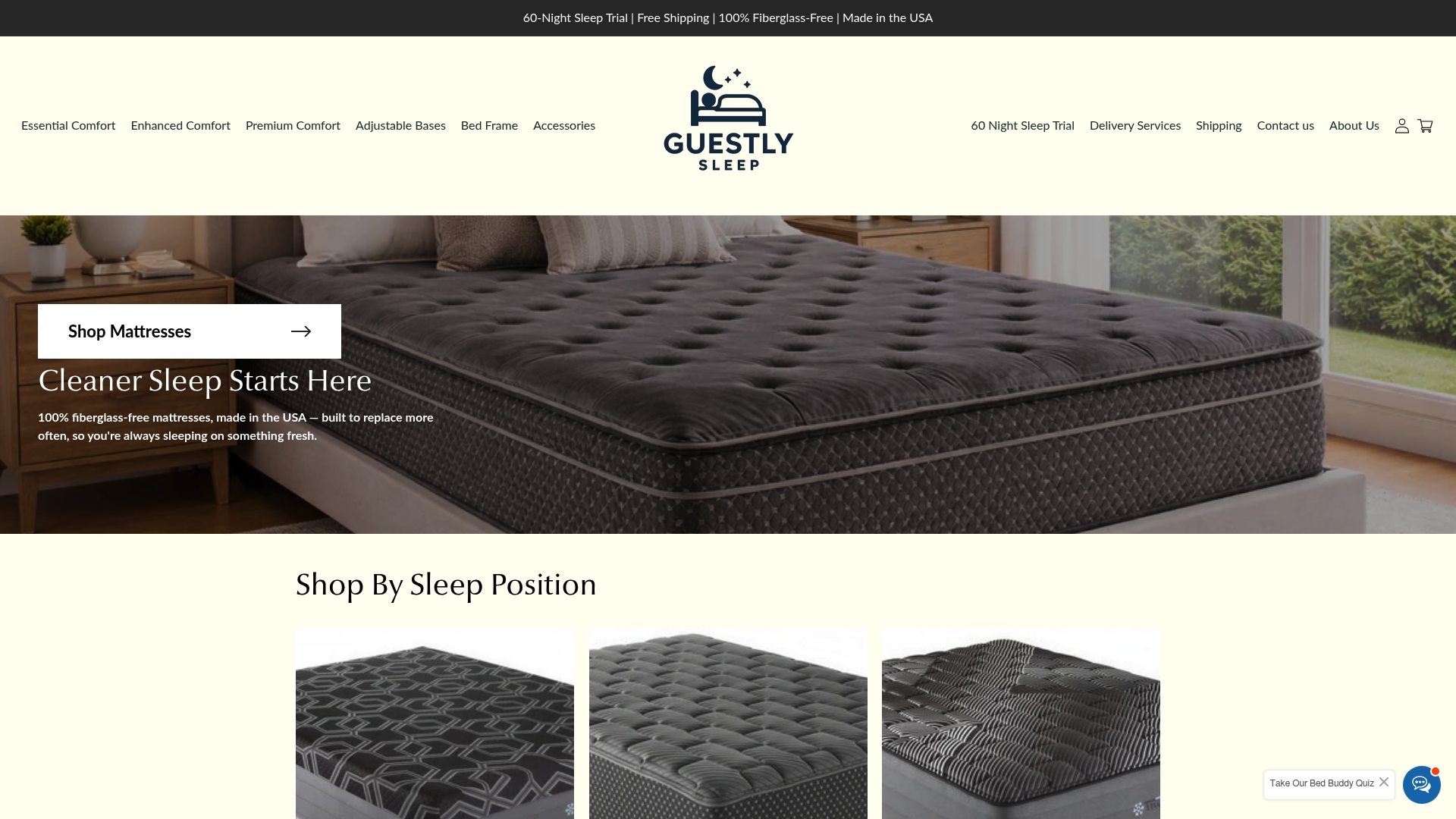
Guestly Sleep sells fiberglass-free mattresses assembled in the United States, organized by comfort level and sleep position so you are not guessing about fit. Every mattress in the lineup uses non-toxic, certified materials with no hidden fillers. The brand recommends replacing your mattress every 2–4 years for cleaner, healthier sleep, and prices its products to make that cadence realistic rather than aspirational. Free shipping, a 60-night sleep trial, and professional setup and disposal services are included, so the total cost of ownership is clear before you check out. Browse the full mattress collection and use the buying checklist from this article to compare any listing against what Guestly Sleep publishes directly on every product page.
Useful sources and where to verify claims
Use these primary sources to confirm certifications, regulatory requirements, and testing methodology before you buy.
- CertiPUR-US database (certipur.us): Search by brand or manufacturer to confirm foam certification status and retrieve certificate numbers.
- OEKO-TEX label check (oeko-tex.com/en/our-standards/oeko-tex-standard-100): Enter a label number to verify Standard 100 certification for textiles and covers.
- GOTS public database (global-standard.org): Confirm organic textile certification for fiber content and processing claims.
- GREENGUARD certification search (ul.com/resources/greenguard-certification): Verify VOC emission certification, including GREENGUARD Gold status for sensitive environments.
- 16 CFR Part 1633 full text (ecfr.gov): The federal flammability standard that every mattress sold in the U.S. must meet; use it to understand what test results a seller should be able to provide.
- FTC “Made in USA” guidance (ftc.gov/business-guidance/resources/complying-made-usa-standard): Explains the “all or virtually all” standard and how to evaluate domestic manufacturing claims.
- Consumer Reports mattress testing (consumerreports.org): Publishes accelerated durability test results and buying guides; useful for independent construction quality assessments.
- Sleep Foundation mattress guides (sleepfoundation.org): Covers material types, price ranges, and certification guidance with editorial independence.
A practical note on documentation: save product page screenshots, seller chat transcripts, and any email confirmations of material claims before you complete a purchase. If you need to file a warranty claim or initiate a return, written proof of what the seller represented is your strongest protection.