

What Happens Inside an Aging Mattress: A Health Guide
An aging mattress changes structurally, chemically, and biologically — and those changes reduce support, trap allergens, and quietly alter the air chemistry in your bedroom. The foam cells collapse, the springs lose tension, organic material accumulates, and the mattress continues producing volatile compounds long after the “new mattress smell” fades. Here is what to do right now:
- Run the 90-second rebound test: press your palm firmly into the center of the mattress and release. If it takes more than 90 seconds to recover its shape, foam degradation is already significant.
- Use a mattress protector immediately if you do not have one. A zippered encasement slows biological loading and is the single highest-return maintenance step.
- Plan replacement if your mattress is past its material-specific lifespan window (polyfoam: 4–8 years; memory foam: 8–12 years; natural latex: 12–15 years) or if two or more of the five diagnostic tests below indicate failure.
Table of Contents
- What actually ages a mattress from the inside out?
- How do specific mattress materials fail, and how long do they last?
- What builds up inside a used mattress, and why does it matter?
- How can you tell whether your mattress is actually the problem?
- What health effects does an aging mattress actually cause?
- How do you maintain a mattress and know when to replace it?
- Research findings that most guides miss
- Key Takeaways
- Why mattress replacement philosophy matters more than most people realize
- Guestlysleep: fiberglass-free mattresses built for health-conscious households
- Useful sources
What actually ages a mattress from the inside out?
Three distinct processes degrade a mattress simultaneously, and they reinforce each other. Understanding them separately helps you match symptoms to causes.
Mechanical breakdown
Every time you lie down, the foam cells and spring coils absorb a compressive load. Over thousands of cycles, foam cells rupture and lose their ability to rebound — a process called compression fatigue. Coil springs undergo a related failure: repeated flexing causes the steel to lose its temper, meaning the coil no longer returns to its original tension after compression. The result is a mattress that feels progressively softer and less supportive, even when the surface fabric looks fine.
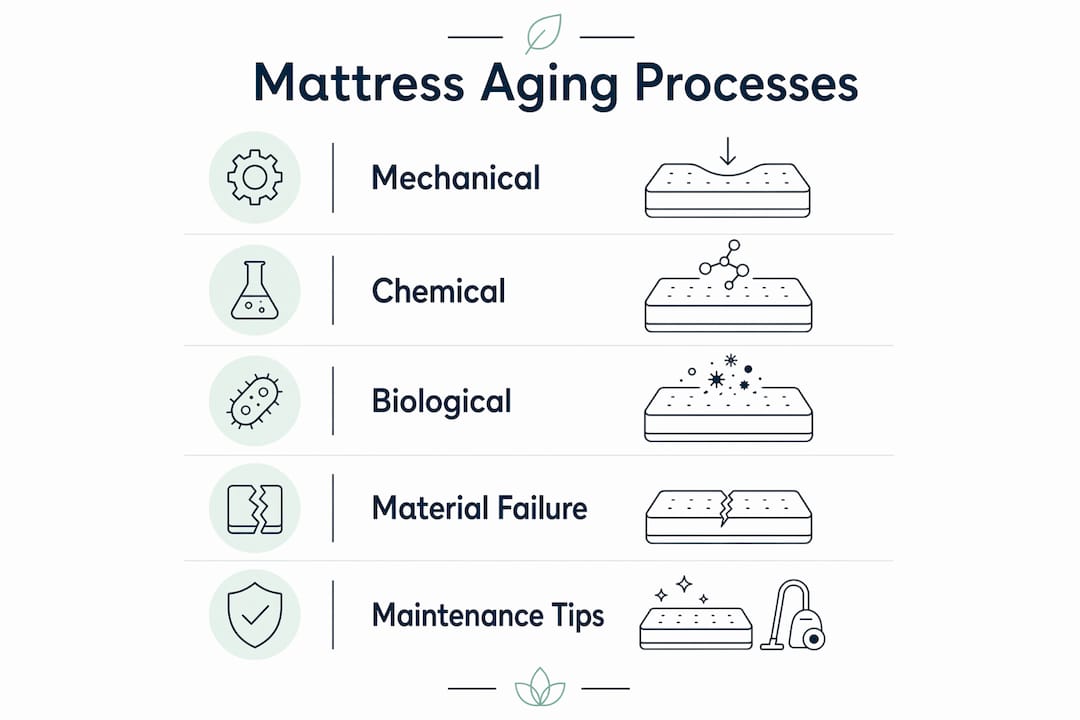
Point loading accelerates this. If you sleep in the same position every night, the hip and shoulder zones absorb a disproportionate share of the load, creating localized sag while the rest of the mattress remains relatively firm.
Pro Tip: Rotate your mattress 180 degrees every three to six months to distribute compression fatigue more evenly across the surface. Most modern one-sided mattresses cannot be flipped, but rotation still meaningfully extends the lifespan of the comfort layers.
Chemical breakdown
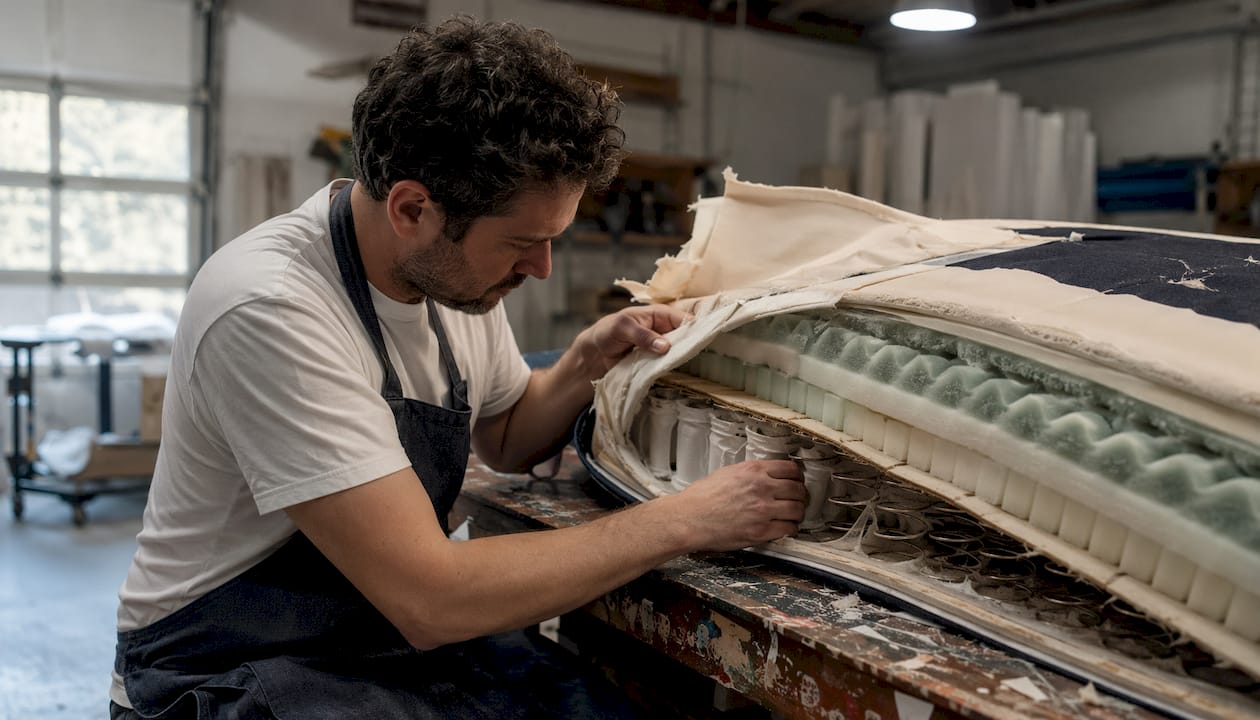
Polyurethane and memory foams undergo autoxidation throughout their entire usable life. This is not a one-time manufacturing effect. Foam autoxidation continuously generates new carbonyl compounds, including formaldehyde and acetaldehyde, as long as the foam exists. Airing out a new mattress reduces the initial concentration of these compounds, but it does not stop the underlying chemistry. The adhesives bonding foam layers together also degrade over time, which can cause layers to shift or delaminate.
Pro Tip: Keep bedroom humidity below 50% and maintain good ventilation. Heat and moisture both accelerate oxidative breakdown in foam, so a well-ventilated room with a dehumidifier in humid climates is a meaningful protective measure.
Biological accumulation
A sleeping adult loses roughly a pound of water per night through perspiration and respiration. A significant portion of that moisture migrates into the mattress layers. Skin cells shed continuously during sleep and work their way into the foam and fiber layers. Dust mites colonize these layers because the combination of warmth, moisture, and food supply (skin cells) is ideal. Fungi follow moisture. The first 6–12 months of a mattress’s life are an adjustment period where foams settle and springs find resting tension, but biological loading begins from the very first night and compounds steadily.
How do specific mattress materials fail, and how long do they last?
Material type is the single biggest predictor of how a mattress fails and when. The failure mechanisms differ enough that a sagging memory foam mattress and a sagging innerspring mattress require different diagnostic approaches.
Material-specific failure modes
Memory foam fails primarily through compression fatigue. The viscoelastic foam cells, which are designed to deform slowly and recover, eventually lose their recovery speed. A mattress that once contoured and rebounded in seconds begins to hold impressions for minutes. High-density memory foam resists this longer than low-density versions, but no foam escapes it entirely.
Polyfoam (conventional polyurethane foam) degrades faster than memory foam because its cell structure is more open and less cross-linked. It compresses, yellows from oxidation, and loses resilience relatively quickly. It is the most common comfort layer in budget mattresses and the most common source of early sagging complaints.
Natural latex resists oxidative breakdown significantly better than synthetic foams. Its cellular structure is more durable under cyclic compression, and it does not harbor dust mites as readily as polyfoam. It does eventually oxidize and crumble, but the timeline is much longer. Synthetic latex falls between polyfoam and natural latex in durability.
Pocketed coils fail individually. Each coil is wrapped in fabric and operates independently, so failure is localized. You may feel a specific soft spot or hear a single squeaking coil before the whole system degrades. Interconnected (Bonnell) coils fail as a system. When the temper goes in one coil, the connected network redistributes load unevenly, accelerating fatigue across the whole unit.
Hybrids combine foam comfort layers with a coil support core. They typically fail first in the foam comfort layers, which are thinner than in an all-foam mattress and therefore reach compression fatigue sooner relative to the coil system beneath.
Lifespan bands by material
| Material | Typical Lifespan | Primary failure mode |
|---|---|---|
| Polyfoam | 4–8 years | Compression fatigue, oxidation |
| Memory foam (high-density) | 8–12 years | Compression fatigue, slow rebound loss |
| Natural latex | 12–15 years | Oxidative crumbling (slow) |
| Pocketed coils | 8–12 years | Individual coil temper loss |
| Bonnell/interconnected coils | 6–10 years | System-wide temper loss |
| Hybrid | 6–10 years | Foam comfort layer failure first |
According to mattress lifespan research, compression fatigue dominates foam failure while coil fatigue dominates innerspring failure, and natural latex resists oxidative breakdown long enough to outlast most foam alternatives by several years.
Body weight modifies every figure in that table. Heavier sleepers place significantly more compressive load on the comfort layers than lighter sleepers, which can reduce effective lifespan by several years across all material types.
- Foam crush vs. coil dip: press the center of the mattress with both hands. If the surface compresses easily but the base feels firm, the comfort layer foam has failed. If the whole mattress flexes downward, the coil system or foundation is the more likely culprit.
- Perimeter firmness imbalance: sit on the edge. If the edge collapses significantly more than the center, the perimeter foam or edge-support coils have failed before the center layers.
- Rebound speed: slow rebound (more than 90 seconds) in a memory foam mattress indicates significant viscoelastic degradation.
What builds up inside a used mattress, and why does it matter?
The biological content of an old mattress is one of the least-discussed aspects of mattress aging, and one of the most consequential for health.
How accumulation works
Sweat and moisture do not evaporate entirely from the mattress surface. A portion wicks through the cover fabric and into the comfort layers, where it raises local humidity. Skin cells follow a similar path, carried by body movement and gravity into the foam and fiber fill. Dust mites thrive at temperatures between 68°F and 77°F with relative humidity above 50%, conditions that the interior of a used mattress reliably provides. They feed on skin cells and reproduce rapidly. Their waste particles are potent allergens.
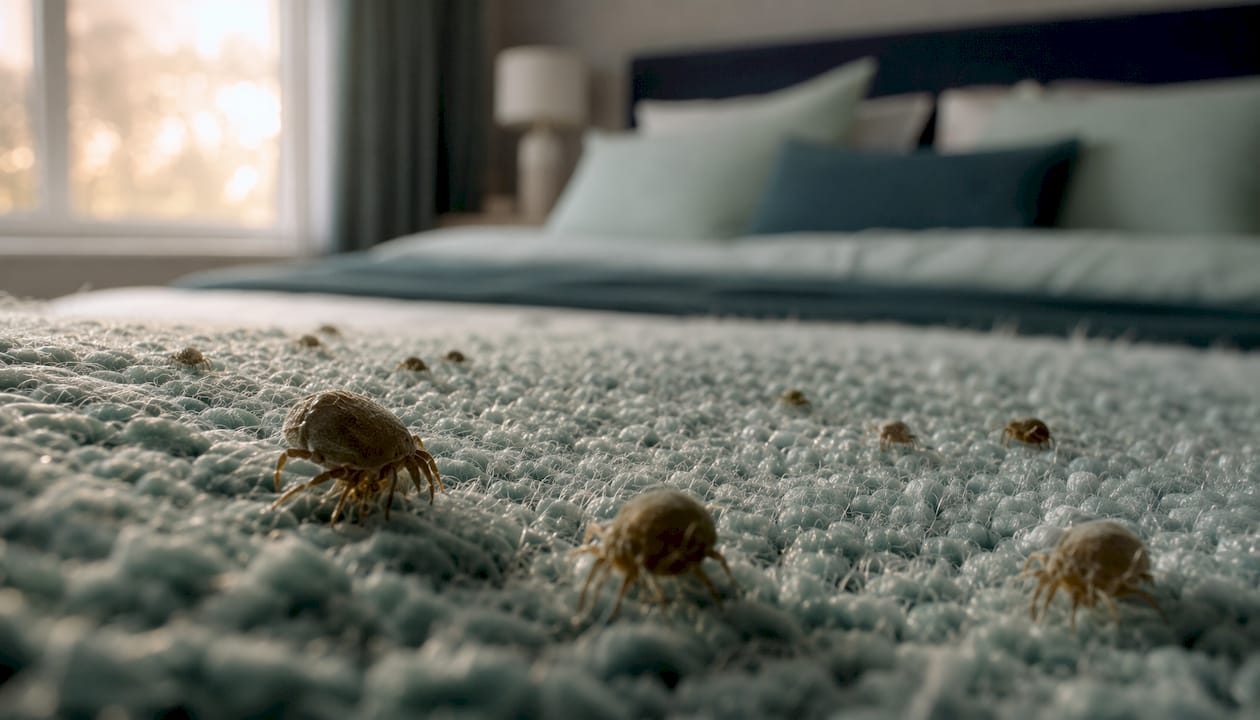
Fungi colonize wherever moisture and organic material coexist. The UCLA Mattress Foam Characterization study confirmed that discarded mattress foam samples exhibited significant bacterial and mold colony growth when cultured, consistent with exposure to moisture and warmth over years of use. Older mattresses consistently harbor higher allergen loads including dust mites, bacteria, and mold that can worsen respiratory symptoms.
This weight gain is not merely a curiosity. It represents a sustained allergen reservoir that no surface cleaning can fully address, because the bulk of the material is embedded in the interior foam layers, well beyond the reach of a vacuum or spray cleaner.
- Odor sources: the smell of an old mattress comes from two overlapping processes. Biotransformation of organic residues (bacteria breaking down sweat and skin cells) produces volatile fatty acids and amines. Simultaneously, ongoing foam autoxidation generates aldehydes. The combination produces the characteristic stale, slightly chemical odor of an aged mattress.
- When odor signals replacement vs. cleaning: a musty or mildew smell that persists after thorough drying and vacuuming indicates fungal colonization in the interior layers. Surface cleaning cannot reach it. That smell is a replacement signal, not a cleaning problem. A faint chemical odor from a newer mattress is more likely autoxidation and can be reduced with ventilation, though it cannot be eliminated.
- Indoor air quality: the allergens and volatile compounds released from an aging mattress affect the air in the room. Pairing mattress replacement with bedroom air purification can meaningfully reduce the allergen load during the transition period.
How can you tell whether your mattress is actually the problem?
The five tests below isolate mattress failure from other causes, including foundation problems, pillow issues, and sleep habits. Run them in order.
-
Visual sag inspection. Strip the mattress and lay a straight edge (a broomstick works) across the sleep zone. A visible depression of 1.5 inches or more in the area where you sleep is a clear structural failure signal. Measure at the hip zone, which typically degrades first.
-
90-second rebound test. Press your palm firmly into the center of the mattress and hold for 10 seconds. Release and count. Memory foam should recover within 30–60 seconds when new; recovery times above 90 seconds indicate significant viscoelastic degradation. For non-memory-foam mattresses, the surface should spring back almost immediately.
-
Sleep-elsewhere test. Sleep on a different mattress, a firm hotel bed, or a guest room for three to five nights. If morning back pain or stiffness resolves noticeably, the mattress is the most probable cause. This is the most diagnostically reliable test because it removes the variable entirely.
-
Partner movement test. If you share the bed, have your partner roll over while you lie still. Excessive motion transfer that was not present when the mattress was new indicates that the foam or coil isolation has degraded.
-
Foundation check. Lift the mattress off the foundation and inspect it directly. Count the support legs: a queen or king foundation needs at least six legs (center support included). Check slat spacing: gaps wider than three inches allow the mattress to flex between slats, causing premature sag that is frequently misdiagnosed as mattress failure.
Pro Tip: Before concluding the mattress needs replacement, always run the foundation check. A $30 center support leg can resolve a sagging complaint that looks exactly like a failed mattress. Foundation problems are the most common misdiagnosis in mattress complaints.
Decision guide based on test results:
- 1 test positive: monitor for three months; add a quality mattress protector if not already in place.
- 2 tests positive: the mattress is likely failing. A topper may provide short-term relief but will not restore structural support. Plan replacement within six months.
- 3 or more tests positive: replace the mattress. A topper on a structurally failed mattress is a temporary comfort patch, not a fix.
- Foundation check fails: repair or replace the foundation first, then re-run the sag and rebound tests.
What health effects does an aging mattress actually cause?
The health case against an old mattress is strongest in two areas: musculoskeletal support and allergen exposure. The evidence for other effects is real but less certain.
- Morning back and neck stiffness is the most consistently reported symptom of a failing sleep surface. When a mattress can no longer maintain spinal alignment, the muscles and ligaments compensate throughout the night, leading to stiffness and pain that typically eases within an hour of waking. The sleep-elsewhere test is the most reliable way to confirm the mattress is the cause.
- Increased nighttime awakenings often follow support loss. A mattress that creates pressure points causes micro-arousals as the body shifts to relieve discomfort, even when the sleeper does not fully wake.
- Worsening allergies and asthma are directly linked to the allergen load described above. Dust mite waste particles are a well-documented trigger for allergic rhinitis and asthma exacerbations. An older mattress with high mite colonization can worsen nighttime symptoms even when daytime exposure is controlled.
- Heat-related sleep disruption increases as foam degrades. Compressed foam cells lose their ability to allow airflow, trapping heat and raising the sleep surface temperature. This is particularly pronounced in memory foam mattresses past their functional lifespan.
- Chemical exposure from autoxidation is a real but less-quantified concern at household levels. The aldehydes produced by ongoing foam autoxidation are classified as volatile organic compounds with known respiratory irritant properties. Long-term health effects at typical bedroom concentrations remain an area of ongoing research rather than settled science.
Vulnerable groups face higher risk from all of these effects. Infants and young children spend more hours in contact with the sleep surface and have developing respiratory systems. Guidance on safe mattress selection for children is worth reviewing separately. Older adults, people with established asthma or severe allergies, and immunocompromised individuals are also at elevated risk from both allergen loading and support-related musculoskeletal effects.
How do you maintain a mattress and know when to replace it?
Maintenance slows degradation but does not stop it. The goal is to extend the functional lifespan while keeping biological loading as low as possible.
Maintenance checklist:
- Zippered mattress encasement: the single most effective protective measure. A quality encasement blocks moisture and skin cell migration into the foam layers, dramatically slowing biological accumulation. Mattress covers also reduce allergen exposure at the sleep surface.
- Rotation every 3–6 months: distributes compression fatigue across the full surface area.
- Vacuum the surface monthly: removes surface-level skin cells and dust mite waste before they migrate deeper. Use an upholstery attachment with a HEPA filter.
- Spot clean promptly: blot liquid spills immediately with a dry cloth, then treat with a mild enzyme cleaner. Never saturate the mattress, as trapped moisture accelerates fungal growth.
- Humidity control: keep bedroom relative humidity below 50%. A dehumidifier in humid climates is a meaningful investment for mattress longevity.
- Foundation inspection annually: check leg count, slat spacing, and structural integrity every year.
When a topper helps vs. when it does not: a topper adds a comfort layer and can extend a mattress that has mild surface softness but intact structural support. It does not restore a mattress with a collapsed support core or significant coil fatigue. If the sag test shows 1.5 inches or more of depression, a topper sits in that depression and provides no meaningful correction.
Pro Tip: When shopping for a replacement, check the mattress replacement guide for disposal and recycling options. Many municipalities have mattress recycling programs, and the Mattress Recycling Council operates take-back programs in several states. Donating a mattress that has significant biological loading is generally not appropriate — check the condition honestly before pursuing donation.
Replacement thresholds by material and use:
| Material | Standard replacement | Heavy use or high body weight |
|---|---|---|
| Polyfoam | 4–8 years | 3–5 years |
| Memory foam | 8–12 years | 6–8 years |
| Natural latex | 12–15 years | 10–12 years |
| Pocketed coils / hybrid | 8–12 years | 6–8 years |
The Sleep Foundation’s general guideline of replacing every 7–10 years is a reasonable midpoint, but material type and body weight can shift that window by several years in either direction.
Research findings that most guides miss
Three findings from practitioner and materials research deserve more attention than they typically receive in mainstream mattress guides.
- Measurable weight gain from organic buildup: mattresses can gain several pounds over a decade from accumulated sweat, skin cells, dust mite waste, and fungi. This is not an estimate. It is a measurable mass increase that reflects the scale of biological loading inside the mattress. The practical implication is that surface cleaning addresses only a fraction of the contamination.
- Foundation-driven premature sag: inadequate foundations — too few legs, excessive slat gaps — are a frequently misdiagnosed cause of sagging complaints. Many mattresses are replaced unnecessarily because the foundation problem was never identified. Always inspect the foundation before concluding the mattress has failed.
- Ongoing foam autoxidation: the assumption that off-gassing is a one-time event that ends after the first few weeks is incorrect. Foam autoxidation continues to generate new carbonyl compounds throughout the mattress’s life. Airing out a new mattress is worth doing, but it does not resolve the underlying chemistry. This is particularly relevant for health-conscious households evaluating long-term chemical exposure.
Pro Tip: Before recommending replacement to anyone in your household, re-check the foundation first. It takes five minutes and can save the cost of a new mattress. A queen-size foundation needs a minimum of six legs, and slat gaps should not exceed three inches.
Key Takeaways
An aging mattress degrades through three simultaneous processes — mechanical, chemical, and biological — and the health effects become measurable well before visible damage appears.
| Point | Details |
|---|---|
| Material lifespan varies widely | Polyfoam lasts 4–8 years; memory foam 8–12; natural latex 12–15 years. |
| Biological loading is measurable | Mattresses can gain several pounds over a decade from organic accumulation alone. |
| Foundation problems mimic mattress failure | Always inspect leg count and slat spacing before concluding the mattress has failed. |
| Two or more failed tests = replace | If the sag, rebound, and sleep-elsewhere tests each point to the mattress, replacement is the correct call. |
| Guestlysleep recommends proactive replacement | Guestlysleep’s fiberglass-free, USA-made mattresses are designed for health-conscious households that replace on a shorter cycle. |
Why mattress replacement philosophy matters more than most people realize
The conventional advice to replace a mattress every 7–10 years is a reasonable average, but it papers over a more important truth: the degradation processes described in this article begin on night one. Biological loading starts immediately. Foam autoxidation is continuous. Compression fatigue accumulates with every sleep cycle. The 7–10 year figure is not a safety threshold; it is the point at which most mattresses have degraded enough that the average person notices.
For health-conscious households, especially those with children, allergy sufferers, or anyone who takes indoor air quality seriously, the relevant question is not “has my mattress reached the replacement window?” It is “what is my mattress doing to my sleep environment right now?” That framing leads to earlier replacement, better protector use, and more attention to foundation integrity. Those are not expensive habits. They are just better-informed ones.
The emphasis on fiberglass-free materials and shorter replacement cycles is not marketing. It reflects a straightforward reading of the materials science: foams that do not contain fiberglass as a fire barrier eliminate one category of contamination risk entirely, and replacing a mattress before it reaches peak biological loading keeps the sleep environment measurably cleaner.
Guestlysleep: fiberglass-free mattresses built for health-conscious households
Replacing a mattress that has reached the end of its functional life is one of the highest-return sleep health decisions you can make. Guestlysleep makes that decision easier with fiberglass-free mattresses manufactured in the United States, using certified materials free from harmful fillers. No fiberglass means no contamination risk during removal or replacement, which matters especially for households with children or allergy sufferers.
Guestlysleep offers free shipping, a 60-night sleep trial, and collections organized by comfort level and sleep position, so you can match the mattress to your body weight and sleep style without guesswork. The brand’s editorial guidance on mattress age and sleep quality and health-focused replacement reflects the same evidence-based approach as this article. Browse the full range of fiberglass-free mattresses at Guestlysleep and find the right replacement for your sleep setup.
Disclosure: this article is published by Guestlysleep, an e-commerce retailer of fiberglass-free mattresses made in the United States.
Useful sources
- Sleep Foundation — How Long Should a Mattress Last?: The primary reference for the 7–10 year general replacement guideline and material-specific lifespan bands used throughout this article.
- National Mattress Authority — Mattress Lifespan and Replacement: Source for material-specific failure modes (compression fatigue, coil fatigue, latex oxidation) and the lifespan table in the material breakdown section.
- EmbrSleep — Mattress Aging Chemistry: The clearest available explanation of foam autoxidation and ongoing carbonyl compound generation; used in the chemical aging and research findings sections.
- MattressHelp.org — Why Does My Mattress Sag?: Practitioner source for the foundation-driven premature sag finding; used in the diagnostic tests and research findings sections.
- UCLA Mattress Foam Characterization Final Report (Mattress Recycling Council): Primary materials science source confirming bacterial and mold colony growth in post-consumer mattress foam samples; used in the biological accumulation section.
- PMC / NIH — Dust Mites and Allergic Disease: Peer-reviewed source linking dust mite allergen exposure to allergic rhinitis and asthma exacerbations; used in the health effects section.