

How to Recognize Poor Sleep from an Old Mattress
Your mattress is the leading environmental cause of preventable sleep disruption, and most people never suspect it. Recognizing poor sleep from an old mattress requires knowing what to look for in your body, your bed, and your sleep patterns. Research shows that replacing a worn mattress reduces back pain by 57%, improves sleep quality by 60%, and cuts stress markers by 48% within four weeks. Those numbers reflect a simple truth: mattress condition and sleep quality are directly linked. The standard industry lifespan for a mattress is 7–8 years, and most people push well past that before acting.
What are the physical symptoms of poor sleep from an old mattress?
The clinical term for mattress-related sleep disruption is “sleep surface dysfunction,” but most people just call it waking up feeling worse than when they went to bed. The most telling sign is morning pain that resolves within 30–60 minutes of getting up. Pain that fades after you move around points directly to your sleep surface, not a chronic condition. Pain that stays all day points elsewhere.
Chiropractor Karen Erikson states that mattress condition is the first question she asks patients who present with alignment problems and morning stiffness. That clinical instinct is backed by patient outcomes. A mattress that no longer supports spinal alignment forces your muscles to compensate all night, and they fatigue just like any overworked muscle.
Common physical symptoms to watch for:
- Morning back, neck, hip, or shoulder pain that eases within an hour of waking
- Frequent nighttime awakenings without an obvious cause like noise or light
- Waking up tired despite sleeping a full 7–8 hours
- Persistent daytime fatigue that does not improve with caffeine or rest
- Morning stiffness in the joints, especially the lower back and hips
- Increased partner disturbance, since degraded mattress materials lose motion isolation and transfer every movement
Pro Tip: Track your symptoms for one week. Note whether pain appears specifically in the morning and fades by mid-morning. That pattern is the clearest early signal of a mattress problem.
How to identify visible signs of wear on your mattress
Physical symptoms tell you something is wrong. The mattress itself tells you why. A visual and tactile inspection takes five minutes and gives you concrete evidence.
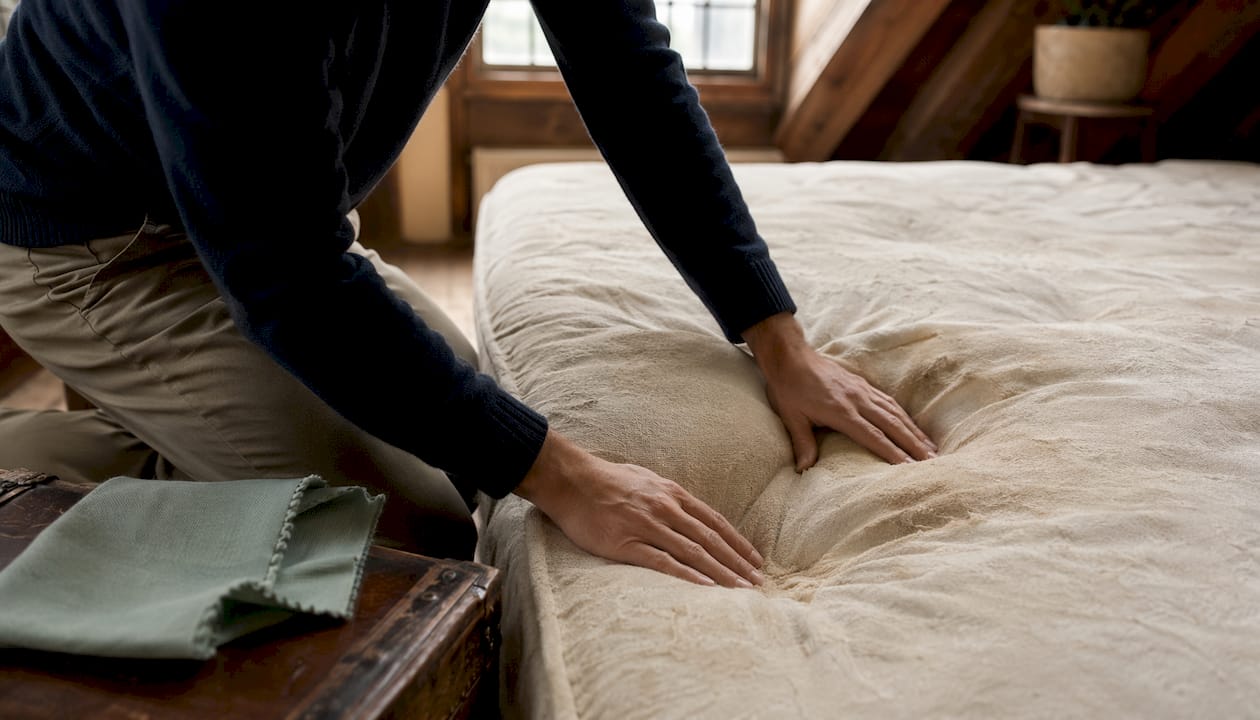
The most significant visible sign is sagging deeper than 1 inch. Body impressions at that depth cause direct spinal misalignment. You can check this by laying a broomstick or straight ruler across the mattress surface and measuring the gap underneath.
| Sign | What it means | Action |
|---|---|---|
| Sagging over 1 inch | Support layer has failed | Replace immediately |
| Permanent body impressions | Foam has lost resilience | Replace soon |
| Noisy springs or creaking | Internal coil damage | Replace soon |
| Uneven surface | Foam or fill has shifted | Inspect and replace |
| Age over 7–8 years | Materials degrade regardless of appearance | Evaluate and plan replacement |
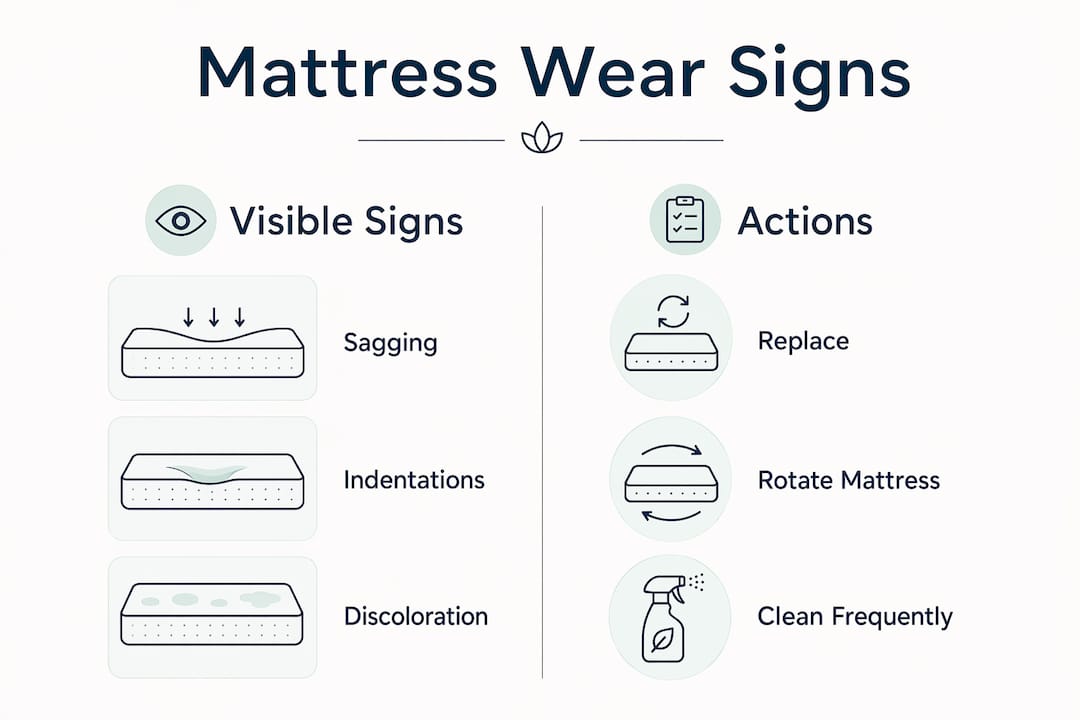
Mattresses begin to degrade around the 7–8 year mark, with foam losing resilience and coils losing tension. That degradation happens even in mattresses that look fine on the surface. Appearance is not a reliable indicator of support quality.
The “hotel test” is the most underused diagnostic tool available. If you sleep noticeably better at a hotel or a guest room than at home, your mattress is the variable. You are the same person, in the same sleep position, with the same schedule. The only difference is the surface beneath you.
Pro Tip: When you check into a hotel, resist the urge to attribute better sleep to “vacation mode.” Pay attention to whether you wake without pain. That data point is more reliable than any self-reported sleep survey.
How does an old mattress affect sleep quality biologically?
Poor mattress support does not just cause discomfort. It triggers a chain of biological responses that degrade your health over time. The mechanism starts with micro-arousals caused by spinal misalignment. Your body makes continuous small positional adjustments when the surface beneath it fails to support neutral alignment. Each adjustment briefly activates the nervous system, pulling you out of deep, restorative slow-wave sleep.
“Mattress discomfort can disrupt hormones regulating hunger, causing cravings and weight gain due to fragmented sleep.” — Dr. David Benavides, sleep physician
The downstream effects of fragmented sleep are measurable and serious:
- Immune suppression. Slow-wave sleep is when the body repairs tissue and produces cytokines. Losing it consistently weakens immune response.
- Cognitive decline. Memory consolidation happens during deep sleep. Chronic fragmentation impairs learning and recall.
- Hormonal disruption. Poor sleep lowers leptin and raises ghrelin, the hormones that regulate hunger and fullness. The result is increased appetite and cravings, especially for high-calorie foods.
- Elevated cortisol. Disrupted sleep raises stress hormone levels, which compounds fatigue and affects cardiovascular health over time.
- Respiratory irritation. Old mattresses accumulate allergens that worsen breathing during sleep, adding another layer of disruption.
Differentiating mattress-related sleep problems from other sleep disorders matters. Conditions like sleep apnea, restless leg syndrome, and insomnia have distinct patterns. Mattress-related issues almost always produce morning pain, improve on other sleep surfaces, and correlate with mattress age. If your symptoms fit those three criteria, the mattress is the most likely cause. A sleep specialist can rule out other disorders if symptoms persist after replacement.
How to self-assess your mattress step by step
A structured self-assessment removes guesswork. Work through these steps in order.
- Log your symptoms for 7 days. Record morning pain location, sleep duration, and how you feel within one hour of waking. Look for patterns tied to time in bed.
- Perform the hotel test. Sleep somewhere other than your own bed for two or three nights. A hotel, a guest room, or a family member’s spare mattress all work. Note whether pain and fatigue decrease.
- Inspect the mattress surface. Strip the bed completely. Look for visible sagging, body impressions, and uneven areas. Use a straight edge to measure any dips.
- Check the age. If you do not know when you bought the mattress, check purchase records or estimate. A mattress over 7–8 years old warrants serious evaluation regardless of appearance.
- Listen for noise. Sit and shift your weight across different areas of the mattress. Creaking or popping sounds indicate internal coil or support layer damage.
- Compare sleep positions. If you sleep better on one side of the bed than the other, the mattress has worn unevenly. That is a structural failure, not a preference.
The most common mistake people make is waiting for dramatic deterioration before acting. Mattress decline is gradual. You adapt to worsening support without realizing it, the same way you adapt to a slow leak in a tire. By the time the problem feels obvious, months of poor sleep have already accumulated. Reading about mattress age and sleep quality can help you set a realistic evaluation timeline before symptoms become severe.
If your self-assessment points to the mattress but you are unsure, a sleep specialist or chiropractor can confirm whether your symptoms align with surface-related disruption or require further investigation.
Best practices for mattress hygiene and longevity
Maintenance extends mattress life and protects your health between replacements. These practices reduce allergen buildup and slow structural decline.
- Vacuum the mattress surface monthly using an upholstery attachment. Dust mites and skin cells accumulate quickly, and old mattresses can gain 10–20% of their original weight in allergens over 10 years. Monthly vacuuming slows that process significantly.
- Rotate the mattress every 3–6 months. Rotating head to foot distributes wear more evenly. Not all mattresses are designed to be flipped, so check the manufacturer’s guidance first.
- Use a quality mattress protector. A waterproof, breathable protector blocks moisture, allergens, and debris from reaching the foam or coils. It is the single most effective maintenance tool available.
- Air the mattress regularly. Strip the bed once a week and let the surface breathe for at least 30 minutes. Moisture trapped inside foam accelerates breakdown and mold growth.
- Know when cleaning is not enough. If allergen symptoms persist despite regular cleaning, or if structural wear is visible, no amount of maintenance reverses the problem. Cleaning addresses surface hygiene. It does not restore lost foam resilience or coil tension.
Mattress materials affect how long these practices remain effective. Denser foam and individually wrapped coils hold up longer than lower-density alternatives. Understanding how mattress materials affect breathing and allergen accumulation helps you choose a replacement that stays healthier for longer.
Key Takeaways
An old mattress causes measurable, specific symptoms that you can identify through physical signs, sleep pattern tracking, and the hotel test.
| Point | Details |
|---|---|
| Morning pain is the key signal | Back, hip, or shoulder pain that fades within an hour of waking points directly to mattress failure. |
| Visible sagging confirms failure | Body impressions deeper than 1 inch cause spinal misalignment and fragmented sleep. |
| The hotel test works | Sleeping better away from home isolates your mattress as the source of poor sleep. |
| Biological effects are real | Micro-arousals from poor support disrupt hormones, immunity, and cognitive function over time. |
| Replace by year 7–8 | Mattresses degrade structurally around this point regardless of how they look on the surface. |
The thing most people get wrong about mattress awareness
People treat mattress replacement like a furniture decision. It is a health decision, and the delay costs more than the mattress ever did.
In my experience, the most common pattern is this: someone spends two years attributing their fatigue to stress, their back pain to posture, and their poor focus to diet. They try everything except the one thing they sleep on for eight hours every night. When they finally replace the mattress, the improvement is so fast and so obvious that they feel genuinely frustrated about the years they waited.
The gradual nature of mattress decline is what makes it so easy to miss. You do not wake up one morning on a failed mattress. You wake up slightly worse each month, and your baseline shifts with it. That is why the hotel test is so revealing. It gives you a sudden, direct comparison that your adapted baseline cannot explain away.
My honest recommendation is to treat mattress inspection the same way you treat a dental checkup. Set a calendar reminder every six months. Run through the visual checks. Note any new symptoms. That habit catches problems before they become chronic. A practical guide to replacing your mattress can help you build that routine with clear criteria for when to act.
The people who sleep best are not the ones who bought the most expensive mattress. They are the ones who pay attention and replace it on time.
— Justin
Guestlysleep fiberglass-free mattresses: built for real sleep health
If your self-assessment points to replacement, the material your next mattress is made from matters as much as its support level.

Guestlysleep specializes in fiberglass-free mattresses made in the United States, using certified materials free from harmful fillers. That matters because fiberglass, used as a fire barrier in many budget mattresses, can escape the cover and contaminate your bedroom. Guestlysleep eliminates that risk entirely. Every mattress ships free, comes with a 60-night sleep trial, and is priced through direct manufacturer relationships that cut out retail markups. For those who want customizable support, the Tranquility II adjustable base lets you dial in your exact position for spinal alignment that a flat surface cannot provide.
FAQ
How do I know if my mattress is causing my back pain?
Back or hip pain that appears in the morning and fades within 30–60 minutes of getting up is a strong indicator of mattress-related issues. Pain that persists throughout the day is more likely tied to a medical condition rather than your sleep surface.
How old is too old for a mattress?
Most mattresses begin losing structural support around the 7–8 year mark, regardless of material quality or appearance. If your mattress is older than that and you are experiencing sleep disturbances, age alone is sufficient reason to evaluate replacement.
What is the hotel test for mattress quality?
The hotel test means sleeping on a different mattress for two or three nights and noting whether your sleep quality, pain, and fatigue improve. Consistent improvement away from home isolates your home mattress as the cause of poor sleep.
Can an old mattress affect more than just sleep?
Yes. Fragmented sleep from a worn mattress disrupts appetite hormones, weakens immune function, impairs memory, and raises cortisol levels. The effects extend well beyond feeling tired in the morning.
Does vacuuming and cleaning fix a worn-out mattress?
Cleaning addresses allergen buildup on the surface but does not restore lost foam resilience or coil support. Once structural degradation is visible or symptoms persist despite cleaning, replacement is the only effective solution.