

Spot 3 Hidden Risks in a Mattress in a Box: U.S. Safety Checks
For most buyers, a boxed mattress is safe to use once it is unpacked and aired out, but three issues deserve attention first: off-gassing from compressed foam, undisclosed fiberglass in some covers, and occasional flammability or labeling failures. The fix for the first issue is simple: unbox the mattress right away, strip the plastic, and ventilate the room for 24 to 72 hours before sleeping on it. If you have asthma, chemical sensitivity, or notice loose glassy fibers on the cover, hold off and follow the checks later in this article, including advice from our guide on Chemical-Free Housing to reduce household chemical exposures.
TL;DR:
- VOC emissions peak on day one and fade over days to weeks; aim a fan toward an open window and wait 24 to 72 hours.
- People with asthma or chemical sensitivity, and those who are pregnant, should air mattresses longer and consider sleeping elsewhere at first.
- Fiberglass exposure often follows damage or opening; do not cut, wash, vacuum, or remove a cover unless the maker says it is designed for that.
- GREENGUARD Gold and OEKO-TEX address emissions or textile substances, but neither guarantees a cover without fiberglass, so verify the flame barrier separately.
- Before buying, check CPSC and SaferProducts.gov for recalls, request an SDS, and get written confirmation about fiberglass, since required labels omit exact flame barrier composition.
Table of Contents
- What “mattress in a box” means for materials and packaging
- Off-gassing and VOC evidence: what the studies show and practical timelines
- Fiberglass and flame-resistant fibers in mattress covers: risk, detection, and labeling gaps
- U.S. flammability standards, labeling, and what they actually require
- How to evaluate mattress safety before you buy
- Safe unboxing, airing, and first-use steps for boxed mattresses
- If you suspect contamination, fiberglass exposure, or a dangerous defect
- Why fiberglass-free, American-made construction matters to us
- A fiberglass-free option if you’re ready to buy
- FAQ
- Sources
What “mattress in a box” means for materials and packaging
A boxed mattress is not a different product so much as a different delivery method. Manufacturers compress a finished mattress under a vacuum press, roll it tightly, and seal it inside heavy plastic so it fits into a box small enough for a standard delivery van. That process typically happens within days of a factory order, and the mattress spends anywhere from a few days to a couple of weeks compressed in transit before it reaches a doorstep.
Compression itself does not create new chemicals, but it concentrates what is already in the foam. Volatile organic compounds that would normally dissipate slowly in an open factory warehouse instead build up inside a sealed bag, which is why the smell on unboxing is often stronger than anything you would notice buying a mattress off a showroom floor.
Boxed mattresses generally fall into a few common constructions:
- All-foam mattresses, built from layers of memory foam or polyfoam, which tend to have the highest VOC output because foam chemistry relies on polyurethane reactions that leave residual compounds.
- Hybrid mattresses, combining a coil support core with foam comfort layers, which usually off-gas less because less total foam volume is compressed.
- Latex mattresses, natural or blended, which carry a different (often rubbery) odor profile and generally lower synthetic VOC output.
Compression also puts mechanical stress on glued or laminated layers. Repeated or prolonged compression can weaken adhesive bonds between foam layers, which is one reason some memory foam mattresses develop soft spots or layer separation earlier than their flat-packed counterparts. None of this makes a boxed mattress inherently unsafe, but it explains why the first 24 to 72 hours after unboxing look and smell different from a mattress that was never compressed.
Off-gassing and VOC evidence: what the studies show and practical timelines
Peer-reviewed testing on memory foam mattresses gives a clearer picture than marketing claims do. A controlled study that measured VOC emissions from memory foam mattresses found that concentrations peaked on the first day after unboxing and then decayed steadily over the following month.
The modeled one-year average concentration of total VOCs in that study was well below the health-based benchmarks used for comparison (source). The chemicals identified, including 2-propanol, acetone, toluene, and chloromethane, had short- and long-term emission half-lives measured in hours to days rather than weeks, meaning the bulk of off-gassing is a short-term event, not a slow chronic leak.
That matters for how you interpret the “new mattress smell.” The compounds most commonly detected are linked to short-term irritation rather than long-term disease at the levels measured:
- Headache and dizziness, typically reported during the first day or two of high concentration.
- Eye, nose, or throat irritation, more common in poorly ventilated rooms.
- Mild nausea, usually resolving once the room airs out.
The same study found no evidence of chronic harm at the concentrations measured in the tested mattresses, which is reassuring for most buyers but not a blanket guarantee, since formulations vary by manufacturer and product line.
Consumer testing backs up the practical timeline. Reporting on off-gassing odor and removal notes that smell peaks on unboxing and fades over days to weeks, with a typical airing window of 24 to 72 hours recommended before regular use. The same reporting found that active ventilation, specifically a box fan aimed across the mattress toward an open window, clears VOCs noticeably faster than simply leaving a door cracked.
Practical guidance for most households:
- Air for 24 to 72 hours in a ventilated room before sleeping on a new mattress overnight.
- Extend that window if you have asthma, chemical sensitivities, or are pregnant.
- Use directed airflow rather than passive airing whenever possible to speed dissipation.
Synthetic foam mattresses generally off-gas more than innerspring or natural-latex models, so if odor sensitivity is a serious concern, material choice matters as much as ventilation time.
Fiberglass and flame-resistant fibers in mattress covers: risk, detection, and labeling gaps
Off-gassing is a known, well-measured risk. Fiberglass in mattress covers is a newer and less well-disclosed one. A peer-reviewed microscopy and spectroscopy study of mattress covers examined four commercial mattress covers and found fiberglass present in the inner sock layer of two of them, used there as a low-cost flame barrier.

The same study measured migration of fiberglass fragments into adjacent layers in up to 1% of samples tested, with particle diameters around 30 to 50 micrometers, a size more likely to deposit in the nose and throat than travel deep into the lungs.
Exposure typically happens through a specific chain of events, not through normal use of an intact mattress:
- A damaged outer cover or opened zipper exposes the inner sock layer, letting fibers escape into bedding and furniture.
- Abrasion from repeated folding, vacuuming, or washing of a cover that was never designed to be removed can release trapped fibers.
- Secondhand or hand-me-down mattresses carry higher risk simply because the cover has had more time and handling to degrade.
Plausible symptoms from fiberglass exposure include skin and eye irritation, nasal and throat irritation, and persistent itching that does not resolve with normal laundering, since fiberglass fragments are notoriously hard to fully remove from fabric and upholstery once released.
One reason this issue persists is a gap in testing scope. Common foam certifications like CertiPUR-US test the foam core for chemical emissions and durability, but they do not necessarily test or disclose what the outer cover or inner sock layer is made of. A foam core that passes certification can still sit inside a cover that contains fiberglass, and the certification label alone won’t tell you.
Pro Tip: Ask the seller directly whether the mattress cover and inner sock were included in any third-party testing, not just the foam core, before you buy.
If you already own a mattress and are unsure what the cover contains, our guide on spotting fiberglass in mattress covers walks through what to look for without removing the cover yourself, since cutting into a fiberglass sock layer is the fastest way to spread fragments through a room.
U.S. flammability standards, labeling, and what they actually require
Every mattress sold in the United States has to meet two federal flammability standards, and understanding what they cover (and what they don’t) explains a lot about why fiberglass ended up in so many covers in the first place.
16 CFR Part 1632 requires mattresses to resist ignition from a smoldering cigarette. 16 CFR Part 1633 is the newer, stricter open-flame standard, requiring a full mattress set to limit heat release and flame spread when exposed to an open flame for a set period, simulating a small fire like a candle or lighter igniting nearby bedding.
Manufacturers typically meet Part 1633 with one of two approaches: a fire-resistant barrier layer, often fiberglass or a treated fiber blend, or chemical flame retardants applied to the foam or fabric. Fiberglass became popular specifically because it is cheap and doesn’t require added chemical treatments, which is also why it ended up inside so many covers without clear disclosure.
Required labeling under these rules includes:
- Manufacture date and location, printed on the law label sewn into the mattress.
- Filling material disclosure, naming the general fiber or foam content.
- A statement of compliance with federal flammability standards.
What the label is not required to specify is the exact composition of the flame barrier itself, which is how a mattress can be fully compliant and still contain fiberglass that a buyer never knowingly agreed to.
The cost of getting this wrong shows up in CPSC enforcement action. In 2025, the agency issued a public warning telling consumers to immediately stop using certain hybrid mattresses sold online, after testing found they violated federal flammability regulations outright. That kind of warning is a reminder that compliance labeling is self-certified by manufacturers in most cases, and enforcement happens after the fact, not before a mattress ships. For a deeper look at how these standards compare across materials, see our breakdown of U.S. mattress regulations.
How to evaluate mattress safety before you buy
A little homework before checkout catches most of the risks covered so far. Run through this before you commit to a boxed mattress:
- Check for GREENGUARD Gold or OEKO-TEX certification, which test for VOC emissions and harmful substances in textiles, though neither guarantees a fiberglass-free cover on its own.
- Confirm CertiPUR-US status for the foam core specifically, and ask whether that certification extends to the cover or only the foam, since most certifications stop at the foam.
- Request a Safety Data Sheet (SDS) from the seller, which should list flame-barrier materials and any chemical treatments used.
- Ask directly whether the mattress contains fiberglass, and get the answer in writing if you plan to rely on it.
- Check the mattress’s recall history on CPSC and SaferProducts.gov before ordering, not after.
- Review the return or trial policy, since a mattress with a weak or nonexistent trial period gives you no recourse if something feels wrong after unboxing.
Red flags worth escalating include a seller who won’t produce an SDS, a listing that avoids any mention of flame-barrier materials, or a product with recent complaints about fiberglass fragments on SaferProducts.gov. If a seller stonewalls a direct question about cover composition, that alone is a reasonable basis to look elsewhere or request independent lab testing before use.
Pro Tip: Save the SDS and any written confirmation from the seller. If a dispute or recall comes up later, that documentation is what supports a return, refund, or formal complaint.
Safe unboxing, airing, and first-use steps for boxed mattresses
Once the mattress arrives, the process for minimizing exposure is the same regardless of brand or material.
- Move the box to a well-ventilated room before opening it. Avoid unboxing in a closed bedroom with no airflow, and open windows if weather allows.
- Cut the outer plastic carefully and let the mattress expand on its frame or a flat surface. Most foam and hybrid mattresses reach full size within a few hours, though full expansion can take up to 48 hours.
- Point a box fan toward an open window, with the airflow passing over the mattress surface. Active ventilation clears VOCs significantly faster than letting a room air out passively (source).
- Air the mattress for 24 to 72 hours before regular nightly use, which matches the airing window recommended by consumer testing and lines up with when peak VOC concentrations are expected to have dropped substantially (source).
- Dispose of plastic packaging promptly rather than leaving it in the room, since trapped off-gassing compounds can linger inside discarded wrapping.
If you are especially sensitive to smells or have respiratory conditions, extend the airing period past 72 hours and consider sleeping in another room the first night or two. A lingering chemical smell after a week, rather than the usual fading pattern, is unusual enough to warrant contacting the seller and asking about a return under the trial policy rather than waiting it out. For a step-by-step look at why the smell happens in the first place, see our explainer on mattress off-gassing.
If you suspect contamination, fiberglass exposure, or a dangerous defect
If something feels wrong, whether it’s visible glassy fibers on the cover, a persistent chemical smell well past the usual window, or a mattress that matches a model named in a public warning, treat it as a safety issue rather than a minor annoyance.
- Search CPSC.gov and SaferProducts.gov for the exact model name and manufacturer before doing anything else.
- Stop using the mattress immediately if it matches an active recall or warning; most recall notices instruct consumers to stop use, avoid cutting into the cover, and contact the seller for disposal or replacement instructions.
- Photograph any visible fibers, damage, or cover defects before touching the area further, since fiberglass fragments spread easily once disturbed.
- Keep the law label, packaging, and any SDS you were given, since these documents support a return, refund, or formal complaint.
- File a report at Saferproducts if the issue isn’t already a recognized recall, which helps regulators identify patterns across complaints.
- Contact the seller or manufacturer directly to request a resolution, referencing your documentation.
If you develop skin irritation, respiratory symptoms, or persistent eye and throat irritation that seems tied to the mattress, treat it as a medical question first and a consumer complaint second. A doctor’s note tying symptoms to exposure also strengthens any complaint filed later. For guidance specific to suspected fiberglass exposure, see our walkthrough on documenting and requesting an SDS.
Why fiberglass-free, American-made construction matters to us
Having spent years looking at how mattress materials are sourced and disclosed, the gap between what a law label requires and what a health-conscious buyer actually wants to know is the most consistent problem in this category. A compliant mattress can still contain materials a buyer would have avoided if they’d been told plainly, and that gap is what pushed us to build mattresses without fiberglass at all, assembled in the United States so the supply chain is traceable rather than a black box. We cover the reasoning behind that choice, along with broader material trends shaping the category, in more detail in our piece on mattress safety and material trends.
We also think the replacement conversation gets skipped too often. A mattress that was safe and supportive five years ago isn’t necessarily either today, which is why we recommend replacing a mattress every two to four years rather than stretching it to the usual eight or ten, a point we go into further in that same piece on material trends. Frequent, lower-cost replacement only works as a strategy if the mattress itself is affordable and safe enough to repeat the purchase without hesitation, which shapes most of what we build.
A fiberglass-free option if you’re ready to buy
Everything covered so far points to the same buyer checklist: confirm what’s in the cover, get documentation in writing, and know your return policy before you need it. We built our entire catalog around skipping that negotiation.
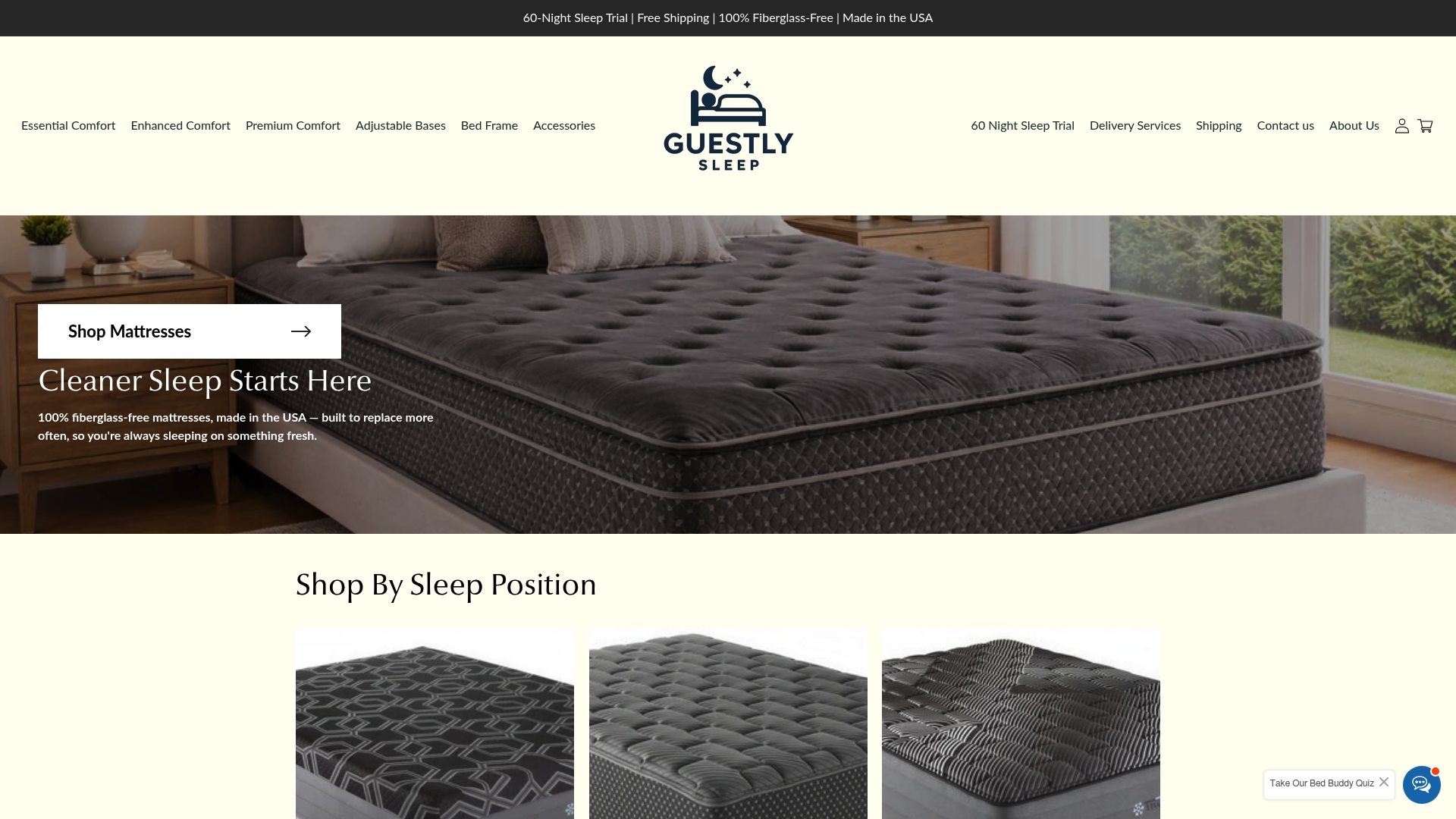
- Fiberglass-free construction across every collection, from Essential Comfort to Premium Comfort.
- A sleep trial period so you can judge the airing-out period and first-week comfort before committing.
- Free shipping, plus optional installation and haul-away disposal if you’re retiring a mattress you no longer trust.
If a current mattress is the one raising concerns, our combined installation and haul-away service handles the swap and the disposal in one visit. Browse our full collection to see certified materials and request an SDS for any model before you order.
FAQ
What happens if you sleep on a mattress in a box before 24 hours?
Sleeping on a mattress immediately after unboxing exposes you to the highest concentration of off-gassing VOCs, since emissions peak on day one and then decay over the following weeks (source). Most people experience nothing worse than a strong smell or mild irritation, but waiting the recommended 24 to 72 hours in a ventilated room reduces exposure meaningfully.
What are the common problems with mattresses in a box?
The most common complaints are off-gassing odor during the first few days, fiberglass fragments in covers that use that material as a flame barrier, and occasional labeling or flammability compliance failures flagged by CPSC warnings (source). Less serious issues include slower-than-expected expansion and mild layer stress from prolonged compression during shipping.
How long can a mattress in a box stay in the box?
Most manufacturers recommend unboxing within a few weeks of delivery, since prolonged compression can stress foam layers and adhesives over time. If a mattress needs to stay boxed longer for storage reasons, check the specific manufacturer’s guidance, since tolerance for extended compression varies by construction.
Why are box springs no longer used?
Modern mattresses, especially memory foam and hybrid models, are often designed to sit on slatted frames, platform beds, or adjustable bases rather than traditional box springs, which were built for older innerspring-only designs. Many current mattresses don’t need the extra give a box spring provided, and using one can sometimes void a warranty on foam-based models.
Is fiberglass in mattress covers dangerous?
Fiberglass is used as a flame barrier in some mattress cover sock layers, and a peer-reviewed study found that fragments can migrate to adjacent layers and measure around 30 to 50 micrometers, small enough to irritate the nose and throat if released (source). Risk comes mainly from a damaged or opened cover, not from an intact mattress used normally, so checking cover composition before buying is the more reliable safeguard.
Sources
- Evaluation of volatile organic compound (VOC) emissions from memory foam mattresses and potential implications for consumer health risk
- Fiberglass and Other Flame-Resistant Fibers in Mattress Covers – PMC (peer-reviewed study)
- My dream mattress came with a nightmare smell — here’s what off-gassing is and how to get rid of it – Tom’s Guide