

Fire Barrier Mattress: Materials, Safety, and U.S. Compliance
A fire barrier mattress in the U.S. is a mattress set engineered and tested to limit early heat release under 16 CFR Part 1633, the federal open-flame flammability standard. It is not fireproof. The barrier slows ignition and reduces how fast heat builds in the first critical minutes of a fire — time that can mean the difference between escape and flashover.
Your single most important buyer action: check the mattress law tag and spec sheet for the tested configuration (mattress alone, or mattress with a specific foundation), ask the seller for proof of Part 1633 compliance, and never disturb internal fiberglass layers.
- Verify the law tag discloses all barrier materials, including any fiberglass content.
- Request the prototype test report or confirmation test certificate from the manufacturer.
- Confirm whether the mattress was tested with or without a foundation — mixing configurations can affect real-world performance.
- Prefer fiberglass-free options when health is a priority; natural and engineered alternatives exist and pass the same standard.
The CPSC framed the federal mattress standard as expected to save hundreds of lives and prevent thousands of injuries by reducing mattress fire size and growth.
Key Takeaways
A fire barrier mattress passes 16 CFR Part 1633 by limiting peak heat release to ≤ 200 kW and total heat release to ≤ 15 MJ in the first 10 minutes — not by being fireproof, and not regardless of how it is configured or what materials it contains.
| Point | Details |
|---|---|
| Part 1633 is performance-based | Passing means meeting heat-release limits in the tested configuration, not permanent fireproofing. |
| Configuration matters | A mattress tested with a foundation is not automatically compliant when sold or used without one. |
| Fiberglass carries handling risks | Disturbing a fiberglass-containing cover releases particles; never wash or remove it without professional guidance. |
| Fiberglass-free alternatives exist | Wool, silica-treated rayon, and modacrylic fibers meet Part 1633 without fiberglass’s handling hazards. |
| Guestlysleep | Offers U.S.-made, fiberglass-free mattresses with setup and disposal services, backed by a 60-night trial. |
Table of Contents
- How mattress fire barriers actually reduce hazard
- Common fire-barrier materials and their real trade-offs
- Health considerations: what the evidence says about fiberglass and chemical retardants
- U.S. compliance: what 16 CFR Part 1633 actually tests
- How to verify and choose a safe, fiberglass-free mattress
- DIY mattress covers and repairs: what’s safe and what isn’t
- Disposal, local laws, and why burning a mattress is a bad idea
- Guestlysleep: a fiberglass-free option worth verifying
- Why the fiberglass-free conversation is overdue
- Guestlysleep: fiberglass-free mattresses built for this exact concern
- Sources
How mattress fire barriers actually reduce hazard
Barriers do not make a mattress noncombustible. They interrupt or slow the ignition sequence and reduce how much heat the mattress releases in the first minutes of a fire. That distinction matters because of a phenomenon called flashover.
NIST research on flashover explains that flashover occurs when radiant heat from burning objects raises room temperatures to the point where nearly all combustibles ignite simultaneously. Reducing early heat release from large furnishings like mattresses delays or prevents the conditions that trigger it. That is why Part 1633 measures peak heat release rate and total heat release in the first 10 minutes rather than testing whether the mattress burns at all.
Physically, a fire barrier works through one or more of three mechanisms: a surface barrier layer that chars and insulates rather than igniting, an internal sleeve or “fire sock” that wraps the foam core and limits oxygen contact, or a treated ticking that resists flame spread across the surface. Seams are a weak point in all three configurations. A gap, puncture, or repair stitch that breaks the barrier’s continuity can allow a flame to reach the foam beneath and accelerate heat release.
“The configuration of the mattress set — including seams, quilting, and the presence or absence of a foundation — is part of what was tested. Changing any of those elements can change how the barrier performs.” 16 CFR § 1633.7
Pro Tip: Never sew, cut, or patch the ticking of a mattress with a fire barrier. Even a small repair stitch through an internal sleeve can compromise the tested configuration. When barrier integrity is in doubt, replace the mattress.
Common fire-barrier materials and their real trade-offs
Most shoppers encounter four or five material strategies, each with a different performance profile and handling risk.
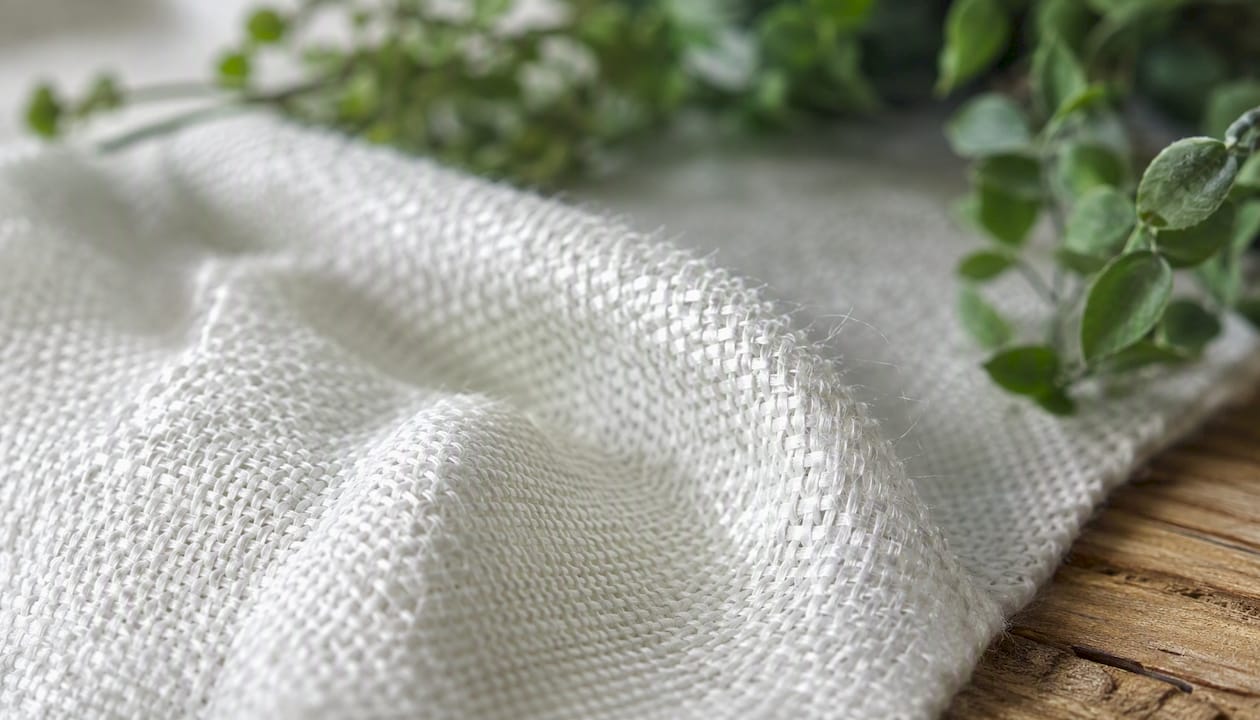
Fiberglass is the most widely used barrier material in budget and mid-range mattresses. It works by forming a dense, heat-resistant layer that chars and insulates rather than burning. Fire performance is strong, cost is low, and it adds minimal thickness. The problem is handling: if the cover is removed, washed, or torn, fiberglass particles can be released into the air and onto bedding, causing skin irritation and respiratory exposure. Law tags on fiberglass-containing mattresses are required to disclose the material; look for phrases like “contains fiberglass” or “do not remove cover.”
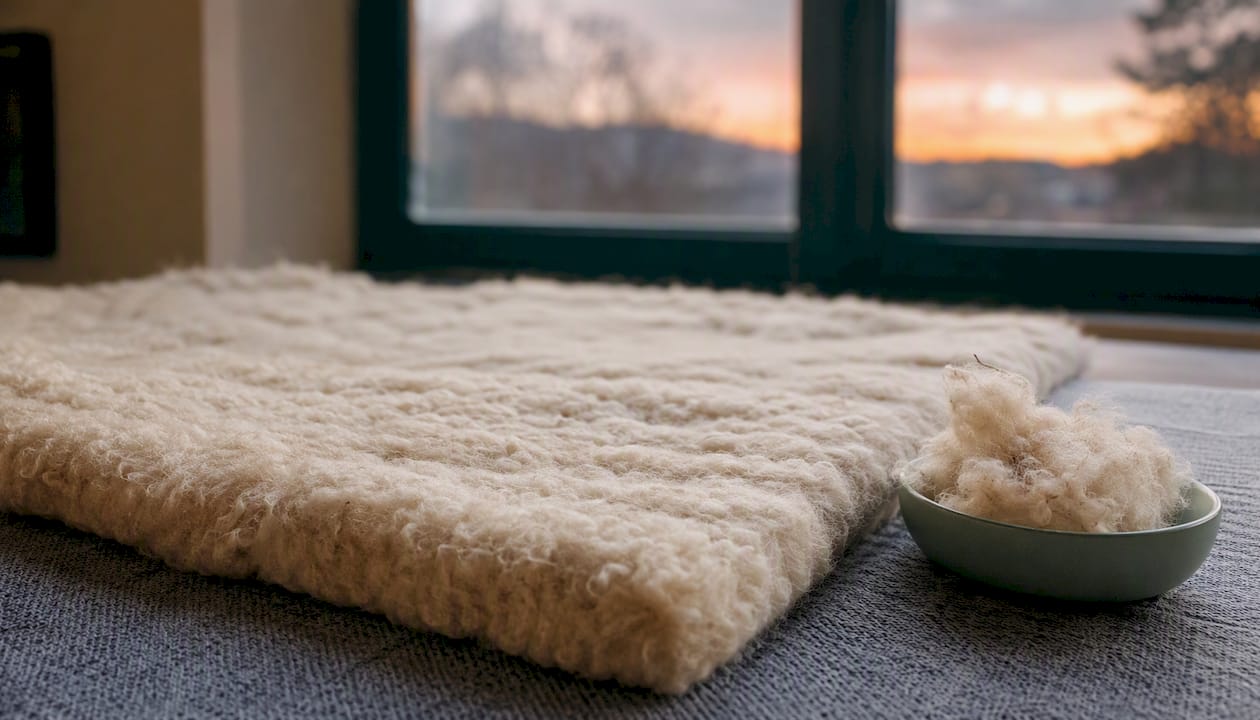
Wool is the leading natural alternative. It chars rather than melts, releases moisture as it heats, and self-extinguishes when the flame source is removed. Wool barriers tend to add some thickness and cost, and they breathe well. The trade-off is price: wool-barrier mattresses typically cost more than fiberglass equivalents, though the gap has narrowed as demand for fiberglass-free options has grown.
Silica-treated rayon (sometimes called viscose with silica) forms a protective char layer under heat. It is softer than fiberglass, poses no splinter risk, and handles washing better than raw fiberglass. Performance is solid across Part 1633 criteria, and it is a common choice in mid-range fiberglass-free mattresses.
Modacrylic fibers are engineered synthetic fibers that resist ignition and melt-drip. They are often blended with other fibers in barrier fabrics. Comfortable, durable, and widely used in higher-end fire-resistant bedding.
Proprietary barrier fabrics (knitted or woven engineered textiles) are used by some manufacturers as internal sleeves. These are designed specifically for foam-core mattresses and can meet Part 1633 without fiberglass or chemical treatments.
As Wired’s reporting notes, fiberglass is effective and cheap, but natural and engineered alternatives like wool and silica-treated fibers can meet the same federal standard without the handling risks fiberglass carries.
Health considerations: what the evidence says about fiberglass and chemical retardants
The two main health concerns in fire-resistant bedding are physical (fiberglass particles) and chemical (legacy flame retardant compounds).
Fiberglass is safe when fully enclosed. The hazard emerges when the cover is disturbed. Washing a mattress cover that contains fiberglass, removing it, or sleeping on a torn cover can release fine glass fibers that embed in skin, irritate eyes, and, with repeated exposure, pose inhalation risks. The safety guide on washing and fiberglass release explains why even a single wash cycle can spread particles through a washing machine and onto other laundry.
Chemical flame retardants are a separate concern. NIEHS summarizes public-health concerns about several classes of flame retardant chemicals, including polybrominated diphenyl ethers (PBDEs), TDCPP, and organophosphate flame retardants (OPFRs). A peer-reviewed review via PMC documents human exposure pathways and health outcomes associated with these compounds, which drove both regulatory action and a consumer shift toward non-chemical barrier approaches.
Practical action steps:
- Read the law tag before washing or moving a mattress. If it discloses fiberglass, do not remove the cover.
- If you suspect fiberglass contamination in your home, wear gloves and a mask, seal the mattress in heavy-duty plastic, and ventilate the room.
- For chemical retardant concerns, look for third-party certifications (such as GREENGUARD Gold or OEKO-TEX) that restrict harmful chemical residues.
- Consult the mattress materials health comparison guide for a broader look at how material choices affect air quality and sleep health.
U.S. compliance: what 16 CFR Part 1633 actually tests
Part 1633 is a performance-based open-flame standard. Passing it means a mattress set met specific heat-release limits under a defined propane-burner test — not that it cannot burn.
The test procedure under § 1633.7 uses propane burners placed against the mattress specimen in a defined geometry, with oxygen-consumption calorimetry measuring heat release rate over time. Two test configurations (A and B) cover different specimen placements, and the mattress must be tested in the configuration it will be sold in — with a foundation if labeled for use with one, or alone if not.
| Criterion | Limit | Test window |
|---|---|---|
| Peak heat release rate | ≤ 200 kW | Any point during test |
| Total heat release | ≤ 15 MJ | First 10 minutes |
| Full test duration | 30 minutes | Entire exposure window |
Source: 16 CFR § 1633.3
Manufacturers must conduct prototype testing (three specimens per prototype), confirmation testing, and maintain a quality-assurance program, as detailed in the full Part 1633 code. A mattress that passes prototype testing but is then manufactured with different materials or seam placement may no longer meet the standard.
Consumer checklist for verifying compliance:
- Ask for the prototype test certificate or confirmation test report.
- Confirm whether the test was conducted with or without a foundation.
- Request evidence of the manufacturer’s QA program.
- Check that the law tag matches the configuration you are buying.
How to verify and choose a safe, fiberglass-free mattress
Start with one non-negotiable: documented Part 1633 compliance in the configuration you will actually use. Everything else builds from there.
- Read the law tag and spec sheet. The law tag must list all materials, including any fiberglass. If it says “do not remove cover,” that is a strong signal fiberglass is present.
- Confirm the tested configuration. Ask whether the mattress was tested with or without a foundation. If you plan to use a platform bed, confirm the mattress was tested alone.
- Request the test report. A reputable manufacturer can provide a prototype or confirmation test certificate from an accredited lab. No documentation means no verified compliance.
- Check manufacturer QA practices. Ask whether the manufacturer runs ongoing quality-assurance testing, not just prototype testing. U.S. manufacturing standards require QA programs, but the rigor varies.
- Choose fiberglass-free when health is a priority. Wool, silica-treated rayon, and modacrylic barriers all meet Part 1633 without the handling risks of fiberglass.
- Look for third-party certifications. GREENGUARD Gold, OEKO-TEX Standard 100, and CertiPUR-US restrict harmful chemical residues and provide an independent verification layer beyond the federal fire standard.
- Inspect on delivery. Check seams for damage, look for any signs of previous repair, and confirm the label matches what you ordered.
Quick scoring rubric: Give a mattress one point each for: (1) documented Part 1633 compliance, (2) clear fiberglass disclosure or fiberglass-free claim, (3) third-party test report available, (4) manufacturer QA program confirmed. Four out of four is the standard worth buying.
Pro Tip: When shopping online, search the product page for “16 CFR 1633” and “fiberglass.” If neither term appears anywhere in the product description or FAQ, contact customer service before purchasing. A seller who cannot answer those two questions has not earned your trust.
DIY mattress covers and repairs: what’s safe and what isn’t
The short answer: DIY barrier repairs are almost always a bad idea, and improvised barrier layers are worse.
Part 1633 compliance is tied to a specific, tested configuration. The barrier material, its placement, the seam construction, and the presence or absence of a foundation are all part of what was tested. Adding a layer of fabric over the ticking, sewing through an internal sleeve, or applying a homemade chemical treatment changes the configuration. The mattress may still look the same, but it no longer matches what was tested.
“Small changes in seams, quilting, airflow, or material placement can alter test behavior even when the outer cover looks similar.” 16 CFR § 1633.7
Specific DIY hazards to avoid:
- Cutting open the ticking to add a foam topper or barrier layer exposes any internal fiberglass and breaks the barrier configuration.
- Sewing through an internal fire sleeve creates gaps that allow flame to reach the foam core.
- Homemade chemical treatments (boric acid sprays, DIY fire-retardant solutions) have no tested performance data and may introduce their own chemical hazards.
Safer options exist. Certified mattress encasements designed for fire safety can add a protective layer without altering the mattress itself. When the barrier is compromised, the right call is replacement, not repair. For parents choosing mattresses for children, the safe kids mattress selection guide covers inspection steps and safer material choices.
Pro Tip: If you want a softer sleep surface without touching the mattress itself, use a certified mattress topper placed on top of the intact cover. It adds comfort without touching the barrier layer beneath.
Disposal, local laws, and why burning a mattress is a bad idea
Burning a mattress is illegal or heavily restricted in most U.S. jurisdictions, and the reasons go beyond fire codes. A burning mattress releases toxic gases from foam, synthetic fabrics, and any chemical flame retardants present. If the mattress contains fiberglass, burning it can aerosolize glass particles. Fines for illegal open burning vary by municipality but can be substantial.
Safer disposal options:
- Retailer take-back programs. Many mattress retailers offer haul-away at delivery. Guestly Sleep offers professional setup and disposal services, which removes the handling risk entirely.
- Municipal bulky-item pickup. Most cities schedule large-item collection. Check your local waste authority’s website for scheduling and any wrapping requirements.
- Certified mattress recycling centers. Organizations like the Mattress Recycling Council operate in many states and can divert up to 90% of mattress materials from landfill.
- Donation. Some charities accept mattresses in good condition, though policies vary.
If the mattress contains fiberglass or suspect chemicals, seal it in heavy-duty plastic sheeting before moving it to the curb or loading it for transport. Notify the hauler so they can handle it appropriately. Never drag a fiberglass-containing mattress across carpet or upholstered furniture.
Guestly Sleep: a fiberglass-free option worth verifying
Guestly Sleep sells fiberglass-free mattresses in the United States, using materials selected to meet Part 1633 without the handling risks of fiberglass or the chemical concerns tied to legacy flame retardants. Every mattress is built around non-toxic barrier materials and manufactured under U.S. quality standards.
Verification checklist for any vendor claim, including Guestlysleep:
- Confirm U.S. manufacturing location on the product page or by contacting support.
- Ask for independent test reports or third-party certifications (GREENGUARD Gold, CertiPUR-US, or equivalent).
- Read the law tag on delivery: it must disclose all materials and should not list fiberglass.
- Ask whether the mattress was tested with or without a foundation, and match that to your bed setup.
- Confirm the manufacturer runs a QA program beyond one-time prototype testing.
Guestly Sleep’s product pages list comfort levels and sleep-position recommendations (side, back, stomach), and the team can provide compliance documentation on request. Setup and disposal services are available, which matters if you are replacing a mattress that may contain fiberglass.
Pro Tip: When reviewing any fiberglass-free claim, ask specifically: “Does this mattress contain any glass fiber, glass wool, or silica fiber in any layer?” A clear yes or no is the only acceptable answer.
Why the fiberglass-free conversation is overdue
The fire-safety conversation in the mattress industry has been dominated for years by the question of compliance: does the mattress pass Part 1633? That is the right starting point, but it is not the whole picture.
What gets less attention is the material cost of achieving compliance. Fiberglass became the dominant barrier material because it is cheap and effective. Manufacturers pass the test, the label says “do not remove cover,” and most consumers never think about it again — until they wash the cover, or a seam tears, or they move the mattress and wonder why their skin is itching.
The shift toward wool, silica-treated fibers, and modacrylics is not just a wellness trend. It reflects a genuine gap in how the standard was written: Part 1633 measures fire performance, not material safety. A mattress can pass the test with materials that pose real handling risks. Choosing fiberglass-free is how consumers close that gap themselves, since the regulation does not close it for them.
Guestly Sleep’s approach, building around non-toxic barrier materials from the start rather than retrofitting compliance onto a cheaper design, reflects where the market is heading. The 60-night trial and free shipping lower the risk of trying that approach. The setup and disposal services mean you are not left managing a potentially fiberglass-laden old mattress on your own.
Guestly Sleep: fiberglass-free mattresses built for this exact concern
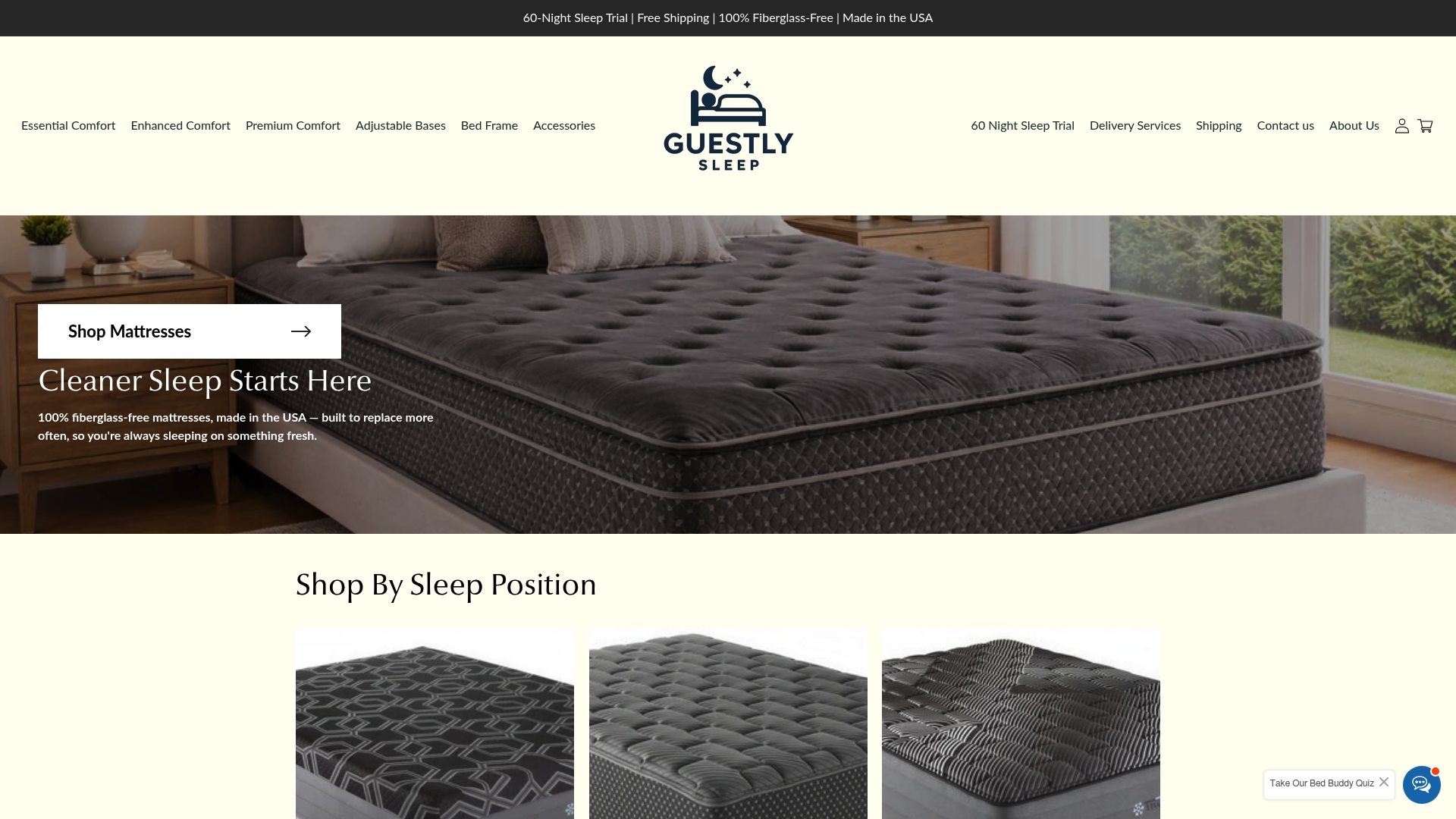
Shoppers who have read this far already know what to look for: Part 1633 compliance, clear material disclosure, no fiberglass, and a manufacturer willing to back those claims with documentation. Guestlysleep was built around exactly that list.
Every mattress is made in the United States, uses fiberglass-free barrier materials, and comes with a 60-night sleep trial and free shipping. Setup and disposal services mean you can replace a potentially fiberglass-containing mattress without handling it yourself. The product range covers side, back, and stomach sleepers across Essential Comfort, Enhanced Comfort, and Premium Comfort tiers, so there is a fit for most budgets without compromising on material safety.
Browse fiberglass-free mattresses at Guestly Sleep.
Sources
- 16 CFR § 1633.3 - General requirements. | Electronic Code of Federal Regulations (e-CFR) | US Law | LII / Legal Information Institute
- Defining Flashover for Fire Hazard Calculations | NIST
- NIEHS - Flame retardants (National Institute of Environmental Health Sciences)
- PMC review article (example source) — peer-reviewed discussion of flame retardant exposure and health outcomes
- Mattress fire retardants and alternatives — Wired