

Prevent Fiberglass Mattress Lawsuits: Ask for the SDS
This guide covers how to buy and confirm a fiberglass-free mattress, not any pending litigation. The single most reliable action is to request the Safety Data Sheet or written material confirmation from the manufacturer before you buy, and to never unzip a mattress cover to check for yourself. If you already suspect loose fibers in a mattress you own, stop touching it, keep people and pets away, and contact the manufacturer for handling instructions.
TL;DR:
- Always request the Safety Data Sheet or written confirmation of the fire-barrier material from the manufacturer before purchasing a mattress, rather than relying on vague claims.
- Look for explicit naming of materials like wool, silica-treated rayon, or plant pulp on product listings and law tags, as these indicate safer, fiberglass-free options.
- Be aware that fiberglass exposure mainly occurs if the mattress cover is torn or damaged, so avoid unzipping or ripping the cover and handle suspected cases with protective gear and containment measures.
- Recognize that certifications like CertiPUR-US apply only to foam and do not guarantee the absence of fiberglass in fire barriers; transparent material disclosure is the key indicator.
- Consider buying from brands that list fire barrier materials explicitly and offer documentation, as transparency reduces the risk of unknowingly choosing a fiberglass-containing mattress.
Table of Contents
- How do you check if a mattress is fiberglass-free?
- What materials replace fiberglass in fire barriers?
- What health risks does fiberglass exposure carry?
- What should you do if you suspect fiberglass exposure?
- What should be on your fiberglass-free mattress checklist?
- What has come out of recent fiberglass mattress lawsuits?
- What steps make sense if you’re weighing legal action over fiberglass exposure?
- What legal protections exist for consumers exposed to fiberglass?
- How should you document fiberglass exposure for potential legal use?
- How have manufacturers responded to fiberglass complaints?
- The industry’s disclosure problem is bigger than fiberglass itself
- Guestly Sleep’s approach to fiberglass-free construction
- A direct path to a fiberglass-free mattress
- Sources
- FAQ
How do you check if a mattress is fiberglass-free?
Start with the product page itself. Look for an explicit statement of the fire-barrier material, not just a claim of “non-toxic” or “safe.” A brand confident in its construction usually names the fiber outright.
Manufacturers sometimes use vague terms to sidestep the question. According to Tom’s Guide, jargon like “glass wool,” “glass fiber,” or an ambiguous use of “silica” can mask fiberglass presence, so ask whether “silica” means hydrated silica, a safe inert filler, or a glass-derived fiber.
- Read the product listing and law tag for the exact fire-barrier material named.
- Request the mattress model’s Safety Data Sheet (SDS) from customer support.
- Ask, in writing, for confirmation of the exact fiber used and whether it contains any glass-based component.
- Treat vague phrases like “proprietary blend” or “non-toxic fire barrier” without a named material as a warning sign.
- If support cannot answer clearly or refuses to provide an SDS, consider a different mattress rather than guessing.
Tom’s Guide notes that the most reliable verification method is checking technical specs, the SDS, or getting written confirmation directly from the company, since vague descriptions are themselves a red flag.
Pro Tip: Save the written confirmation email. It becomes useful documentation if the mattress arrives with different materials than promised.
What materials replace fiberglass in fire barriers?
Fiberglass is not a requirement for meeting U.S. flammability standards. Manufacturers routinely use other materials that pass the same mattress flammability rules without a glass-based barrier, and disclosure of the specific fiber is the clearest signal you are looking at a safer build.
- Wool: a natural fire-resistant fiber often used as a barrier layer, generally well tolerated on skin.
- Rayon treated with hydrated silica: a plant-derived fiber infused with silica for flame resistance, distinct from glass fiber despite the similar-sounding mineral name.
- Thistle or other plant pulp: processed plant fibers used as a barrier layer in some certified constructions.
- Certified foam layers: foams that meet CertiPUR-US standards for emissions and certain flame retardants, though that certification typically covers the foam itself, not the cover or its fire-resistant fibers, such as specialized fire-retardant foam used in some mattress constructions.
A mattress that lists any of these materials by name on its product page or law tag is showing the kind of transparency that indicates a fiberglass-free build. Our own breakdown of fire-barrier materials and compliance covers how these alternatives satisfy the same safety rules fiberglass is meant to address.
What health risks does fiberglass exposure carry?
Fiberglass acts mainly as a physical irritant rather than a chemical allergen. Direct contact with skin or eyes commonly causes itching, rash, or eye irritation, and inhaling airborne fibers can irritate the airway.
A Poison Control advisory notes that health effects can include eye injuries, skin irritation, and lung inflammation, and recommends avoiding cover removal and contacting the manufacturer directly if fibers are suspected. Children, people with asthma or sensitive skin, and anyone doing extended cleanup are more vulnerable to these effects.
Exposure typically happens when a zippered outer cover is opened, exposing an inner “sock” layer that contains the fiberglass barrier, or when that layer is torn or damaged. An intact, undisturbed cover is generally protective. Practical precautions include:
- Never unzip the inner cover, even to inspect or wash it.
- Avoid sharp tools or vigorous scrubbing near seams that could tear the fabric.
- Keep children and pets off a mattress you suspect is compromised.
- Use a zippered encasement as a barrier layer over an aging or damaged mattress.
- Run a HEPA air filter in the room if any fibers may have become airborne.
What should you do if you suspect fiberglass exposure?
Treat a torn cover or visible loose fibers as a containment problem first, not a cleaning problem.
- Stop touching or moving the mattress and keep people and pets out of the room.
- Ventilate carefully, opening a window if it will not stir up loose fibers, but avoid running fans that blow air across the surface.
- Put on gloves, goggles, and an N95 or better respirator before handling anything near the mattress.
- Use a lint roller or soft brush to lift fibers rather than shaking or vacuuming with a standard vacuum, then HEPA-vacuum the area.
- Seal the mattress in a zippered encasement to stop further shedding.
- Contact the manufacturer for an SDS and specific handling instructions, and consider a professional cleanup service for heavy contamination.
Pro Tip: If the inner cover is torn, treat replacement as the safer option rather than attempting a long-term fix. A damaged fiberglass barrier tends to keep shedding.
For contamination that has spread through the bedroom, a disposal service that hauls the mattress away intact, rather than one that requires you to bag or move it yourself, limits how much you have to handle it directly.
What should be on your fiberglass-free mattress checklist?
A short checklist keeps the buying decision simple, whether you are shopping for the first time or replacing a mattress after a scare.
- Request the SDS or written manufacturer confirmation before you buy, not after.
- Favor listings that name the exact barrier material instead of using vague safety language.
- Check the law tag for the model number and production date, and match it to the manufacturer’s records if you have any doubt.
- Remember that certifications like CertiPUR-US apply to foam, not to covers or fire-resistant fibers.
- Factor trial length, warranty terms, and shipping or installation costs into the decision, alongside how often you plan to replace the mattress.
- Consider a protector or encasement at purchase time, and know your options for haul-away or disposal when the mattress reaches the end of its life.
| Checklist item | What to look for | Why it matters |
|---|---|---|
| Material disclosure | Named fiber (wool, rayon, silica, thistle) | Confirms the barrier type without guesswork |
| SDS or written confirmation | Document from manufacturer, not a sales rep’s verbal claim | Creates a record you can reference later |
| Certification scope | CertiPUR-US applies to foam only | Prevents assuming a certified foam means a certified cover |
| Trial and warranty | Length of sleep trial, warranty terms | Gives you a way out if materials do not match claims |
| Replacement cadence | Every 2 to 4 years for cleaner sleep, per Guestly Sleep | Keeps barrier materials from aging into a shedding risk |
What has come out of recent fiberglass mattress lawsuits?
Fiberglass contamination has become one of the more visible mattress complaints in recent years, driven largely by consumers discovering torn inner covers after washing or removing outer layers. Much of the public discussion traces back to case reports and consumer complaints rather than a single definitive ruling, and outcomes have varied by manufacturer and by the specific product line involved.
The recurring pattern in these disputes centers on disclosure: whether a company clearly stated that a mattress contained a fiberglass barrier layer, and whether care instructions adequately warned against removing the inner cover. Academic testing has reinforced why this matters. A microscopy study published in PMC found fiberglass in the inner covers of some mattresses tested, along with fragments that had migrated into adjacent layers, a finding that supports complaints from consumers who reported fibers spreading through their homes after a cover was opened or damaged.
For a shopper, the practical lesson is not to track the litigation itself but to recognize the underlying pattern: mattresses with undisclosed fiberglass barriers and unclear care labeling are the ones generating complaints, which is exactly what a request for an SDS or written confirmation is designed to catch before you buy.

What steps make sense if you’re weighing legal action over fiberglass exposure?
If you believe a mattress caused harm through undisclosed fiberglass, the practical first steps are the same ones that support any consumer complaint: documentation, communication with the seller, and a clear record of what happened.
Start by contacting the manufacturer directly and requesting the SDS along with a written explanation of the fire-barrier material used. Keep copies of the original product listing, any care labels, and your purchase receipt, since these establish what was represented at the time of sale. If the company’s own materials contradict what arrived in your home, that gap is the core of most consumer complaints in this space.
From there, a consultation with a consumer protection attorney or your state’s consumer affairs office can clarify whether your situation fits standard product liability or consumer protection claims. Small claims court is also a realistic option for damages tied to a specific defective product, without the cost of a larger case. None of these steps require you to have already suffered a severe injury: a mattress that arrived with undisclosed fiberglass despite being marketed as safe is itself a legitimate complaint.
What legal protections exist for consumers exposed to fiberglass?
Consumer protection law generally gives buyers the right to accurate product representations, and a mattress marketed without disclosing a fiberglass barrier can run into standard misrepresentation or failure-to-warn claims depending on the specifics of the sale and the jurisdiction. Federal flammability standards require mattresses to resist open flame, but they do not require fiberglass specifically, which means a manufacturer’s choice to use it, and to disclose or not disclose it, is a separate question from safety compliance.
Warranty terms also matter here. Many mattress companies offer a trial period and warranty that can support a return or refund claim if the product does not match its description, independent of any broader legal action. Reviewing those terms at the time of purchase, rather than after a problem surfaces, gives you a clearer path if something goes wrong.
Because rules vary by state and by the nature of the harm claimed, a consumer facing a specific dispute is better served by a professional consultation than by general guidance, and any specific legal or medical claim should be verified with an attorney or a licensed provider rather than assumed from general reading.

How should you document fiberglass exposure for potential legal use?
Good documentation starts the moment you notice a problem, not after you decide to pursue a claim.
Photograph the torn cover, any visible fibers, and the mattress law tag showing the model number and manufacturing date. Keep the original purchase receipt, the product listing as it appeared when you bought it, and any written communication with the manufacturer, including their SDS if provided. If you or a family member experienced skin irritation, eye discomfort, or respiratory symptoms, a note from a healthcare provider describing the symptoms and their timing relative to the exposure adds a medical record to the timeline.
Avoid discarding the mattress before you have documented it fully, but also avoid further handling that could spread fibers. Sealing it in an encasement preserves it as evidence while limiting ongoing exposure. This kind of record, dated photos, receipts, correspondence, and any medical notes, gives you a factual basis whether you pursue a warranty claim, a small claims filing, or a larger legal consultation.
How have manufacturers responded to fiberglass complaints?
Manufacturer responses have ranged from quiet policy changes to public shifts in marketing. Several companies have moved toward listing fire-barrier materials explicitly on product pages and law tags rather than relying on general safety language, a direct response to the disclosure gap that drove many complaints.
Some brands have also updated care labeling to more clearly warn against removing inner covers, and a number of retailers now highlight “fiberglass-free” as a standalone selling point rather than an assumed default. Shopping guides have taken note of this shift. Eachnight’s testing of dozens of mattresses found that fiberglass-free options are now common across price points, though very cheap mattresses remain more likely to use fiberglass as a low-cost barrier.
The broader trend favors transparency: material disclosure, clearer labeling, and explicit no-fiberglass claims that a buyer can verify before purchase rather than discover after the fact.
The industry’s disclosure problem is bigger than fiberglass itself
The real failure in this category was never fiberglass as a material. It was the habit of hiding what a mattress is made of behind marketing language, “hypoallergenic,” “non-toxic fire barrier,” “proprietary blend,” while leaving out the one detail that actually matters: the name of the fiber.
That pattern extends past fiberglass. A shopper who cannot get a straight answer about a fire barrier probably will not get one about foam density, adhesive chemicals, or where a mattress was actually assembled either. Certifications get treated as a blanket assurance when most, like CertiPUR-US, cover a narrow slice of the product, the foam, and say nothing about the cover. Reading a certification badge as proof of a fiberglass-free mattress is a mistake plenty of careful shoppers still make.
The fix is not more certifications. It is buyers treating a request for an SDS or a written material confirmation as a normal part of buying a mattress, the same way you would ask about return policy or trial length. Companies that answer that question immediately and specifically are telling you something real about how they operate.
— Justin
Guestly Sleep’s approach to fiberglass-free construction
Guestly Sleep builds its mattresses without fiberglass, using certified, non-toxic materials assembled in the United States. Products are organized by comfort level and sleep position, Essential Comfort, Enhanced Comfort, and Premium Comfort, so buyers can match a mattress to how they actually sleep rather than guessing from generic firmness labels.
The company also recommends replacing a mattress regularly to keep sleep surfaces cleaner, supported by a trial period and free shipping that lower the risk of committing to the wrong choice. For material questions, contacting support directly for an SDS is the same verification step this guide recommends for any brand.
A direct path to a fiberglass-free mattress
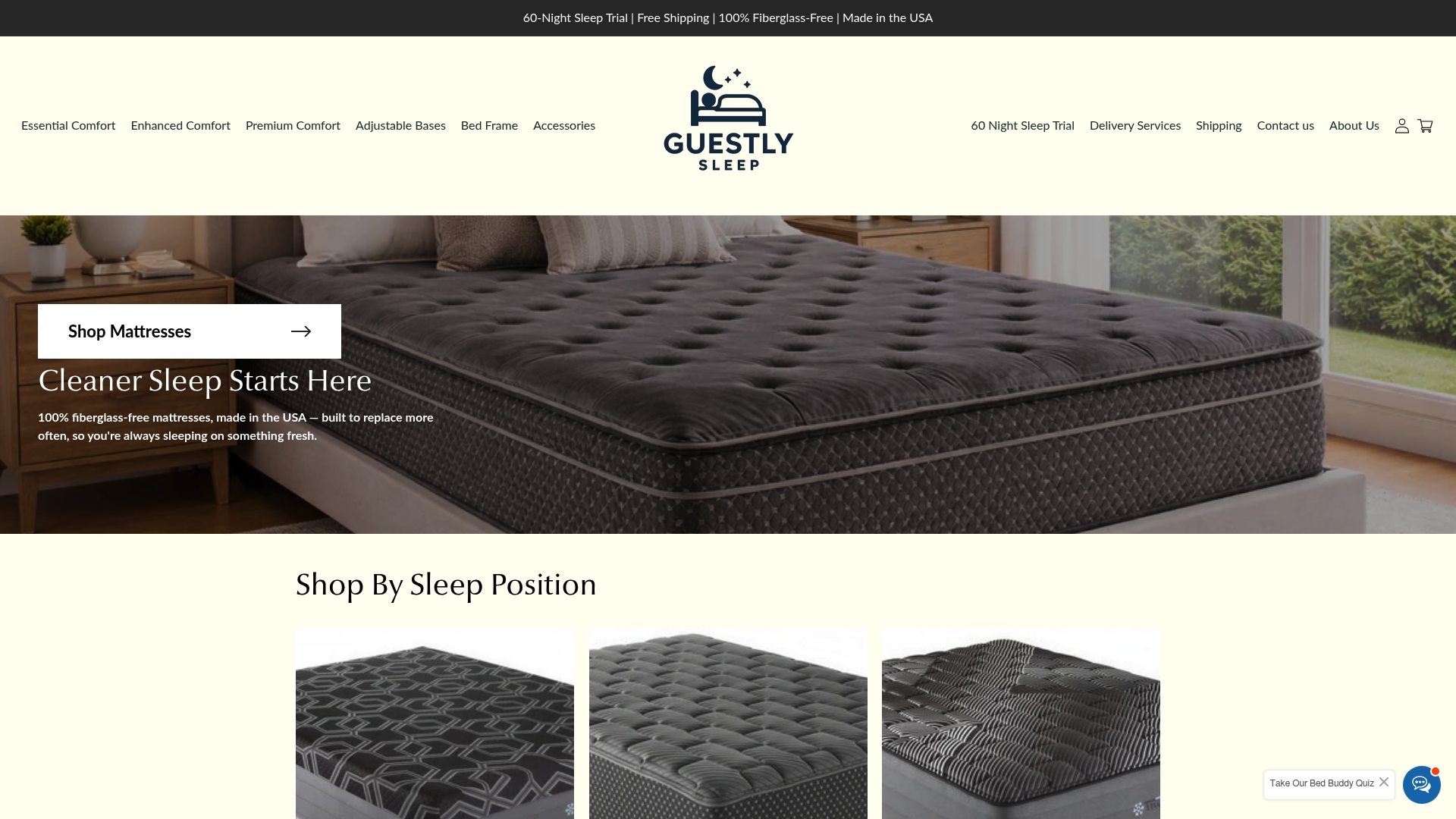
Replacing a mattress is also easier when the removal is handled for you. Guestly Sleep offers installation services alongside haul-away and disposal options for the old mattress, so a fiberglass concern does not turn into a bigger cleanup project.
- Browse mattress and service options on the full collections page.
- Add mattress disposal and haul-away if you are replacing a mattress with a damaged cover.
- Combine installation with removal through mattress and bed frame setup with haul away for a single visit.
The company offers a trial period and free shipping, allowing you to test the mattress at home before deciding if it is the right fit. Visit the collections page to compare options and get started.
Sources
- How to know if your mattress has fiberglass inside — and if it’s safe to sleep on | Tom’s Guide
- Microspectroscopy study detecting fiberglass in mattress covers (PMC)
- Why do mattresses contain fiberglass? | Poison Control
FAQ
Is it safe to sleep on a mattress that might contain fiberglass?
An intact, undisturbed cover is generally considered protective, since the fiberglass barrier sits inside a sealed inner layer. If the cover is torn, unzipped, or visibly shedding fibers, Poison Control recommends avoiding contact and contacting the manufacturer rather than continuing to use it.
How can I tell if a mattress cover has been compromised?
Look for visible tears, loose fibers on bedding, or unusual itching after contact with the mattress surface. If you see any of these signs, stop touching the mattress, isolate the room, and follow the containment steps for handling suspected fiberglass exposure.
Does CertiPUR-US certification mean a mattress is fiberglass-free?
Not necessarily. CertiPUR-US typically certifies foam for emissions and certain flame retardants, but it generally does not cover the mattress cover or the fire-resistant fibers used there, so a certified foam mattress can still use a fiberglass barrier layer elsewhere.
What should I ask a mattress company before buying?
Ask for the Safety Data Sheet and written confirmation of the exact fire-barrier material used, not just a general safety claim. Vague answers or refusal to name the material are red flags worth taking seriously before you buy.
How often should I replace my mattress for health reasons?
Guestly Sleep recommends replacing a mattress every 2 to 4 years to maintain a cleaner sleep surface, particularly for allergy-prone sleepers. Older mattresses are also more likely to have worn covers, which raises the risk of any internal fire-barrier material becoming exposed.