

How Fiberglass Gets into Your Bedroom: Safety Guide
Fiberglass contamination in the home is defined as the presence of microscopic glass fibers in indoor air and on surfaces, originating from damaged mattress fire barriers or deteriorating HVAC insulation. Understanding how fiberglass gets into bedroom spaces is the first step toward protecting your household. Once fibers escape containment, they become airborne, settle on every surface, and embed into fabrics where standard cleaning cannot fully remove them. Fiberglass exposure causes mechanical irritation to the respiratory tract, skin, and eyes, with symptoms including itching, prickling, and coughing that improve only when you leave the contaminated space.
How does fiberglass escape from mattresses into bedrooms?
Fiberglass enters the bedroom most often through a single source: the fire barrier layer sewn beneath your mattress cover. U.S. mattress fire barrier regulations require flame-retardant layers inside mattresses, and many manufacturers use fiberglass as the primary solution because it is inexpensive and effective. The fiberglass sits between the outer ticking fabric and the foam core, acting as a passive fire shield. That arrangement is safe as long as the cover stays intact.
The problem starts when the cover is compromised. Common triggers include:
- Unzipping the mattress cover to wash it, which releases fibers directly into the air
- Physical wear and tearing from years of use, especially along seams and zipper edges
- Rough handling during moves or when rotating the mattress
- Children jumping on the bed, which stresses the fabric repeatedly
- Budget and imported mattresses with thinner ticking that wears through faster
Budget mattresses and imports carry a higher risk because manufacturers often use less durable outer fabrics over the fiberglass layer. A mattress cover that tears releases fibers immediately, and those fibers become airborne within seconds of disturbance. The contamination event begins the moment the barrier fails, not gradually over time.
Pro Tip: Never unzip your mattress cover for any reason. If the label says “do not remove,” treat that as a fiberglass warning. Use a separate, fully zipped mattress encasement over the entire mattress instead.
Knowing which mattresses carry fiberglass is half the battle. Check the label for phrases like “do not remove cover” or “fiberglass fire barrier.” Many budget mattress risks are not obvious at purchase, which is why reading labels and asking manufacturers directly matters before you buy.
How do fiberglass fibers spread through bedroom air and surfaces?
Once fibers escape, they behave like fine particulate matter with one critical difference: they are sharp and mechanically irritating at the microscopic level. Fiberglass fibers become airborne and then settle onto every horizontal surface in the room, including bedding, carpet, upholstery, and clothing. The contamination does not stop there.
The settle-and-resuspend cycle is what makes fiberglass contamination so persistent. Each time you disturb the room, fibers lift back into the air and resettle somewhere new. The cycle repeats with every ordinary activity:
- Walking across the bedroom floor kicks up settled fibers from carpet fibers
- Making the bed launches fibers from sheets and blankets back into the air
- Running the HVAC system pulls fibers into the ductwork and redistributes them to other rooms
- Sitting on upholstered furniture compresses fabric and releases embedded fibers
- Carrying contaminated clothing out of the bedroom spreads fibers to other areas of the home
Cleaning efforts that agitate fibers can prolong contamination and exposure risks substantially. Standard vacuuming without HEPA filtration does not capture fiberglass particles. It recirculates them. — Indoor Doctor
The HVAC system deserves special attention here. Once fibers enter the return air duct, the system distributes them to every room in the house. Fiberglass contamination spreads from the bedroom to other living spaces through fibers embedded in clothing and through air duct redistribution, meaning multiple occupants face exposure even if they never entered the original bedroom. This is why a single damaged mattress can create a whole-home contamination event.
What other household sources introduce fiberglass into bedrooms?
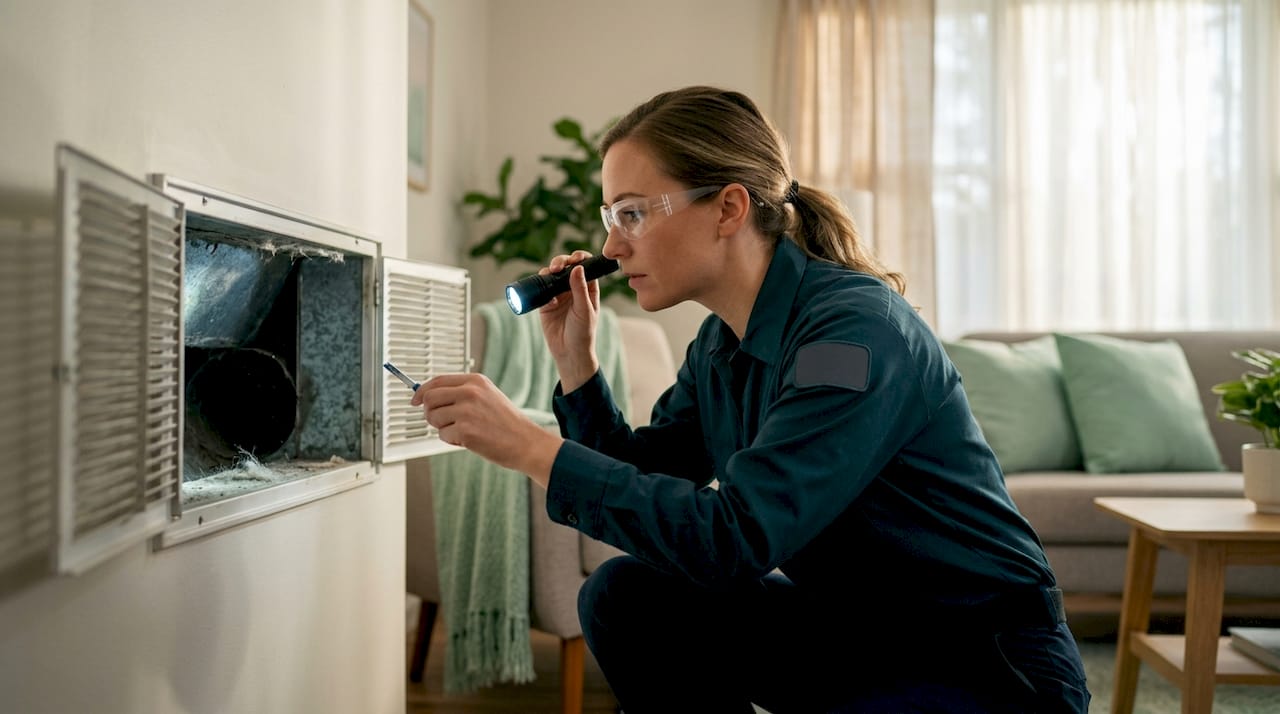
Mattresses are not the only source. HVAC duct liners are a commonly overlooked entry point for fiberglass in indoor air. Many residential duct systems use fiberglass-lined ducts to reduce noise and improve thermal performance. Over time, those liners deteriorate.
Key signs that your HVAC system may be releasing fiberglass fibers include:
- Symptoms that worsen when the heat or air conditioning runs and improve when the system is off
- Visible dust or debris around supply vents that appears shortly after the system cycles on
- A history of water damage or mold near ductwork, which accelerates liner breakdown
- An older home with original ductwork that has never been inspected or replaced
Deteriorating fiberglass duct liners release tiny fibers directly into the HVAC airflow, and moisture accelerates that deterioration while also promoting microbial growth on the liner surface. The result is a dual contamination problem: fiberglass fibers and mold spores traveling through the same air supply. Symptoms tied to HVAC operation timing are a reliable diagnostic clue that the ducts, not the mattress, are the source.
A professional HVAC inspection is the only way to confirm duct liner deterioration. Visual inspection through vents is rarely sufficient because the damage often occurs deep within the duct runs. If your symptoms track with HVAC cycles, schedule an inspection before assuming the mattress is the problem.
How to remove fiberglass and prevent bedroom contamination
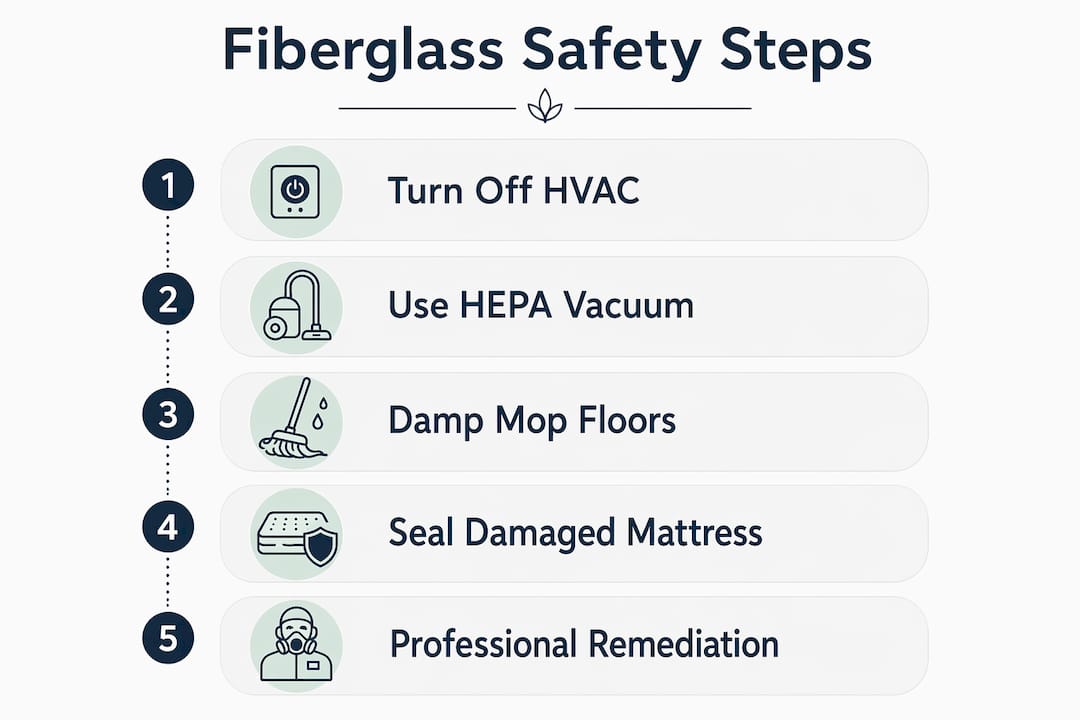
Effective fiberglass safety in bedrooms depends on one principle: minimize disturbance. Every action that moves air or disturbs fabric increases fiber spread. The table below compares safe and unsafe approaches.
| Action | Safe approach | Unsafe approach |
|---|---|---|
| Vacuuming | HEPA-filter vacuum on low speed | Standard vacuum without HEPA filter |
| Mattress cover | Keep intact, add zipped encasement | Unzip, wash, or remove the cover |
| Bedding cleanup | Bag and seal before moving | Shake or carry loosely through the home |
| HVAC during cleanup | Turn off system entirely | Leave running during cleaning |
| Severe contamination | Hire professional remediation team | DIY cleaning with household tools |
For active contamination, follow these steps in order. First, turn off the HVAC system before doing anything else. Running the system during cleanup guarantees that fibers travel to other rooms. Second, wear an N95 respirator, safety glasses, and disposable gloves before entering the room. Third, use a HEPA-filter vacuum on all surfaces, moving slowly to avoid re-aerosolizing fibers. Fourth, seal contaminated bedding and clothing in plastic bags before removing them from the room.
Pro Tip: Damp mopping hard floors captures fibers that vacuuming misses. Use a disposable mop head and seal it in a bag immediately after use. Never dry sweep.
Professional remediation for severe fiberglass contamination includes airflow control, encapsulation of affected surfaces, HEPA air scrubbers, and specialized cleaning protocols. Standard cleaning is not sufficient for heavy contamination events. If the mattress cover was fully compromised and fibers spread throughout the room, professional help is the right call.
Safe mattress disposal also matters. A damaged fiberglass mattress should be wrapped in plastic sheeting and sealed with tape before it leaves the bedroom. Moving it unwrapped through the home spreads fibers to every room it passes through. Guestlysleep offers a mattress disposal service that handles removal safely, which removes the risk of spreading fibers during the process.
Key takeaways
Fiberglass enters bedrooms through damaged mattress fire barriers and deteriorating HVAC duct liners, and the settle-and-resuspend cycle makes contamination persist long after the initial release.
| Point | Details |
|---|---|
| Primary entry point | Damaged mattress covers release fiberglass fire barrier fibers directly into bedroom air. |
| HVAC as a second source | Deteriorating duct liners push fibers through the air supply into every room. |
| Contamination persists | Fibers resettle and re-aerosolize with every disturbance, prolonging exposure. |
| Safe cleanup requires HEPA | Standard vacuums recirculate fibers; only HEPA filtration captures them effectively. |
| Prevention beats remediation | Zipped encasements and fiberglass-free mattresses eliminate the risk at the source. |
What I’ve learned about fiberglass contamination after years of watching homeowners get it wrong
The most common mistake I see is the instinct to clean aggressively. A homeowner finds glittery fibers on their sheets, strips the bed, shakes everything out, and runs the vacuum. Every one of those actions makes the problem worse. Containment, not cleaning speed, is what limits the damage.
The second mistake is assuming the mattress cover is fine because it looks fine. Fiberglass release from mattress fire barriers often starts at seams and zipper edges that are invisible to a casual glance. By the time you see glittery particles on your pillow, the cover has already been compromised for some time.
Newer mattress regulations have pushed some manufacturers toward safer fire barrier materials, but fiberglass remains common in budget and imported products. The only way to be certain is to buy from a manufacturer that explicitly states their mattresses are fiberglass-free and backs that claim with certifications. Checking for CertiPUR-US certification is a useful starting point, though it does not by itself guarantee a fiberglass-free fire barrier. Ask the manufacturer directly.
The homeowners who handle this best are the ones who treat prevention as the goal. A zipped encasement over an intact mattress costs very little. Replacing a contaminated bedroom costs far more in time, professional fees, and stress.
Safer sleep starts with a fiberglass-free mattress from Guestlysleep
Knowing how fiberglass gets into bedroom spaces makes one thing clear: the safest solution is removing fiberglass from the equation entirely before contamination starts.
Guestlysleep sells fiberglass-free mattresses made in the United States, using certified materials that contain no fiberglass fire barriers. Every mattress ships free, comes with a 60-night sleep trial, and is built to replace the hidden risks that budget mattresses carry. If you want a specific product, the RZ Cool Choice 14" is a strong option for homeowners who want a fiberglass-free mattress without paying a premium price. Guestlysleep also recommends replacing mattresses every 2–4 years to keep your sleep environment clean and safe.
FAQ
What is the main way fiberglass gets into a bedroom?
Fiberglass enters bedrooms most often when a mattress cover tears or is unzipped, releasing fire barrier fibers directly into the air. HVAC duct liner deterioration is the second most common source.
Is it safe to sleep on a mattress that contains fiberglass?
Sleeping on an intact fiberglass mattress cover is generally considered safe. Risk increases sharply when the cover is damaged, worn, or removed.
Can fiberglass fibers spread to other rooms?
Yes. Fibers travel on clothing, through HVAC airflow, and by resuspending with foot traffic, which means a single bedroom contamination event can affect the entire home.
What type of vacuum removes fiberglass fibers safely?
Only a vacuum with a true HEPA filter captures fiberglass fibers without recirculating them. Standard vacuums push fibers back into the air and worsen contamination.
How do I know if my HVAC is releasing fiberglass?
Symptoms that worsen when the HVAC system runs and improve when it is off are the clearest sign. HVAC duct liner deterioration is confirmed through professional inspection, not visual checks through vents.