

Verify Fiberglass Free Memory Foam in 4 Steps with Guestly Sleep
Yes, fiberglass-free memory foam mattresses are widely available, and most major mattress-in-a-box brands now offer at least one line built without it. Before you buy, do two things: read the fire-barrier line in the product listing and check the sewn-in law tag for the actual materials used. Some mattress brands build their mattresses without fiberglass from the start, so that verification step is one less thing to worry about.
TL;DR:
- Many brands build mattresses without fiberglass using safer fire barriers like wool, silica-woven fabrics, or treated foam, often indicated by washable covers.
- Cost differences lead budget mattresses to include fiberglass socks, which pose health risks if torn or unzipped, spreading fibers into the room and HVAC systems.
- All mattresses must meet federal fire safety standards through materials that slow ignition or resist flames, not necessarily fiberglass, which is often replaced by natural or woven alternatives.
- Verifying a mattress’s fiberglass-free claim involves checking the fire barrier materials listed on the product listing and sewn-in law tags, especially for removable covers.
- A long-lasting indicator of a fiberglass-free mattress is an easily washable cover, since fiberglass socks are never meant to be unzipped or washed by consumers.
Table of Contents
- What Does “Fiberglass-Free” Actually Mean?
- Why Do Some Mattresses Still Use Fiberglass?
- How Do Mattresses Meet Fire Safety Standards Without Fiberglass?
- How Can You Verify a Mattress Is Truly Fiberglass-Free?
- How Do You Pick a Fiberglass-Free Mattress for Your Sleep Style?
- Comparing the Fire-Barrier Alternatives
- What Guestly Sleep Does Differently for Safety-Focused Buyers
- The Checklist Beats the Brand Hunt
- Ready to Shop Fiberglass-Free? Start Here
- Where to Verify These Claims Yourself
- Sources
What Does “Fiberglass-Free” Actually Mean?
A mattress described as fiberglass-free doesn’t contain a fiberglass fire sock, which is the thin, sealed pouch of woven glass fibers that sits just under the outer cover on many budget foam mattresses. The problem isn’t the fiberglass sitting there quietly. It’s what happens if that sock gets torn, or if someone unzips the outer cover (which is never supposed to be removed) and shakes loose fibers throughout the foam layers and into the room.
Manufacturers who skip fiberglass entirely use other materials to meet the same federal fire-safety requirements. The most common alternatives include:
- Rayon or viscose blends woven into the mattress cover, often treated to resist ignition and generally machine-washable.
- Silica-woven barriers, tightly woven fabric containing silica that’s mechanically bound so it doesn’t shed like a loose fiberglass sock.
- Wool, which is naturally flame-resistant without any chemical treatment and has been used as a fire barrier for decades.
- Silica-treated or baked foam, where fire resistance is built into the foam itself during manufacturing rather than added as a separate layer.
- Plant-fiber barriers, less common but increasingly used in mattresses marketed as natural or organic.
Here’s a practical signal worth paying attention to: if a listing advertises a removable, machine-washable cover, that’s a strong indicator the mattress doesn’t rely on a sealed fiberglass sock. Fiberglass mattresses almost always carry an explicit warning never to remove the cover, because doing so is exactly what releases the fibers. A brand confident enough to let you unzip and wash the cover is telling you, indirectly, that there’s nothing hazardous underneath it.
Why Do Some Mattresses Still Use Fiberglass?
Cost is the honest answer. Fiberglass is cheap, lightweight, and reliably passes federal flammability tests, which makes it attractive to manufacturers competing on price in the crowded budget bed-in-a-box segment. A rayon or wool barrier costs more to source and integrate. For a company shipping a $200 queen mattress, that cost difference matters, and it’s a big reason fiberglass shows up disproportionately in the lowest-priced listings rather than in mid-range or premium mattresses.
The risk shows up when things go wrong at the consumer end. A fiberglass sock is designed to stay sealed permanently. But mattress covers get unzipped anyway, by accident, out of curiosity, or because a buyer wants to wash it like a normal cover. Once that seal breaks, microscopic glass fibers can spread through the foam, into surrounding fabric, onto floors and furniture, and into HVAC systems if the mattress sits in a bedroom for any length of time. Vacuuming often makes it worse rather than better, because standard vacuums can aerosolize the fibers instead of capturing them.
Medical and occupational research on glass fiber exposure gives a reasonable basis for concern. Studies on glass fiber inhalation note that these particulates can irritate skin, eyes, and airways, particularly when materials are disturbed or damaged. That doesn’t mean every mattress with a fiberglass sock is dangerous when left sealed and undisturbed. It means the danger is specifically tied to what happens after the barrier is compromised, which is precisely why so many consumer complaints trace back to an unzipped cover rather than the mattress itself sitting untouched.
How Do Mattresses Meet Fire Safety Standards Without Fiberglass?
Every mattress sold in the U.S. has to pass federal flammability testing, and none of it requires fiberglass specifically. Two standards do the heavy lifting here. 16 CFR 1632 tests a mattress’s resistance to a smoldering cigarette, the kind of slow-burn scenario that used to cause a lot of house fires. 16 CFR 1633 goes further, requiring the entire mattress assembly to resist an open flame for a set period, simulating a more serious ignition event like a candle or lighter.
Manufacturers can pass both tests using any fire barrier that does the job, and several do it without a strand of glass fiber:
- Rayon and viscose barriers, often layered directly under the cover fabric, slow ignition enough to meet the open-flame standard.
- Wool has been used as a natural fire retardant for far longer than synthetic alternatives and performs well against both standards.
- Silica-woven fabrics create a physical barrier that resists flame spread without the shedding risk of loose fiberglass, as detailed in our guide to flame-retardant curtain safety and standards.
- Silica-treated or baked foams build resistance into the foam’s chemistry, which is part of why some mattresses can advertise a fully removable cover with no fire-barrier layer to worry about disturbing.
CPSC guidance on mattress flammability confirms this directly: the agency’s rules set a performance goal, not a materials mandate. A mattress that lists rayon, wool, or a silica-woven layer as its fire barrier is just as compliant with federal law as one that uses fiberglass. Nothing about “fiberglass-free” means a compromise on safety. If anything, it usually means the manufacturer paid more to get the same legal outcome through a safer route, a point worth understanding when you’re comparing why US mattress regulations are stricter than most countries’ approaches to home furnishings.
How Can You Verify a Mattress Is Truly Fiberglass-Free?
You don’t need a lab to check this. A few minutes of reading before you buy, and a few more at unboxing, will tell you almost everything you need to know.
- Read the fire-barrier line in the product listing. Legitimate fiberglass-free mattresses state their alternative material outright, usually rayon, wool, or a silica-woven blend. Vague language like “meets federal flammability standards” with no material named is a yellow flag, not a green one.
- Check the sewn-in law tag. Every mattress has one, and it’s required to list the actual materials inside, including the fire barrier. If the tag says “glass fiber” or “fiberglass” and the listing never mentioned it, that’s a mismatch worth walking away from.
- Prefer listings with a removable, machine-washable cover. As mentioned earlier, this is one of the more reliable practical signals of a genuinely fiberglass-free build, since a fiberglass sock design almost never permits cover removal.
- Scan buyer photos and the Q&A section. Real customers who’ve washed their cover or asked seller support about materials tend to leave the most useful information, often more candid than the listing copy itself.
If you already own a mattress and suspect it contains fiberglass, stop unzipping or handling the cover immediately. Contact the seller for their disposal and cleanup guidance, and avoid vacuuming the area with a standard household vacuum, since that can spread fibers further. Our guide on handling fiberglass exposure walks through safer cleanup steps in more detail.
How Do You Pick a Fiberglass-Free Mattress for Your Sleep Style?
Going fiberglass-free narrows your search, but it doesn’t answer the bigger question: which mattress actually fits how you sleep. That decision comes down to material structure, not just the fire barrier.
All-foam mattresses contour closely to the body, which side sleepers tend to prefer because it cushions the shoulders and hips without creating pressure points. The tradeoff is heat retention. Dense foam traps body heat more than a hybrid design, so if you sleep hot, an all-foam mattress without cooling features can feel uncomfortably warm by 2 a.m.
Hybrid mattresses, which pair a foam comfort layer with an innerspring coil base, tend to sleep cooler because air moves through the coils. They also offer firmer edge support, which matters if you sit on the edge of the bed to put on shoes or share a bed and need to use the full surface without feeling like you’ll roll off. Back and stomach sleepers often do better on a hybrid or firmer all-foam build, since too much sink can misalign the spine over time.
For anyone managing heat sensitivity, look for:
- Gel-infused memory foam, which draws heat away from the body more effectively than standard foam.
- A hybrid coil layer, which adds airflow the foam alone can’t provide.
- Breathable cover fabrics, often listed separately from the fire barrier itself.
If respiratory or skin sensitivities are the bigger concern, prioritize mattress materials that support easier breathing, such as wool fire barriers, natural latex, or CertiPUR-US certified foam, which is tested for low chemical emissions and doesn’t rely on ozone-depleting blowing agents. Our breakdown of asthma-friendly mattress materials goes deeper into which combinations tend to work best for allergy-prone sleepers.
Comparing the Fire-Barrier Alternatives
Not all fiberglass alternatives are equal, and the differences show up in price, care instructions, and how “natural” the finished mattress actually is.
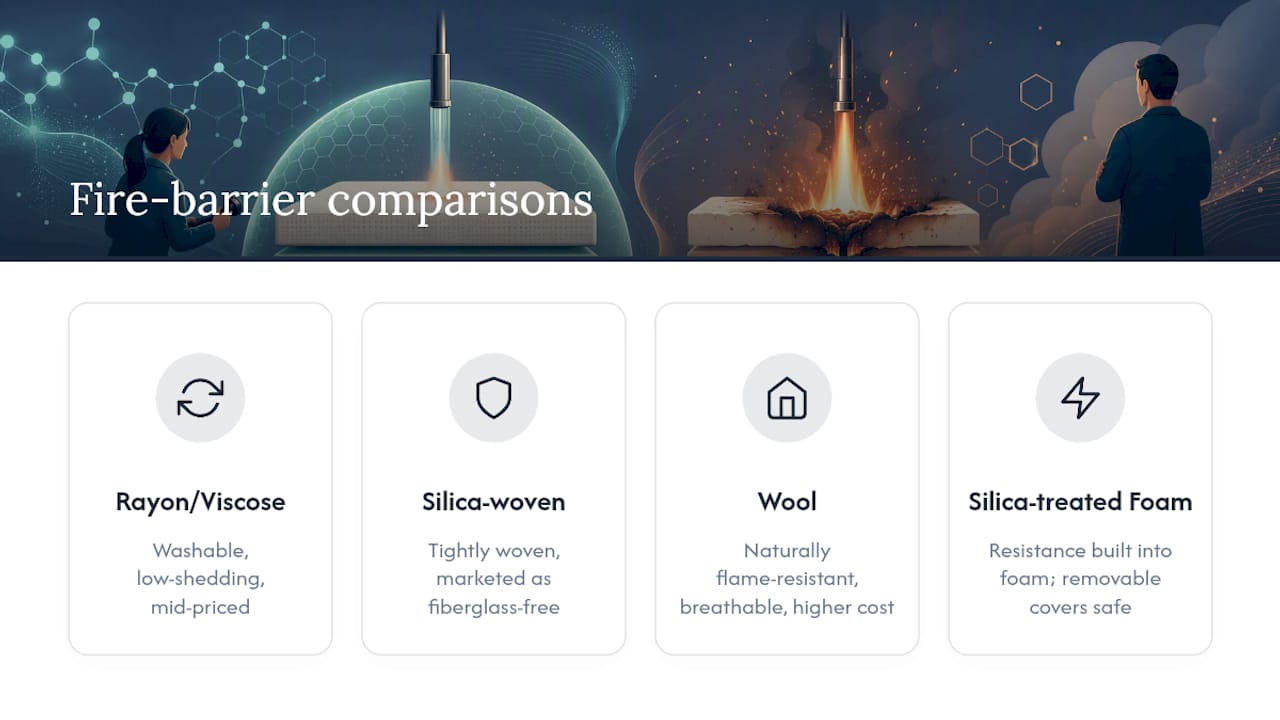
Rayon and viscose barriers hit a sweet spot for a lot of buyers. They’re washable, low-shedding, and don’t add dramatically to the mattress price, which is why they show up across a wide range of mid-priced fiberglass-free mattresses.
Silica-woven barriers occupy an interesting middle position. Silica is technically silicon-based, chemically related to the sand-derived compounds used in glass, but the manufacturing process matters enormously here. Woven tightly and bonded into the fabric, it doesn’t shed the way a loose fiberglass sock does, which is why most safety-focused brands market it as fiberglass-free without controversy. Buyers who want zero silicon-based materials of any kind, not just fiberglass, should look specifically for wool or organic latex builds instead, since a general “fiberglass-free” label doesn’t guarantee silica-free.
Wool sits at the top end for buyers who want nothing glass or silica-related anywhere near their mattress. It’s naturally flame-resistant without chemical treatment, breathes well, and has a long track record in bedding. The cost premium is real, though, and wool-barrier mattresses typically run higher than rayon or silica-woven alternatives.
Silica-treated or baked foams take a different approach entirely: resistance is built into the foam during manufacturing rather than layered on as a separate barrier. This is often what allows a mattress to advertise a fully removable, washable cover with genuine confidence, since there’s no separate fire-barrier layer to disturb in the first place.
What Guestly Sleep Does Differently for Safety-Focused Buyers
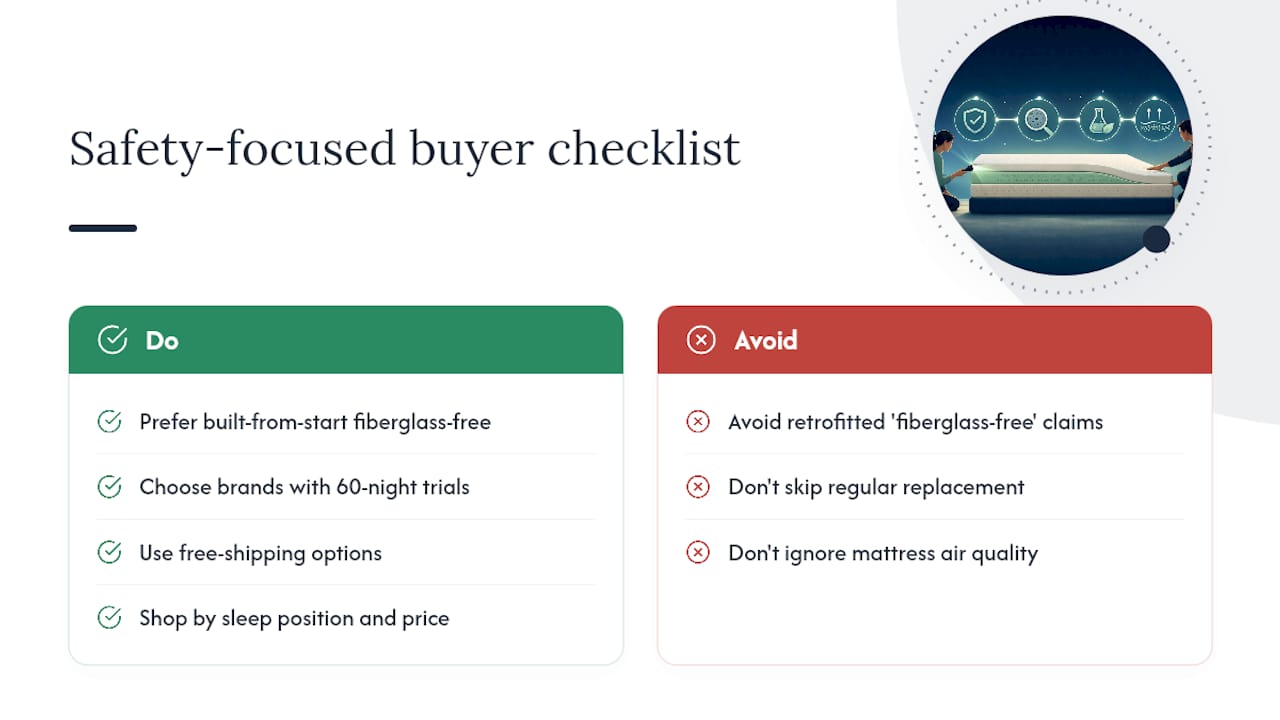
Some mattress brands build every mattress without fiberglass, using certified, safe materials and American manufacturing from the ground up rather than retrofitting a budget design after the fact. That distinction matters more than it sounds. A lot of “fiberglass-free” marketing gets bolted onto an existing product line late in the process; building it in from the start tends to produce a more consistent result across a product catalog.
The practical buyer protections back that up. Some mattress brands include a 60-night sleep trial and offer free shipping, which removes a common friction point when comparing options across several brands. Organizing collections by sleep position and price tiers can help buyers choose mattresses that fit their sleep habits.
Some mattress manufacturers recommend replacing a mattress regularly to maintain air quality, as older mattresses accumulate dust, allergens, and material breakdown regardless of fire barrier type. The reasoning ties directly back to the safety conversation here: older mattresses accumulate dust, allergens, and material breakdown regardless of what fire barrier they started with, and a fresher mattress on a predictable replacement schedule is one more way to keep a bedroom’s air quality in check. For readers who want the fuller picture on why this matters, our guide on why fiberglass-free matters covers the reasoning in more depth.
The Checklist Beats the Brand Hunt
Most advice on this topic turns into a list of brand names, which is useful for exactly as long as those brands keep their sourcing consistent, and not one day longer. The more durable skill is knowing how to read a fire-barrier line, spot a sewn-in law tag that doesn’t match the marketing, and recognize a removable cover as the practical signal it actually is.
Where I’d push back on conventional wisdom: a lot of guides treat “silica-free” and “fiberglass-free” as the same claim, and they’re not. If that distinction matters to you, wool or organic latex is the honest answer, not just any mattress that avoids the word “fiberglass” on its label.
Prioritize verification over reputation. A mattress from an established name with a vague fire-barrier disclosure deserves the same scrutiny as an unknown seller. Read the tag, check for a washable cover, and don’t assume price alone guarantees a safer build.
Ready to Shop Fiberglass-Free? Start Here
Some mattress brands build every mattress fiberglass-free from the first layer, not as an afterthought bolted onto an existing budget design. That means the fire-barrier line on the listing matches what’s actually inside, and buyers are not left cross-referencing a sewn-in tag against marketing copy to figure out what they’re sleeping on.
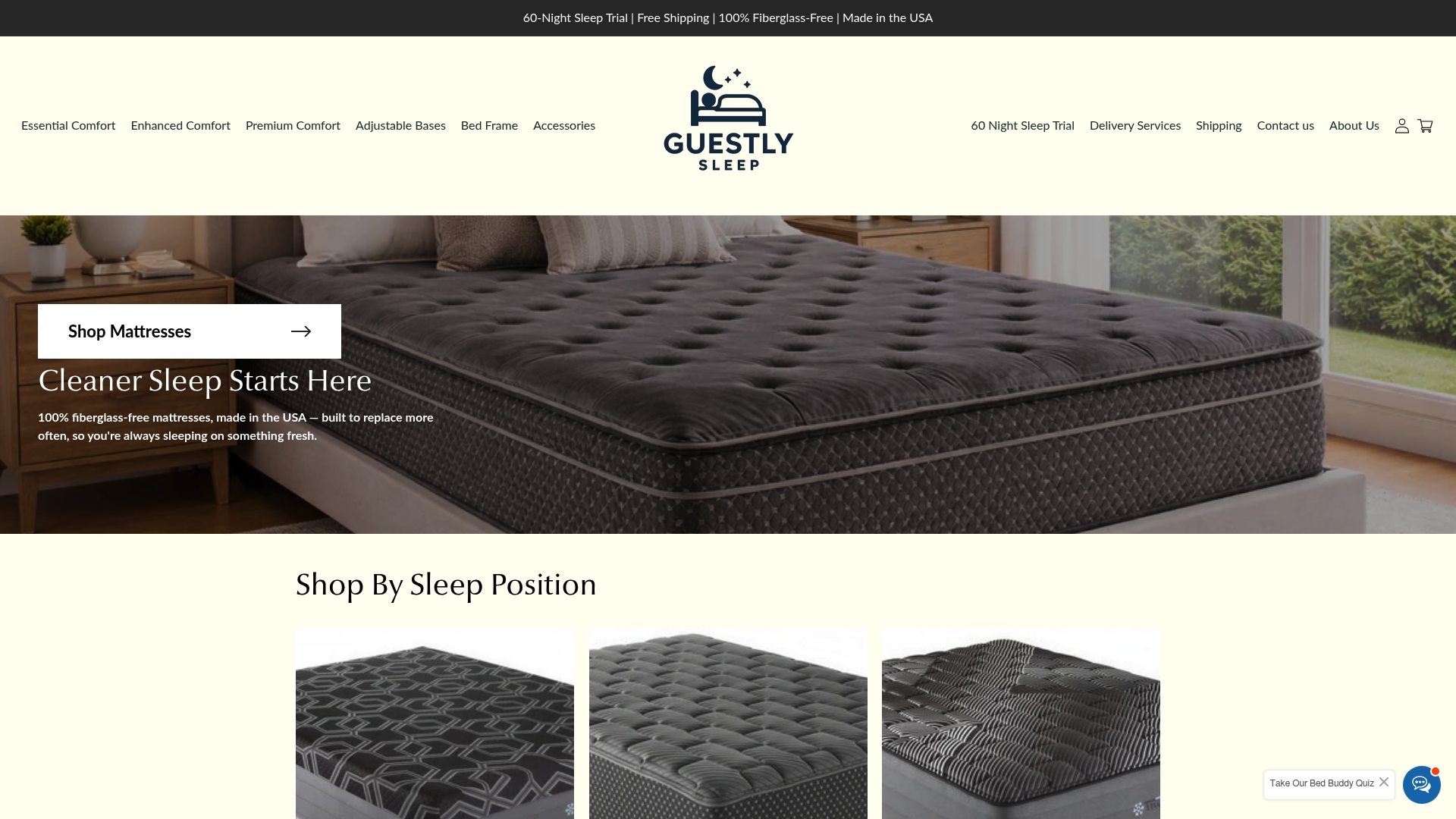
Browse the full lineup of fiberglass-free mattresses organized by sleep position and comfort tier, from Essential Comfort through Premium Comfort, so you can match a mattress to how you actually sleep instead of a generic size chart. If heat retention has been a problem with past mattresses, pair your choice with the Cooling Bedding Bundle for added temperature regulation through the night.
Some mattress orders come with a sleep trial period and free shipping, allowing evaluation at home before committing. Setup and disposal add-ons may also be available, which can be convenient when retiring an older mattress. Start by browsing collections by sleep position and see which comfort tier fits your body and your budget.
Where to Verify These Claims Yourself
The federal flammability rules referenced throughout this guide come directly from government sources, not marketing copy, and they’re worth reading firsthand if you want the full legal language.
- 16 CFR 1632 covers the cigarette-ignition resistance test every mattress must pass.
- 16 CFR 1633 covers the full open-flame test standard, the stricter of the two.
- CPSC’s rulemaking pages explain the agency’s reasoning and accepted compliance approaches in plain terms.
- Research on glass fiber exposure gives useful context on why disturbed fiberglass poses more risk than an intact, sealed barrier.
When a brand claims independent lab testing confirms its mattress is fiberglass-free, look for the actual lab name or a linked test report rather than taking the claim at face value. A specific, named source is always worth more than a general assurance.
Sources
- Relevant PubMed study on glass fibers and respiratory/dermal effects
- 16 CFR Part 1632 - Standard for the Flammability of Mattresses and Mattress Pads
- 16 CFR Part 1633 - Standard for the Flammability (Open Flame) of Mattress Sets
- CPSC — Flammability of Mattresses and Mattress Pads (rulemaking and guidance)