

Sensitive Sleepers: Clear Pillow Off Gassing in 24–72 Hours
Pillow off-gassing is the release of volatile organic compounds (VOCs) trapped in memory foam and its plastic packaging, and for most people it’s a nuisance, not a hazard. Certified foams are generally low risk, though the odor can trigger headaches or irritation in sensitive sleepers. The fastest fix: unbox the pillow immediately, strip off any plastic wrap or cover, and let it air out in a room with open windows or a fan running.
TL;DR:
- Most pillow off-gassing odors diminish within a week, especially with good ventilation and airing in warm, breezy conditions.
- CertiPUR-US, GREENGUARD Gold, and OEKO-TEX certifications indicate lower chemical emissions and reduce off-gassing intensity.
- Sensitive sleepers may experience short-term symptoms like headache or throat irritation, but these typically resolve once the pillow is aired out.
- Removing plastic packaging immediately upon unboxing and using activated charcoal can speed up odor dissipation significantly.
- Persistent odors beyond a week or ongoing symptoms warrant contacting the manufacturer or retailer for resolution.
Table of Contents
- What Causes That New Pillow Smell
- How Long Does Pillow Odor Actually Last
- Is Pillow Off-Gassing Actually Harmful to Your Health
- How to Get Rid of Pillow Off-Gassing Fast
- When Persistent Smell Means It’s Time to Contact the Maker
- A Straight Answer From Guestlysleep on Low-Odor Sleep Products
- Why Guestlysleep Is Built for Sleepers Who Don’t Want to Gamble on Chemical Odor
- The Off-Gassing Panic Is Overblown, but the Fix Habit Is Underrated
- Sources
What Causes That New Pillow Smell
The chemical odor comes from two sources working together. Polyurethane foam releases VOCs as a byproduct of its manufacturing chemistry, and the adhesives used to bond foam layers add their own share of fumes. Then there’s the packaging problem: most memory foam pillows ship vacuum-sealed in plastic, which traps those gases against the foam for weeks during shipping and storage. The moment you cut that seal, you’re releasing a concentrated dose all at once.
Fresh foam off-gasses more than foam that’s had time to cure, which is why a pillow straight off the truck often smells stronger than one that sat on a store shelf. Density matters too. Denser, more compressed foams tend to hold onto VOCs longer simply because there’s less surface area for the gas to escape.
Not every fill material behaves this way. Natural latex and certain fiber fills produce far less odor because they skip the polyurethane chemistry entirely. If you’re shopping for a lower-odor option, look for these signals on the label:
- CertiPUR-US certification, which tests foam content and emissions and tends to correlate with lower off-gassing
- GREENGUARD Gold certification, which sets stricter chemical emission limits for indoor products
- OEKO-TEX certification, which screens textiles and covers for harmful substances
How Long Does Pillow Odor Actually Last
Most memory foam pillows lose their noticeable smell within 24 to 72 hours of unboxing, and the majority fade to nothing within a week. Denser, higher-end foams sometimes take longer simply because they were more tightly compressed in packaging.
A few factors speed things up or slow them down:
- Ventilation is the single biggest variable. A pillow airing in a breezy room clears faster than one left in a closed closet.
- Room temperature affects the rate too. Slightly warmer air helps VOCs evaporate, though you don’t want to overdo the heat (more on that below).
- Packaging duration plays a role. A pillow that sat vacuum-sealed in a warehouse for months may off-gas more intensely upfront than one shipped quickly.
You’ll know the smell is fading normally when the intensity drops noticeably each day and any mild symptoms you had (a slight headache, a tickle in your throat) ease up alongside it. If the odor holds steady instead of tapering off, that’s a different situation, covered further down.
Is Pillow Off-Gassing Actually Harmful to Your Health
For most sleepers, no. The Sleep Foundation frames off-gassing as a personal sensitivity issue rather than an industry-wide toxic exposure problem, since emission levels from certified foams sit at generally low concentrations. But “generally low” doesn’t mean zero, and some people notice it more than others.
What sensitive sleepers report: Common short-term symptoms include headache, mild nausea, eye or throat irritation, and lightheadedness. These tend to show up within the first few nights and resolve once the pillow has aired out and the VOC concentration in the room drops.
The EPA’s general guidance on indoor air quality treats VOCs as pollutants worth managing through ventilation and source control, which lines up with what sleep researchers recommend for pillows specifically. If you have asthma, chemical sensitivity, or you’re pregnant or caring for an infant, the safer move is to air the pillow out in a garage, spare room, or covered porch instead of the bedroom, or to lean toward mattress and pillow materials built around lower emissions from the start. People managing asthma in particular may want to review which materials tend to work better for sensitive airways before buying.
How to Get Rid of Pillow Off-Gassing Fast
Getting a new pillow smelling normal again is mostly about removing barriers and giving VOCs somewhere to go. Here’s the order that works:
- Cut it out of the packaging immediately. A lot of the initial smell comes from adhesives and packaging materials, not just the foam, so pulling the pillow out of its vacuum-sealed bag right away cuts the trapped concentration fast.
- Wash the removable cover if the care label allows it. This clears surface residue and any lingering packaging odor that clings to the fabric.
- Set it up for airflow, not storage. Lay the pillow in a room with open windows and a fan creating cross-breeze. Never reseal it in plastic while it’s airing. It needs moving air to release VOCs, not a closed bag.
- Add an odor absorber for stubborn smells. Activated charcoal in a breathable container placed near the pillow for 24 to 48 hours pulls VOCs out of the air effectively. Baking soda works for lighter, surface-level odor but won’t do much for deeper foam smell.
- Skip the sprays and essential oils, and consider using a safer alternative like an Inhalable Sleep Diffuser with Natural Relaxation Formula designed for sensitive sleepers. Masking chemical odor with perfume or fragrance oils often makes things worse for sensitive noses, since you’re layering one irritant on top of another instead of removing anything.
- Avoid heat shortcuts. Skipping the dryer and keeping the pillow out of direct, prolonged sun matters, since high heat can degrade the foam and shorten its lifespan even as it seems to speed up airing.
- Give it brief outdoor time on dry days if weather allows. A couple of hours outside in mild, dry conditions beats days stuck in a stuffy room.
Pro Tip: Slip an activated charcoal bag inside a breathable cotton pillowcase alongside the pillow rather than resting it directly on the foam. You get the same odor absorption without the charcoal dust transferring onto the pillow’s surface.
When Persistent Smell Means It’s Time to Contact the Maker
If a strong chemical odor is still hanging around after a full week of proper airing, that’s outside the normal range and worth acting on. The same goes for symptoms that don’t ease up, headaches or irritation that return every time you use the pillow even after ventilation.
Before you reach out to the manufacturer or retailer, document what happened:
- Dates and times you unboxed the pillow and started airing it
- What steps you took (ventilation, charcoal, washing the cover) and for how long
- Any symptoms you or someone else in the house experienced
- Photos of the packaging, care label, and any certification tags
Most reputable sellers offer a trial period or return window specifically for cases like this. If the smell or symptoms persist, stop using the pillow and request an exchange or refund rather than pushing through it.
A Straight Answer From Guestly Sleep on Low-Odor Sleep Products
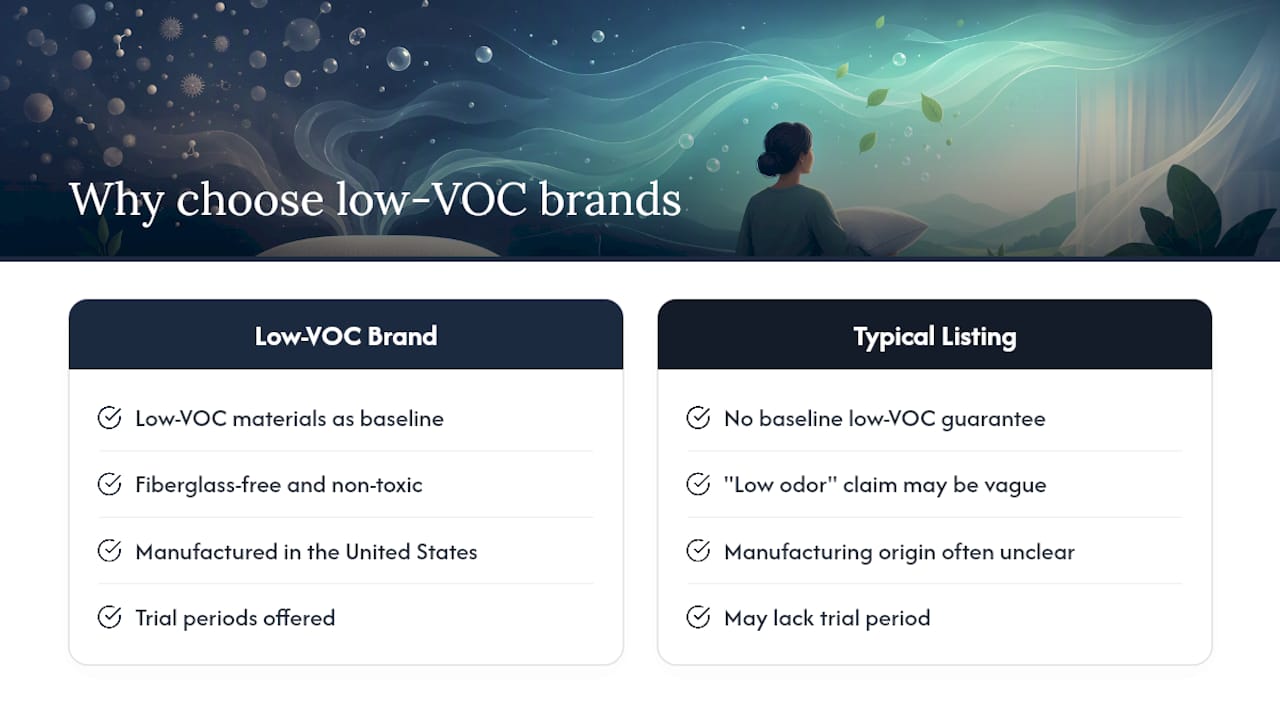
Some companies build their products around fiberglass-free, non-toxic materials and that same logic applies to why certifications and trial periods matter so much for sensitive sleepers. A tested, certified product removes most of the guesswork around what you’re breathing in on night one. It’s also part of why we recommend replacing pillows and mattresses every two to four years: materials break down, and fresher components tend to mean fewer surprises. For sleepers dealing with chemical sensitivity, a fill option like a bamboo charcoal pillow offers natural odor absorption built into the product itself, rather than something you add after the fact. If you want to understand the mechanics behind foam odor in more depth, our in-depth explainer on memory foam off-gassing breaks down what’s happening at the material level.
If chemical smell is a dealbreaker for you, the smartest move is buying from a company that treats low-VOC materials as a baseline rather than an upgrade. Some companies make their mattresses fiberglass-free and non-toxic, with manufacturing based in the United States, and back that with trial periods and free shipping so customers can live with a product before committing to it. 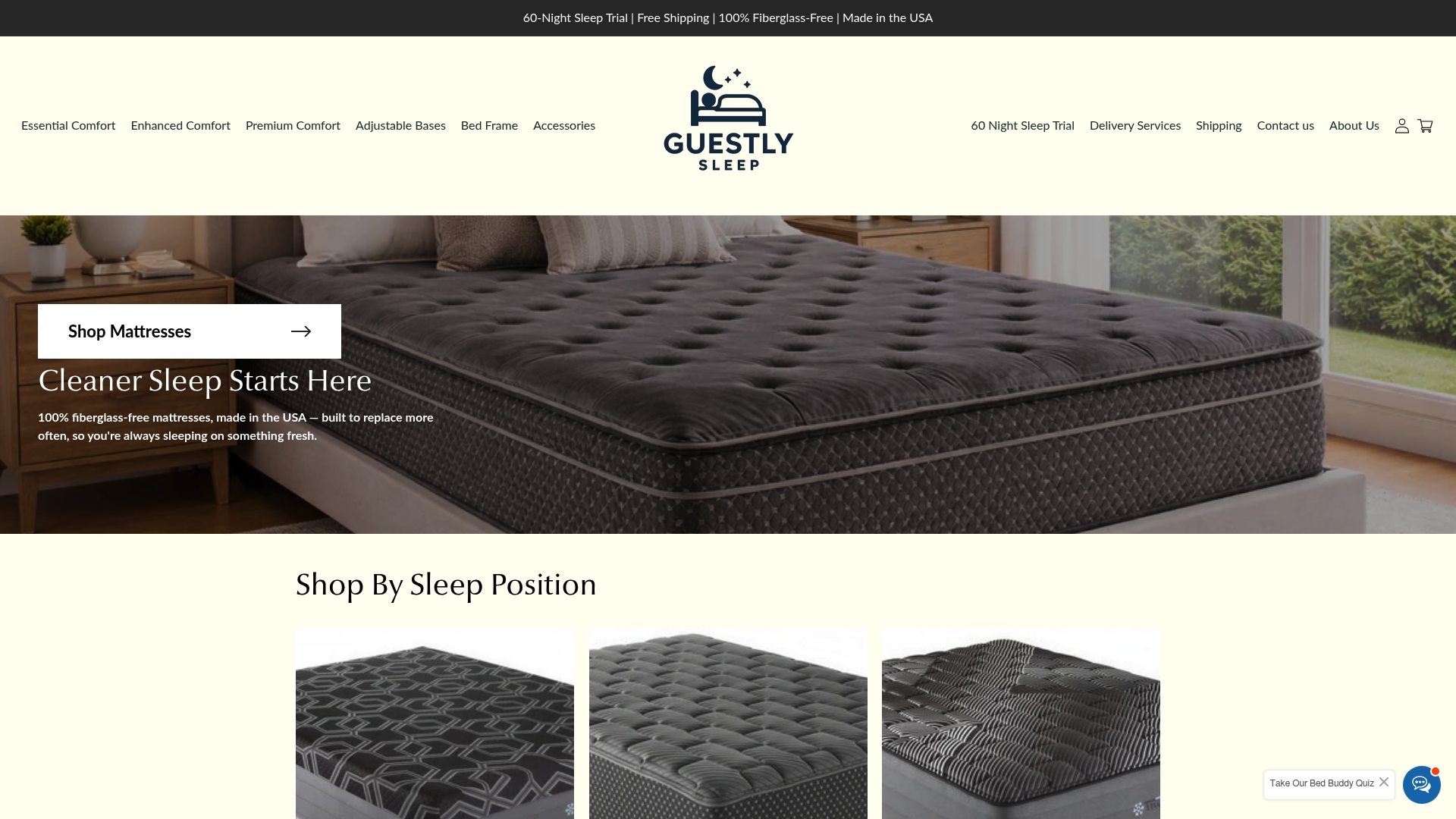 That trial window matters more than most shoppers realize. It gives sensitive sleepers real time to air out a new pillow, test how their body responds over multiple nights, and return it without a fight if something’s off. Instead of guessing whether a listing’s “low odor” claim holds up, you get to find out firsthand with a safety net in place. Check the current pillow and mattress lineup to see trial terms and material details before you buy, or read more on what mattress off-gassing involves if you’re comparing pillows and mattresses at the same time.
The Off-Gassing Panic Is Overblown, but the Fix Habit Is Underrated
Most of what gets called a “toxic pillow” scare online is really just impatience. People unbox a pillow, catch a whiff of chemical smell, and assume the worst instead of giving ventilation sufficient time to work. The data backs a calmer read: certified foams sit at low emission levels for the average sleeper, and the odor itself, while unpleasant, isn’t the same thing as a genuine safety hazard.
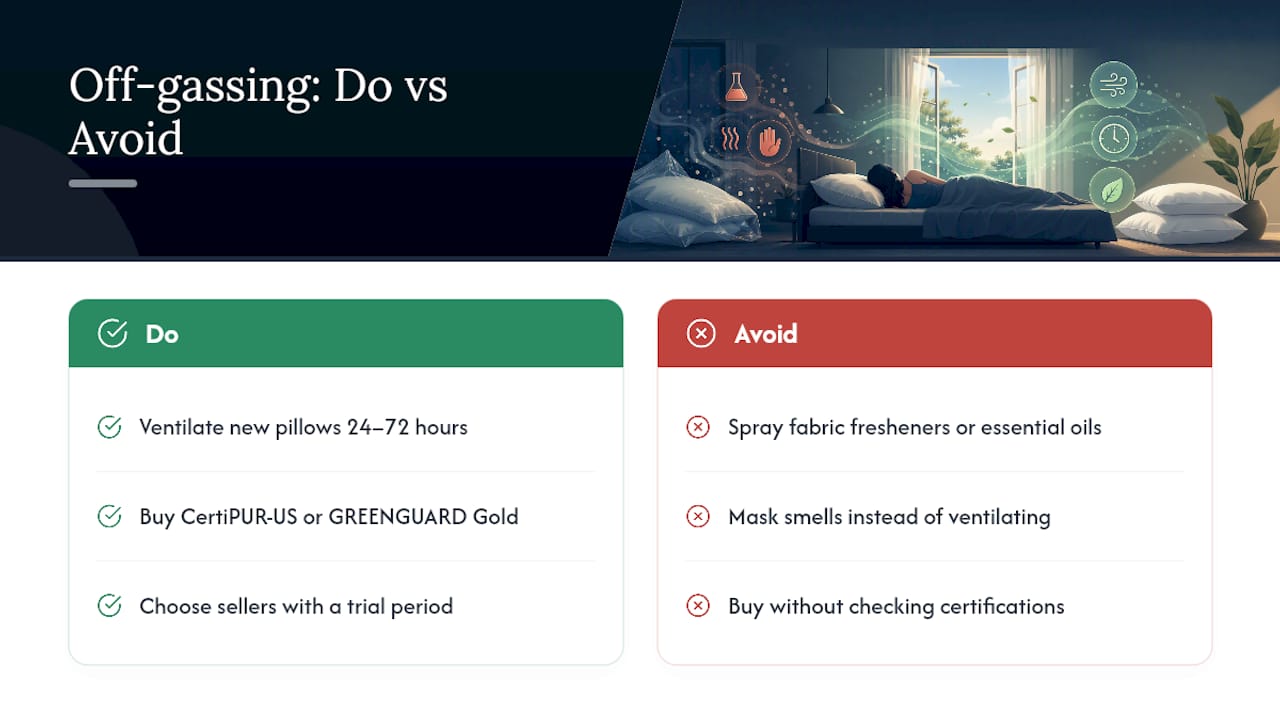
Where I think people get it backwards is treating masking as a fix. Spraying a new pillow with fabric freshener or dabbing on essential oil doesn’t remove anything. It just adds a second scent on top of the first, and for anyone with a sensitive nose or airway, that combination is often worse than the original smell alone. Ventilation and time are unglamorous, but they’re the only steps that actually reduce the VOC load rather than covering it up.
The other thing worth saying plainly: if you know you’re sensitive to chemical smells, don’t buy blind and hope for the best. Look for CertiPUR-US or GREENGUARD Gold certification before you order, and pick a seller with a real trial period. That one habit does more to prevent a bad night’s sleep than any amount of charcoal bags or open windows after the fact.
This article is general information, not a substitute for advice from a qualified doctor. Consult a qualified healthcare professional about your own circumstances before acting on anything here.
Sources
- Is Memory Foam Toxic? | Sleep Foundation
- Volatile Organic Compounds’ impact on indoor air quality | EPA
- Understanding Off-Gassing in Memory Foam Pillows and How to Minimize It Quickly – The Sleep Resource