

Memory Foam Off Gassing: What It Means for Your Health
For most healthy adults, memory foam off-gassing is a temporary nuisance, not a genuine health threat. The chemical smell comes from volatile organic compounds, or VOCs, which the EPA defines as gases that evaporate off certain materials at room temperature. A room-scale study on two memory foam mattresses found that emissions peaked on day one, decayed over roughly 32 days, and stayed well below health-based benchmarks throughout testing.
That doesn’t mean everyone should shrug it off. People with asthma, chemical sensitivities, or a history of respiratory issues can react to concentrations that wouldn’t bother someone else, and the CDC’s NIOSH division notes that isocyanates used in some foam production are respiratory sensitizers.
Do three things right away:
- Ventilate the room with open windows or a fan for a day or more before sleeping on a new mattress.
- Delay your first night if the smell is strong or you have asthma, allergies, or chemical sensitivity.
- Check for a certification like CertiPUR-US and confirm the return or trial policy before you commit.
Key Takeaways
Memory foam off-gassing peaks within the first 24 to 72 hours and typically falls below health-based exposure benchmarks within about a month with normal ventilation.
| Point | Details |
|---|---|
| Verdict for healthy adults | Standard off-gassing rarely poses a significant health risk when the room is ventilated normally. |
| Peak window | VOC emissions peak on day one and decay over roughly a month, per room-scale testing. |
| Watch for symptoms | Eye or throat irritation, headaches, dizziness, or nausea that fade once you leave the room usually track with normal off-gassing. |
| Higher-risk groups | Infants, pregnant people, and those with asthma or chemical sensitivity should ventilate longer or choose certified low-VOC options. |
| Certifications matter | CertiPUR-US, GREENGUARD Gold, and OEKO-TEX confirm independent emissions testing that marketing claims alone can’t. |
| Guestly Sleep’s role | Guestly Sleep sells fiberglass-free, U.S.-made mattresses with a 60-night trial, giving sensitive buyers time to judge real-world air quality. |
Table of Contents
- What Causes Memory Foam Off Gassing?
- Which Chemicals Are in That New Mattress Smell?
- How Long Does Off Gassing Last?
- Is Memory Foam Off Gassing Actually Harmful?
- Who Needs to Take Extra Precautions?
- How Do You Reduce Exposure and Speed Up Off Gassing?
- What Do Mattress Certifications Actually Test For?
- When Should You Be Concerned Enough to Act?
- What Should You Check Before Buying a New Mattress?
- Guestly Sleep’s Approach to Off Gassing
- A Balanced Take on Off Gassing Risk
- Shop Fiberglass-Free Mattresses Built for Cleaner Air
- Frequently Asked Questions
- Sources
What Causes Memory Foam Off Gassing?
Off-gassing happens when residual chemicals trapped inside a manufactured product slowly release into the air as gas. The EPA’s definition of VOCs covers exactly this: compounds that evaporate at normal room temperature and become airborne indoor pollutants, showing up in everything from paint to carpet to furniture.
Memory foam is particularly prone to it because of how it’s made. Polyurethane foam production relies on resins, catalysts, blowing agents, and solvents, and manufacturers often add flame retardants or adhesives during assembly. Not every one of those substances fully reacts or evaporates during production. What’s left behind keeps escaping slowly once the mattress is unrolled and exposed to air.
Think of it as a simple chain: manufacturing leaves behind unreacted chemical residue, that residue emits gas as the foam expands and warms, and you’re exposed when you breathe the air in that room. It’s the same mechanism behind “new car smell,” just from a different set of source materials.
- Manufacturing residue (resins, catalysts, solvents) gets trapped inside the foam cell structure.
- Compression and rolling for shipping temporarily seals some of that gas in.
- Unboxing releases a concentrated burst as the foam expands and warms to room temperature.
Pro Tip: Unbox your new mattress in a garage, spare room, or any space with a window you can crack open, rather than your bedroom. Where you unbox it determines what room absorbs the strongest burst of odor.
Which Chemicals Are in That New Mattress Smell?
The smell isn’t one chemical. It’s a mix of several VOCs, and no manufacturer’s off-gassing profile is identical. The Sleep Foundation notes that memory foam commonly releases VOCs from the foam itself, the adhesives holding layers together, and any fabric treatments applied to the cover.
Here’s what typically shows up, and why each one matters:
- Formaldehyde — Often present in adhesives or fabric finishes. The National Cancer Institute classifies it as a known human carcinogen at sufficient long-term exposure levels, which is why manufacturers who avoid it tend to advertise it.
- Toluene — A solvent used in some foam and adhesive processes; PubChem’s toxicity data links higher exposures to headaches and nervous system effects.
- Isocyanate residues — Leftover from the polyurethane reaction itself. OSHA documents respiratory and skin irritation tied to occupational isocyanate exposure, and NIOSH classifies them as respiratory sensitizers capable of triggering occupational asthma at sufficient exposure.
- Aldehydes and flame retardant residues — Byproducts of certain foam chemistries and fire-safety treatments, generally tied to eye and throat irritation at higher concentrations.
None of this means your mattress is loaded with industrial-strength chemicals. Concentrations in a finished consumer mattress are a fraction of what a factory worker might encounter, but the compounds are the same, which is exactly why third-party certification testing exists.
How Long Does Off Gassing Last?
Odor and true chemical emission are related, but they don’t move in perfect sync. The Sleep Foundation confirms that smell usually peaks fast and fades faster than the underlying VOC output. A mattress can stop smelling weeks before it stops emitting anything measurable.
| Stage | Timeframe | What to expect |
|---|---|---|
| Immediate | up to 24 hours | Strongest odor and highest VOC concentration, right after unboxing |
| Short term | around one week | Smell noticeably fades; emissions drop quickly from their peak |
| Medium term | about a month | Odor largely gone; low-level emissions continue declining |
| Long tail | 1 to several months | Odorless, trace emissions may persist at very low levels |
The room-scale mattress study that tracked this closely found VOC concentrations peaked on day one, then decayed steadily across roughly 32 days of measurement, with modeled long-term averages landing well under available health benchmarks. Ventilate thoroughly during the first several days when concentrations run highest, then keep cracking a window weekly through the first month as a low-effort habit.
Is Memory Foam Off Gassing Actually Harmful?
For most healthy adults under normal ventilation, no. Consumer Reports notes that high VOC concentrations can cause real symptoms, but that standard mattress off-gassing under typical airing conditions usually doesn’t rise to a significant risk for the average healthy sleeper.
Watch for these acute symptoms, especially in the first few days:
- Eye, nose, or throat irritation
- Headache or a dull pressure behind the eyes
- Dizziness or lightheadedness
- Nausea
- Skin irritation from direct contact with the foam or cover
The room-scale emissions study modeled average VOC concentrations at roughly 2.7 to 4.2 micrograms per cubic meter over a year of decay, well below the health-based benchmarks researchers compared them against. That’s the closest thing to a real-world verdict this topic has: two tested memory foam mattresses were unlikely to pose a health risk to consumers under normal use.
That’s reassuring for the average buyer, but it’s one study of two mattress models, not a blanket guarantee covering every foam formulation on the market. If symptoms are mild and fade within a few days of ventilating, that tracks with expected off-gassing behavior. If symptoms are severe, worsen instead of improving, or include difficulty breathing, stop using the mattress and talk to a doctor. This article offers general information, not a substitute for personalized medical advice.
Who Needs to Take Extra Precautions?
Off-gassing risk isn’t evenly distributed. Some people should air out a new mattress far longer than the standard recommendation, and a few should think carefully about foam at all.
- Infants and young children — Higher breathing rates relative to body size mean proportionally more exposure; delay use for at least 72 hours and ventilate thoroughly.
- Pregnant people — Heightened sensitivity to chemical exposure during pregnancy warrants a longer airing period and a conversation with your provider if concerns persist.
- Asthma or COPD — Respiratory irritants can trigger flare-ups; consider a certified low-VOC option or a non-foam alternative if you’re symptomatic even after airing.
- Multiple chemical sensitivity (MCS) — Even trace VOC levels others wouldn’t notice can trigger a reaction; prioritize third-party certified products with published emissions data.
- Severe allergy sufferers — Combine off-gassing precautions with a breathable mattress protector to reduce total irritant exposure.
If you fall into any of these groups, look specifically for certified low-VOC materials and confirm the return window before you buy, not after the mattress arrives.
How Do You Reduce Exposure and Speed Up Off Gassing?
You have more control over this than most shoppers realize. A few deliberate choices in the first week can meaningfully cut your exposure.
- Unbox the mattress in a garage, spare room, or any space you don’t sleep in, with a window cracked or a fan running.
- Leave the plastic wrap off once the mattress is out, unless the manufacturer specifically says otherwise.
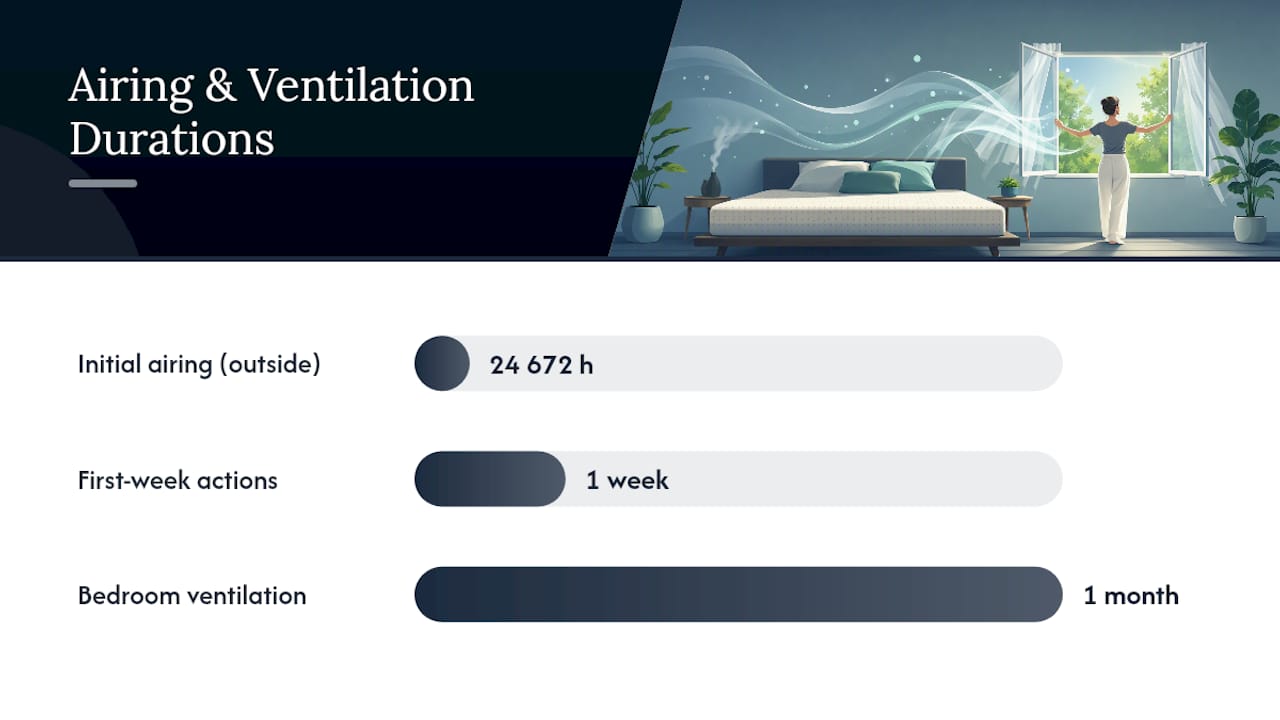
- Let the mattress stand upright or lie flat in that ventilated space for 24 to 72 hours before moving it to the bedroom.
- Once it’s in your bedroom, keep ventilating periodically for the first month, especially after warm days when off-gassing tends to accelerate.
- Add a breathable mattress protector once initial airing is done, to reduce direct contact with any residual emissions.
Heat and humidity speed up VOC release, so a mattress airing out in a warm, sealed room may actually off-gas faster and more intensely than one airing in a cool, ventilated space. That’s counterintuitive: people assume warmth “burns off” the smell faster, when it’s really just releasing more of it into a room with nowhere for it to go.
Pro Tip: If you’re especially sensitive, a portable air purifier with both a HEPA filter and an activated carbon layer captures VOCs that HEPA alone won’t touch. Consumer-grade VOC meters give you a rough directional reading; if you need a real number for medical or legal reasons, that’s a job for a professional indoor air quality test, not a $40 sensor.
What Do Mattress Certifications Actually Test For?
Certification labels exist precisely because the EPA doesn’t regulate VOC emissions in household products the way it might regulate outdoor air pollutants. That regulatory gap is why the FTC has taken enforcement action against mattress companies making unverified “zero VOC” claims. Third-party testing fills that gap.
- CertiPUR-US tests foam specifically for VOC emissions, heavy metals, formaldehyde, and certain flame retardants, verified through independent lab testing.
- GREENGUARD Gold sets stricter chemical emissions limits than standard GREENGUARD certification and screens hundreds of VOCs, with particular attention to products used by sensitive populations like children.
- OEKO-TEX focuses on textiles and fabric covers, screening for harmful substances in the materials that touch your skin most directly.
When you’re reading a product page, look for the actual chamber test data or certification number, not just a badge graphic. A real certification cites a testing date and a specific standard; a vague “eco-friendly” claim with no backing document usually isn’t one.
| Certification | What it primarily tests |
|---|---|
| CertiPUR-US | Foam VOC emissions, heavy metals, formaldehyde, flame retardants |
| GREENGUARD Gold | Broad chemical emissions limits, stricter thresholds for sensitive users |
| OEKO-TEX | Harmful substances in textiles and fabric covers |
None of these certifications promise zero emissions. What they promise is that an independent lab tested the product against a defined limit and it passed, which is a meaningfully higher bar than a manufacturer’s own marketing copy.
When Should You Be Concerned Enough to Act?
Most off-gassing resolves on its own with basic ventilation. A few signs mean it’s time to escalate beyond “just air it out more.”
- The chemical smell is still strong and unchanged after five to seven days of active ventilation.
- Respiratory symptoms are getting worse instead of better the longer you use the mattress.
- Dizziness, nausea, or headaches consistently start after time in the bedroom and ease elsewhere.
If you hit any of these, stop sleeping on the mattress, document your symptoms with dates, and use your return or trial policy rather than pushing through it. A consumer VOC meter can give you a rough sense of whether levels are unusually high, but a professional indoor air quality assessment from an industrial hygienist is the real answer if symptoms are severe or persistent. See a clinician if respiratory symptoms don’t resolve once you’re away from the mattress.
What Should You Check Before Buying a New Mattress?
A few minutes of checking before you buy beats weeks of ventilating after.
- Look for a named third-party emissions certification, not just a general “non-toxic” claim.
- Ask for or search for the technical data sheet showing chamber test results.
- If you’re highly sensitive, consider certified foam or a non-foam alternative outright.
- Confirm the return or trial window in writing before you commit to a purchase.
- Verify the mattress is fiberglass-free, since fiberglass introduces a separate and more serious hazard than off-gassing.
Red flags worth walking away from: vague material descriptions, zero emissions data anywhere on the listing, and no return policy at all. Pair any purchase with a mattress protector and, where offered, a trial period of 60 nights or more so you have time to judge real-world comfort and air quality together.
Guestly Sleep’s Approach to Off Gassing
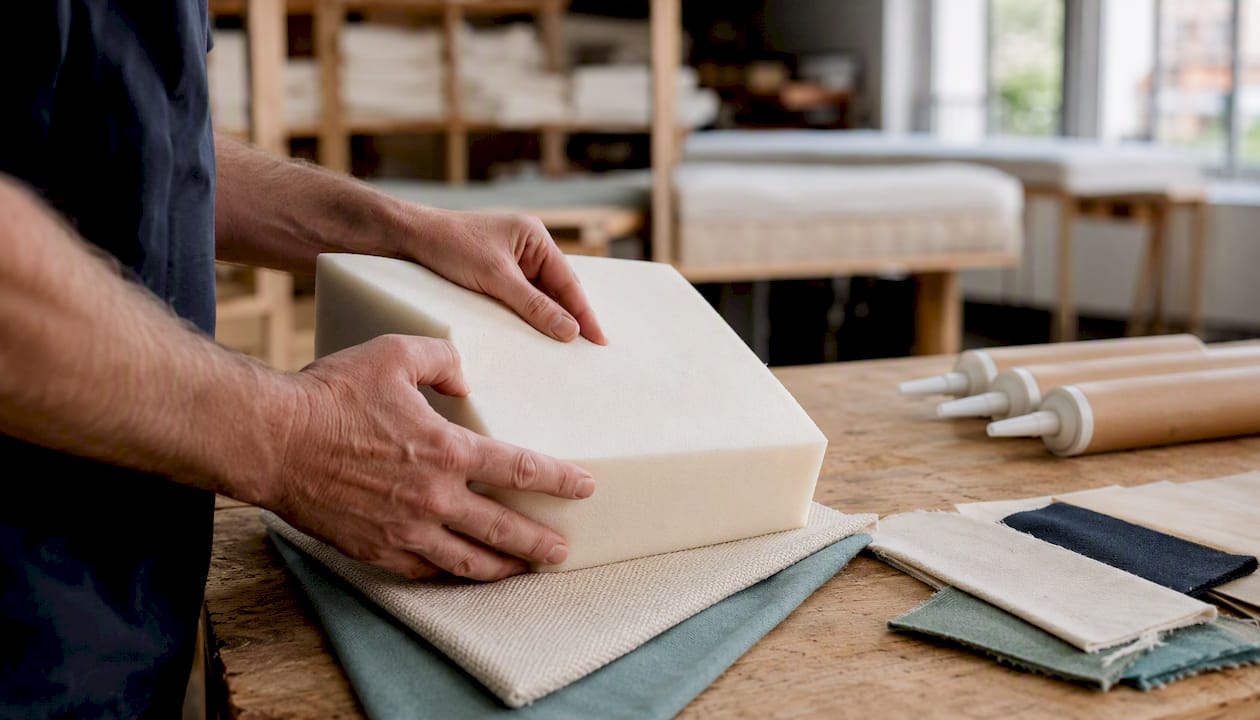
Guestly Sleep sells mattresses without fiberglass, sourcing certified, safety-tested materials and assembling every product in the United States rather than overseas. That domestic manufacturing model gives more direct oversight of the same materials this article just walked through: foam composition, adhesives, and fabric treatments.
Every Guestly Sleep mattress ships with a 60-night trial and free shipping, which matters specifically because off-gassing sensitivity varies so much from person to person. The scientific evidence in this piece explains the general pattern. Your own trial period is what actually confirms how your body responds.
A Balanced Take on Off Gassing Risk
Most of the anxiety around memory foam off-gassing outpaces the actual evidence. Peer-reviewed testing on real mattresses keeps landing in the same place: emissions peak fast, decline fast, and stay under health-based benchmarks for healthy adults who give a new mattress basic ventilation.
That doesn’t mean the caution is misplaced, it means it should be proportional. Ventilate before first use, favor certified materials, and take extra precautions if you’re pregnant, asthmatic, or raising an infant. For everyone else, a few days of open windows resolves the part of this that actually matters. Choosing a fiberglass-free, certified mattress from a brand like Guestly Sleep removes one more variable from a decision that shouldn’t require a chemistry degree to get right.
Shop Fiberglass-Free Mattresses Built for Cleaner Air
If off-gassing worries you enough to read this far, the material choice matters more than the airing routine. Guestly Sleep mattresses are built without fiberglass, using certified, safety-tested foam and fabric, and every mattress is made or assembled in the United States rather than shipped from an overseas factory with no oversight of what’s inside it.
You still get a normal off-gassing period since that’s physics, not a manufacturing flaw, but you’re starting from cleaner materials and a supply chain you can actually trace. Every order includes free shipping and a 60-night trial, so you have real time to judge air quality and comfort together instead of committing on day one. Browse the fiberglass-free mattress collection and find the comfort level built for how you actually sleep.
Frequently Asked Questions
How long does memory foam off-gassing last? Odor typically peaks in the first 24 to 72 hours and fades noticeably within a week. Low-level emissions can continue for several weeks to a few months, though they usually drop well below detectable smell long before they fully stop.
Is memory foam toxic to sleep on? Not for most healthy adults under normal ventilation. Testing on memory foam mattresses has found modeled VOC concentrations well below health-based benchmarks, though people with asthma, chemical sensitivity, or who are pregnant should take extra precautions.
Why does my new mattress smell like chemicals? That smell comes from VOCs released by the foam, adhesives, and fabric treatments used in manufacturing. It’s the same off-gassing process behind “new car smell,” just from different source materials.
What if the chemical smell doesn’t go away after a week? Persistent strong odor after five to seven days of active ventilation, especially alongside worsening symptoms, is a signal to stop using the mattress, document what you’re experiencing, and use your return or trial policy.
Do certifications guarantee zero off-gassing? No. Certifications like CertiPUR-US, GREENGUARD Gold, and OEKO-TEX confirm independent lab testing against defined emission limits, which lowers the odds of high emissions but doesn’t promise a completely odorless or emission-free product.
Sources
For deeper research beyond this guide, these sources cover the science and standards behind mattress emissions:
- Is Memory Foam Toxic? — Sleep Foundation
- What are volatile organic compounds (VOCs)? — EPA
- Isocyanates — OSHA
When in doubt about a symptom or a specific product’s chemical content, these agencies and studies are a better starting point than a marketing page.