

How Recycled Materials Appear in New Mattresses: 2026 Guide
How recycled materials find their way into new mattresses
Old mattresses are not trash. A significant majority of a typical mattress is recoverable at certified recycling facilities, including steel coils, polyurethane foam, cotton batting, and wood framing. Once separated and processed, those materials reappear in new mattresses, carpet padding, insulation, and other products. The path from discarded mattress to usable raw material runs through a network of certified dismantling facilities that clean, sort, and prepare each component to meet quality and safety standards.
Here is what a typical mattress contains, by weight and material type:
- Steel coils: 25–40% of total mattress weight; the most valuable recyclable component
- Polyurethane foam: 10–20%; reused in padding, insulation, or new mattress cores
- Cotton and natural fiber: 10–15%; repurposed for carpet underlay and industrial insulation
- Synthetic fiber: 10–15%; processed into fill material or acoustic insulation
- Wood: 5–10%; chipped for biomass fuel or composite wood products
Certified recycling facilities play a specific role here. They operate under quality control protocols that prevent contaminated or pest-infested materials from entering the recycled stream, which protects both the environment and the end consumer.
What actually happens when a mattress gets recycled?
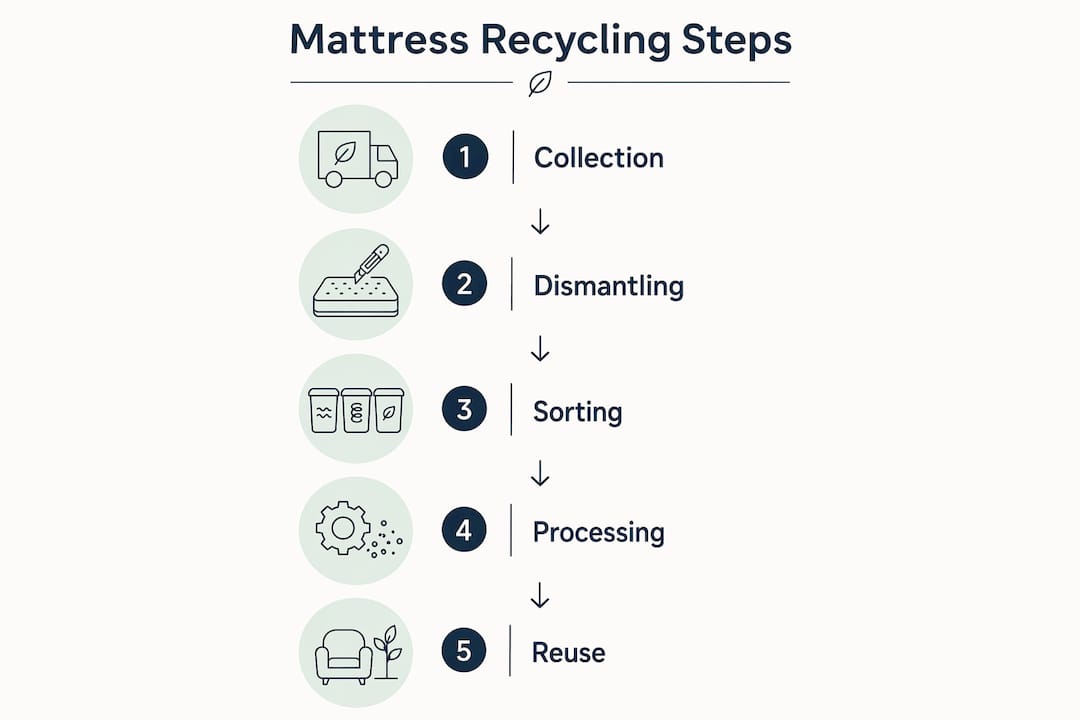
The recycling process is more physical than chemical. Workers and machines tear a mattress apart layer by layer, separating each material into its own clean stream. Operators at dedicated facilities use both manual and automated techniques to keep those streams uncontaminated.
The stages break down like this:
- Collection and intake: Mattresses arrive at the facility via curbside pickup, retailer take-back programs, or consumer drop-off. Staff inspect each unit for mold, bed bugs, or moisture damage.
- Dismantling: Workers cut away the fabric cover and ticking first, then remove foam layers, then extract the spring unit or wood frame. This step is almost entirely manual.
- Sorting: Each material type goes into a separate bin or bale. Steel coils are compressed. Foam is stacked or shredded. Fabric is bundled.
- Cleaning and processing: Steel gets degreased and baled for smelting. Foam is shredded or mechanically processed. Cotton and synthetic fibers are cleaned and compressed.
- Quality control: Processed materials are tested for contamination, density, and structural integrity before being sold to manufacturers.
Pro Tip: If you plan to recycle old mattress materials properly, keep the mattress dry and covered until pickup day. A single moisture event can introduce mold that disqualifies the entire unit from recycling.
The table below shows recovery rates for each major component at a well-equipped dismantling facility.
| Material | Share of mattress | Typical recovery rate | Primary destination |
|---|---|---|---|
| Steel coils | 25–40% | High | Steel mills, spring manufacturers |
| Polyurethane foam | 10–20% | Moderate to high | Carpet padding, new mattress cores |
| Cotton/natural fiber | 10–15% | Moderate | Industrial insulation, carpet underlay |
| Synthetic fiber | 10–15% | Moderate | Acoustic insulation, fill material |
| Wood | 5–10% | High | Biomass fuel, composite wood |
Connecticut’s Department of Energy and Environmental Protection notes that dismantlers recover a high percentage of mattress materials for reuse or recycling, which is a much better outcome than landfill disposal, where recovery is zero.
Where do recycled mattress materials actually end up?
This is the part most people do not picture clearly. Recycled mattress components do not just disappear into a vague “recycling stream.” They show up in specific, traceable products.
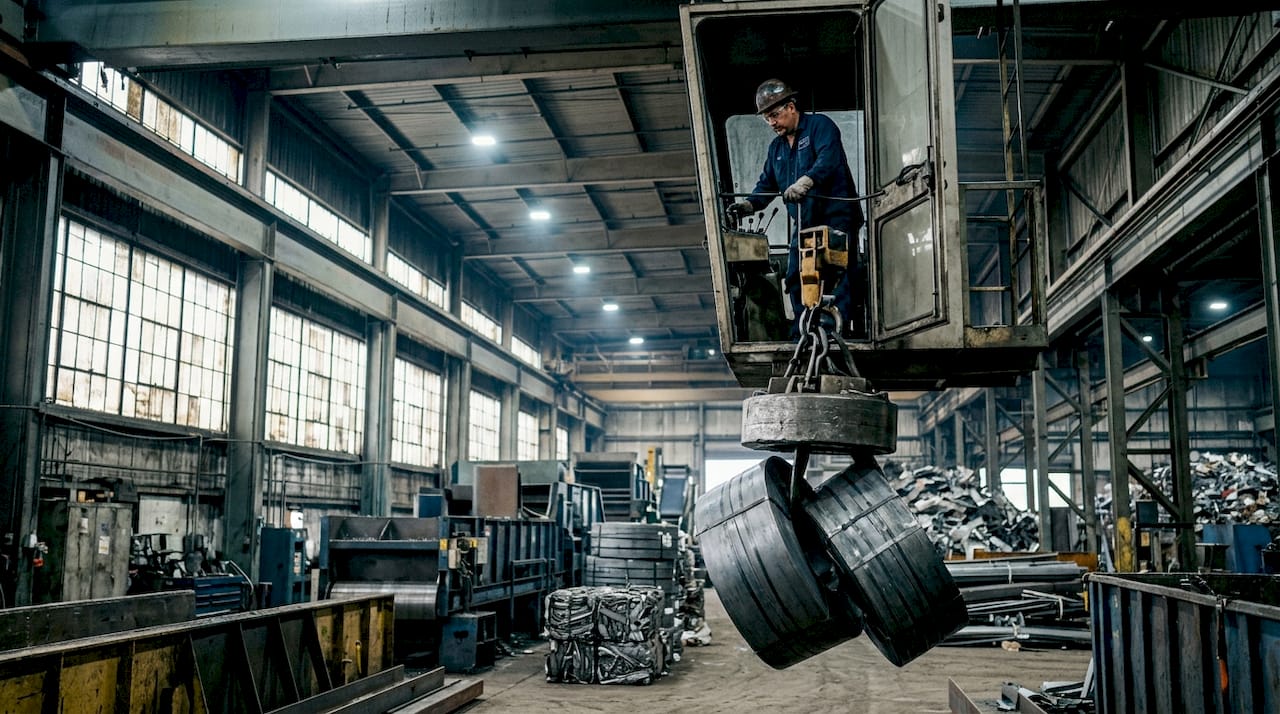
Steel is the simplest story. Coils get baled and sent to steel mills, where they are melted down and cast into new steel products, including new spring units for mattresses. The loop is tight and well-established.
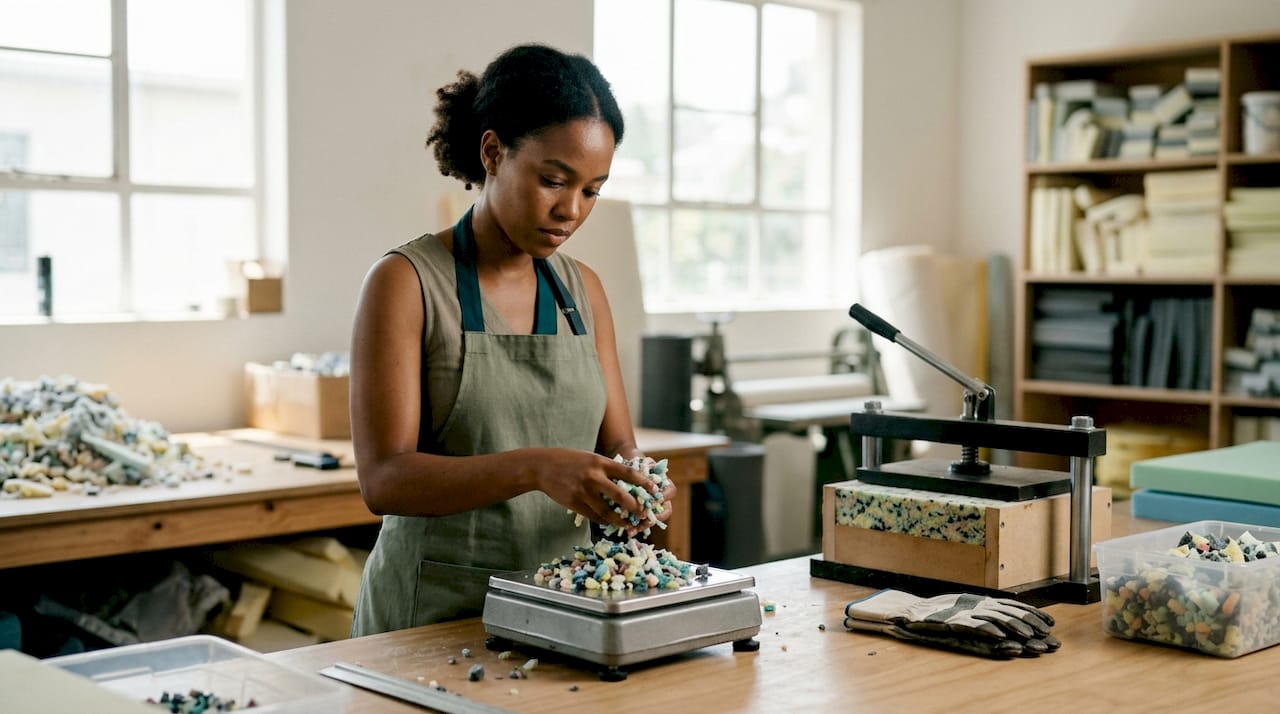
Foam is more interesting. The traditional method, called rebonding, shreds foam scraps and binds them under pressure into dense, stiff sheets used for carpet padding and gym flooring. That works, but the resulting material is too rigid to go back inside a mattress. A newer process called AIR-LAY changes that. It mechanically breaks foam into particles and binds them with bi-component fibers, producing flexible layers with density and performance comparable to virgin foam. That means recycled foam can now go directly into new mattress cores, closing a loop that rebonding could not close.
Cotton and textile fibers from old mattresses are cleaned and compressed into batts used for industrial insulation and carpet underlay. Some specialty recyclers process them into acoustic panels for construction. The fiber quality after processing is generally lower than virgin cotton, so these materials tend to land in industrial rather than consumer-facing applications.
| Recycled material | Reuse in new mattresses | Other common destinations |
|---|---|---|
| Steel coils | New innerspring units | Rebar, automotive parts |
| Polyurethane foam (AIR-LAY) | Flexible mattress core layers | Carpet padding, gym flooring |
| Cotton/natural fiber | Comfort layers, ticking fill | Industrial insulation, carpet underlay |
| Synthetic fiber | Quilting fill, edge support | Acoustic insulation, geotextiles |
| Wood | Rarely; mostly biomass | Composite board, mulch |
For consumers interested in mattress eco-friendly materials, understanding where recycled content comes from and where it goes is the first step toward making genuinely informed choices. The supply chain for recycled mattress materials is more developed than most shoppers realize, particularly for steel and foam.
Are recycled mattress materials safe and good for the environment?
The short answer is yes, when processed correctly. The longer answer involves understanding what “processed correctly” actually requires.
On the environmental side, the numbers are striking. Recycling one mattress saves a significant amount of water, energy, and reduces greenhouse gas emissions comparable to reducing car travel. Multiply that across the millions of mattresses discarded annually in the United States and the aggregate impact becomes substantial. Massachusetts notes that more than 75% of mattress components can be reused once disassembled, which keeps material out of landfills and reduces the demand for virgin resources.
On the health and safety side, recycled materials in new mattresses go through cleaning and testing before they reach consumers. Steel is smelted, which eliminates biological contaminants entirely. Foam processed through AIR-LAY or rebonding is mechanically treated, not chemically altered, so the base polymer remains stable. Textile fibers are cleaned and compressed, removing allergens and debris.
The main safety risk in mattress recycling is contamination at the source. Mattresses with mold, moisture damage, or bed bugs cannot be processed and go straight to landfill. This is why hygiene standards at intake matter so much. A contaminated mattress does not just fail to get recycled; it also adds cost and handling burden to the facility.
Benefits of choosing mattresses with recycled content, for eco-conscious consumers, supported by initiatives like Cozy Bedside - Sleep-Zone Air Purification:
- Reduced demand for virgin steel, petroleum-based foam, and raw cotton
- Lower carbon footprint across the product lifecycle
- Support for circular manufacturing models that keep materials in use longer
- Often paired with certifications like GREENGUARD Gold or CertiPUR-US that verify low chemical emissions
If you want to understand how mattress choices affect carbon output, the recycled content question is one of the most direct levers available.
Why the mattress recycling industry still has real problems to solve
The recycling infrastructure exists. The technology is improving. But the industry is not operating at full potential, and the reasons are worth understanding.
“Scaling mattress recycling faces challenges including the high cost of manual dismantling and the need to meet strict purification and safety standards. The ultimate goal is a circular loop integrating recycled mattress materials in new products without increasing retail price.” — IKEA France RetourMatras & Ecomaison Sustainable Practices
Manual dismantling is the core bottleneck. A mattress takes time and skilled labor to take apart cleanly. Adhesives bonding foam to fabric, or fabric to springs, make clean separation difficult. This is driving innovation toward modular mattress designs where layers can be separated without cutting or tearing, reducing labor time and improving material quality.
Regulatory fragmentation compounds the problem. Mattress disposal rules vary widely by state and municipality. Some states, including California, run dedicated stewardship programs through the Mattress Recycling Council (MRC) under CalRecycle oversight. Others leave disposal entirely to consumers and local waste services. Programs like Bye Bye Mattress offer state-specific drop-off and pickup options, but coverage is uneven.
Key challenges and developments shaping the industry in 2026:
- Cost of labor: Manual dismantling remains the largest expense for recycling facilities, limiting how many mattresses can be processed profitably
- Design complexity: Adhesives and multi-material bonding make clean separation difficult; modular design is the proposed fix
- Regulatory patchwork: No federal standard governs mattress recycling; state programs vary in funding, scope, and consumer access
- Quality standards: Recycled materials must meet the same performance benchmarks as virgin materials to be accepted by manufacturers
- Consumer awareness: Many consumers do not know recycling options exist, which reduces collection volumes and facility throughput
The mattress industry is shifting toward treating end-of-life recovery as a design consideration, not an afterthought. Manufacturers who build for disassembly reduce recycling costs and improve material yield. That shift benefits everyone in the chain, from the recycler to the consumer who eventually buys a mattress containing recovered materials.
For consumers who want to act now, checking with local waste services or the Bye Bye Mattress program is the fastest way to find a certified facility. And when buying new, looking for US mattress manufacturing standards and certifications signals that a manufacturer takes material quality seriously, whether those materials are virgin or recycled.
Guestly Sleep: built for the consumer who thinks about what goes into a mattress

Guestly Sleep makes fiberglass-free mattresses in the United States, using certified materials that are free from harmful fillers. If you have been thinking carefully about what goes into a mattress and what happens to it at end of life, that attention to material quality is exactly what Guestly Sleep is built around. Every mattress ships free, comes with a 60-night sleep trial, and is designed for the consumer who does not want to compromise on safety or sustainability.
Shop fiberglass-free mattresses and find the right comfort level for your sleep position, from Essential Comfort to Premium Comfort, all made in America.
Key Takeaways
Recycled mattress materials reappear in new products through certified dismantling, cleaning, and processing, with about 75% of a typical mattress recoverable at a properly equipped facility.
| Point | Details |
|---|---|
| Recovery rate | About 75% of a typical mattress can be recovered for recycling at certified facilities, including steel coils, polyurethane foam, cotton, and wood. |
| AIR-LAY foam recycling | The AIR-LAY process produces recycled foam layers with density comparable to virgin foam, enabling direct reuse in new mattress cores. |
| Environmental impact | Recycling one mattress saves a significant amount of water, energy, and reduces greenhouse gas emissions comparable to reducing car travel. |
| Contamination risk | Mattresses with mold, moisture, or pests cannot be recycled and go to landfill; keeping a mattress dry before disposal is critical. |
| Industry direction | Manufacturers are moving toward modular designs that ease disassembly and lower the cost of material recovery at end of life. |