

The Best Nontoxic Bedding Company for Non-Toxic Sleep
Table of Contents
- What counts as a natural bedding company?
- Which natural materials suit your sleep style?
- Which certifications actually protect you?
- What safety issues should you watch for?
- Does sustainability go beyond the raw material?
- How do you pick the right natural bedding company?
- How long does natural bedding actually last?
- Why Guestlysleep fits these buyer criteria
- What is the verdict?
- Key Takeaways
- The part most buyers miss
- Guestlysleep: non-toxic sleep products for health-focused shoppers
- Useful sources
What counts as a natural bedding company?
“Natural bedding” covers a wider range of products than most shoppers expect. The category spans mattresses, sheets, pillows, duvets, and mattress protectors, and the materials used across those products vary significantly in feel, durability, and health impact.
Mattresses are the anchor purchase. Natural latex (tapped from rubber trees), organic latex, and hybrid mattresses (latex or organic cotton over a coil system) are the main types. Natural latex is durable and pressure-relieving; hybrids add edge support and airflow. Both cost more than conventional foam but avoid the VOC off-gassing associated with standard polyurethane.
Sheets and pillowcases made from organic cotton, linen, or Tencel (lyocell derived from eucalyptus) are the most accessible entry point. Organic cotton is soft and widely certified; linen is coarser but exceptionally breathable and long-lasting; Tencel is silky and moisture-wicking. Sustainable bedding options tested by editors at The Good Trade in 2026 include brands across all three fabric types, with GOTS and OEKO-TEX certifications as the baseline selection criteria.
Pillows and duvets made from wool, down, or natural latex each serve different sleepers. Wool regulates temperature year-round; down is lofty and warm; natural latex is supportive and resistant to dust mites.
Mattress protectors are often overlooked, but a certified organic cotton or wool protector keeps your mattress free from moisture and allergens, which directly extends its useful life.
| Material | Breathability | Hypoallergenic | Durability | Price range |
|---|---|---|---|---|
| Organic cotton | Good | Yes | Moderate | $ |
| Linen | Excellent | Yes | High | $$ |
| Wool | Excellent | Mostly | High | $$ |
| Natural latex | Good | Yes | Very high | $$$ |
| Down | Moderate | No | Moderate | $$ |
| Silk | Good | Yes | Moderate | $$$ |
Which natural materials suit your sleep style?
Organic cotton
Organic cotton is the most familiar option and the easiest to find with credible certification. It feels soft from night one, washes well, and works for most sleepers. The trade-off: it holds moisture longer than linen or wool, which can be a problem for hot sleepers. Thread count is widely misunderstood here.
Pro Tip: A moderate thread count percale weave breathes better than a higher-thread-count sateen, even when both are labeled organic cotton. The weave structure determines airflow; the number is mostly marketing.
Linen
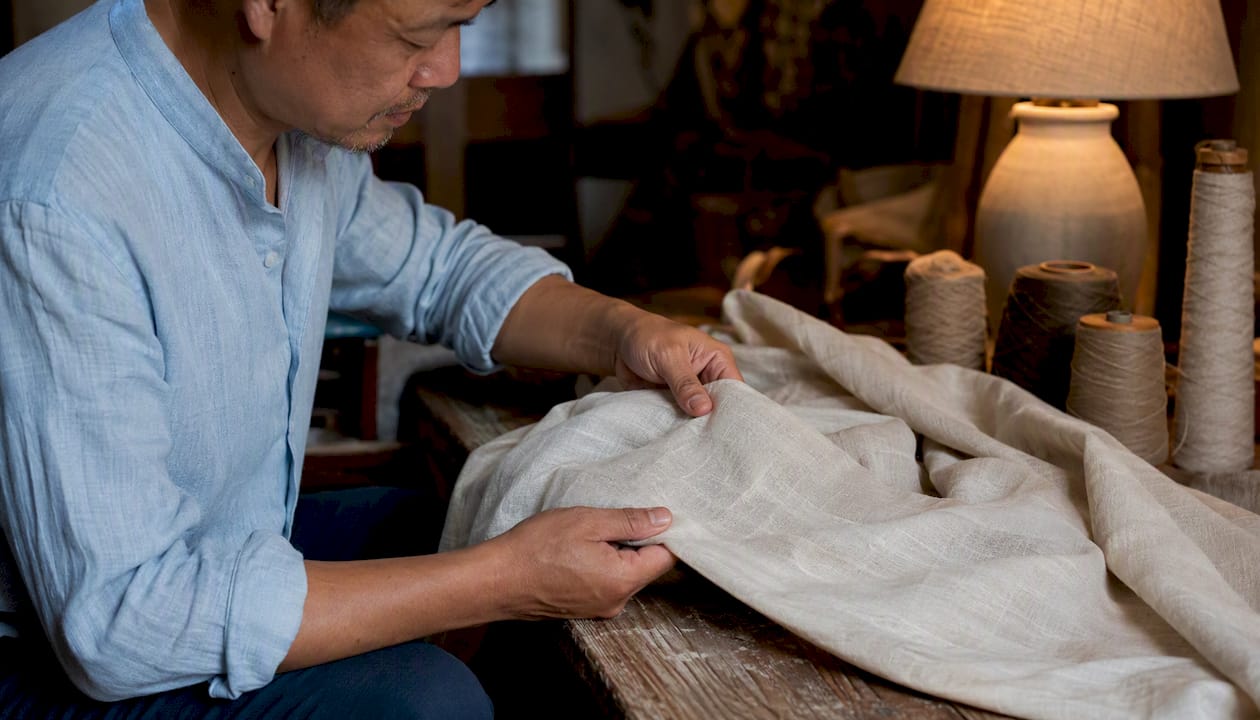
Linen comes from flax and gets softer with every wash. It is the best choice for warm climates or hot sleepers because its open weave releases heat faster than any cotton construction. GOTS-certified organic hemp and linen bedding from mills in Portugal demonstrates how regional manufacturing can add traceability to the sustainability claim. Linen costs more upfront but typically outlasts cotton by years.
Wool
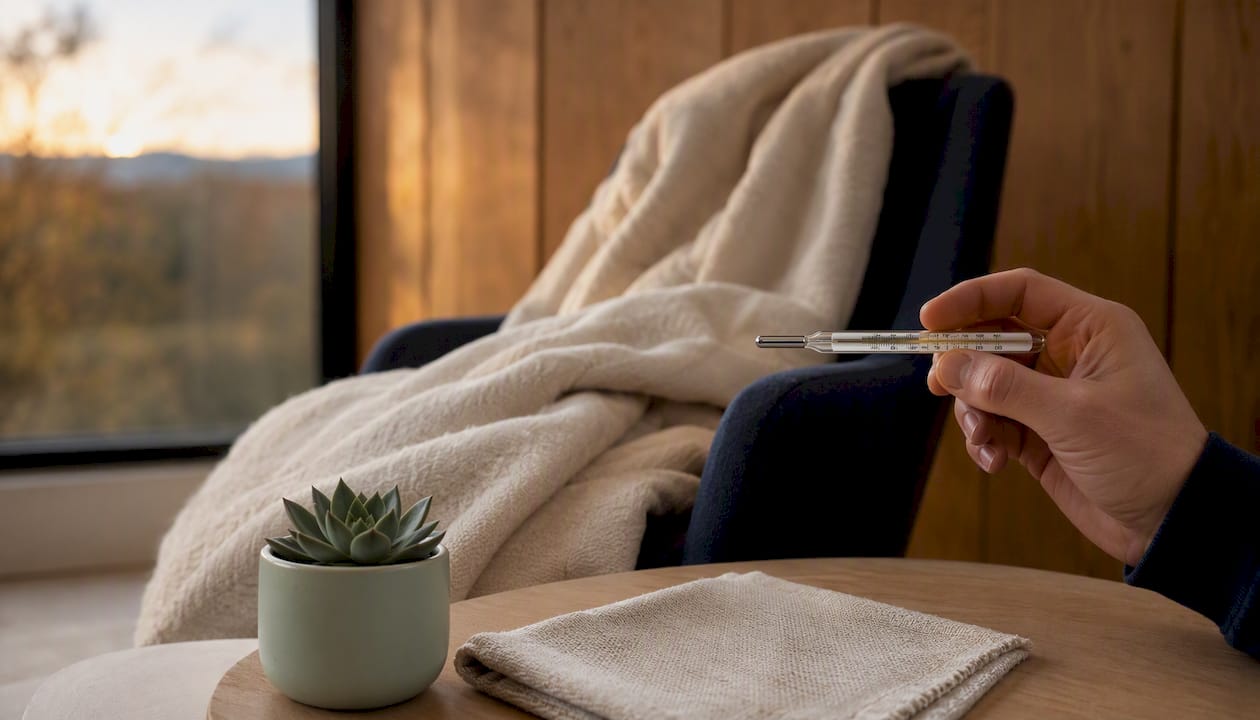
Wool is the most versatile bedding material for temperature regulation. It wicks moisture away from the body, insulates in winter, and stays cool enough in summer that many sleepers use a wool duvet year-round. Natural wool also acts as a flame retardant, which is why some certified organic mattresses use a wool layer instead of chemical fire barriers. Potential allergen for a small number of sleepers, though most reactions are to lanolin rather than the fiber itself.
Natural latex
Natural latex is tapped from Hevea brasiliensis rubber trees and is the most durable core material in organic mattresses. It is naturally resistant to dust mites and mold, which makes it a strong pick for allergy sufferers. The material runs warm compared to coil-based hybrids, so breathable mattress materials and construction choices matter when you are buying a latex mattress. True latex allergies are rare but real; confirm before purchasing.
Down and silk
Down is warm, lightweight, and lofty, but it is not hypoallergenic and requires dry cleaning or careful hand washing. Silk is temperature-neutral and naturally resistant to dust mites, but it is expensive and delicate. Both materials suit sleepers who prioritize luxury feel over easy maintenance.
Which certifications actually protect you?
Labels multiply fast in the natural bedding space. Some carry rigorous third-party audits; others are little more than brand claims dressed up with a logo.
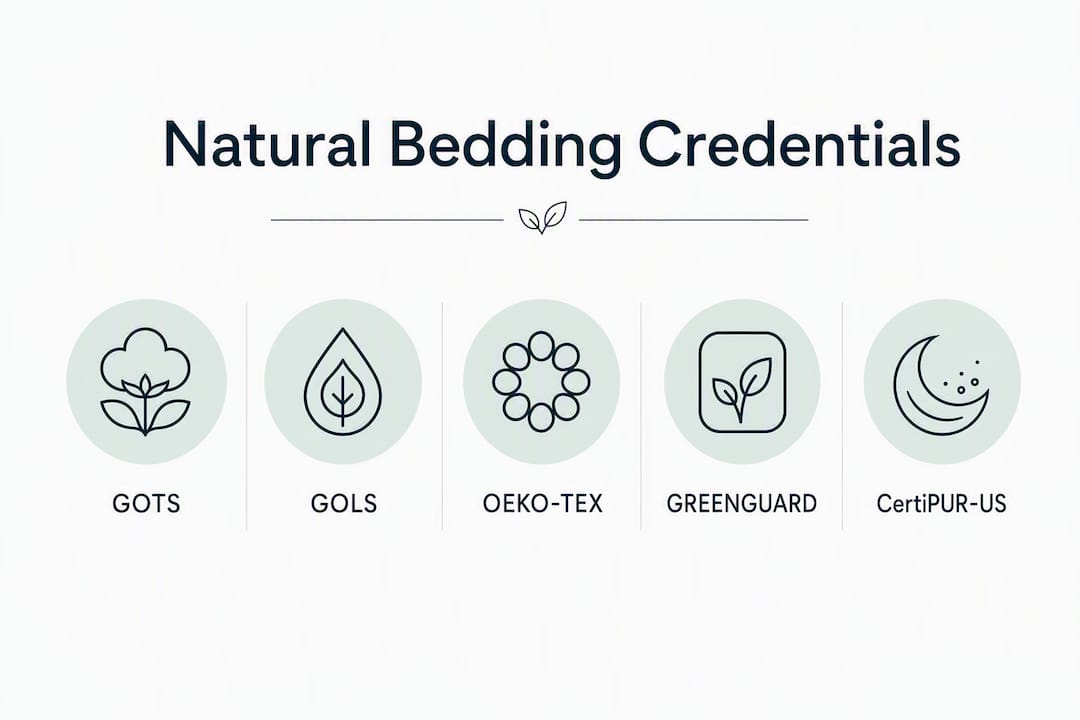
GOTS (Global Organic Textile Standard) is the gold standard for organic textiles. It covers the entire supply chain from fiber to finished product, including chemical inputs, wastewater treatment, and social criteria for workers. A GOTS label on sheets or a mattress cover means the organic claim has been independently verified at every processing stage, not just at the farm.
OEKO-TEX Standard 100 tests finished products for harmful substances, including pesticide residues, heavy metals, and formaldehyde. It does not verify organic farming or supply chain labor practices, but it does confirm the product you sleep on meets chemical safety limits. Brands like Under The Canopy use OEKO-TEX alongside organic cotton sourcing to cover both the farming and the chemical-safety angles.
GOLS (Global Organic Latex Standard) applies specifically to latex products and certifies that the latex content is at least 95% certified organic raw material. If you are buying a natural latex mattress or pillow, GOLS is the certification to look for.
CertiPUR-US applies to polyurethane foam, not natural materials. It certifies that foam is free from ozone depleters, heavy metals, and certain flame retardants. Relevant for hybrid mattresses that include a foam comfort layer alongside natural materials.
GREENGUARD Gold certifies low chemical emissions for indoor air quality. It is particularly relevant for mattresses because it tests the finished product in a room-sized chamber and measures VOC release over time. GREENGUARD Gold has stricter limits than standard GREENGUARD and is the version worth asking about.
B Corp and Climate Neutral operate at the company level, not the product level. B Corp certification requires a company to meet verified standards for social and environmental performance, accountability, and transparency. Climate Neutral certifies that a brand has measured, reduced, and offset its carbon footprint. Neither tells you what is in the mattress, but both indicate the company is accountable to third-party standards beyond its own marketing.
What to check on a product page:
- The certification body’s name and a license or certificate number you can verify on the certifier’s website.
- Whether the certification covers the finished product or only the raw material.
- The date of the most recent audit (certifications expire and must be renewed).
What safety issues should you watch for?
Fiberglass is the most commonly missed hazard in mattresses marketed as natural or non-toxic. Many budget mattresses use a thin fiberglass layer inside the cover as a low-cost fire barrier. When the cover is removed for washing or the mattress is cut open at disposal, microscopic glass fibers can spread through a room and embed in skin, eyes, and lungs. The problem is not always disclosed clearly on product pages.
Fiberglass fire barriers are legal and common in U.S. mattresses, but they are not required. Wool, thistle fiber, and certain treated cotton barriers achieve the same fire resistance without the contamination risk. Always ask a vendor directly: “Does this mattress contain fiberglass?” and look for a written answer, not a redirect to a certification page.
VOCs (volatile organic compounds) off-gas from synthetic foams, adhesives, and flame-retardant chemicals. New mattress smell is the most obvious sign, but some compounds dissipate quickly while others linger. GREENGUARD Gold certification is the most reliable third-party test for VOC levels in a finished mattress. Third-party lab reports, when a brand publishes them, go further than any single certification because they show actual measured levels rather than pass/fail thresholds.
Chemical flame retardants, including certain brominated and chlorinated compounds, were phased out of many products after regulatory pressure, but not all. Ask vendors for a full materials disclosure document, not just a certification badge. If a brand cannot or will not provide one, that is a clear signal to look elsewhere.
Safety warning signs to walk away from:
- No materials disclosure on the product page or available on request.
- Fiberglass not mentioned anywhere, with no alternative fire barrier named.
- No third-party testing documentation, only self-reported claims.
Understanding how mattress materials affect breathing and sleep health is the practical starting point for evaluating any mattress purchase on safety grounds.
Does sustainability go beyond the raw material?
Single-ingredient claims (“made with organic cotton”) are easy to make and hard to verify beyond the fiber itself. Full-cycle sustainability requires looking at what happens between the farm and your bedroom, and what happens after the mattress leaves your home.
The brands that hold up under scrutiny are the ones that publish factory names, third-party labor audits, and take-back or recycling programs. A vague “sustainably sourced” claim with no supporting documentation is a marketing statement, not a sustainability commitment.
A credible sustainability checklist for any natural bedding company:
- Transparent sourcing: Named farms or mills, not just “responsibly sourced.”
- Labor standards: Third-party audits (SA8000, Fair Trade) or named certifications covering worker wages and conditions.
- Recycled or low-impact packaging: Specific materials named, not “eco-friendly packaging.”
- Take-back or recycling program: A concrete process for mattress disposal, not a suggestion to “check local recycling.”
- Carbon claims: Verified by Climate Neutral or a named offset program with a registry number, not a self-declared “carbon neutral” badge.
Red flags that suggest surface-level sustainability: no factory information anywhere on the site, carbon offset claims with no registry link, and recycling language that turns out to mean “we suggest you donate it.”
For most shoppers, worker welfare and materials safety are the two factors that most directly affect the people involved in making the product. Carbon offset programs matter, but they should come after a brand has addressed its direct supply chain impacts.
How do you pick the right natural bedding company?
Use this checklist when comparing vendors. It turns the earlier criteria into a practical decision process.
- Verify certifications. Look up the certificate number on the certifier’s website (GOTS, GOLS, OEKO-TEX, GREENGUARD). A badge on a product page is not verification.
- Ask about fiberglass. Get a written answer. If the brand cannot confirm fiberglass-free construction, move on.
- Read the materials disclosure. A full list of materials, including the fire barrier, should be available without a support ticket.
- Check the sleep trial length. Thirty nights is the minimum worth considering; 60 nights gives you enough time to assess pressure relief and temperature regulation across seasons.
- Confirm warranty coverage. Ask what the warranty covers: sagging depth threshold, cover defects, and whether it is prorated or full replacement.
- Check country of manufacture. U.S.-made products are easier to verify for labor standards and have shorter supply chains.
- Ask about delivery and disposal. White-glove setup and old mattress removal reduce the friction of switching, and responsible disposal keeps fiberglass and foam out of landfills.
- Compare total cost. A $600 mattress replaced every 4 years costs less over a decade than an $1,200 mattress that lasts 6 years with proper care.
How long does natural bedding actually last?
Cleaning and care
- Organic cotton sheets: Machine wash cold, tumble dry low. Wash weekly. Replace every 2–3 years under regular use.
- Wool duvets: Spot clean; air regularly. Professional cleaning once a year. Wool duvets can last many years with proper care.
- Natural latex pillows: Spot clean only; never machine wash. Air in indirect sunlight to reduce moisture. Replace every few years as needed.
- Down pillows: Machine wash on gentle with two tennis balls to restore loft. Replace every few years.
- Mattress protectors: Machine wash monthly. Replace when waterproofing degrades, typically every 2–3 years.
- Mattresses: Guestly Sleep recommends replacing every 2–4 years to reduce allergen buildup and maintain safe materials standards.
For mattress cleaning products, choosing a non-toxic certified detergent matters as much as the mattress materials themselves. Residue from conventional cleaners can undermine the non-toxic environment you paid for.
Lifespan and cost per year
Guestly Sleep recommends replacing your mattress every 2–4 years to reduce allergen buildup and maintain safe materials standards. That is more frequent than the conventional 8–10 year guideline, and it reflects a health-first approach rather than a cost-minimization one.
| Product | Typical lifespan | Approx. annual cost |
|---|---|---|
| Organic cotton sheets | 2–3 years | Moderate |
| Natural latex pillows | Few years | Moderate |
| Wool duvets | Many years | Modest |
| Natural latex mattresses | 2–4 years | Moderate |
| Fiberglass-free foam mattresses | 2–4 years | Moderate |
Delivery timelines for natural bedding vary by product. In-stock mattresses from U.S.-based e-commerce brands typically ship within a few business days. Custom or made-to-order latex mattresses can take several weeks to arrive. White-glove installation and disposal services may add a few days to the delivery window.
Why Guestly Sleep fits these buyer criteria
Guestly Sleep meets the practical checklist above at every point that matters most to health-conscious shoppers.
- Fiberglass-free construction: Every mattress is explicitly fiberglass-free, with no hidden fire barriers that could contaminate a bedroom at disposal.
- U.S. manufacturing: Mattresses are made or assembled in the United States, which shortens the supply chain and makes labor standards easier to verify.
- Certified safe materials: Products use certified materials free from harmful fillers, with materials transparency built into the brand’s core positioning.
- Comfort-level collections: The product range covers Essential Comfort, Enhanced Comfort, and Premium Comfort tiers, plus options organized by sleep position (side, back, stomach), so buyers can match the mattress to their actual needs.
- 60-night sleep trial: Sixty nights is long enough to assess pressure relief, temperature regulation, and partner disturbance across real-life conditions.
- Free shipping: No hidden delivery fees on mattress orders.
- Setup and disposal service: Guestly Sleep offers a professional mattress and adjustable base installation service that includes removal of the old mattress, reducing disposal friction and keeping old materials out of landfills irresponsibly.
- Adjustable bases and solid wood frames: The product line extends beyond mattresses to adjustable bases and solid wood bed frames, so buyers can build a complete non-toxic sleep setup from one source.
If you are buying a mattress specifically to avoid fiberglass, VOCs, and undisclosed chemical fire barriers, Guestly Sleep’s combination of materials transparency, U.S. manufacturing, and a 60-night trial makes it the most practical starting point for health-focused shoppers.
What is the verdict?
Health-conscious shoppers who want documented, fiberglass-free, non-toxic materials with a real sleep trial should start with Guestly Sleep. The materials disclosure and U.S. manufacturing address the two biggest trust gaps in the natural bedding market.
Allergy sufferers benefit most from the fiberglass-free construction, certified materials, and the option to pair a mattress with a natural latex or organic cotton protector that keeps allergens from accumulating.
Budget-minded shoppers should factor in the 2–4 year replacement cycle Guestly Sleep recommends. A lower upfront price with a shorter replacement window can cost less over time than a premium mattress held past its safe lifespan.
The next step is straightforward: compare Guestly Sleep’s fiberglass-free mattress options side by side on the mattress comparison chart to find the comfort level and construction that fits your sleep position and budget.
Key Takeaways
The single most important rule when choosing a natural bedding company: verify certifications independently, confirm fiberglass-free construction in writing, and prioritize a sleep trial of at least 60 nights before committing.
| Point | Details |
|---|---|
| Certifications to verify | GOTS covers organic textiles; GOLS covers latex; GREENGUARD Gold covers VOC emissions in finished mattresses. |
| Fiberglass is a real risk | Always get written confirmation that a mattress contains no fiberglass fire barrier before purchasing. |
| Sleep trial minimum | A 60-night trial gives enough time to assess pressure relief and temperature regulation across real conditions. |
| Replacement timeline | Guestlysleep recommends replacing mattresses every 2–4 years to reduce allergen buildup and maintain safe materials. |
| Guestlysleep recommendation | Fiberglass-free, U.S.-made mattresses with a 60-night trial and professional setup/disposal service available. |
The part most buyers miss
There is a gap in how most people shop for natural bedding, and it costs them. They spend hours comparing thread counts and organic certifications on sheets, then buy a mattress from a brand that buries a fiberglass fire barrier in the fine print. The mattress is where you spend a third of your life. It is also the product most likely to contain undisclosed materials that affect indoor air quality.
The certification landscape makes this harder than it should be. GOTS on a sheet set is meaningful. OEKO-TEX on a mattress cover tells you about chemical limits on the fabric, not what is inside the mattress. GREENGUARD Gold on the finished mattress is the one that actually tests what you breathe while you sleep. Most shoppers do not know the difference, and most brands do not explain it.
What I find compelling about Guestly Sleep’s positioning is the specificity. “Fiberglass-free” is a concrete, verifiable claim. “Non-toxic” alone is not. When a brand names the specific hazard it has eliminated and explains why, that is a more trustworthy signal than a stack of certification badges with no explanation of what they cover.
The 2–4 year replacement recommendation is also worth taking seriously. Conventional wisdom says replace a mattress every 8–10 years. But a mattress that has absorbed years of moisture, skin cells, and allergens is not the same product you bought, regardless of how it looks. Treating your mattress as a consumable wellness product rather than a furniture investment changes the math on what “affordable” actually means.
Guestly Sleep: non-toxic sleep products for health-focused shoppers
Fiberglass-free mattresses made in the USA, with a 60-night sleep trial and free shipping, are not the standard in the bedding market. Guestly Sleep built its product line specifically around the concerns this article covers: no hidden fire barriers, certified safe materials, and a replacement cycle that keeps your sleep environment genuinely clean. (Guestly Sleep mattresses are Certified-Pur certified nontoxic, but are not considered natural.)
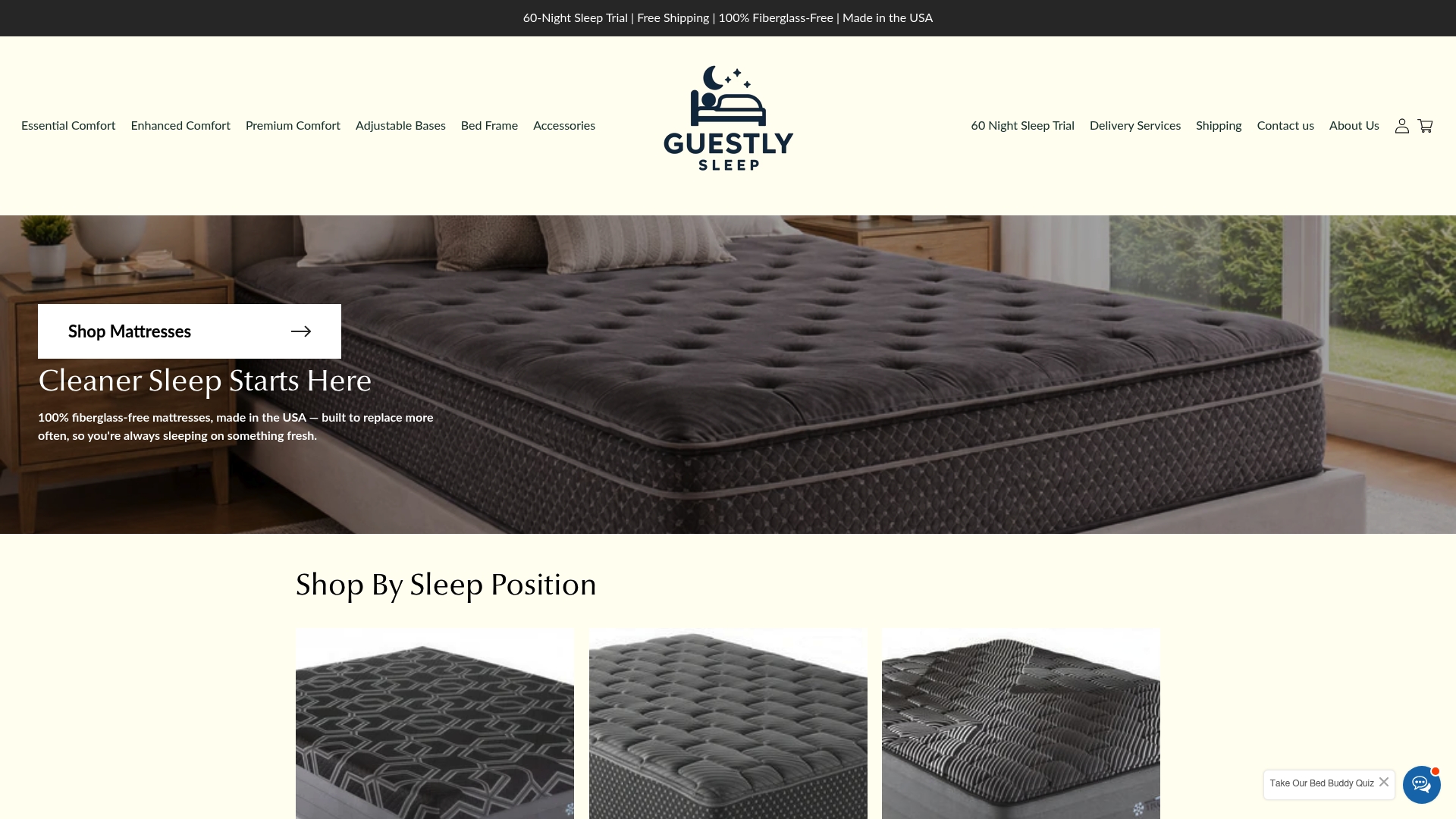
The product range covers every part of a non-toxic sleep setup: fiberglass-free memory foam and hybrid mattresses organized by comfort level and sleep position, non-toxic pillows, mattress protectors, adjustable bases, and solid wood bed frames. Add-on setup and disposal service handles delivery, installation, and old mattress removal in one visit.
The 60-night sleep trial removes the main risk of buying a mattress online. Free shipping removes the cost friction. And the mattress comparison chart lets you compare fiberglass-free options side by side before you decide.
Useful sources
These sources back the certification standards, editorial tests, and safety guidance in this article.
- We Tested The Best Sustainable And Organic Bedding (2026) — The Good Trade: Editor-tested picks across organic bedding categories, with GOTS, OEKO-TEX, and MADE SAFE as selection criteria. Useful for understanding how third-party editorial tests evaluate natural bedding brands.
- Purecise Clean — What “Non-Toxic Certified” Detergent Means: Explains verification steps for non-toxic cleaning product claims; useful when choosing safe care products for natural bedding.
- Mattress Materials Health Comparison: 2026 Guide — Guestlysleep: Covers health impacts of common mattress materials and why organic fibers reduce VOC exposure and support temperature regulation.
- Why Replacing Your Mattress Is a Smart Health Investment — Guestlysleep: Explains the 2–4 year replacement recommendation and the health rationale behind treating a mattress as a consumable wellness product.