

When 1.5 Inches of Sag Matters: Mattress Warranty Coverage for Health Focused Buyers
Mattress warranties cover manufacturing and workmanship defects, like broken coils, split foam, or sagging that goes beyond a set depth threshold. They don’t cover comfort changes, stains, or normal wear. Most policies are prorated after an initial full-coverage window, meaning you’ll likely pay shipping or a percentage of the replacement cost. Before filing anything, photograph the problem, measure it, and check your specific policy’s claims steps.
TL;DR:
- Most mattress warranties last between 10 to 20 years, but lifetime options often involve significant proration after the first decade.
- Coverage applies only to defects such as broken coils, cracked foam, ripped seams, or excessive sagging, typically measured at around 1.5 inches.
- Claims are frequently denied due to exclusions like normal wear, stains, pet damage, unsupported foundations, or removal of the law tag.
- Expect to pay shipping, inspection, or repair fees unless the warranty is non-prorated and fully covers these costs.
- Proper documentation, support matching manufacturer specifications, and following setup instructions are key to avoiding claim rejections.
Table of Contents
- How Mattress Warranty Coverage Actually Works
- What a Mattress Warranty Actually Covers
- Mattress Warranty Exclusions You Need to Know
- Prorated vs. Non-Prorated: What You’ll Actually Pay
- How to File a Mattress Warranty Claim
- Protecting Your Warranty Before You Ever Need It
- Sleep Trial or Warranty Claim: Which One Applies?
- Why Guestlysleep Treats Warranty Clarity as Part of the Product
- Shop Smarter With Clear Policies at Guestlysleep
- Primary Sources for Warranty Terms
- Sources
- FAQ
How Mattress Warranty Coverage Actually Works
A mattress warranty is a limited warranty, meaning it protects against specific problems (usually defects in materials or workmanship) rather than every possible failure; for athletes or active sleepers, choosing the right mattress and understanding warranty details can help improve sleep quality for muscle repair. The FTC’s consumer guidance draws a useful line between express warranties (the written promises a manufacturer makes) and implied warranties (baseline guarantees under state law that a product works as sold). Understanding mattress warranties starts with knowing which type you’re dealing with, since that determines what you can actually push back on.
Coverage typically starts on your purchase or delivery date, not the manufacture date, though some brands specify one or the other in the fine print. Length varies widely:
- Short warranties (around 5 years) show up on budget models.
- Standard warranties (10 to 20 years) cover most mid-range and premium mattresses.
- “Lifetime” warranties exist but almost always carry heavy proration after the first decade, so the term is misleading if you expect free replacement forever.
Some policies are non-prorated for the full term, some are prorated from day one, and many are a hybrid: full coverage for a set number of years, then a sliding scale after that.
What a Mattress Warranty Actually Covers
Coverage centers on defects that show up through no fault of your own. Manufacturers write these warranties to catch problems with materials or assembly, not problems caused by how a mattress gets used.
- Broken or bent innerspring coils. If a coil snaps or deforms under normal use, that’s a workmanship failure, not wear and tear.
- Cracked or split foam layers. Foam that separates or crumbles internally, especially in the first few years, usually qualifies as a material defect.
- Ripped seams or major cover defects. A seam that fails along the edge of the mattress, as opposed to a small nick from handling, typically counts.
- Excessive sagging. This is the most common warranty claim, and manufacturers measure it with a straightedge and a ruler. Many use a threshold around 1.5 inches of depression when no one is lying on the mattress. Sag shallower than that gets classified as normal body impression, not a defect.
Once a claim is approved, the remedy is rarely a blank check. Manufacturers generally choose between repair, straight replacement, a prorated refund, or store credit toward a new unit. Sleep Foundation’s warranty guide notes that replacement is the most common outcome for structural defects, while cosmetic issues sometimes get resolved with a repair kit or partial credit instead.
Mattress Warranty Exclusions You Need to Know
Most denied claims trace back to a short list of exclusions that show up in nearly every warranty policy, regardless of brand. Knowing them before you buy, or before you file, saves you the hassle of a rejected claim.
- Normal wear and tear. Every mattress softens over time. That’s expected aging, not a defect.
- Comfort preference changes. If the mattress just feels too firm or too soft now, that’s a trial issue, not a warranty issue.
- Stains, spills, and burns. Any of these typically void coverage outright, even if the mattress also has an unrelated structural problem.
- Water or mold damage. Warranties almost universally exclude damage from moisture, which is why a mattress protector matters so much.
- Pet damage. Claws, chewing, and accidents fall outside coverage every time.
- Secondhand or reseller purchases. Warranties generally apply only to the original purchaser, so buying used or through an unauthorized third party can void coverage entirely, according to Sleep Foundation.
Beyond those, a few procedural mistakes cause denials just as often as physical damage does. Using the wrong foundation or an unsupportive frame can void a claim because manufacturers specify support requirements for a reason: a foam mattress on slats spaced too far apart will sag prematurely, and that sag won’t be covered. Removing the law tag (the white tag stitched into the seam) is another classic mistake; it identifies the manufacturer and materials, and many warranties treat its removal as a violation of terms. Skipping registration can also slow or block a claim, depending on the brand.
Prorated vs. Non-Prorated: What You’ll Actually Pay
Proration is the part of mattress warranty coverage that catches people off guard, because it determines how much of the replacement cost lands on you instead of the manufacturer.
A non-prorated warranty means the manufacturer covers 100% of the repair or replacement cost during the covered period, no matter when the defect shows up. A prorated warranty means your share of the cost grows as the mattress ages. Sleep Doctor’s breakdown explains that many warranties combine both: a full-coverage window of two to five years, followed by a prorated scale for the remaining term.
Here’s roughly how the math tends to work in practice: some manufacturers start with your original purchase price, subtract a flat service or handling fee, then apply a percentage discount based on the mattress’s age before issuing store credit. A mattress that’s eight years into a 10-year prorated warranty might only qualify for a fraction of its original value in credit, not a full replacement.
Expect to cover a few things yourself even on an approved claim:
- Shipping the defective mattress back, or shipping fees for the replacement.
- Inspection fees, if the manufacturer charges for an in-home evaluation.
- Repair labor, in cases where a repair kit doesn’t count as a full manufacturer service.
How to File a Mattress Warranty Claim
Filing a claim goes faster when you treat it like building a case file instead of a casual complaint.
- Read your specific warranty document first. Terms vary enough between brands that assuming standard rules is a mistake. Check for a registration requirement, since some manufacturers require it before they’ll process anything.
- Keep your receipt and photograph the law tag. Both prove original ownership and the exact model, which matters since coverage generally applies only to the original purchaser.
- Document the defect thoroughly. Take dated photos, measure any sag with a tape measure or straightedge, and write down when you first noticed the issue.
- Contact the manufacturer or retailer directly. Most brands have a dedicated claims form. Beautyrest’s support page is a good example of what that process looks like: submit photos and measurements, then wait for an inspection decision or return instructions.
- Save every communication. Emails, claim numbers, and any written cost estimates for shipping or prorated fees protect you if there’s a dispute later.
Pro Tip: If a manufacturer quotes you a prorated fee, ask for the calculation in writing. A legitimate claims department will break down the original price, the service fee, and the age-based discount separately, not just hand you a final number.
Protecting Your Warranty Before You Ever Need It
Most warranty denials are preventable, and prevention mostly comes down to documentation and following the setup instructions you probably skimmed at delivery.
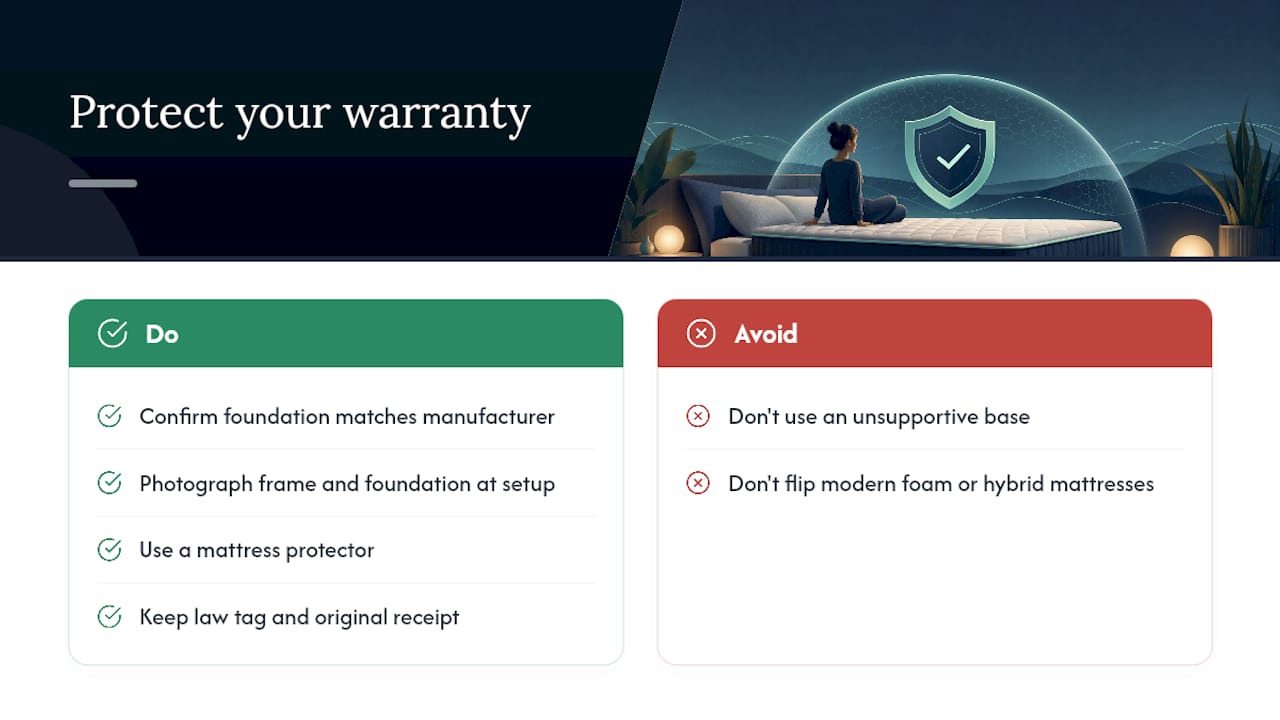
Confirm your foundation matches what the manufacturer specifies. A mattress on an unsupportive base can develop sag that gets classified as owner-caused rather than a defect. Photograph your frame or foundation when you first set up the bed, so you have proof of proper support if you ever need to file a claim years later. A mattress protector guards against the liquid damage that voids coverage instantly, and keeping the law tag intact along with your original receipt protects your standing as the original owner. If your model includes rotation guidance, follow it. Note that most modern layered foam and hybrid mattresses aren’t designed to be flipped the way old-style innerspring units were.
Sleep Trial or Warranty Claim: Which One Applies?
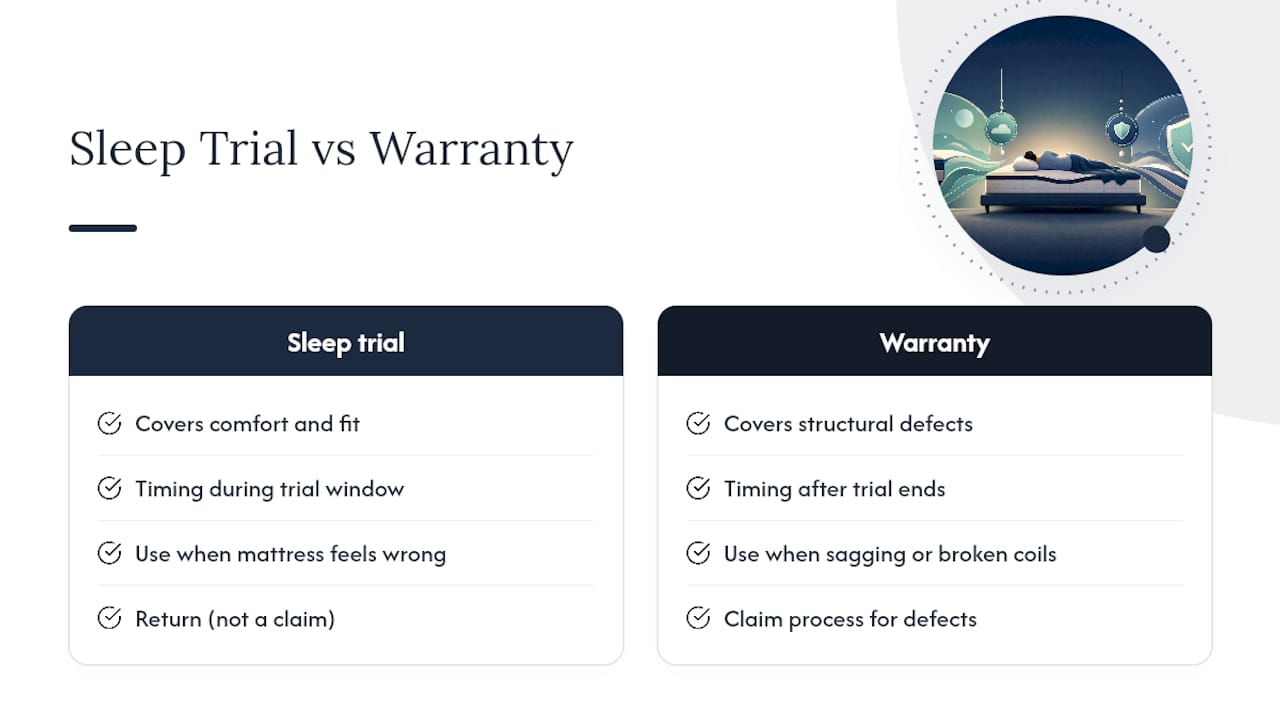
These two policies solve completely different problems, and mixing them up wastes time. A sleep trial covers comfort and fit: if the mattress feels wrong for your body or sleep position within the trial window, that’s a return, not a claim. A warranty covers structural defects that show up after the trial period ends, like sagging or broken coils. If you’re within your trial window and just don’t love how it feels, use the trial. If coils are failing or foam is cracking, that’s the warranty process, and the two have separate timelines, separate paperwork, and often separate return-shipping rules.
Why Guestlysleep Treats Warranty Clarity as Part of the Product
Warranty language shouldn’t require a law degree to interpret, which is part of why Guestlysleep builds its mattresses fiberglass-free and American-made. A trial period, shipping, and add-on services can reduce the guesswork buyers usually face after checkout. For health-focused sleepers, replacing a mattress every two to four years matters as much as the warranty itself, since even a perfectly covered mattress accumulates allergens and wear that no claim will fix.
— Justin
Shop Smarter With Clear Policies at Guestlysleep
Guestlysleep skips the fine-print maze that makes warranty coverage so confusing in the first place. Every mattress ships fiberglass-free and American-made, backed by a 60-night sleep trial and free shipping, so you’re not stuck guessing whether a comfort issue or a structural one applies to your situation.

If you want the support setup right from day one, which matters for keeping any future claim valid, Guestlysleep also offers professional installation and haul-away services starting at $250 for a full mattress and bed frame setup with old-mattress removal included. Warranty and return details live on each product page at Guestlysleep’s collections, and registering your purchase there takes a few minutes. Browse the mattress lineup and pick a model built around your sleep position before adding setup or disposal at checkout.
Primary Sources for Warranty Terms
The FTC’s warranty guide and Sleep Foundation’s mattress warranty overview cover the legal and industry basics referenced throughout this guide. Always check your specific manufacturer’s warranty page for exact terms, since coverage length, proration schedules, and registration steps differ by brand.
Sources
- Warranties | Consumer Information (FTC)
- Mattress Warranties | Sleep Foundation
- Mattress warranties, explained by an industry expert | Sleep Doctor
FAQ
Which Mattresses Offer a 10-Year Warranty?
Most mid-range and premium mattresses, including many hybrid and memory foam models, carry a standard limited warranty generally lasting several years, with terms varying by brand on proration and sag thresholds.
Is a Sagging Mattress Covered Under Warranty?
Sagging is covered when it exceeds the manufacturer’s defect threshold, often around 1.5 inches measured without anyone on the mattress; shallower body impressions are usually classified as normal wear.
Is a Mattress Warranty Worth It?
A manufacturer’s mattress warranty comes standard with your purchase at no extra cost, so it’s worth understanding even if you never file a claim; separate paid protection plans, like those from Allstate/SquareTrade, cover accidental damage such as stains and rips that manufacturer warranties exclude.
How Long Is the Average Mattress Warranty?
Most mattress warranties run multiple years with variability depending on model and brand; some budget models offer shorter coverage, while lifetime warranties usually include significant proration over time.
What’s the Difference Between a Sleep Trial and a Warranty?
A sleep trial, like Guestlysleep’s 60-night trial, covers comfort and fit issues during a limited window, while a warranty covers structural defects like broken coils or excessive sag after that window closes.