

How Often to Vacuum a Mattress, Memory Foam Included
Vacuum your mattress at least once a month. If it is memory foam, or you have allergies, pets or a mattress with no protector, move to every one to two weeks, or each time you change the sheets. That rhythm keeps dust, dander and dust mite debris from settling deep into the layers where you sleep for roughly a third of your life.
Below you will find a schedule by situation, the exact way to vacuum without harming foam, the one case where you can skip vacuuming, and how we think about mattress care at Guestly Sleep.
TL;DR
- Vacuum a mattress at least monthly. The Spruce advises this whether or not you use a protector.
- For memory foam, vacuum every one to two weeks or whenever you change the sheets.
- Use the upholstery attachment, work the seams, and keep the mattress dry. Moisture is the real danger for foam.
- A tested, fully enclosing allergy cover can remove the need to vacuum the mattress itself.
- Cleaning extends a mattress’s useful life but does not replace it. We recommend replacing every 2 to 4 years.
Table of Contents
- Your vacuuming schedule at a glance
- Why vacuuming a mattress is worth the ten minutes
- Memory foam: every one to two weeks
- Hybrids and innerspring: the monthly baseline
- How the allergy question changes the answer
- When you can skip vacuuming the mattress
- How to vacuum a mattress, step by step
- What not to do
- A simple monthly and seasonal routine
- Perspective: why we think about mattress hygiene differently
- When cleaning is not enough: replacement, setup and haul away
- FAQ
- Sources
Your vacuuming schedule at a glance
There is no single number that fits every bed. The right frequency depends on the material, who sleeps on it and whether anything covers it. Here is a practical way to set yours, built from the guidance of the sources cited later in this article.
| Your situation | How often to vacuum | Why |
|---|---|---|
| Standard household, no allergies, mattress protector on | At least once a month | A monthly pass removes surface dirt before it works deeper |
| Memory foam mattress, topper or pillow | Every one to two weeks, or at each sheet change | Foam traps dust, debris and pet hair |
| Allergies or asthma in the household | About once a month at minimum, more often if symptoms flare | Dust mites and their debris can aggravate symptoms |
| Pets sleep on the bed | Every one to two weeks | Hair and dander collect quickly |
| Tested, fully enclosing allergy encasement | The mattress itself does not need vacuuming | The cover is the barrier; clean the cover instead |
| Mattress with natural fillings such as wool, silk or cotton | Do not vacuum | Suction can disturb the internal layers |
If you want a simple anchor: pick the day you change sheets. Weekly sheet changes are common, so memory foam owners can vacuum every other change and stay within the one to two week window.
Why vacuuming a mattress is worth the ten minutes
You do not see what builds up in a mattress. Skin flakes, dust, pollen carried in on hair and pajamas, and pet dander all work their way into the top layers. Dust mites feed on that material. A sleep ergonomics expert at TEMPUR told Ideal Home that a single mattress can host between 100,000 and 10 million dust mites. They are microscopic, but their presence can make allergy symptoms worse.
The American Cleaning Institute’s Brian Sansoni makes the practical point in Consumer Reports: a clean mattress is a proactive way to head off common bedroom triggers such as dust, pollen and loose dirt that can lead to allergy and asthma flare-ups.
Two honest limits are worth knowing. Vacuuming removes surface and near-surface debris; it does not sterilize a mattress. And it works best as one step in a routine that also includes washing bedding and using a cover. We cover that routine further down.
If you want the longer story on how particles accumulate over the years, our article on how dust mites build up in a mattress in just a few years goes through it, and can old mattresses collect allergens explains what changes as a mattress ages.
Memory foam: every one to two weeks
Memory foam is dense and holds what lands on it. Angi’s guidance, which also reflects advice from The Spruce, is to vacuum memory foam every one to two weeks, or each time you change the sheets, to prevent the build-up of dust, debris and pet hair. That includes foam toppers and pillows, which sit closest to your face.
A few foam-specific habits help:
- Go gently. Use a soft brush or upholstery attachment rather than a bare hose end. Ideal Home suggests a soft brush attachment for a gentler clean.
- Keep liquids out. Angi notes that memory foam is highly absorbent and hard to dry, and that too much moisture can lead to mold and break down the foam’s structure. Vacuuming is the safest first move because it adds no moisture at all.
- Treat spills fast. Blot, do not soak, and let the area dry fully before you put sheets back on.
Synthetic constructions in general are fine to vacuum. Ideal Home says it is generally safe to vacuum memory foam, latex and innerspring mattresses. If you are weighing foam against other builds, our mattress comparison chart for hybrid and memory foam lays out the differences side by side, and the piece on foam latex mattresses covers another option.
Hybrids and innerspring: the monthly baseline
For a hybrid or innerspring mattress with a quilted top, the monthly baseline is a sensible default. The Spruce recommends vacuuming at least once a month, with or without protectors or covers because dust, dander and dust mites accumulate regardless.
Quilted tops and tufted seams collect the most, so spend extra time there. If the mattress is on the heavier side of use, such as a guest room that gets a lot of visitors or a bed shared with a dog, tighten the interval toward every two weeks.
How the allergy question changes the answer
If anyone in your home has asthma or allergies, you should treat the monthly figure as a minimum. Tobin James of TEMPUR advises in Ideal Home that everyone should clean their mattress at least every six months, but people with asthma or allergies should vacuum about once a month.
For a wider rule of thumb, Consumer Reports suggests cleaning a mattress at least twice a year, or four times a year if there is no encasement. Think of that as the deep-clean cadence (baking soda, spot treatment, a full airing) on top of your regular vacuuming.

There is a detail that protects you while you clean. The American Cleaning Institute advises that a non-allergic person should vacuum when possible, or you should wear a dust mask and goggles if eye allergies are a problem. If you have a diagnosed allergy or asthma, ask your allergist what routine suits your triggers, since they know what you react to.
Materials matter too. Our guides on which mattress materials suit people with asthma and how mattress materials affect breathing and sleep health can help you choose, and our allergy-friendly bedroom case study shows what a full set of changes looked like in practice.
When you can skip vacuuming the mattress
There is one clear exception. Cambridge University Hospitals NHS Foundation Trust says that if a mattress is fully enclosed in a tested, verified allergy-proof cover, there is no need to vacuum the mattress itself. The cover is the barrier, so the cover is what you maintain. That guidance comes from the United Kingdom, but the logic carries over: the barrier keeps allergens from reaching the mattress, so the surface you clean is the cover.

The American Cleaning Institute likewise recommends dust mite-proof covers to keep mites from passing through mattresses and pillows.
Two cautions keep this honest:
- A regular protector is not an encasement. A fitted waterproof pad covers the top. An encasement zips around all six sides. Only the second matches the situation above. We break down the difference in when certified covers matter, protector or encasement.
- Do not over-wash the cover. Allergist Dr. Sonal Patel told Wirecutter that washing encasements too often can loosen their fibers and reduce their effectiveness as an allergen barrier. Follow the care label and wash only as the manufacturer directs.
For the washing side of the routine, see how to clean a mattress cover properly.
How to vacuum a mattress, step by step
The whole job takes 10 to 15 minutes once you have done it a couple of times.
- Strip the bed. Take off sheets, protector and any topper. Put the bedding in the wash.
- Choose your tool. Fit the upholstery attachment. Consumer Reports recommends vacuuming the entire mattress with an upholstery attachment, paying close attention to seams and crevices, and a crevice attachment can reach them.
- Check your filter. The American Cleaning Institute recommends a HEPA or exhaust filter, or a special bag that holds allergens inside, so fine dust is not blown back into the room.
- Work in overlapping lanes. Start at the head and go side to side, then repeat from top to bottom. Slow passes pick up more than fast ones.
- Do the seams, tufts and edges. Run the crevice tool along piping and around the handles.
- Flip or rotate if the design allows. Check the care guidance for your model. Vacuum the underside and the foundation or base too.
- Let the dust settle. The National Institute of Environmental Health Sciences notes that after vacuuming you should stay out of the area for 20 to 30 minutes while stirred-up dust and allergens settle. Air out the room, then make the bed.
Optional: the baking soda step
For odors, Consumer Reports recommends leaving baking soda on the mattress for 24 hours before vacuuming it up. Sprinkle a thin, even layer on a dry mattress. This suits a seasonal refresh, not every vacuuming session.
What not to do
- Do not vacuum natural-fill mattresses. Ideal Home advises that mattresses with natural fillings like wool, silk or cotton should not be vacuumed because suction can disturb the internal layers. Check your mattress label first.
- Do not soak foam. Skip steam cleaners and wet shampoos on memory foam. Angi’s warning about mold and structural breakdown applies to any water-heavy method.
- Do not skip the seams. Most of the debris sits there.
- Do not make the bed on a damp mattress. Give any spot treatment time to dry completely.
- Do not tackle suspected fiberglass with a vacuum. If a mattress has had its cover opened and you worry about glass fibers, stop and read how to remove fiberglass from a mattress safely before you do anything else.
For material-specific care beyond vacuuming, a good routine also includes the basics of sleep hygiene habits, because a cleaner bed works best alongside consistent sleep routines.
A simple monthly and seasonal routine
A routine you will actually keep beats a perfect one you will not. This is one that fits into normal life.
- Weekly: Wash sheets. Foam owners vacuum on every second sheet change.
- Monthly: Strip the bed, vacuum the whole surface and seams, air the mattress for 20 to 30 minutes with the window open.
- Twice a year: Deep clean. Use baking soda if there are odors, spot-treat stains with minimal moisture, and clean or replace the protector. Four times a year if you have no encasement, per the Consumer Reports rule of thumb above.
- Every 2 to 4 years: Consider replacing the mattress. More on that below.
Perspective: why we think about mattress hygiene differently
We make mattresses, so people often assume we want you to buy a new one instead of cleaning the one you have. The truth is that we want you to do both, and to do them on a sensible schedule.
A mattress is a place where skin cells, dust and moisture collect every night. Vacuuming slows that down, and a good cover slows it further. But no cleaning routine undoes years of use. That is why we recommend replacing a mattress every 2 to 4 years, and why we price our mattresses to make that realistic rather than a once-in-a-decade splurge. We work directly with the manufacturer, which is how we keep prices affordable.
Our mattresses are made in the United States, are 100% fiberglass-free, and use certified, non-toxic materials. That matters for upkeep. When you know what is inside your mattress, you can vacuum it, cover it and care for it with confidence, without worrying about what a cleaning attachment might disturb. We also offer collections by comfort level and by sleep position, so a side sleeper and a stomach sleeper each find a firmness that fits.
Our advice is simple. Vacuum monthly, or every one to two weeks for foam. Cover the bed. And when the mattress has done its years, replace it with something clean.
Justin
When cleaning is not enough: replacement, setup and haul away
Cleaning keeps a mattress fresh, but it cannot reset one that has worn out. If you have vacuumed on schedule and the bed still sags, smells or leaves you stuffy in the morning, it may be time for a new one.
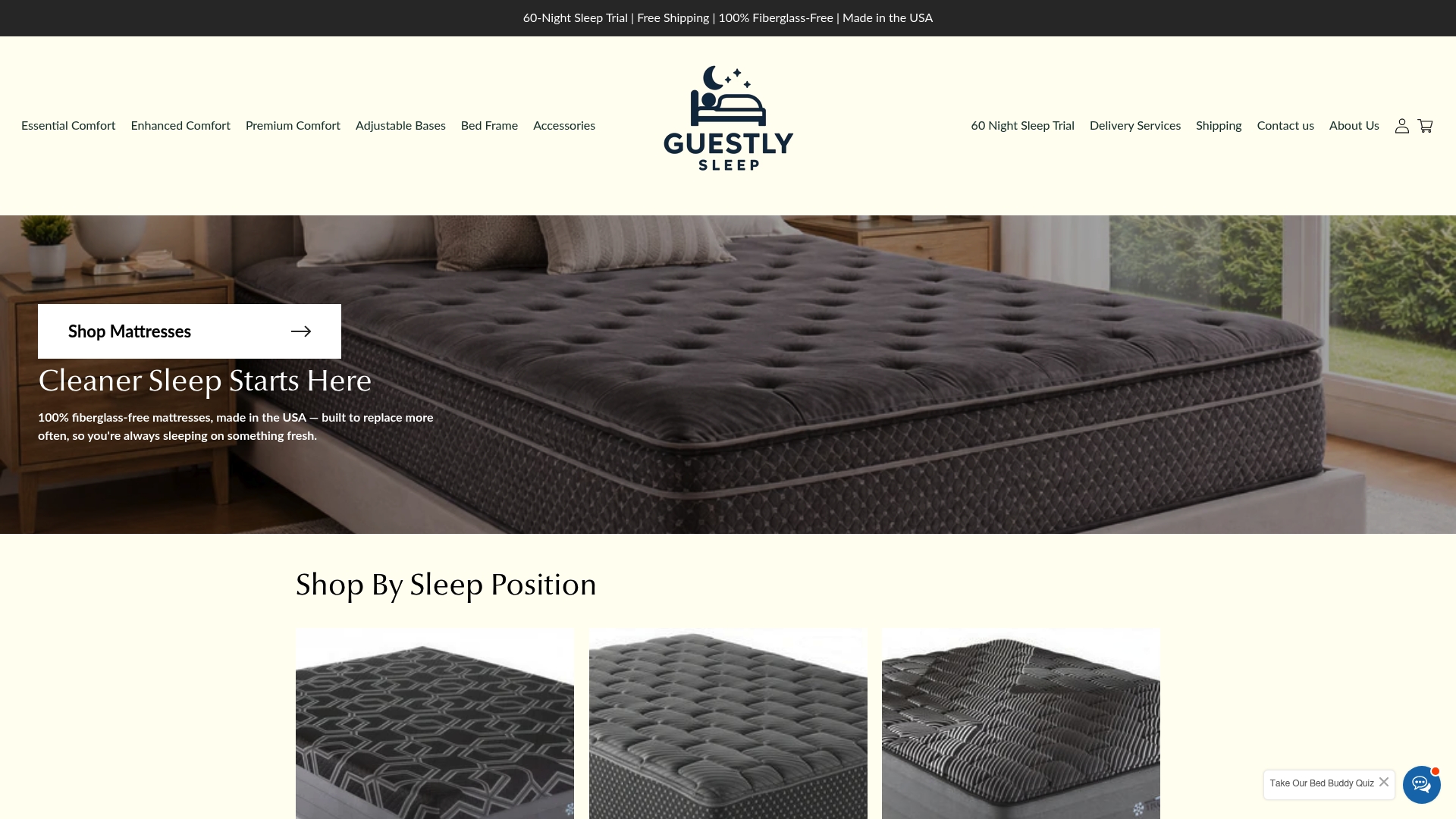
At Guestly Sleep, you can browse fiberglass-free hybrid and memory foam mattresses in Essential, Enhanced and Premium Comfort collections on our homepage. Every order includes free shipping and a 60-night sleep trial, so you can test the feel at home.
We also take the heavy lifting off your hands. The old mattress is the hardest part, and these services are listed on our services page:
- Mattress disposal and haul away: 125 USD
- Mattress and bed frame installation: 175 USD
- Mattress and bed frame installation with haul away: 250 USD
If you would rather recycle foam yourself, our US guide to recycling a memory foam mattress walks through the options.
FAQ
How often should I vacuum a memory foam mattress?
Every one to two weeks, or whenever you change the sheets, according to Angi’s guidance on memory foam. Use a soft or upholstery attachment and keep the foam dry. Foam toppers and pillows follow the same rhythm.
Do I need to vacuum my mattress if I use a protector?
Yes, in most cases. The Spruce recommends vacuuming at least monthly with or without protectors or covers. The exception is a tested, fully enclosing allergy encasement, where the barrier means the mattress itself does not need vacuuming.
Can I vacuum any type of mattress?
Most synthetic mattresses are fine, including memory foam, latex and innerspring. Mattresses filled with natural materials such as wool, silk or cotton should not be vacuumed, because suction can disturb the layers, as Ideal Home explains. When in doubt, read the care label.
How long should I stay out of the room after vacuuming?
About 20 to 30 minutes. The National Institute of Environmental Health Sciences says this gives stirred-up dust and allergens time to settle. A HEPA or bagged vacuum helps keep that dust contained.
Does vacuuming replace deep cleaning or replacing my mattress?
No. Vacuuming handles surface debris between deeper cleans, which Consumer Reports suggests doing at least twice a year. It does not reverse wear, so we recommend replacing a mattress every 2 to 4 years.
Sources
- Have You Been Vacuuming Your Mattress? Here’s Why You Should (The Spruce)
- How to Clean Memory Foam Mattresses, Toppers, and Pillows (Angi)
- How to Clean a Mattress (and Why) (Consumer Reports)
- Should you vacuum a mattress? (Ideal Home)
- Dust Mites and Cockroaches (National Institute of Environmental Health Sciences)
- Cleaning to Control Allergies and Asthma (American Cleaning Institute)
- How to reduce the level of dust mites in your home (Cambridge University Hospitals)
- How to Clean Your Mattress (Wirecutter)
- Mastering Sleep Hygiene