

How Mattress Thickness Affects Price: A Buyer's Guide
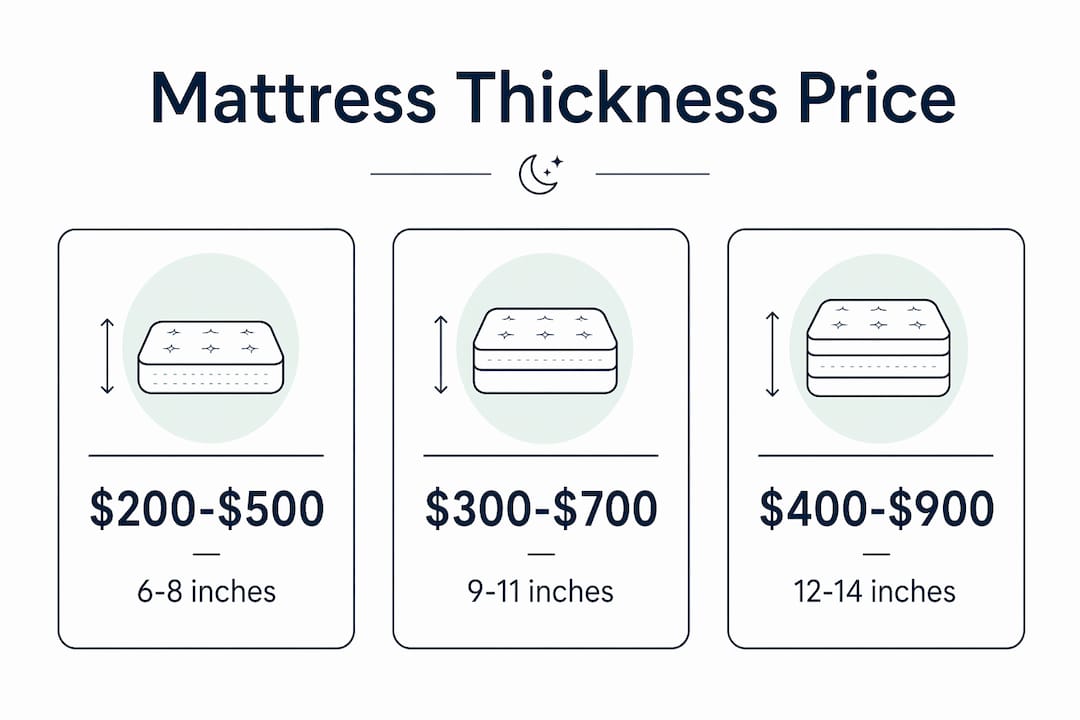
Mattress thickness directly determines price because more thickness requires more raw material, and more material means higher manufacturing cost. A low-profile mattress at 6–8 inches typically costs $200–$500, while an ultra-thick model at 14–16 inches runs $1,500–$3,000 or more. Every 2-inch increase in thickness adds roughly $100–$200 to the retail price. Understanding how mattress thickness affects price keeps you from paying a premium for height you don’t actually need. This guide breaks down the real cost drivers, clears up the biggest misconceptions, and gives you a clear framework for choosing the right thickness for your budget and sleep style.
How does mattress thickness affect price?
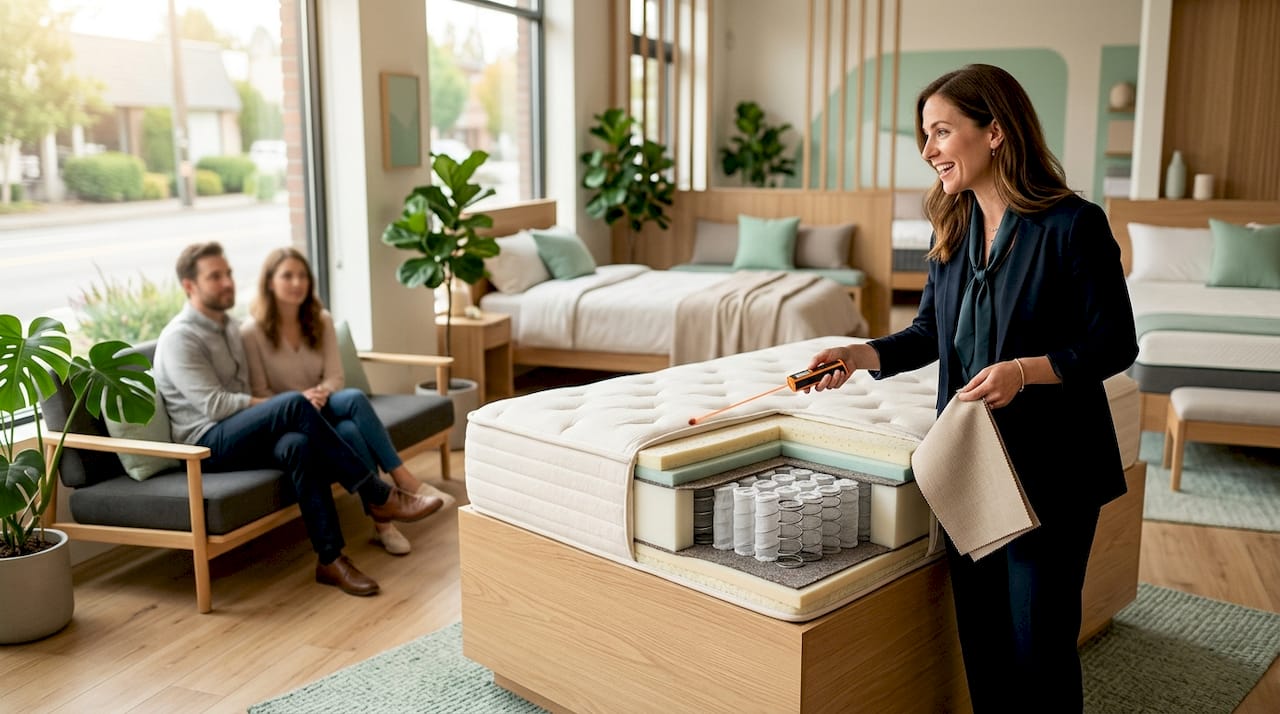
Thickness drives price because it determines how much material a manufacturer needs to build the mattress. A thicker mattress is not just taller. It contains more foam, more coils, more fabric, and more labor to assemble all of it.
The numbers make this concrete. 10–14 inch mattresses use 150–200% more material than standard 6–8 inch versions. That jump in material volume is the single biggest reason luxury-height mattresses cost so much more than entry-level profiles. Brand prestige plays a role, but raw material volume is the primary cost driver.
Mattress size also matters. A king-size mattress at 12 inches uses far more material than a twin at the same height, which is why mattress size significantly multiplies price alongside thickness. Thickness remains the primary incremental cost driver across all sizes, though. Add 2 inches to any size and the price climbs accordingly.
Thickness and price: what the numbers show
| Thickness range | Profile label | Typical price range |
|---|---|---|
| 6–8 inches | Low-profile | $200–$500 |
| 8–10 inches | Standard | $400–$800 |
| 10–12 inches | Mid-profile | $700–$1,200 |
| 12–14 inches | Tall | $1,000–$1,800 |
| 14–16+ inches | Ultra-thick | $1,500–$3,000+ |
Each 2-inch step up adds roughly $100–$200 to the base price. That pattern holds across foam, hybrid, and innerspring constructions. The material cost logic is the same regardless of mattress type.
Does thickness actually mean better quality?
Thickness does not equal quality. This is the most common and costly mistake buyers make. A thicker mattress can actually perform worse than a thinner one if the extra height comes from low-grade materials.
Consumers often equate thickness with quality, but thicker budget mattresses frequently use low-density foams that compress quickly and lose support within a year or two. You end up paying more upfront for a mattress that wears out faster. That is the opposite of value.
Foam density is a far better quality indicator than thickness. High-density memory foam costs more and lasts longer than a thicker slab of low-density foam. A 3-inch layer of high-density foam provides better pressure relief and durability than 6 inches of cheap filler foam. The density number tells you far more about what you are buying than the height measurement.
Manufacturers know buyers associate height with luxury. Some brands use thickness as a proxy for premium positioning, charging premium prices for extra inches that add little functional value. The markup often reflects marketing, not construction quality. Guestlysleep addresses this directly by focusing on certified, fiberglass-free materials rather than stacking up inches to justify a higher price.
- Foam density (measured in pounds per cubic foot) predicts durability better than thickness alone.
- Support core quality determines spinal alignment, not total mattress height.
- Comfort layer materials (latex, gel foam, memory foam) affect pressure relief more than how many inches they stack.
- Certifications like CertiPUR-US indicate foam quality standards that thickness measurements never capture.
- Construction layering matters. A well-engineered 10-inch mattress outperforms a poorly built 14-inch one.
What are the hidden costs of a thicker mattress?
Price at checkout is only part of the cost equation. Thicker mattresses carry ongoing costs and practical challenges that buyers rarely factor in before purchasing.
Extra-thick mattresses are heavier and harder to rotate, which creates a real maintenance problem. Rotating a mattress every 3–6 months extends its lifespan significantly. A 14-inch mattress can weigh well over 100 pounds, making regular rotation a two-person job at minimum. Skipping rotation because the mattress is too heavy accelerates uneven wear and shortens its usable life.
Bedding costs add up fast. Mattresses over 10–12 inches require deep-pocket sheets, which cost more than standard fitted sheets and are harder to find in specialty fabrics. If you already own a full set of standard bedding, switching to a thick mattress means replacing it entirely.
Beyond 14 inches, extra thickness rarely adds functional benefit. The additional layers tend to trap heat and create a softer, less stable sleep surface. Side sleepers who need pressure relief may appreciate some extra cushioning, but most adults gain nothing from going above 12–13 inches.
- Rotation difficulty. Mattresses above 12 inches are significantly heavier. Plan for two people and a clear path to rotate safely.
- Deep-pocket sheet costs. Budget $40–$80 extra for a quality deep-pocket sheet set if your current bedding fits standard profiles.
- Heat retention. Thick comfort layers, especially dense memory foam, trap body heat. Look for gel-infused or open-cell foam if you sleep warm.
- Bed frame height. A very thick mattress on a tall bed frame can make getting in and out uncomfortable, especially for shorter adults or children.
Pro Tip: If you sleep hot, prioritize mattress material and airflow design over thickness. A well-ventilated 10-inch mattress will sleep cooler than a 14-inch mattress with dense, heat-trapping foam layers.
How to choose the right mattress thickness for your budget
The right thickness depends on your body type, sleep position, and budget. Buying more thickness than you need wastes money. Buying too little leaves you uncomfortable.
Standard thickness of 8–12 inches balances comfort and affordability for most adults. This range covers the majority of sleep positions and body types without pushing into luxury pricing territory. For most buyers, a well-constructed 10-inch mattress hits the sweet spot between support, comfort, and cost.
Heavier sleepers and side sleepers benefit from 12–16 inches of total height for added cushioning and pressure relief. Heavier sleepers compress foam more deeply, so extra thickness provides a meaningful functional benefit. Side sleepers need more cushioning at the shoulder and hip, making a thicker comfort layer genuinely useful. For these buyers, spending more on thickness is justified.
Industry experts recommend 10–12 inches as the ideal range for most sleepers. This range delivers adequate support, manageable weight, standard bedding compatibility, and reasonable pricing. Going above 12 inches makes sense only for specific body types or comfort preferences, not as a general upgrade.
Thickness recommendations by sleeper type
| Sleeper type | Recommended thickness | Reason |
|---|---|---|
| Back sleepers | 8–12 inches | Firm support core needed; extra height adds little benefit |
| Side sleepers | 10–14 inches | Thicker comfort layer relieves shoulder and hip pressure |
| Stomach sleepers | 6–10 inches | Thinner profile keeps spine aligned; thick foam causes sag |
| Heavier sleepers (230+ lbs) | 12–16 inches | Extra depth prevents bottoming out on the support core |
| Lightweight sleepers (under 130 lbs) | 6–10 inches | Less compression needed; thicker mattress may feel too soft |
A few buying principles cut through the noise when comparing options:
- Prioritize foam density and support core quality over total height.
- Match thickness to your sleep position, not to a general idea of luxury.
- Check for certifications that confirm material quality, not just marketing claims.
- Factor in bedding costs if you are considering a mattress above 12 inches.
Understanding how mattress materials affect sleep quality gives you a sharper lens for evaluating any mattress, regardless of its height. The best mattress for pressure relief, for example, depends far more on layer construction than on total thickness.
Why I think most buyers overspend on thickness
Thickness is the easiest mattress spec to see and feel in a showroom. You walk up, press down, and a taller mattress feels more substantial. That physical impression is powerful, and the mattress industry knows it.
What I have seen consistently is that buyers spend $400–$600 more than they need to by chasing height rather than evaluating what is actually inside the mattress. A 14-inch mattress with low-density filler foam will feel impressive on day one and disappoint within 18 months. A 10-inch mattress built with high-density foam and a quality support core will outlast it and cost less.
Luxury mattress markups frequently charge for thickness rather than construction quality. That is not a cynical take. It is a documented pricing pattern. The fix is simple: ask for the foam density specs, check for material certifications, and ignore the height number until you have confirmed what the layers are actually made of.
The buyers who get the best value treat thickness as the last variable, not the first. They pick the right sleep position profile, confirm material quality, then check whether the thickness fits their body type. That order of operations saves money and leads to better sleep.
Guestly Sleep: quality materials at the right price
Paying more for a thicker mattress only makes sense when the extra height comes from quality materials, not filler foam. Guestlysleep builds its mattresses around certified, fiberglass-free materials made in the United States, so you know exactly what you are sleeping on.
Every Guestly Sleep mattress is designed to deliver real support and comfort without inflating the price through unnecessary height. The product range covers Essential Comfort, Enhanced Comfort, and Premium Comfort options, each matched to specific sleep positions and body types. Free shipping and a 60-night sleep trial mean you can evaluate the mattress in your own bedroom before committing. Browse the full selection of fiberglass-free mattresses and find the thickness and comfort level that fits your sleep style and budget.
FAQ
Does a thicker mattress always cost more?
Yes. Thicker mattresses require more raw material, which directly increases manufacturing cost. Each 2-inch increase in thickness adds roughly $100–$200 to the retail price.
How thick should a mattress be for most adults?
8–12 inches is the recommended range for most adults, balancing comfort, support, and affordability. Heavier sleepers or side sleepers may benefit from 12–16 inches for added cushioning.
Is mattress thickness a reliable indicator of quality?
No. Foam density and support core construction predict durability and comfort far better than thickness alone. A thicker mattress built with low-density foam will wear out faster than a thinner, denser alternative.
What extra costs come with a very thick mattress?
Mattresses over 10–12 inches typically require deep-pocket sheets, which cost more than standard bedding. They are also heavier and harder to rotate, which can shorten their lifespan if maintenance is skipped.
What is the best thickness for side sleepers?
Side sleepers generally perform best on a mattress between 10 and 14 inches, where a thicker comfort layer relieves pressure at the shoulder and hip without sacrificing overall support.