

How Mattress Collections Are Organized for Better Sleep
How mattress collections are organized: the core system
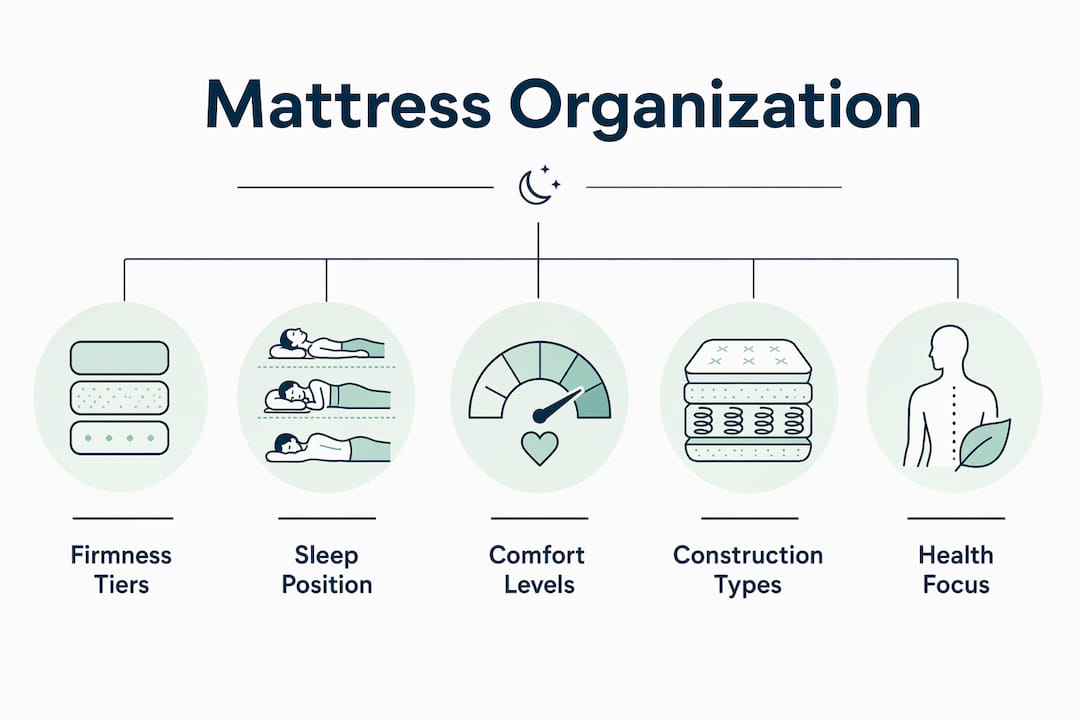
Mattress collections are organized around three interlocking principles: a standardized firmness scale, comfort tier pricing, and sleep position targeting. Understanding all three is what separates a confident purchase from a frustrating one.
Here is the basic framework most collections use:
- Firmness scale (1–10): Soft lands around 2–4, medium at 5–6, medium-firm at 6–7, and firm at 8–10. The 1–10 firmness scale helps consumers filter options quickly, and medium-firm to firm models suit the majority of shoppers.
- Comfort tiers: Collections typically break into Essential, Enhanced, and Premium categories, each targeting a different budget and feature set.
- Sleep position grouping: Side, back, stomach, and combination sleepers each need different support profiles, so well-organized collections label accordingly.
- Construction type: Innerspring, memory foam, latex, and hybrid mattresses are grouped distinctly because their structural differences produce genuinely different sleep experiences.
- Certifications and standards: Industry bodies like the International Sleep Products Association (ISPA) define construction thresholds that responsible collections use to categorize products accurately.
How firmness scales and comfort tiers help you filter fast
The firmness scale is the first filter in any well-built collection. A number from 1 to 10 tells you immediately whether a mattress will cradle or push back, which matters enormously for spinal alignment and pressure relief.
- Soft (2–4): Best for side sleepers who need deep cushioning at the hips and shoulders.
- Medium (5–6): Works for combination sleepers who shift positions through the night.
- Medium-firm (6–7): The most popular band for back sleepers and couples with different preferences.
- Firm (8–10): Preferred by stomach sleepers and those who need maximum lumbar support.
Comfort tiers layer budget logic on top of firmness. An Essential tier mattress covers the basics: adequate support, standard materials, accessible price. Enhanced adds features like zoned support or cooling fabric. Premium brings in natural latex, advanced coil systems, or certified organic materials. Each tier has a defined role, which prevents the collection from becoming a confusing pile of near-identical options.
Pro Tip: If you share a bed, prioritize the medium-firm range first. It accommodates the widest variety of body types and sleep positions without requiring a compromise that leaves one person uncomfortable.
Why sleep position is the most practical way to shop
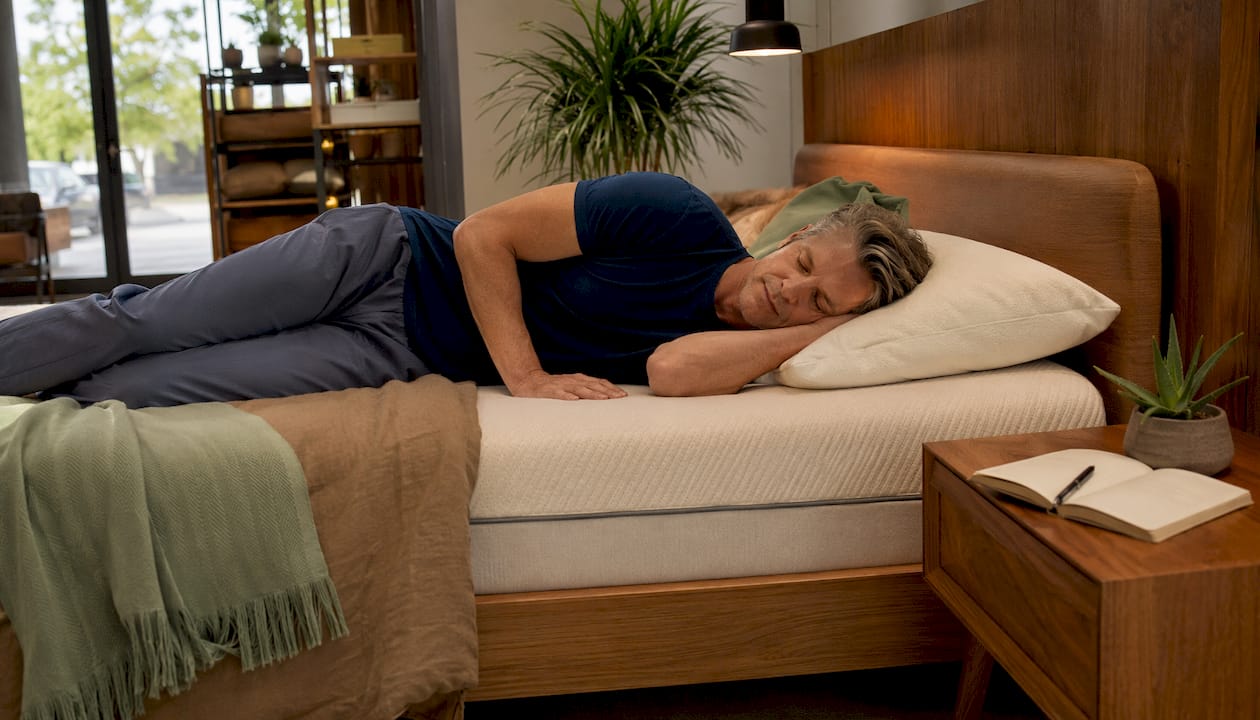
Grouping mattresses by sleep position is the most consumer-friendly organization method because it connects directly to how your body actually behaves at night.
- Side sleepers need softer to medium firmness to relieve pressure at the hips and shoulders. Without adequate cushioning, those contact points bear disproportionate weight, which disrupts circulation and causes morning soreness.
- Back sleepers do best on medium-firm surfaces that keep the lumbar spine in a neutral curve without sinking too deep.
- Stomach sleepers need firm support to prevent the hips from dropping, which would arch the lower back into an unhealthy position.
- Combination sleepers benefit from responsive materials, typically hybrid constructions, that allow easy repositioning without resistance.
- Physical characteristics matter too. Heavier sleepers generally need firmer, more durable constructions to avoid premature sagging, while lighter sleepers may find firm mattresses feel rigid rather than supportive.
Clear labeling by sleep position removes guesswork. When a collection page tells you directly which model suits a back sleeper versus a side sleeper, you spend less time second-guessing and more time evaluating the right options for your body.
What mattress construction types actually mean for your health
Construction type is not a marketing label. It defines the structural and comfort differences that determine how a mattress performs for your body over years of use.
- Innerspring: A coil-based support system with minimal comfort layers. Responsive and breathable, but limited in pressure relief. Best for back and stomach sleepers who run hot.
- Memory foam: Viscoelastic foam that conforms slowly to body contours under heat and pressure. Excellent pressure relief for side sleepers, though it retains more heat than coil-based options.
- Latex: Processed rubber, either natural or synthetic, offering high bounce, durability, and moderate contouring. Natural latex is a top choice for allergy-sensitive shoppers and those prioritizing eco-conscious materials.
- Hybrid: Per the ISPA definition, a hybrid combines a steel coil support core with at least 2 inches of foam, latex, or microcoil comfort layers. This threshold matters because a coil mattress with a thin foam quilting layer is functionally an innerspring, regardless of how it is marketed.
For health-conscious shoppers, material safety is part of the construction conversation. Fiberglass-free mattresses built with certified materials avoid the off-gassing and fiber migration risks associated with lower-cost fillers. The mattress materials comparison between construction types is worth reviewing before committing to any collection tier.
Common merchandising mistakes that make mattress shopping harder
A poorly organized collection does not just frustrate shoppers. It actively prevents good decisions.
- The wall of options problem: Presenting too many near-identical models in adjacent price bands creates hesitation, not choice. Five medium-feel hybrids with slightly different cover treatments and nearly identical talking points do not differentiate. They paralyze.
- No distinct role per model: Every mattress in a well-built collection should have one clear job: pressure relief, cooling, lumbar support, or premium feel. If you cannot describe a model’s purpose in one sentence, it probably should not be in the collection.
- Brand sprawl over buying logic: Organizing by supplier or brand name instead of comfort story or sleep position forces shoppers to decode the collection themselves. Buying logic groupings place firmer builds together, pressure-relief stories together, and opening-price models clearly separated from premium options.
- Poor visual storytelling: Shoppers cannot see a zoned support core or transition foam layer by looking at a mattress panel. Cutaways and layer displays make the construction tangible and justify the price difference between tiers.
- Online clutter: Digital catalogs that split each size and firmness into separate, ungrouped product pages create a storefront mess. Combined listing architecture groups size and firmness products under a parent collection, keeping navigation clean without hiding options.
How to actually test a mattress before you buy
Testing a mattress properly takes longer than most people expect. Lying on a mattress for 90 seconds in a showroom tells you almost nothing useful.
- Spend a sufficient amount of time lying in your actual sleep position, not just flat on your back, and learn more about mattress comfort and support in this sleeper sofa repair basics DIY guide.
- Assess whether your spine feels neutral. For side sleepers, check that hips and shoulders sink in enough that the spine stays level, not angled.
- Notice pressure points. If you feel the mattress pushing back against your hip or shoulder within a few minutes, that sensation will be worse after eight hours.
- Use firmness categories as a starting filter, then validate with your body. A label that says “medium-firm” may feel different depending on your weight and body shape.
- For online purchases, trial periods are the equivalent of in-store testing. A 60-night trial gives your body enough time to adjust and give an honest verdict.
Pro Tip: Bring your own pillow to an in-store test. Your head position affects how your spine aligns on the mattress, and testing without your usual pillow height skews the result.
When to replace your mattress and why it matters for your health
Mattress aging is a health issue, not just a comfort one. An old mattress accumulates allergens, loses its support structure, and can contribute to poor sleep quality and morning pain.
- Guestly Sleep recommends replacing mattresses every 2–4 years to maintain hygienic, supportive sleep environments, a more frequent cycle than the industry average.
- Sagging, visible indentations, and increased morning stiffness are the clearest signs a mattress has passed its useful life.
- Allergy sufferers are particularly vulnerable to aging mattresses, which accumulate dust mites and other irritants over time.
- Newer certified materials, including fiberglass-free constructions and CertiPUR-US certified foams, reduce off-gassing and chemical exposure from day one.
- Organizing replacement cycles within a collection, with clearly tiered options at accessible price points, makes regular replacement practical rather than prohibitive.
What health-conscious shoppers should remember
Mattress collections are organized by firmness, sleep position, and construction type to help you find the right fit without guesswork. The clearest collections give every model a distinct role and make the differences physically perceivable.
- Firmness scales and comfort tiers (Essential, Enhanced, Premium) let you filter by budget and body type simultaneously.
- Sleep position labeling connects directly to spinal health outcomes, making it the most practical shopping filter.
- Construction type (innerspring, foam, latex, hybrid) determines long-term comfort, durability, and material safety.
- Avoid collections that present too many near-identical options without clear differentiation by feel or function.
- Test mattresses in your actual sleep position for at least 10 minutes, and use trial periods for online purchases.
- Replace your mattress on a regular schedule to protect sleep hygiene and maintain proper support.
Guestly Sleep organizes its collections around your sleep health
Shoppers who want a collection built specifically around health-conscious principles will find Guestly Sleep’s approach direct and practical. Every mattress is fiberglass-free and made in the United States, organized into Essential Comfort, Enhanced Comfort, and Premium Comfort tiers so you can match your budget to your needs without sorting through irrelevant options.
Collections are labeled by sleep position, so side, back, and stomach sleepers each have a clear starting point. The 60-night sleep trial replaces the guesswork of in-store testing, and free shipping removes the friction that usually makes mattress replacement feel like a project. Because Guestly Sleep recommends replacing your mattress every 2–4 years for optimal sleep hygiene, the pricing is built to make that cycle realistic. Visit Guestly Sleep to find the collection that fits your sleep position, comfort preference, and health priorities.
Key Takeaways
Well-organized mattress collections use firmness scales, sleep position labels, and construction categories to help health-conscious shoppers find the right fit without confusion.
| Point | Details |
|---|---|
| Firmness scale guides filtering | The 1–10 scale lets shoppers target soft, medium, or firm options matched to their sleep position and body type. |
| Comfort tiers structure budgets | Essential, Enhanced, and Premium tiers give each model a distinct role and prevent near-identical options from creating hesitation. |
| Sleep position is the key filter | Side, back, and stomach sleepers need different firmness and construction profiles for healthy spinal alignment. |
| Replace mattresses regularly | Guestlysleep recommends replacement every 2–4 years to maintain hygiene, support, and a safe sleep environment. |
| Guestlysleep’s collection structure | Fiberglass-free, American-made mattresses organized by sleep position and comfort tier, with a 60-night trial and free shipping. |