

Skip Vinyl: Verify OEKO-TEX or GREENGUARD for Protector Safety
Yes, waterproof mattress protectors are safe when they’re made with vinyl-free membranes like TPU or polyurethane and backed by real certifications. The main risk isn’t the waterproofing itself. It’s cheap vinyl/PVC covers that trap heat and moisture, and vague “antimicrobial” claims with no testing behind them. Look for OEKO-TEX or GREENGUARD Gold labels, then check the breathability and fit checklist below before you buy.
TL;DR:
- Most safe waterproof mattress protectors use vinyl-free membranes like TPU or polyurethane, which are more breathable and free of chemical concerns.
- Certifications such as OEKO-TEX, GREENGUARD Gold, or MADE SAFE ensure the product has been tested for harmful substances, with certification numbers verifiable online.
- Protectors that trap moisture or have chemical off-gassing can promote mold growth and emit unpleasant odors, especially if they are not breathable or are made of vinyl or PVC.
- Regularly washing protectors with warm water, airing them out, and inspecting for signs of mold, odor, or seam damage extends their safety and lifespan.
- Choosing a fitted, 5-sided protector with certified materials helps control allergens, preserve mattress warranty, and improve sleep hygiene more reliably than surface-only options.
Table of Contents
- What Waterproof Mattress Protectors Are Made Of (And Why It Matters)
- Which Certifications Prove a Protector Is Actually Non-Toxic?
- Do Waterproof Protectors Really Improve Sleep Hygiene?
- What Makes a Waterproof Protector Unsafe?
- How Do You Pick and Care for One Safely?
- The Real Question Isn’t Waterproof vs. Not. It’s Which Barrier You’re Sleeping On.
- Where Guestly Sleep Fits Into Your Sleep Setup
- Sources
- FAQ
What Waterproof Mattress Protectors Are Made Of (And Why It Matters)
A waterproof mattress protector works by putting a thin barrier between your body and the mattress itself, blocking sweat, spills, and allergens from soaking in. What that barrier is made of determines whether it’s a health upgrade or a hidden problem.
Two families of material dominate the market. TPU (thermoplastic polyurethane) and non-vinyl polyurethane membranes are thin, flexible layers laminated to a fabric surface, usually cotton or polyester knit. They stretch, resist cracking, and let some vapor pass through. Vinyl or PVC-coated protectors are the older, cheaper option. They’re often stiffer, noisier, and less breathable, and PVC production has raised long-standing chemical-exposure concerns that make it a material worth avoiding on something you sleep on eight hours a night.
Construction matters as much as material:
- Fitted, 5-sided protectors cover the top and all four sides, sealing out spills from every angle.
- Surface-only pads protect just the sleeping surface, leaving the mattress edges exposed.
- Zippered encasements wrap the entire mattress, which matters most for allergy control or bed bug prevention.
Quick fact: the tradeoff shows up in three places every time — breathability drops as waterproofing goes up, thicker vinyl layers tend to crinkle audibly when you move, and any new synthetic cover can off-gas a faint chemical smell for the first day or two, which is normal and fades with airing out.
Which Certifications Prove a Protector Is Actually Non-Toxic?
A label that says “non-toxic” means nothing on its own. A certification number you can look up does.
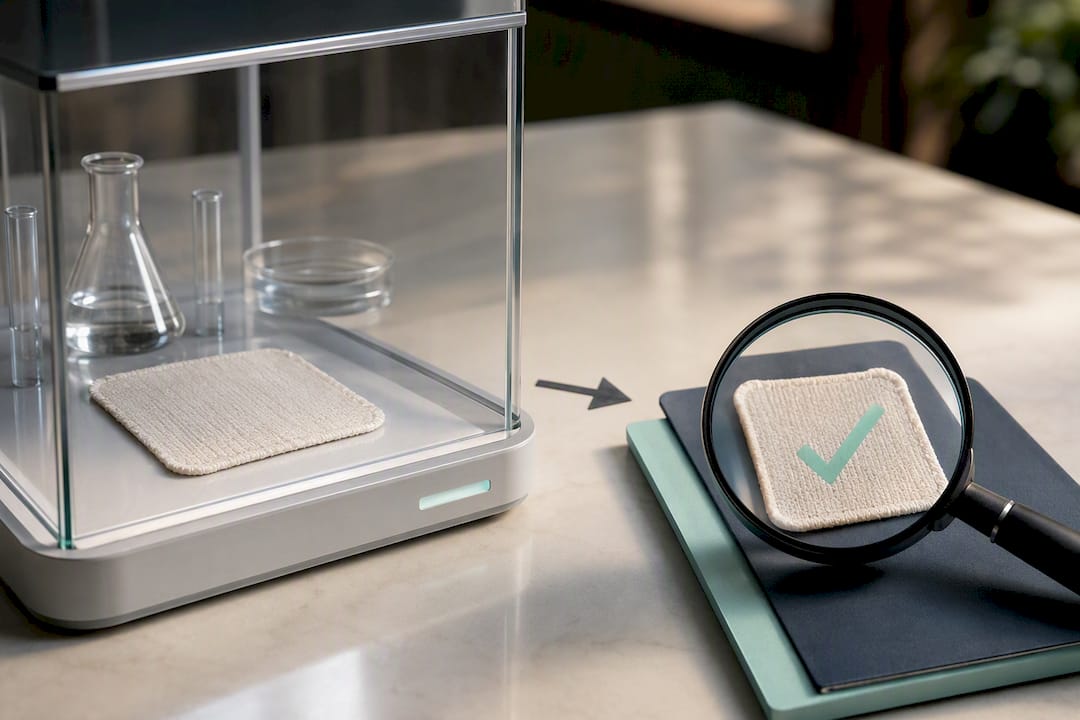
OEKO-TEX STANDARD 100 tests finished textile products for hundreds of harmful substances, including certain dyes, formaldehyde, and heavy metals, against limits stricter than most U.S. regulations require. GREENGUARD Gold certification screens specifically for chemical emissions and volatile organic compounds (VOCs), which matters more than most shoppers realize because it’s tied directly to indoor air quality, not just skin contact. MADE SAFE goes further, screening ingredients and materials against a list of chemicals linked to human health harm, banning known carcinogens, reproductive toxins, and heavy metals outright.
Here’s what to actually check before trusting any of these logos:
- Find the certificate number printed on the product page or tag.
- Search that number directly on the certifier’s own website (oeko-tex.com, greenguard.org, madesafe.org).
- Confirm the certification applies to the specific product, not just “the brand” in general.
Pro Tip: Screenshot the certificate lookup page when you buy. If a product ever gets recalled or reformulated, you’ll have proof of exactly what you purchased and when.
Independent testing groups like the Good Housekeeping Institute run chemists and materials scientists through lab evaluations precisely because vendor claims alone aren’t reliable verification.
Do Waterproof Protectors Really Improve Sleep Hygiene?
Yes, and the benefits go beyond keeping your mattress clean. A well-made protector blocks sweat, allergens, dust mite waste, and bodily fluids from working into the foam or fabric layers where they’re nearly impossible to remove later.
The health case is straightforward:
- Allergen control: a sealed, 5-sided protector keeps dust mites and their waste products out of the mattress core, which matters directly for people with asthma or dust allergies.
- Spill and stain protection: this preserves your mattress warranty, since most manufacturers void coverage once a mattress shows staining or fluid damage, protector or not.
- Longevity: a mattress that never absorbs moisture resists the sagging and odor buildup that shortens its usable life.
- Comfort: modern knit-top protectors are designed to be quiet and breathable rather than the crinkly plastic sheets people remember from childhood, which breathable fabric guidance ties directly to better airflow and less heat buildup overnight.
Keeping fluids off the mattress surface is also one of the few things you fully control that affects a warranty claim later, right alongside proper support and rotation. Guestly Sleep’s own guidance treats the protector as part of the mattress system, not an afterthought.
What Makes a Waterproof Protector Unsafe?
Most safety complaints trace back to one of four issues, and all four are things you can spot before you ever put the cover on your bed.
- Off-gassing from new synthetic materials. A faint chemical smell right out of the packaging is common with polyurethane and vinyl products alike; air the cover out for 24 to 48 hours before first use, similar to the ventilation window recommended for new memory foam.
- Trapped moisture and mold. Any waterproof layer that doesn’t breathe traps body heat and sweat vapor against the mattress surface, and that’s the exact condition mold needs. Check the underside of the protector monthly for a musty smell or dark spotting.
- Chemical red flags. Vinyl/PVC construction, PFAS-based stain treatments, and phthalate softeners are the three ingredients worth actively avoiding, especially since none of them are required to be disclosed on the package.
- Vague antimicrobial claims. “Antimicrobial” printed on a tag means nothing without a named testing standard behind it. Some treatments are embedded in the fiber and durable through many washes; others are a topical spray that washes out in a few cycles, and there’s no way to tell which from the packaging alone.
Pro Tip: If a protector has zero odor, zero noise, and zero care instructions on the tag, be skeptical rather than reassured. Legitimate waterproof materials almost always list a recommended wash temperature and drying method; the absence of that information is itself a red flag.
How Do You Pick and Care for One Safely?
The shopping checklist is short. Prioritize vinyl-free TPU or polyurethane membranes over anything listed as vinyl or PVC. Confirm a real certification number for OEKO-TEX, GREENGUARD Gold, or MADE SAFE rather than trusting marketing language alone. Choose a breathable knit top over a plastic-feeling surface, and measure your mattress depth first so the fitted skirt actually reaches the corners without pulling loose.
Care determines whether that safety holds up over time:
- Wash before first use to remove manufacturing residue.
- Wash every one to two weeks, using warm (not hot) water to protect the membrane.
- Air-dry or use low heat; high heat is the number one cause of premature membrane failure.
- Check monthly for trapped moisture or odor, especially along mattress edges where airflow is weakest.
Quick fact: Guestly Sleep’s cleaning guidance notes that a two-minute monthly check for moisture and odor catches most mold problems before they ever reach the mattress itself.
The Real Question Isn’t Waterproof vs. Not. It’s Which Barrier You’re Sleeping On.
Guestly Sleep has spent years focused on one core idea: what touches your body while you sleep should never be a mystery ingredient list. That’s the same lens worth applying to mattress protectors, not just mattresses. Guestly Sleep builds fiberglass-free, American-made mattresses for exactly this reason, and the logic carries straight over to what covers them.
The shortcut is simple. Skip vinyl entirely, verify the certification instead of trusting the label, and treat mattress replacement on a multi-year cycle as part of the same hygiene routine. For more on material trends shaping this shift, see Guestly Sleep’s breakdown of mattress safety trends.
Where Guestly Sleep Fits Into Your Sleep Setup
Guestly Sleep sells fiberglass-free mattresses in the United States with the same standard this article just walked through: no harmful fillers, certified materials, and construction you can actually verify instead of just trust. There is often a trial period to confirm the mattress works for your body before committing.
If you’re already rethinking what’s between you and your mattress, it’s worth applying that same scrutiny to the mattress itself. Guestly Sleep’s side, back, and stomach sleeper collections are organized by comfort level and price tier, from Essential Comfort to Premium Comfort, so you can match support to how you actually sleep rather than guessing. Browse the current lineup and see which comfort tier fits your budget and sleep position before your next mattress reaches the 4 year mark.
Sources
Verify any certification claim directly at Oeko-tex, Greenguard, or Madesafe. For material and care guidance, see Guestly Sleep’s mattress cover resources and Good Housekeeping’s testing standards.
FAQ
Are Vinyl Mattress Protectors Dangerous?
Vinyl (PVC) protectors aren’t automatically dangerous, but they trap heat and moisture more than TPU or polyurethane alternatives and carry long-standing chemical-exposure concerns, which is why vinyl-free options are the safer default choice.
Can a Waterproof Mattress Protector Cause Mold?
Yes, if it’s not breathable enough to let vapor escape, trapped sweat and body heat create the damp, warm conditions mold needs; checking monthly for musty odor or dark spotting catches this early.
Does OEKO-TEX Certification Guarantee Safety?
OEKO-TEX STANDARD 100 certification confirms a product passed testing for hundreds of harmful substances against strict limits, which is a strong verification signal, though it’s worth confirming the certificate number matches your specific product.
How Often Should I Replace My Mattress Protector?
Most protectors last one to three years with regular washing, but replace one immediately if the waterproof membrane starts cracking, peeling, or losing its seal at the seams.
Do Waterproof Protectors Affect My Mattress Warranty?
Many mattress warranties require stain-free, damage-free surfaces to remain valid, so a waterproof protector that prevents spills and sweat from reaching the mattress directly protects your warranty coverage.