

Mattress Replacement Mistakes That Cost You Sleep
Common mattress replacement mistakes are errors made during purchase, setup, or evaluation that reduce sleep quality, shorten mattress life, and add unexpected costs. Most shoppers focus on price and brand, missing the factors that actually determine whether a mattress works for them. Mistakes like skipping proper testing, ignoring foundation compatibility, and misreading safety labels are the leading causes of buyer’s remorse in this category. This guide covers the most damaging pitfalls and gives you the specific knowledge to avoid them.
1. Common mattress replacement mistakes start with inadequate testing
Testing a mattress for 30 seconds is the single most common mistake shoppers make in stores. Ten minutes is the absolute minimum needed to assess comfort and support in your actual sleep position. Sitting on the edge or bouncing briefly tells you almost nothing about how the mattress performs over a full night.
The right way to test is to lie down in your usual sleep position and stay there. A mattress that feels fine on your back may create pressure points on your side within five minutes. If you share a bed, bring your partner. Motion transfer, edge support, and firmness feel completely different with two people.
Pro Tip: Bring your own pillow to the store. Your neck position changes how the mattress feels, and a store pillow will skew your read on firmness and support.
- Lie in your primary sleep position, not just on your back
- Test for at least 10 minutes per mattress you are seriously considering
- Check motion transfer by having your partner roll over while you stay still
- Test edge support by sitting near the side where you typically get in and out of bed
2. Ignoring foundation compatibility
An old or broken foundation is one of the most overlooked mattress buying blunders. A mismatched or damaged base causes sagging, uneven support, and premature mattress failure. Many shoppers invest in a quality mattress and then place it on a frame that undermines it within months.

Foundation compatibility is not just about fit. Mattress warranties typically require a specific type of base, and using the wrong one voids coverage. Memory foam mattresses need solid or closely slatted platforms. Innerspring models often require box springs. Getting this wrong means you pay full price for a mattress and lose warranty protection at the same time.
Pro Tip: Measure your bed frame’s slat spacing before you shop. Slats more than 3 inches apart can cause foam mattresses to sag between them, even on a brand-new frame.
- Check your current frame for broken slats, sagging center supports, or rust
- Confirm the mattress manufacturer’s base requirements before purchasing
- Replace your foundation when you replace your mattress if it is more than 5 years old
- Ask the retailer whether the mattress is compatible with your specific frame type
3. Underestimating the total cost of ownership
The sticker price is rarely what you actually pay. Total mattress cost includes delivery, setup, old mattress removal, a mattress protector, and applicable taxes, all of which can add hundreds of dollars to the final bill. Shoppers who compare only list prices often end up paying more than they planned.
Here is a realistic breakdown of fees that frequently appear at checkout or delivery:
| Cost item | Typical range |
|---|---|
| White-glove delivery and setup | $50–$150 |
| Old mattress removal | $30–$100 |
| Mattress protector | $30–$80 |
| Sales tax (varies by state) | 5%–10% of purchase price |
| Frame or foundation upgrade | $100–$400 |
Always ask for an “out-the-door” price quote before you commit. That number should include every fee listed above. A mattress priced at $600 with $250 in add-ons costs more than a $750 mattress with free delivery and removal included.
Low-cost mattresses often degrade in about 18 months, making their cost per year higher than a mid-range model lasting a decade. Budget-tier mattresses make sense for guest rooms or short-term use. For your primary bed, the math almost always favors spending more upfront.
Pro Tip: Ask retailers to match a competitor’s all-in price, not just the sticker price. Most will negotiate on delivery and removal fees before they discount the mattress itself.
4. Misunderstanding mattress firmness
The belief that a firm mattress is best for back pain is one of the most persistent mattress errors in circulation. Medium-firm mattresses provide better spinal alignment and pressure relief than firm models for most people with back pain. Firm mattresses can create pressure points at the hips and shoulders, forcing the spine out of alignment.
Firmness is also not a universal scale. A “firm” mattress from one manufacturer may feel like a “medium” from another. The only reliable way to evaluate firmness is to test it in person or use a brand’s trial period at home. Reading descriptions online without testing leads to choosing the wrong mattress more often than not.
Your sleep position matters as much as your pain history. Side sleepers need more cushioning at the shoulder and hip. Back sleepers benefit from medium-firm support. Stomach sleepers need a firmer surface to prevent the hips from sinking. For a detailed breakdown, Guestlysleep’s guide on how to choose mattress firmness covers each position with specific recommendations.
- Side sleepers: medium to medium-soft to relieve shoulder and hip pressure
- Back sleepers: medium-firm for lumbar support without excessive sinkage
- Stomach sleepers: firm to keep hips level with the spine
- Combination sleepers: medium, which balances support across positions
If you wake with back pain that eases within 30–60 minutes of getting up, your current mattress firmness is likely the cause. That pattern is a reliable signal to reassess.
5. Overlooking mattress safety labels and chemical risks
Safety labels on mattresses confirm regulatory compliance, not chemical safety. Mattress safety labels indicate fire resistance standards are met but do not reveal the full chemical profile of the materials inside. A mattress can carry a compliant label and still off-gas volatile organic compounds for months after purchase.
Common consumer misunderstandings about labels include treating them as proof of non-toxic materials or long-term air quality safety. They are not. Labels confirm that a product meets minimum federal fire safety requirements under 16 CFR Part 1633. They say nothing about foam density, adhesive chemicals, or flame retardant type.
Independent certifications like GOTS (Global Organic Textile Standard) and GOLS (Global Organic Latex Standard) go further. These certifications require third-party testing of raw materials, not just finished products. A mattress carrying GOTS or GOLS certification has been evaluated at the ingredient level, which is a meaningfully higher bar than a standard safety label.
One specific risk worth knowing: removing the cover on a mattress that contains fiberglass flame retardant releases harmful particles that are extremely difficult to clean from a room. Never unzip a mattress cover unless you have confirmed the mattress is fiberglass-free. For more on why US regulations differ from independent certifications, Guestly Sleep’s article on US mattress regulations explains the gap clearly.
- Check for GOTS, GOLS, or CertiPUR-US certifications, not just the law tag
- Never remove a mattress cover unless the manufacturer confirms no fiberglass is present
- Off-gassing is most intense in the first 48–72 hours; ventilate the room after delivery
6. Treating mattress rotation as a substitute for replacement
Rotating a mattress every 3–6 months distributes wear evenly and extends its useful life. Rotation is a maintenance practice, not a fix for existing sagging or structural failure. Shoppers who rotate a degraded mattress and expect improvement are making a mistake that delays a necessary replacement.
The distinction matters because a sagging mattress creates real health consequences. Spinal misalignment during sleep contributes to chronic neck and back pain. Rotation slows the development of body impressions but cannot reverse them once they form. If your mattress has visible dips or you feel the springs, rotation will not help.
Guestly Sleep recommends replacing mattresses every 2–4 years for optimal sleep hygiene. That timeline is shorter than the industry average but reflects the reality that materials degrade before visible signs appear. Replacing on a proactive schedule is a smarter approach than waiting for pain to force the decision.
Key Takeaways
Avoiding mattress buying blunders requires testing properly, matching your foundation, and understanding total cost before you commit to a purchase.
| Point | Details |
|---|---|
| Test for at least 10 minutes | Thirty seconds tells you nothing; lie in your sleep position and stay there. |
| Match your foundation | A wrong or broken base voids warranties and causes premature sagging. |
| Get the all-in price | Delivery, removal, and protector fees can add hundreds to the sticker price. |
| Choose medium-firm for back pain | Research shows medium-firm beats firm for spinal alignment and pressure relief. |
| Read beyond the safety label | Labels confirm fire compliance only; seek GOTS or GOLS for chemical safety. |
What I’ve learned from watching people buy the wrong mattress
The mistake I see most often is not the one people expect. Shoppers obsess over brand names and thread counts but spend 45 seconds lying on a mattress before deciding. That is backwards. The mattress you sleep on for the next several years deserves more than a minute of evaluation in a showroom.
The firmness myth is the second thing I would push back on hard. “Get a firm mattress for your back” is advice that has been passed down for decades without much evidence behind it. The research consistently points to medium-firm as the better choice for most people with back pain. If you have been sleeping on a firm mattress and your back still hurts, that is worth reconsidering.
The total cost trap catches people who are otherwise careful shoppers. They negotiate the sticker price down by $100 and then pay $200 in delivery and removal fees they did not see coming. Always ask for the full number before you agree to anything.
The safety label issue is the one most people never think about until something goes wrong. A label that says a mattress is compliant with fire safety law tells you almost nothing about what you are breathing in for the next few years. Fiberglass-free, certified materials are not a luxury. They are the baseline for a healthy sleep environment.
Guestly Sleep: fiberglass-free mattresses built for healthier sleep
Replacing your mattress is one of the highest-impact health decisions you make at home. Guestly Sleep specializes in fiberglass-free mattresses made in the United States, using certified materials that meet a higher standard than regulatory compliance alone. Every mattress ships free, comes with a 60-night sleep trial, and is priced through direct manufacturer relationships that cut out the middleman.
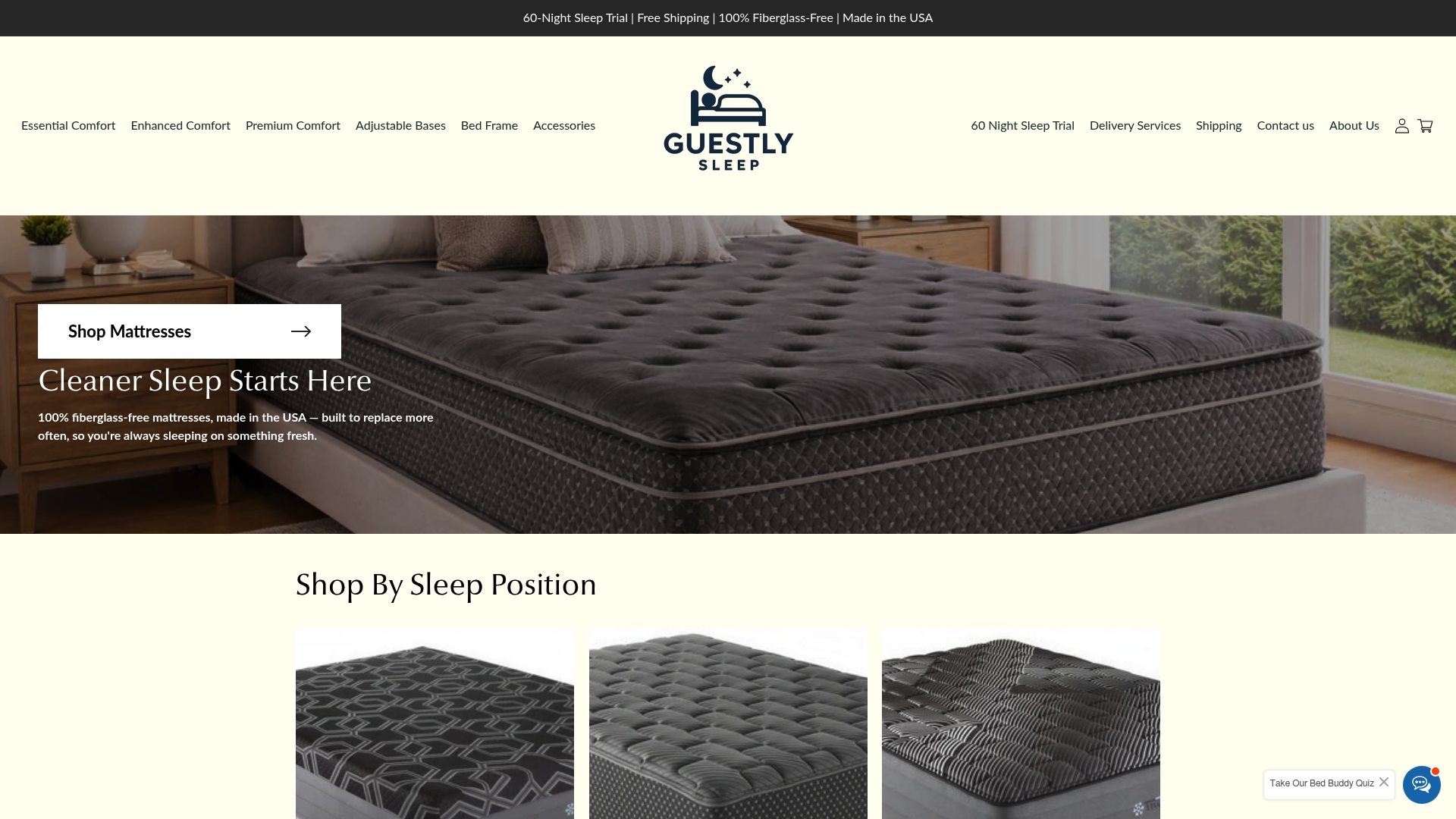
For shoppers who want to address foundation compatibility at the same time, the Tranquility II Adjustable Base is designed for zero clearance and works with platform beds. It pairs with Guestly Sleep mattresses and eliminates the guesswork around base compatibility. If you want a premium feel without fiberglass risk, the 15" TRU Luxury Plush Mattress combines deep comfort with safe, certified materials.
FAQ
How long should I test a mattress in a store?
Ten minutes is the minimum needed to assess comfort and support. Lie in your actual sleep position and bring your partner if you share a bed.
Does a firm mattress help with back pain?
Research shows medium-firm mattresses outperform firm for spinal alignment and back pain relief. Firm mattresses often create pressure points at the hips and shoulders.
What do mattress safety labels actually tell you?
Safety labels confirm that a mattress meets fire resistance regulations but do not disclose the full chemical content or off-gassing risk. Look for GOTS or GOLS certifications for deeper material safety.
Can rotating my mattress fix sagging?
No. Rotation distributes wear but cannot reverse existing body impressions or structural failure. A sagging mattress needs replacement, not rotation.
What hidden costs should I expect when buying a mattress?
Delivery, setup, old mattress removal, a protector, and taxes can add several hundred dollars to the sticker price. Always ask for a full out-the-door quote before purchasing.