

The Best Luxury Organic Bedding: Certified Picks for 2026
The best luxury organic bedding starts with GOTS-certified fibers, transparent mill practices, and finishes free of synthetic chemicals. For hotel-style softness, Boll & Branch leads. For breathable linen, Coyuchi and The Citizenry are the strongest picks. For cooling performance, Sijo’s Tencel sheets are hard to beat. Here is the at-a-glance comparison:
| Brand | Material / Fiber | Weave / Finish | Key Certifications | Price Band |
|---|---|---|---|---|
| Boll & Branch | Long-staple organic cotton | Sateen, percale | GOTS, Fair Trade | $$$ |
| Coyuchi | Organic cotton, linen | Percale, washed linen | GOTS | $$$$ |
| The Citizenry | Linen, organic cotton | Stonewashed, slub | Artisan Fair Trade | $$$$ |
| Avocado | Organic cotton, linen | Percale, sateen | GOTS, MADE SAFE | $$$ |
| Sijo | Tencel/lyocell | Sateen | OEKO-TEX | $$$ |
| Under The Canopy | Organic cotton | Percale, sateen | GOTS | $$ |
| Quince | Organic cotton | Percale, sateen | GOTS | $$ |
| Naturepedic | Organic cotton | Percale | GOTS, MADE SAFE | $$$$ |
Who each pick suits:
- Hotel-style luxury, wide color range: Boll & Branch (sateen, accessible price for the quality)
- Breathable, textured linen: Coyuchi or The Citizenry (both suit hot sleepers and allergy-sensitive buyers)
- Cooling, silky feel: Sijo (Tencel, moisture-wicking, best for warm climates)
- Certified non-toxic for children: Naturepedic (GOTS + MADE SAFE, strictest chemical controls)
- Certified basics without boutique pricing: Quince or Under The Canopy
Table of Contents
- The top luxury organic bedding brands worth your money
- How to choose luxury organic bedding that actually fits your needs
- What the fiber and weave actually feel like in practice
- Which certifications actually protect you and which ones are marketing
- What luxury organic bedding actually costs and how long it lasts
- Where to buy luxury organic bedding in the U.S.
- Why certifications and mill practices matter more than marketing claims
- Key Takeaways
- The case for building your sleep environment from the mattress up
- A non-toxic sleep setup starts with the right mattress
- Useful sources and certification references
- The certifications are real, but the mattress is where it starts
The top luxury organic bedding brands worth your money
The Good Trade’s multi-night editorial testing confirms that certifications alone do not tell the whole story. Feel, mill transparency, and return policies matter just as much. Here is what each brand actually delivers.
Boll & Branch is the most recognizable name in certified luxury cotton bedding. Its sateen sheets use long-staple organic cotton and carry both GOTS and Fair Trade certification. The hand-feel is genuinely hotel-grade, and the brand’s direct-to-consumer model keeps pricing competitive for the quality tier. Return policy is generous, and sheets are widely available in retail stores for buyers who want to touch before buying.
Coyuchi goes further on mill transparency than almost any other brand. Its Refined Organic Percale sheets are GOTS-certified, and the factory recycles 90% of its wastewater. That level of documented mill practice is rare. The percale weave is crisp and cool, making it a strong choice for warm sleepers who want proof behind the sustainability claims.
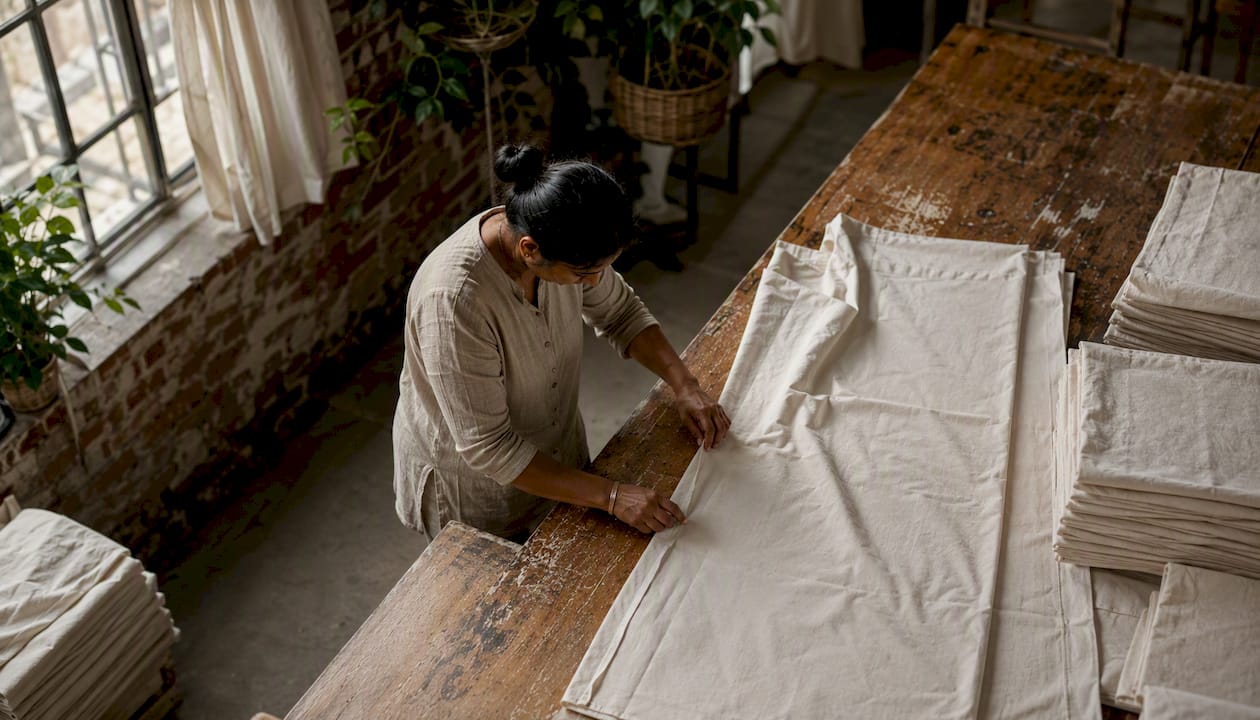
The Citizenry takes a different route: artisan partnerships with weavers in Portugal and India, stonewashed and slub-linen finishes, and fair-artisan pay commitments. The texture is relaxed and lived-in rather than crisp. Buyers who want provenance and craft over clinical certification will find it here.
Avocado Green Mattress offers bedding as part of a fully certified bedroom system. GOTS and MADE SAFE certifications cover both the mattress and the sheets, which matters if you are building a non-toxic sleep environment from the ground up. The brand also carries Climate Neutral certification, a useful signal for buyers tracking carbon impact.
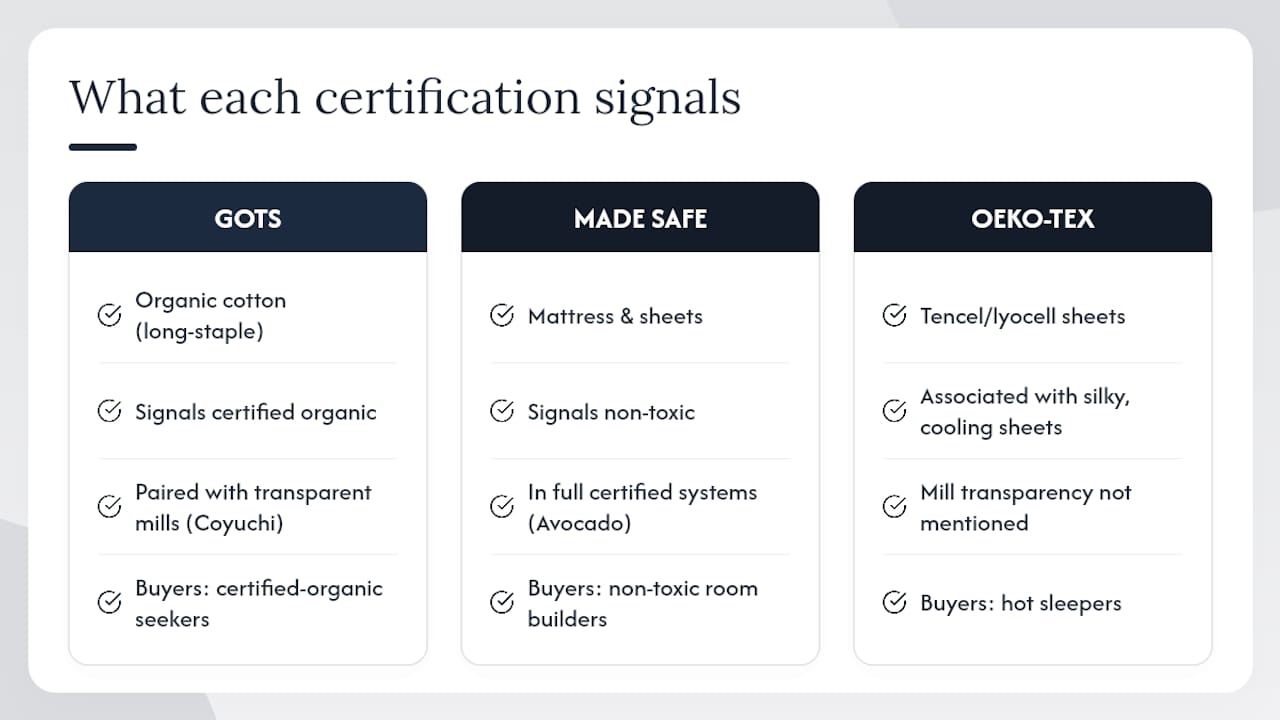
Sijo is the specialist for cooling. Its Tencel/lyocell sheets are OEKO-TEX certified, moisture-wicking, and noticeably silky. If you sleep hot and want an eco-friendly alternative to cotton, Sijo is the clearest answer.
Under The Canopy offers GOTS-certified basics at accessible luxury price points. The selection covers percale and sateen in a clean, minimal aesthetic. It is the right call for buyers who want documented certification without paying boutique prices.
Quince sits at the value end of certified luxury. GOTS-certified percale and sateen at prices well below most competitors. The trade-off is less artisanal provenance and fewer weave options, but the certification credentials are real.
Parachute focuses on contemporary hotel-style aesthetics in percale, sateen, and washed linen. Certifications vary by product line, so check individual listings. Strong lifestyle branding and a solid return policy.
Brooklinen covers a wide range of weaves and price points, with some GOTS-certified lines. Good for buyers who want to compare feels before committing.
Nest Bedding bundles organic bedding with mattresses and sleep accessories. Useful for one-stop shoppers outfitting a full bedroom.
Pact leads on Fair Trade credentials at mainstream price points. GOTS and Fair Trade certified basics, with a focus on labor standards as much as fiber quality.
West Elm brings certified organic and Fair Trade options into a major retail environment with easy returns and frequent new styles. Certifications vary by product, so read labels carefully.
Happsy and Naturepedic both target family buyers with strict non-toxic controls. Naturepedic holds GOTS and MADE SAFE certification and is the strongest pick for children’s bedding.
Cozy Earth is known for plush, silky performance textiles. Some natural fiber options exist, but the brand’s signature is softness and temperature regulation rather than organic certification depth.
Of An Origin and White Lotus Home serve buyers who want small-batch provenance and boutique washed-linen finishes. Both suit buyers for whom the story behind the textile matters as much as the thread count.
Homebird, Birch, and My Green Mattress round out the list. Birch holds OEKO-TEX certification and positions itself for hotel-style sheets. My Green Mattress integrates bedding with its organic mattress lines. Homebird focuses on design-forward natural fiber collections.
How to choose luxury organic bedding that actually fits your needs
The single most important decision is fiber plus weave. Everything else, including price, certifications, and brand story, flows from that starting point.
Prioritized decision checklist:
- Check for OEKO-TEX or MADE SAFE — These address chemical safety in the finished product, not just the raw fiber. Both matter for sensitive skin.
Pro Tip: For sensitive skin or allergy-prone sleepers, prioritize GOTS first, then MADE SAFE. GOTS covers the fiber and processing; MADE SAFE screens the finished product for over 6,500 chemicals of concern. Together, they give you the most complete non-toxic assurance available.
How to rank trade-offs when you cannot have everything: GOTS certification first, then mill/dye transparency, then OEKO-TEX, then price. A brand with GOTS and documented mill practices beats a brand with a lower price and a proprietary “natural” claim every time.
What the fiber and weave actually feel like in practice
Understanding the difference between a percale and a sateen is not pedantic. It determines whether you sleep cool or warm, whether your sheets feel crisp or silky, and how long they last.
Fibers:
- Tencel/lyocell: derived from wood pulp in a closed-loop process that recycles solvent. Silky, moisture-wicking, and noticeably cool against skin. The Sleep Foundation notes that fiber choice directly affects temperature regulation and comfort during sleep.
| Material | Typical feel / weight | Best sleep temperature | Care notes |
|---|---|---|---|
| Long-staple organic cotton | Soft, smooth, medium weight | Neutral to cool | Machine wash cold, tumble dry low |
| French flax linen | Textured, relaxed, heavier | Cool to warm | Machine wash cold, line dry preferred |
| Tencel/lyocell | Silky, lightweight, drapes well | Cool | Gentle cycle, low heat |
| Bamboo-derived blend | Soft, slightly heavier | Neutral | Gentle cycle, avoid high heat |
Weaves and finishes:
Pro Tip: Plant-based softeners and enzymatic washes, used by brands like Frette in their Naturalismo collection (dyed with organic poppy petals), soften fibers without synthetic chemical residue. If a brand does not specify its finishing process, ask. Conventional fabric softeners can leave coating residue that affects breathability and skin contact.
Which certifications actually protect you and which ones are marketing
Not all sustainability claims carry the same weight. Here is what each major credential actually guarantees.
- GOTS (Global Organic Textile Standard): The most rigorous standard for organic bedding. Covers organic fiber content (minimum 70% for “made with organic,” 95% for “organic”), plus environmental criteria for dyeing and finishing, and social criteria including fair wages and safe working conditions. A GOTS label on a product page means an independent body audited the entire supply chain.
- OEKO-TEX Standard 100: Tests the finished product for over 100 harmful substances. Does not require organic fiber, but confirms the textile you sleep on is free of the most common chemical hazards. Useful as a complement to GOTS, not a replacement.
- Fair Trade Certified: Verifies fair wages, safe conditions, and community investment for workers in the supply chain. Boll & Branch and Pact both carry this. It does not address fiber organics, so look for it alongside GOTS.
- MADE SAFE: Screens finished products against a banned and restricted substances list covering thousands of chemicals of concern. Naturepedic and Avocado both hold this. It is the strongest chemical-safety signal for sensitive skin and children’s bedding.
- Climate Neutral: Confirms a brand measures and offsets its carbon emissions. Avocado holds this badge. Useful for climate-conscious buyers but does not address fiber or labor standards.
- 1% for the Planet membership: Signals a brand donates at least 1% of annual sales to environmental causes. A philanthropic trust signal, not a product-safety credential.
Red flags to watch for:
- “Natural” or “eco-friendly” with no third-party certification named
- Proprietary testing only (“tested in our own lab”)
- OEKO-TEX cited as the sole credential for a product marketed as “organic”
- No country of origin or mill name listed anywhere on the product page
What to look for on product pages: The certification logo should link to a verifiable certificate number on the certifying body’s database. GOTS, OEKO-TEX, and MADE SAFE all maintain public databases. If a brand lists a certification but provides no certificate number, treat it as unverified.
What luxury organic bedding actually costs and how long it lasts
Price in this category is driven by four factors: fiber quality (long-staple vs. short-staple), weave complexity, certification costs passed to the consumer, and production method (artisanal vs. industrial).
Typical price ranges per set (queen, sheets + pillowcases):
- Entry certified luxury (Quince, Under The Canopy, Pact): $80–$180
- Mid-tier certified luxury (Boll & Branch, Brooklinen organic lines, Parachute): $200–$350
- Premium artisan and fully certified (Coyuchi, The Citizenry, Avocado, Naturepedic): $350–$600+
- Boutique and small-batch (Of An Origin, White Lotus Home, Frette): $500 and above
Expected lifespan by material:
- Long-staple organic cotton percale or sateen: 5–7 years with proper care
- Linen: 10–15 years; linen genuinely improves with washing
- Tencel/lyocell: 3–5 years; more delicate under high heat
Care basics that extend lifespan:
- Wash in cold water with a fragrance-free, plant-based detergent
- Tumble dry on low or line dry; high heat degrades fibers faster than anything else
- Rotate between two sets to reduce wear frequency
- Avoid fabric softeners, which coat fibers and reduce breathability over time
Pro Tip: A brand’s return or trial policy is a proxy for confidence in their product. Brands that offer 30–60 day returns on used bedding are betting you will keep it. That confidence is worth a small price premium over a brand with a no-return policy on opened items.
Where to buy luxury organic bedding in the U.S.
Direct from the brand (recommended for most buyers):
- Boll & Branch: direct site plus retail stores; best for hotel-style cotton with wide color options
- Coyuchi: direct site; best for documented mill transparency and GOTS percale
- The Citizenry: direct site; best for artisan linen and stonewashed finishes
- Avocado Green Mattress: direct site; best for fully certified bedroom systems
- Under The Canopy: direct site; best for GOTS basics at accessible prices
- Nest Bedding: direct site; best for bundled mattress and bedding purchases
Major retailers with certified options:
- West Elm: in-store and online; certified organic and Fair Trade lines available; easy returns; good for buyers who want to see products in person
- Brooklinen: direct site; wide weave range; some GOTS lines
Boutique and small-batch:
- Of An Origin and White Lotus Home: direct sites; small-batch provenance; best for buyers who want limited-run textiles with a documented origin story
What to know about each channel:
- Direct brand stores give the most complete certification documentation and the best return policies
- Major retailers offer easier in-person access and broader return windows but less supply-chain detail
- Boutique brands offer provenance and craft but often have stricter return terms and longer shipping windows
Why certifications and mill practices matter more than marketing claims
The gap between “natural” marketing and verified sustainability is wide. GOTS certification requires independent auditing of the entire supply chain, from farm to finished product, covering both chemical inputs and labor conditions. Coyuchi’s factory recycling 90% of its wastewater is a documented example of what mill-level sustainability actually looks like in practice, not a marketing claim.
The MADE SAFE banned and restricted substances list covers thousands of chemicals of concern, including known carcinogens, endocrine disruptors, and neurotoxins. Brands that submit to MADE SAFE screening are committing to a level of chemical transparency that vague “non-toxic” marketing does not require.
Fair Trade certification addresses the human side of the supply chain: fair wages, safe working conditions, and community investment. In textile production, where supply chains often span multiple countries, this credential is a meaningful check on labor practices that organic fiber certification alone does not cover.
What documented sustainability looks like in practice:
- Wastewater management or recycling data published (Coyuchi’s 90% recycling rate is the benchmark)
- Certificate numbers for GOTS, OEKO-TEX, or MADE SAFE that you can verify in the certifying body’s public database
- Climate Neutral or similar carbon badge for brands making climate claims
The luxury brands that hold multiple independent certifications, name their mills, and publish dyeing and waste management data are the ones worth trusting. The rest are selling a story.
Key Takeaways
The strongest luxury organic bedding combines GOTS-certified fibers, documented mill practices, and chemical safety screening from MADE SAFE or OEKO-TEX, with fiber and weave chosen to match your sleep temperature.
| Point | Details |
|---|---|
| Fiber and weave first | Choose long-staple cotton for softness, linen for breathability, or Tencel for cooling before comparing brands. |
| GOTS is the baseline | GOTS covers organic fiber content plus labor and environmental criteria across the full supply chain. |
| Add MADE SAFE for chemical safety | MADE SAFE screens finished products against thousands of chemicals; pair it with GOTS for the most complete non-toxic assurance. |
| Mill transparency separates real brands | Named factories, wastewater data, and verifiable certificate numbers distinguish genuine sustainability from marketing. |
| Guestlysleep for the foundation | A fiberglass-free, non-toxic mattress from Guestlysleep pairs directly with GOTS-certified bedding for a fully clean sleep environment. |
The case for building your sleep environment from the mattress up
The conversation about non-toxic bedding usually starts with sheets, but the mattress underneath is where most of your chemical exposure risk actually lives. Conventional mattresses can off-gas volatile organic compounds and contain fiberglass as a fire barrier, a material that can shed microscopic particles into your sleep environment. Certified organic sheets on top of a mattress with those issues is a partial solution.
The logic behind Guestly Sleep’s approach is the same logic that drives GOTS and MADE SAFE certification: every layer of your sleep environment matters. A non-toxic mattress foundation, combined with certified organic bedding, gives you the most complete protection available. Choosing one without the other leaves a gap.
Guestly Sleep’s fiberglass-free mattresses are made in the United States using certified, safe materials with no harmful fillers. The brand offers a 60-night sleep trial and free shipping, which makes the decision lower-risk than most luxury purchases. For buyers who want to understand how mattress materials affect respiratory health and allergen exposure, Guestly Sleep’s guide on mattress materials and sleep health covers the evidence in detail.
A non-toxic sleep setup starts with the right mattress
If you are investing in GOTS-certified sheets and MADE SAFE-screened duvet covers, the mattress underneath should meet the same standard.
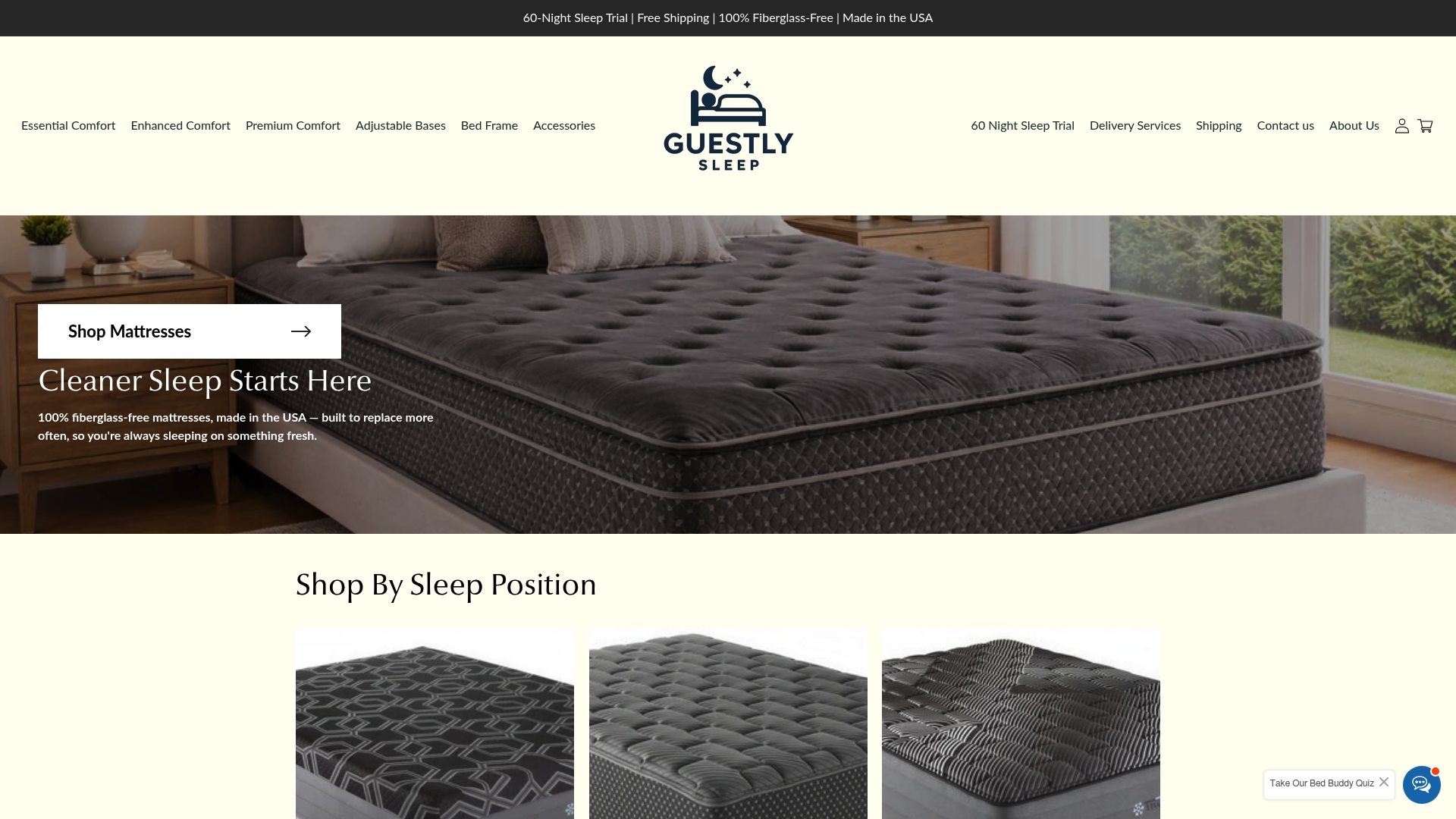
Guestly Sleep’s fiberglass-free mattresses are built in the United States with non-toxic materials, no fiberglass fire barriers, and no harmful fillers. Pair one with the certified organic bedding brands on this list and you have a sleep environment that holds up to scrutiny at every layer. The 60-night sleep trial means you can test the combination without committing. Start with the mattress, add your certified linens, and the setup is complete.
Useful sources and certification references
These are the primary sources to consult when verifying product claims or learning more about the standards referenced in this article.
- Naturalismo Duvet Cover Set | Frette
- Refined Organic Percale Sheet Set – Coyuchi
- We Tested The Best Sustainable And Organic Bedding (2026) - The Good Trade
- Global Standard (GOTS)
- Banned & restricted list | MADE SAFE
- Fairtrade Certified
- Climate Neutral
- Best wool blankets | Sleep Foundation
The certifications are real, but the mattress is where it starts
Most buyers spend hours comparing thread counts and GOTS certificates, then sleep on a mattress that off-gasses synthetic chemicals all night. The bedding matters. The mattress matters more.
What strikes me about the brands that genuinely lead in this space, Coyuchi naming its factory and publishing wastewater recycling data, Avocado holding GOTS and MADE SAFE across both mattresses and sheets, Naturepedic applying the same chemical screening to children’s products that most brands reserve for premium adult lines, is that they treat certification as a floor, not a finish line. The brands that list a single OEKO-TEX badge and call it “organic” are doing the minimum. The ones that stack GOTS, MADE SAFE, mill transparency, and Fair Trade are building something you can actually trust.
The practical implication: do not let a lower price on a less-certified sheet set convince you the difference is marginal. The difference between GOTS-certified long-staple cotton from a named mill and a “natural cotton” sheet with no third-party verification is not a marketing distinction. It is a real difference in what you are sleeping on every night.