

Why Direct-to-Consumer Mattresses Cost Less Than Retail
Direct-to-consumer (DTC) mattresses cost less because they cut out every layer between the factory and your bedroom. No showroom rent. No commissioned salespeople. No multi-step distribution chain adding margin at each handoff. Consumers who buy a mattress online generally spend less than those who buy in-store. That gap is not a fluke. It reflects a fundamentally different cost structure.
Here is what drives the price difference:
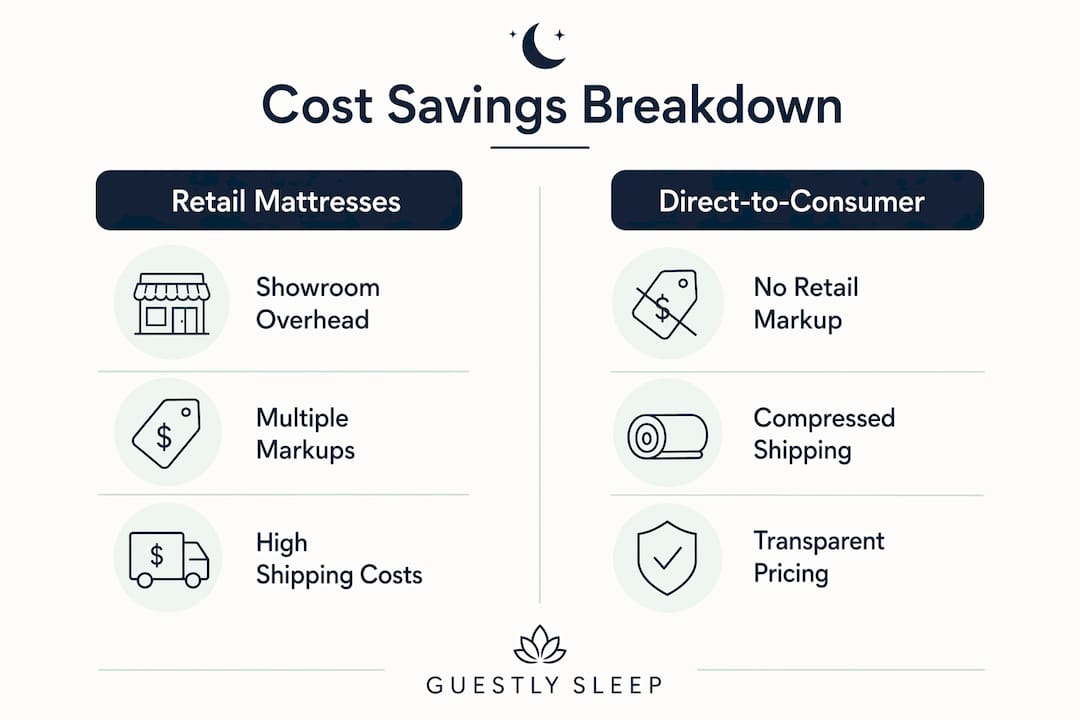
- No retail middlemen: DTC brands sell factory-direct, skipping wholesale and retail markup layers.
- No showroom overhead: Rent, utilities, floor models, and maintenance costs never touch the price tag.
- No sales commissions: You pay for the mattress, not the salesperson’s cut.
- Compressed shipping: Vacuum-packed mattresses ship via standard couriers instead of expensive white-glove fleets.
- Digital-only marketing: Targeted online ads cost far less than TV campaigns and physical retail infrastructure.
- Extended trial periods: A 100-night home trial replaces the showroom test, removing the need for a physical store entirely.
Each of these factors compounds. Together, they explain why a DTC mattress and a showroom mattress made from nearly identical materials can carry price tags hundreds of dollars apart.
Why direct-to-consumer mattresses cost less starts with showroom overhead
Traditional mattress retail is expensive to operate, and those costs land squarely on the sticker price. A large showroom requires thousands of square feet of floor space in high-traffic retail locations, plus utilities, insurance, and ongoing maintenance. Floor model mattresses get replaced regularly. None of that is cheap.
The markup structure tells the real story. Retail mattress markups can reach up to 10 times the cost of materials. A mattress that costs around $300 to make might sell for as much as $3,000 in a showroom. Even at more typical markups, these numbers remain dramatic.
- Showroom rent and utilities: Large floor space in retail corridors is a fixed cost that never disappears.
- Sales commissions: Salespeople typically earn a percentage of each sale, which gets baked into the price.
- Multi-step distribution: Manufacturer to distributor to retailer adds margin at every transfer.
- Retail markup on materials: Materials account for only 25–35% of a traditional retail mattress price, with the remainder going to markup, commissions, and overhead.
- Brand name premiums: Established retail brands charge for recognition, not just product quality.
A mattress costing a manufacturer a few hundred dollars to produce may retail for up to 10 times that amount after markups. DTC brands skip most of that chain entirely.
How compression and shipping innovations make online mattresses cheaper

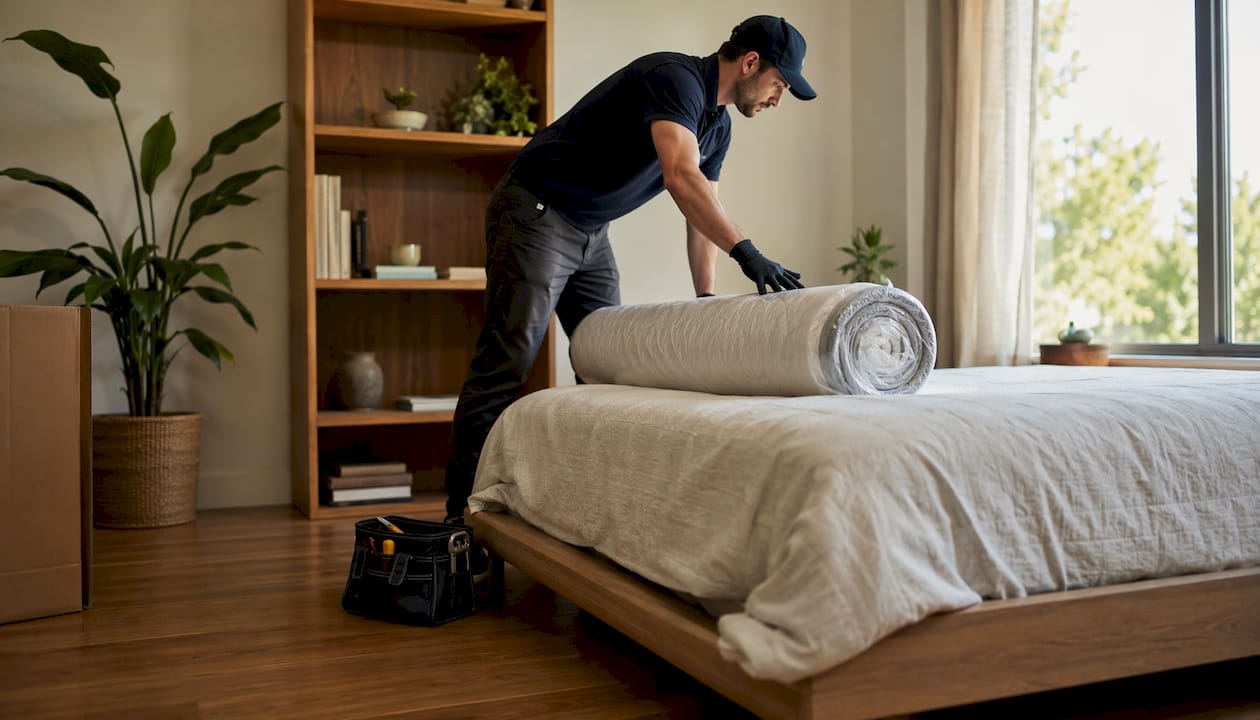
The logistics breakthrough that made DTC mattresses possible is compression. Vacuum-packing a mattress into a box small enough to ship via UPS or FedEx transformed the economics of the entire category. Before this, shipping a mattress required specialized freight, white-glove delivery crews, and scheduling windows that added real cost and friction.
Compressed packaging enables efficient palletization and the use of standard courier networks, cutting traditional shipping costs dramatically. The math behind it matters: box size, weight, and how many units fit on a truck determine whether the logistics model works at all.
- Vacuum compression: Mattresses are rolled or folded and sealed, reducing volume enough for standard parcel shipping.
- Palletization efficiency: Standardized box dimensions allow more units per truck, lowering per-unit freight cost.
- No white-glove fleets: Eliminating specialized delivery crews removes a significant cost layer.
- Gig-economy returns: DTC companies use gig-economy pickups and donation partnerships instead of expensive restocking operations.
- Doorstep delivery: Customers receive the mattress at home without scheduling a delivery window or paying setup fees.
Pro Tip: If you want in-home setup without the traditional retail price premium, some DTC brands offer optional white-glove service as an add-on. Guestlysleep, for example, offers a white-glove setup service so you get the convenience without paying showroom prices for the mattress itself.
The shift to compressed shipping is as much a logistics innovation as a pricing one. It solved what was previously considered an unsolvable problem: how do you ship something the size of a mattress through the mail affordably?
Why a 100-night trial beats 15 minutes on a showroom floor
The standard advice for decades was to lie on a mattress in a store briefly before buying. That advice made sense when the alternative was nothing. But a 100-night home trial is categorically more useful. You sleep on the mattress in your actual environment, with your actual pillow, in your actual sleep position, for months.
Long home trials provide better consumer protection than brief in-store tests, and they remove the primary objection to buying a mattress without touching it first. Consumer Reports notes many mattresses-in-a-box perform well for sleepers of various body sizes and sleeping styles, indicating the trial period offers meaningful quality assurance.
- Real-world testing: You evaluate the mattress under your actual sleep conditions, not a showroom’s fluorescent lights.
- No pressure to decide quickly: A 100-night window removes the urgency that showroom salespeople rely on.
- Return logistics handled: Most DTC brands arrange pickup or donation, so you never have to repack the mattress.
- Consumer protection built in: The trial period functions as a purchase guarantee that showrooms rarely match.
- Guestlysleep’s 60-night trial: Guestlysleep offers a 60-night sleep trial so you can assess comfort and support before committing fully.
One thing worth checking before you buy: some brands charge a return pickup fee or restocking fee. Read the fine print. A generous trial with hidden fees is less valuable than it looks.
How DTC brands build trust through transparent pricing and materials
Price transparency is one of the clearest advantages of buying direct. In a traditional showroom, the listed price is often a starting point for negotiation, and the same mattress can appear under different names at different retailers, making comparison nearly impossible. DTC pricing is fixed and public.
Comparing total mattress costs requires looking beyond the list price to include delivery fees, bundled extras, and return terms. DTC brands tend to make these terms explicit upfront, which is itself a form of value. You know what you are paying and why.
- Fixed, public pricing: No haggling, no retailer-exclusive model names designed to prevent comparison shopping.
- Material disclosure: Health-conscious DTC brands publish what goes into their mattresses, including certifications and what is absent (fiberglass, harmful fillers).
- Clear return terms: Pickup logistics, donation partnerships, and any applicable fees are stated before purchase.
- Bundled value: Many DTC brands include free shipping, pillows, or protectors that would cost extra at retail.
- No commission pressure: Without a salesperson earning a cut, the information you get is less likely to be shaped by incentive.
Guestlysleep publishes a full mattress comparison chart covering materials, comfort levels, and certifications, so you can evaluate options without a sales conversation. That kind of transparency is structurally difficult for traditional retail to replicate.
For buyers who care about what is actually inside the mattress, a mattress materials health guide can clarify which certifications matter and which marketing claims are just noise.
Why replacing your mattress every 2–4 years makes financial sense with DTC pricing
The conventional wisdom is that a mattress should last 8–10 years. That timeline made sense when mattresses cost $2,000 or more and replacing one was a major financial decision. DTC pricing changes that calculation.
Replacing mattresses every 2–4 years improves health outcomes by maintaining a cleaner, fresher sleep surface. Mattresses accumulate dust mites, dead skin cells, and moisture over time, and no amount of cleaning fully reverses that. A lower upfront cost makes regular replacement realistic rather than aspirational.
- Cleaner sleep environment: A newer mattress means fewer allergens and less microbial buildup.
- Better support over time: Materials degrade. Replacing more frequently means you sleep on a mattress that still performs as designed.
- Lower total cost: A $900 DTC mattress replaced every three years costs less annually than a $2,500 retail mattress replaced every eight.
- Health-conscious materials: Guestlysleep’s fiberglass-free, American-made mattresses are designed for exactly this kind of regular replacement cycle.
The DTC model makes frequent replacement not just possible but practical. When the price is right, you stop tolerating a mattress that has stopped working for you.
Key Takeaways
Direct-to-consumer mattresses cost less because their entire cost structure is built around eliminating retail overhead, not subsidizing it.
| Point | Details |
|---|---|
| Retail markup is the core gap | Traditional showroom mattresses carry markups up to 10 times manufacturing cost, with materials representing only 25–35% of the retail price, while DTC brands allocate 40–50% of price to materials. |
| Compression unlocked the model | Vacuum-packed shipping via standard couriers replaced costly white-glove delivery fleets, making DTC logistics viable. |
| Trial periods replace showrooms | A 100-night home trial provides more meaningful purchase protection than a brief in-store test. |
| Online buyers spend less | Studies find that consumers who buy a mattress online generally spend less than those who buy in-store. |
| Frequent replacement is now affordable | DTC pricing makes replacing a mattress every 2–4 years financially realistic, supporting a healthier sleep environment. |
Guestlysleep offers fiberglass-free, American-made mattresses with free shipping and a 60-night sleep trial, priced to make regular replacement practical. Browse the full mattress collection or explore the RZ Cool Choice 14" mattress as a starting point.
Recommended
- Why You Don’t Have to Spend Over $1,200 to Get a Good Mattress – Guestly Sleep
- Why Buying an Affordable Mattress Online Might Be a Better Option Than – Guestly Sleep
- Why It’s Better to Buy a New Affordable Mattress Online Instead of a U – Guestly Sleep
- Spend Less, Replace More Often: A Smarter Way to Buy a Mattress – Guestly Sleep