

What Mattress End-of-Life Means and When to Replace Yours
Mattress end-of-life is the point when your mattress can no longer provide the postural support and comfort your body needs for restorative sleep. Not when it falls apart. Not when springs poke through the fabric. The functional decline happens long before any visible catastrophe, and most people miss it entirely because the deterioration is so gradual.
Experts at the Sleep Foundation frame it this way: end-of-life is better understood as a loss of sufficient support rather than structural failure. Your body adjusts to the slow compression of foam and the weakening of coils, so the decline feels invisible until you sleep somewhere else and wake up feeling genuinely rested.
Here is what mattress end-of-life typically looks like in practice:
- Loss of support: The mattress no longer keeps your spine aligned during sleep, leading to morning stiffness or aches.
- Visible sagging or body impressions: Permanent indentations where you sleep signal that materials have compressed beyond recovery.
- Disrupted sleep: Increased tossing, turning, or waking through the night without an obvious cause.
- Worsening allergies: Accumulated dust mites, mold, and allergens in aging mattress materials can trigger respiratory symptoms.
- Sleeping better elsewhere: Hotels, guest beds, even a couch feel more comfortable than your own mattress.
Most mattresses reach this stage typically after several years, though the timing shifts considerably based on mattress type, how you use it, and how well you maintain it. The sections below break down every factor that matters.
Table of Contents
- What determines how long your mattress actually lasts?
- How long does each mattress type typically last?
- 10 signs your mattress has reached the end of its life
- How to extend the life of your mattress
- What the industry and health experts say about mattress end-of-life
- Guestlysleep offers a cleaner, safer replacement when you are ready
- Key Takeaways
What determines how long your mattress actually lasts?
No universal expiration date exists for mattresses, and that is not a cop-out. According to sleep and health experts, individual variables like body weight, sleep position, and even the humidity in your bedroom affect lifespan so significantly that a blanket number would be misleading. A 130-pound side sleeper in a dry climate and a 250-pound back sleeper in a humid one are not working with the same timeline.
The factors that matter most:
- Material quality: Higher-density foams and tempered steel coils hold up longer than budget-grade equivalents. A mattress built with cheap polyurethane foam will compress faster regardless of how carefully you treat it.
- Body weight and sleep position: Heavier body weight and specific sleep positions accelerate compression and material degradation, pushing mattresses toward premature end-of-life. Side sleepers tend to create deeper impressions in shoulder and hip zones.
- Frequency of use: A guest room mattress used 30 nights a year will outlast a primary bed mattress by years, even if they are identical models.
- Care and maintenance: Rotating regularly, using a quality mattress protector, and keeping the mattress on a proper foundation all slow wear meaningfully.
- Environmental conditions: High humidity promotes mold and material breakdown. A mattress in a poorly ventilated basement bedroom ages faster than one in a climate-controlled room.
- Pets and children: Both add unpredictable weight distribution, moisture, and physical stress that shorten lifespan.
Understanding these variables helps you calibrate your own replacement timeline rather than relying on a generic number someone else’s mattress earned.
How long does each mattress type typically last?
Mattress type is one of the strongest predictors of lifespan. The construction and materials used in each category have real durability differences, and research from the Sleep Foundation confirms that quality and care within each type modify these estimates further.
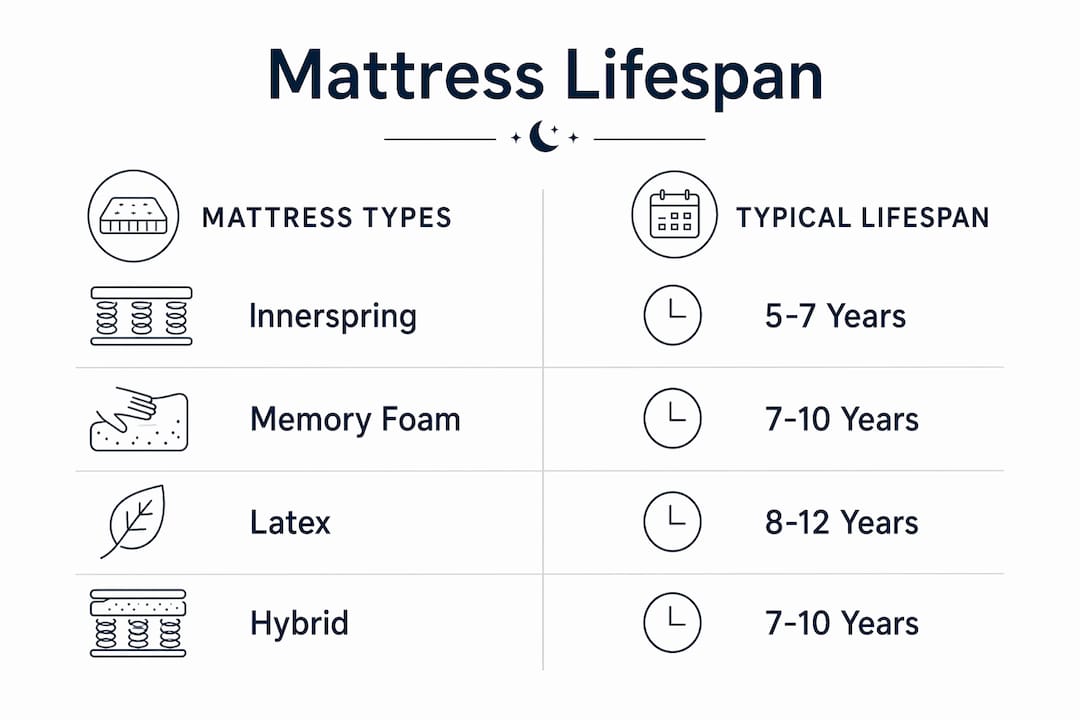
| Mattress Type | Typical Lifespan | Key Durability Factor |
|---|---|---|
| Innerspring | shorter lifespan | Coil gauge and count; comfort layers compress quickly |
| Polyurethane foam | moderate lifespan | Foam density; lower-density foam sags faster |
| Hybrid | moderate lifespan | Depends on foam layer quality over the coil system |
| Latex | longer lifespan | Naturally resilient; resists compression and allergens |
| Airbed (adjustable) | longer lifespan | Pump and chamber durability; foam surrounds still degrade |
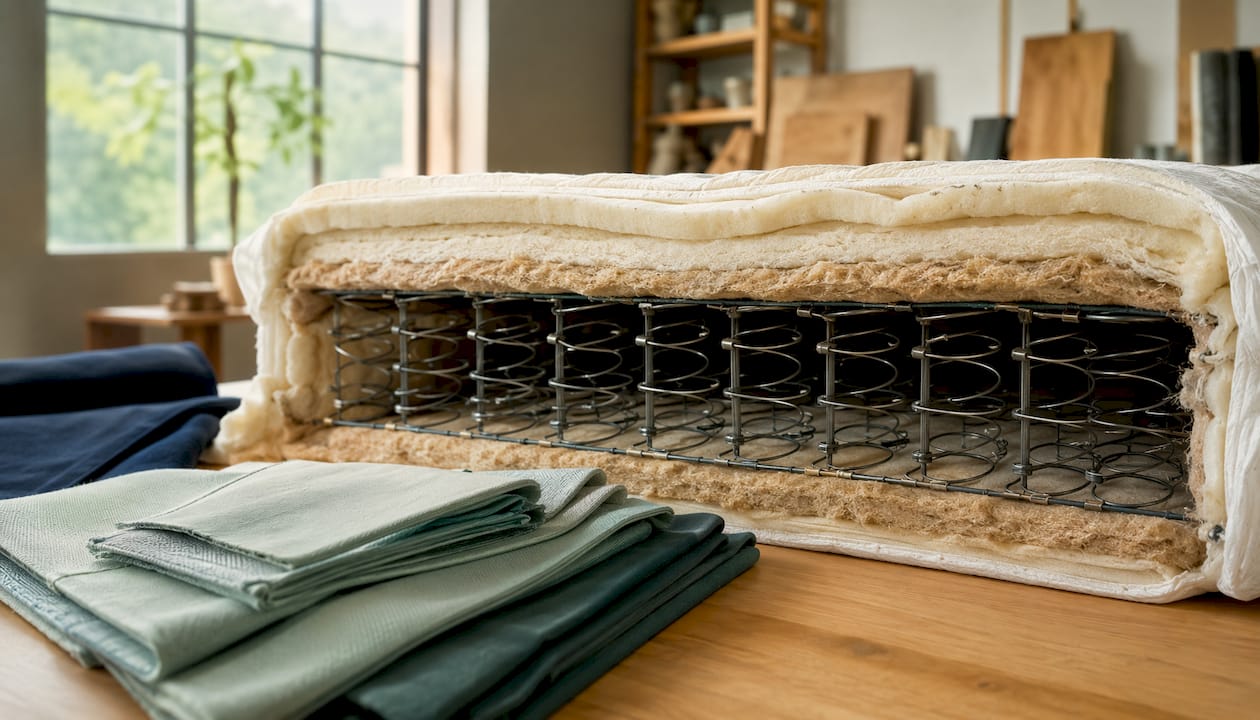
Innerspring mattresses tend to show their age earliest. The comfort layers on top, usually thin foam or fiber, compress within a few years even when the coil system itself still functions. Latex holds up best because the material naturally resists the compression that kills foam mattresses. Hybrid mattresses sit in the middle, and their longevity depends heavily on how thick and dense the foam layers above the coils are.
One thing worth knowing: a mattress warranty does not tell you when your mattress has reached end-of-life. Warranties typically cover structural defects like sagging beyond 1.5 inches, not the gradual comfort degradation that actually determines when you need a replacement. Your mattress can feel completely worn out and still be “within warranty.”
10 signs your mattress has reached the end of its life
1. Visible sagging or body impressions
The most obvious sign. If you can see a dip where you sleep, the support materials have compressed past the point of recovery. Even an inch of sagging changes your spinal alignment enough to cause real discomfort.
2. You wake up with aches and stiffness
Morning back pain, hip soreness, or neck stiffness that fades within an hour of getting up is a classic signal. The mattress is no longer keeping your spine in a neutral position through the night.
3. You sleep better somewhere else
This one catches people off guard. If a hotel bed, a friend’s guest room, or even a couch feels noticeably more comfortable than your own mattress, that contrast is your body telling you something. Experts recommend prioritizing this “feel test” over calendar age alone, because gradual support loss is easy to normalize when you sleep on the same surface every night.
4. You feel your partner moving
A mattress that once absorbed motion transfer now transmits every shift. If your partner’s movements are waking you up more than they used to, the foam or coil system has lost its ability to isolate motion.
5. Squeaking or creaking noises
Innerspring and hybrid mattresses develop noise as coils weaken and lose tension. If your mattress sounds like an old floorboard, the internal structure is telling you it is done.
6. Increased allergy symptoms at night
Mattresses accumulate dust mites, dead skin cells, mold spores, and other allergens over years of use. If your allergies or asthma symptoms worsen at night or first thing in the morning, an aging mattress could be the source. Replacing it, or at minimum using an allergen-barrier protector, makes a measurable difference. For more on this, mattress hygiene and replacement timing are closely linked.
7. The mattress feels lumpy or uneven
Foam breakdown rarely happens uniformly. You may notice firmer spots, softer zones, or a general unevenness that makes finding a comfortable position harder than it used to be.
8. You are not sleeping through the night
More frequent waking, restlessness, or micro-awakenings you barely remember can all trace back to a mattress that is no longer supporting your body properly. Poor sleep quality without an obvious cause is worth investigating at the mattress level.
9. The mattress is over 7 years old
Age alone is not the deciding factor, but it is a useful flag. If your mattress is past the 7-year mark and you are experiencing any of the signs above, the combination is a strong signal. USA Today’s reporting on mattress replacement puts the general guideline at 7 to 10 years, with material type and maintenance determining where in that range your mattress lands.
10. You dread going to bed
This one is easy to dismiss, but it matters. If getting into bed feels like a chore rather than a relief, something is wrong. Sleep should feel like a reward. When it does not, the surface you are sleeping on is worth examining first.
Pro Tip: Your body adjusts to gradual mattress decline the same way it adjusts to a noisy neighborhood. You stop noticing. Pay attention to how you feel after sleeping somewhere else, and use that contrast as your baseline, not how you feel after a typical night at home.
How to extend the life of your mattress
Good maintenance genuinely delays end-of-life. Proper care, including rotation, protectors, and foundation support, preserves both comfort and hygiene over time. None of these steps are complicated, but most people skip them.
- Use a mattress protector from day one. A waterproof, breathable protector keeps moisture, sweat, and allergens from penetrating the mattress materials. This single habit extends lifespan more than almost anything else.
- Rotate your mattress every 3–6 months. Head-to-foot rotation distributes wear more evenly across the surface. Most modern mattresses are not designed to be flipped, but check your manufacturer’s guidance.
- Use a proper foundation or bed frame. A sagging or broken box spring transfers stress directly to your mattress. Slat spacing matters too: gaps wider than 3 inches allow foam to compress into the gaps over time.
- Air it out regularly. Strip the bedding once a week and let the mattress breathe. This reduces moisture buildup that accelerates foam and fabric breakdown.
- Vacuum the surface every few months. A low-suction upholstery attachment removes dust mites and debris from the surface layers without damaging the materials.
- Keep pets off the mattress. Pet weight, claws, and moisture are hard on mattress materials. A dedicated pet bed nearby is a worthwhile investment.
For anyone curious about sleeper sofa mattresses and upholstery care, this DIY repair guide covers practical maintenance basics that apply to mattress longevity more broadly.
What the industry and health experts say about mattress end-of-life
From a waste management standpoint, mattress end-of-life is the moment a mattress enters the waste stream, and it creates a real logistical challenge. Mattresses are bulky, built from glued layers of steel, foam, polyester, and wood, and those mixed materials make disassembly for recycling genuinely difficult. In practice, many mattresses collected for recycling end up processed for energy recovery rather than material reclamation.
The Mattress Recycling Council manages state-mandated stewardship programs in California, Connecticut, and Rhode Island that facilitate mattress collection and recycling at scale. These programs represent the most organized infrastructure for mattress disposal currently available to U.S. consumers. The broader trend, tracked by the Product Stewardship Institute, is toward mandatory producer responsibility, where manufacturers bear more of the cost and responsibility for end-of-life handling. The logic is straightforward: if manufacturers are financially accountable for disposal, they have an incentive to design mattresses that are easier to recycle.
On the health side, the consequences of sleeping on a mattress past its functional lifespan are not trivial. The Sleep Foundation’s guidance is clear on this point:
The connection between mattress age and sleep quality is well documented. Poor sleep compounds over time, affecting mood, cognitive function, immune response, and cardiovascular health. Treating a mattress replacement as a health decision, not just a home furnishing upgrade, changes how you weigh the cost.
One important clarification: most consumers keep mattresses longer than recommended, often because they misread end-of-life as physical destruction rather than functional decline. A mattress does not need to be visibly broken to be hurting your sleep. If you are waking up stiff, sleeping poorly, or feeling better rested after a night away from home, those signals matter more than whether the mattress still looks intact.
Guestly Sleep offers a cleaner, safer replacement when you are ready
When your mattress has reached end-of-life and you are ready to replace it, the material it is made from matters as much as the support it provides.
Guestly Sleep specializes in fiberglass-free mattresses made in the United States, using certified, non-toxic materials free from harmful fillers. That distinction matters for health-conscious consumers who want to replace an aging mattress without introducing new chemical concerns into their sleep environment. Every mattress ships free, comes with a 60-night sleep trial, and is priced to make regular replacement realistic, not a once-a-decade financial event.
Guestly Sleep organizes its range by comfort level and sleep position, so whether you sleep on your side, back, or stomach, there is a specific option built for your body. The direct manufacturer relationship keeps prices honest without cutting corners on materials. If you have been sleeping on a mattress past its prime and you want a replacement you can feel good about, browse the full collection and use the 60-night trial to make sure it is right for you.
Key Takeaways
A mattress reaches end-of-life when it can no longer support healthy spinal alignment during sleep. Lifespan varies by mattress type: latex typically lasts 7–8+ years, innerspring about 5–6 years, with foam and hybrids generally in the middle range. Your body remains the best indicator—morning stiffness, disrupted sleep, and feeling better elsewhere signal replacement time. Maintenance such as rotation, protectors, and proper foundation can extend lifespan meaningfully. | Maintenance extends lifespan | Rotation, protectors, and proper foundation support delay end-of-life meaningfully. | | Guestly Sleep for the replacement | Fiberglass-free, American-made mattresses with a 60-night trial make replacement easier and safer. |