

Mattress Replacement Schedule Planning: 2026 Guide
Mattress replacement schedule planning is defined as the practice of tracking your mattress's age, wear, and performance to replace it before it harms your sleep or health. The mattress industry has long used 7–10 years as its standard replacement window — but that figure measures how long a mattress stays structurally intact, not how long it stays clean, supportive, or healthy to sleep on. Dust mite accumulation, foam degradation, and cumulative body impressions begin long before visible breakdown, which is why Guestly Sleep recommends replacing mattresses every 2–4 years for the cleanest, healthiest sleep environment possible. Building a replacement schedule around that health-first window — rather than the durability limit — is what this guide covers.
How does mattress type affect your replacement schedule planning?
Mattress material is the single biggest variable in any replacement timeline. Two people sleeping on the same schedule can need to replace their mattresses years apart simply because of what's inside them.
The functional durability ranges by material break down like this:
- High-quality latex: 6–7 years. Latex resists body impressions better than any other material, making it the most structurally durable option. That durability limit, however, doesn't mean it stays hygienic or optimally supportive for that entire window.
- Hybrid: 5–6 years. The coil system provides airflow and structural longevity, but the foam comfort layers compress and accumulate wear well before the coils fail.
- All-foam (non-memory): 1–3 years. Softer foam compresses faster under body weight, especially for heavier sleepers.
- Memory foam: 4–6 years. Memory foam develops permanent body impressions from heat and pressure over time, compressing in the zones where you sleep most.
These durability figures represent the maximum lifespan of the mattress's structure — not how long it continues to deliver optimal sleep health. Hygiene degradation, foam compression, and allergen accumulation follow a different curve, which is why a 2–4 year replacement cycle makes sense regardless of material type.
Usage intensity changes structural wear just as much as material does. Hotel mattresses follow a completely different cycle: luxury hotels replace every 3–5 years, mid-range hotels every 5–7 years, and extended-stay properties as often as every 2–4 years. That frequency reflects the hotel industry's understanding that regular turnover is essential for guest health and hygiene — not just that nightly use by different body types accelerates wear. The same logic applies at home.
The wear mechanism also differs by type. Latex degrades more evenly but eventually loses its rebound. All-foam models develop permanent body impressions from heat and pressure, while hybrid coil systems lose tension over time and begin to squeak. Understanding which failure mode applies to your mattress helps you know what to look for during inspections — and confirms that you don't want to wait for it to reach that point.
Pro Tip: If you share your bed with a partner or a pet, subtract one to two years from the standard durability estimate for your mattress type.
For a broader look at how material choice affects long-term planning, Guestly Sleep’s mattress materials health comparison breaks down which materials hold up best over time.
-
What are the signs that tell you it's time to replace your mattress?
Experts recommend replacing your mattress when three or more of eight specific signs are present. If you're on a 2–4 year replacement cycle, you're unlikely to reach three signs — and that's the point. These signs exist as a hard floor, not a target. Here are the eight signs to watch for:- Sagging over 1.5 inches. This is the industry standard threshold for warranty claims and replacement. Measure it by laying a straightedge across the mattress surface and checking the gap beneath.
- Morning stiffness or pain. If you wake up sore and the feeling fades within 30 minutes of getting up, the mattress is likely the cause.
- Visible body impressions. Permanent indentations where you sleep indicate foam or coil failure.
- Noise. Squeaking or creaking from an innerspring mattress signals broken or fatigued coils.
- Allergy symptoms. Dust mites accumulate in aging mattresses. If your allergy symptoms improve when you sleep elsewhere, the mattress is the source.
- Sleeping hot. Compressed foam loses its airflow channels, trapping heat and disrupting sleep.
- Expired warranty. Warranty duration is a manufacturer's own estimate of useful life. An expired warranty is a built-in replacement signal.
- Partner movement disruption. Worn mattresses lose motion isolation, meaning you feel every shift your partner makes.
Pro Tip: Test your mattress's impact on pain by sleeping on a different bed for 2–7 nights. If your soreness disappears, the mattress is the problem, not your body.The sag measurement is the most objective tool you have. A straightedge, a ruler, and five minutes give you a concrete number rather than a vague feeling. For a deeper look at physical warning signs, Guestly Sleep's guide on 9 signs you need a new mattress covers each indicator in detail.
How to build a personalized mattress replacement schedule
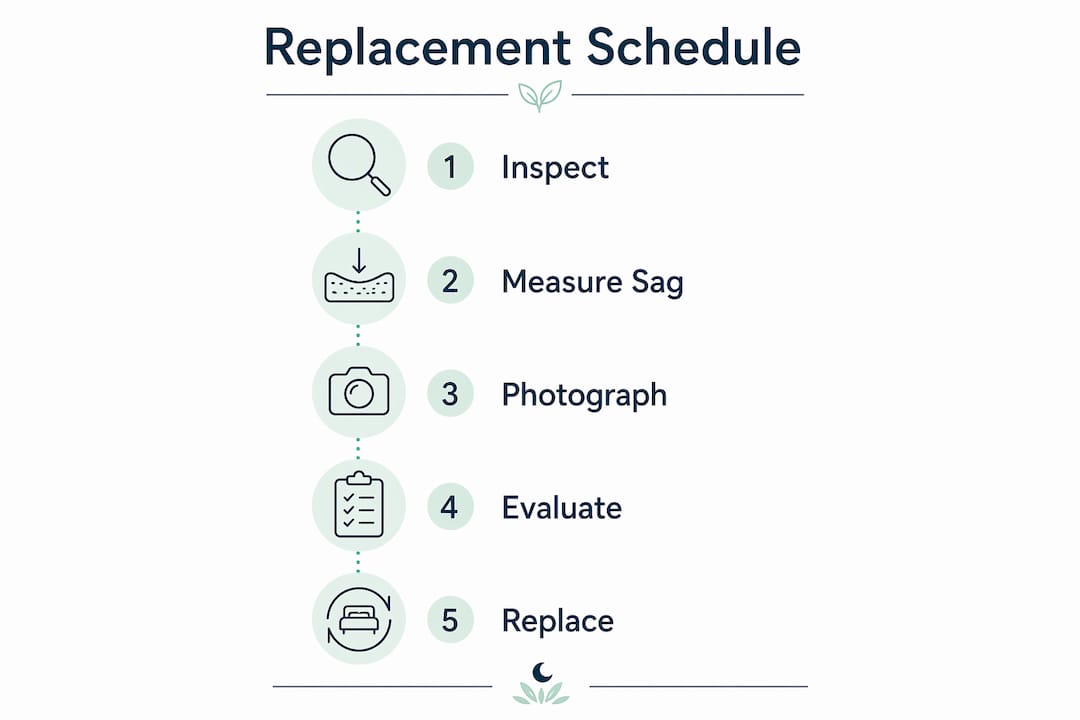
A personalized schedule turns vague replacement intentions into a concrete plan. Follow these steps to build one that actually works:- Record your purchase date and mattress model. Write it down or add it to a calendar app. Include the material type so you know which durability range applies.
- Set your replacement target date at 2–4 years out. Mark it in your calendar when you buy. If you prioritize sleep health and hygiene, treat this as a firm endpoint rather than a suggestion. More intensive use — a partner, a pet, heavier sleepers — puts you closer to the 2-year end.
- Measure sag annually starting from year one. Use a straightedge once a year. Log the measurement each time so you can track the rate of change, not just the current number.
- Flag health signals as they appear. Keep a simple note on your phone. If you wake up sore three mornings in a row, log it. Patterns matter more than single incidents.
- Start shopping 3–6 months before your target date. Replacement should happen on a planned schedule, not as a reaction to visible failure.
- Adjust for life changes. Weight changes, new health conditions, or a new sleep partner all shift your timeline. Revisit your schedule whenever your sleep situation changes significantly.
Staggering replacements across multiple beds in a home or rental property also stabilizes your budget. Replacing all mattresses at once creates a large, unpredictable expense. Replacing one per year keeps costs predictable and manageable.Pro Tip: Photograph your mattress surface each year during your inspection. Side-by-side photos from year to year reveal sagging and body impressions that are easy to miss when you see the mattress every day.For a broader look at how material choice affects long-term planning, Guestly Sleep's mattress materials health comparison breaks down which materials hold up best over time.
How to avoid common mistakes in mattress replacement planning
Most replacement mistakes fall into one of five categories. Recognizing them early keeps your schedule on track.- Treating manufacturer durability claims as health guidelines. A mattress that lasts 10 years structurally isn't a mattress you should sleep on for 10 years. Durability and hygiene are separate curves, and hygiene degrades first.
- Confusing cosmetic wear with structural failure. A stained or discolored mattress is not necessarily a worn-out one. Focus on sag measurements and sleep symptoms, not surface appearance.
- Ignoring warranty terms. Your warranty documents the manufacturer's own lifespan estimate. Many consumers never read it. The warranty expiration date belongs in your replacement schedule as a hard outer limit — but your health signals should move you to act well before that.
- Failing to account for changing sleep needs. A mattress that worked well at 160 pounds may not support you adequately at 200 pounds. Body weight changes alter pressure distribution and accelerate wear in specific zones.
- Delaying replacement because the mattress "looks fine." 77% of consumers replace their mattress only when deterioration is very visible. Sleep quality degrades well before visible breakdown occurs. Waiting for obvious damage means sleeping poorly for months or years before acting.
- Skipping the alternate-bed test. Many people attribute morning pain to stress, age, or exercise. Sleeping on a different mattress for a week isolates the variable. If the pain stops, the mattress is the cause.
The mattress replacement guide from Guestly Sleep walks through how to factor both budget and health signals into your timing decisions.
Key Takeaways
Effective mattress replacement schedule planning combines a health-first replacement target, annual sag measurements, and personal health signals to replace your mattress at the right time — not just the conventional one.
Why I think most people replace their mattresses too late
Most people I talk to have no idea when they bought their mattress. They guess. They say "a few years ago" and then realize it's been closer to ten. That gap between perception and reality is exactly why sleep quality suffers for so long before anyone does anything about it.The conventional wisdom says replace every 7–10 years. That's a durability estimate — how long a mattress holds its structure under normal conditions. It's not a health recommendation. Dust mites, foam degradation, and allergen buildup don't wait until year eight to start affecting your sleep. They start accumulating from day one.What actually works is treating your mattress like any other consumable health product — a water filter, an air purifier, contact lenses. You don't wait for it to completely fail before replacing it. You replace it on a schedule that keeps it performing the way it should.The cost argument is simpler than people think. A quality mattress priced to support a 2–4 year cycle costs less per year than a premium "lifetime" mattress — and you're sleeping on a cleaner surface the entire time. That's the model Guestly Sleep is built around: pricing that makes regular replacement realistic, not a luxury decision.My honest recommendation: set a 2–4 year replacement target when you buy your mattress, let your health signals and sag measurements tell you whether to move it up, and don't wait until it "looks bad." By that point, you've been sleeping poorly for longer than you realize.
Guestly Sleep and your next mattress replacement
Replacing your mattress on a clear schedule only works if the replacement itself is worth sleeping on.Guestly Sleep specializes in fiberglass-free mattresses made in the United States, built from certified, non-toxic materials that hold up over time without introducing harmful fillers into your sleep environment. Every mattress comes with free shipping and a 60-night sleep trial, so you can verify the fit before committing. The product range covers side, back, and stomach sleepers across Essential Comfort, Enhanced Comfort, and Premium Comfort tiers — all priced to support a 2–4 year replacement cycle, making healthier, more frequent replacement financially realistic for everyday households. If your replacement schedule says it's time, Guestly Sleep makes the next step simple.
FAQ
How often should you replace your mattress? For optimal sleep health and hygiene, every 2–4 years. The industry standard of 7–10 years reflects how long a mattress stays structurally intact — not how long it stays clean, allergen-free, or properly supportive. Dust mite accumulation and foam compression degrade sleep quality well before visible breakdown occurs.What is the 1.5-inch sag rule? A sag greater than 1.5 inches, measured with a straightedge across the mattress surface, is the industry standard threshold for replacement. It signals that the mattress can no longer support proper spinal alignment. On a 2–4 year replacement cycle, you shouldn't reach this threshold — but it serves as the hard floor for anyone deciding whether an aging mattress is still usable.How do I know if my mattress is causing my back pain? Sleep on a different mattress for 2–7 nights. If your morning stiffness or pain disappears, the mattress is the cause, not your posture or activity level.Does mattress type change how often I need to replace it? Material type affects structural durability — how long the mattress holds its shape. It doesn't significantly change the hygiene and allergen accumulation timeline. Regardless of material, a 2–4 year replacement cycle is the health-first standard. Higher-durability materials simply mean a structurally sound mattress at replacement time.What is the best time to start planning a mattress upgrade? Set your replacement target when you buy your mattress — 2–4 years from purchase. Start shopping 3–6 months before that date. That gives you time to measure wear, track symptoms, and shop without pressure before your target window arrives.