

How Mattress Lifespan Affects Your Sleep Cycles
A mattress’s age is one of the most direct physical determinants of sleep cycle quality. Most people know that sleep matters, but far fewer realize their mattress is actively working against them long before it looks worn out. Mattress degradation begins as early as year 2, well before the typical 7–10 year replacement window. Understanding how mattress lifespan affects sleep cycles is the first step toward protecting your most restorative hours. The physical changes inside your mattress, from compressed foam to clogged ventilation, directly fragment the sleep stages your body depends on for recovery.
How mattress lifespan affects sleep cycles through physical degradation
A mattress degrades from the inside out, and the effects on sleep architecture are measurable. Foam layers compress under repeated pressure, coil tension weakens, and ventilation channels fill with accumulated moisture and debris. Each of these changes removes a layer of physical support that your body needs to stay in deep sleep.
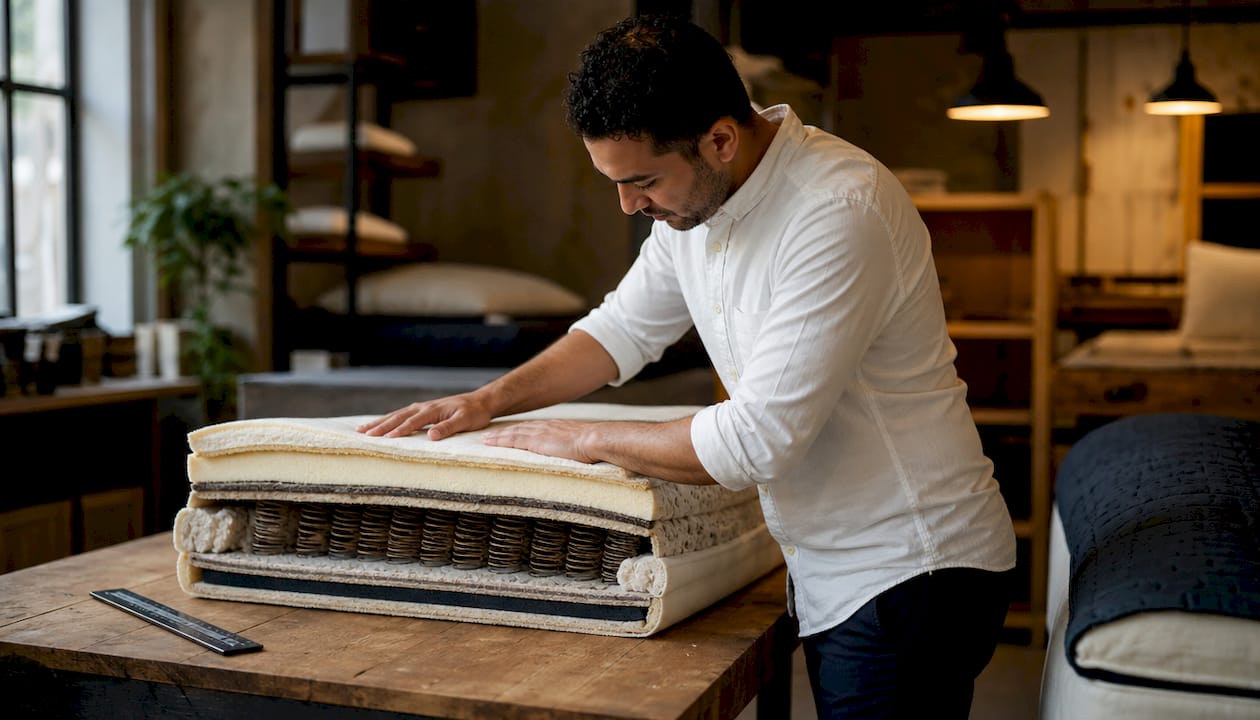
The most critical mechanism is thermoregulation. Your core body temperature must drop to enter N3 sleep, the deepest and most restorative stage. Aging foam traps body heat by compressing and losing its open-cell structure, which raises sleeping temperature and triggers micro-awakenings. Each micro-awakening resets your sleep cycle back to stage N1, the lightest sleep stage. That reset costs you the deep sleep your brain and body need to repair.
Spinal alignment is the second major factor. As support layers fail, your spine falls out of neutral alignment. Poor spinal support causes continuous micro-arousals that prevent sustained slow-wave sleep, even when total time in bed appears normal. You may sleep eight hours and still wake exhausted because your body never completed enough full cycles.
- Foam compression: Reduces pressure relief and traps heat, disrupting thermoregulation
- Coil tension loss: Allows spinal sag, triggering pain-related micro-arousals
- Ventilation clogging: Sweat and skin cells accumulate internally, worsening heat retention around year 5
- Motion transfer increase: Worn support layers transmit partner movement more readily, causing additional cycle resets
Pro Tip: Flip or rotate your mattress every three months to slow uneven compression, but recognize this only delays degradation. It does not reverse internal support loss.
How does mattress age specifically impact stages of the sleep cycle?
A healthy night of sleep contains 4–6 complete cycles, each lasting roughly 90 minutes. Each cycle moves through light sleep (N1, N2), deep slow-wave sleep (N3), and REM sleep. An aging mattress disrupts this progression at multiple points.
Motion transfer from a partner causes micro-awakenings that reset the cycle to N1, stripping away the deep and REM stages that accumulated before the disruption. A mattress with degraded support layers transmits movement far more readily than a new one. The result is a night that looks like eight hours of sleep but delivers far fewer completed cycles.
N3 sleep is where physical repair happens. Growth hormone releases, immune function consolidates, and tissue rebuilds during this stage. When an aging mattress keeps pulling you out of N3 through heat or pain signals, those biological processes get cut short. REM sleep, which consolidates memory and emotional regulation, suffers the same fate when cycles restart repeatedly.
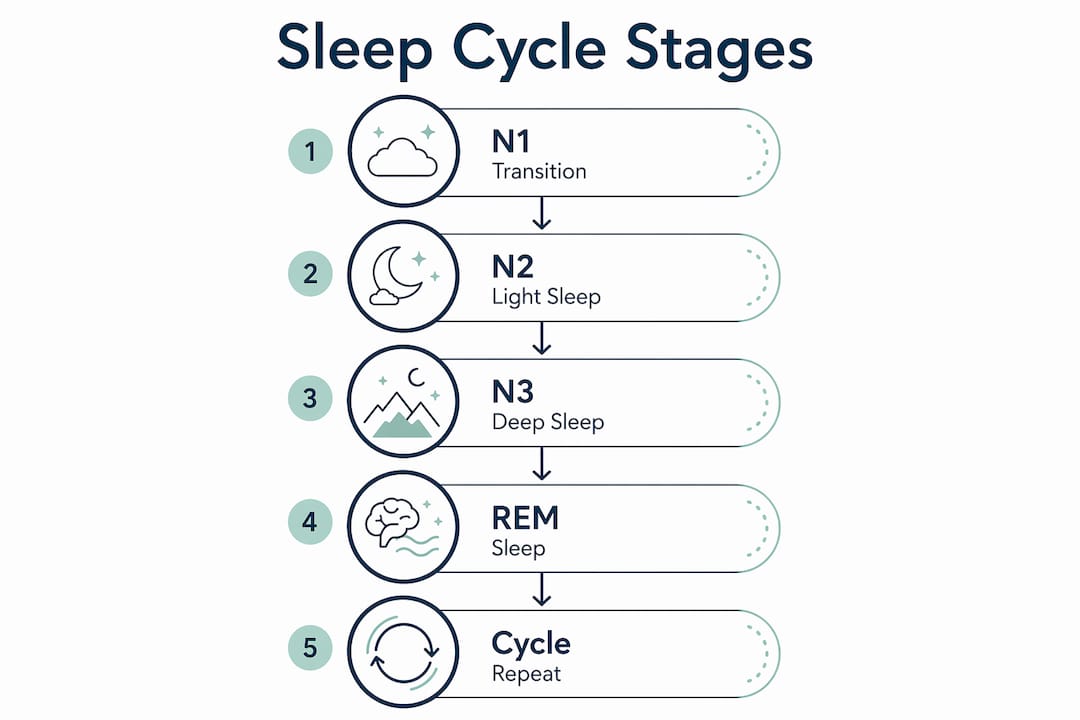
| Sleep stage | Function | How mattress aging disrupts it |
|---|---|---|
| N1 (light sleep) | Transition into sleep | Micro-awakenings return the sleeper here repeatedly |
| N2 (light sleep) | Heart rate and temperature regulation | Disrupted by heat retention from compressed foam |
| N3 (deep sleep) | Physical repair, immune function | Interrupted by spinal misalignment and heat buildup |
| REM | Memory consolidation, emotional regulation | Lost when cycles reset before completion |
The compounding effect is significant. One disrupted cycle is recoverable. Four or five disrupted cycles per night, repeated across months, produces the kind of chronic fatigue that people routinely misattribute to stress, aging, or workload rather than their sleep surface.
What signs indicate your mattress is prematurely degrading your sleep quality?
Visible sagging over 1 inch is the clearest physical signal that a mattress needs replacement. But internal support failure almost always precedes visible sag. The comfort layer drives mattress lifespan more than the support core, and it can fail completely while the mattress still looks flat and clean.
Subjective signs are often more reliable than visual inspection:
- Morning stiffness or lower back pain that resolves within an hour of getting up points directly to inadequate spinal support during sleep
- Waking more tired than when you went to bed despite sleeping a full night suggests fragmented cycles rather than insufficient hours
- Sleeping better on a hotel bed, guest bed, or couch is one of the clearest indicators that your mattress is the variable
- Increased fatigue and mood disruption without a clear lifestyle cause often traces back to reduced N3 and REM sleep from a degraded surface
- Feeling hot throughout the night on a mattress that used to sleep cool signals ventilation loss from internal accumulation
Pro Tip: Sleep on a firm, unfamiliar bed for two consecutive nights. If you wake more rested, your mattress is the problem. This two-night test isolates the mattress effect from novelty or placebo.
A 2024 survey found that 77% of adults replace their mattress only after clear deterioration is visible. That means most people tolerate months or years of fragmented sleep before acting. The cost is not just comfort. Chronic sleep fragmentation affects cortisol levels, immune response, and cognitive function.
Reading about mattress replacement timing from a health-informed perspective helps you set a proactive replacement schedule rather than waiting for pain to force the decision.
How mattress lifespan varies by material and its effect on sleep quality
Not all mattresses age at the same rate, and the material determines how quickly sleep quality degrades. Average lifespans by type break down clearly: innerspring and pillow-top mattresses last 2–5 years, memory foam and hybrid models last 4–6 years, and latex mattresses last 6–7 years. These are functional lifespans, meaning the point at which sleep quality impact becomes measurable, not the point at which the mattress physically falls apart.
| Mattress type | Average lifespan | Primary failure mode |
|---|---|---|
| Innerspring | 2–5 years | Coil tension loss, motion transfer increase |
| Pillow-top | 2–5 years | Comfort layer compression, body impressions |
| Memory foam | 4–6 years | Heat retention, slow response, foam breakdown |
| Hybrid | 5–6 years | Comfort layer wear, coil fatigue |
| Latex | 6–7 years | Minimal degradation, best long-term support |
Sleeper weight and humidity accelerate degradation beyond these averages. Thermal comfort issues disproportionately affect heavier sleepers on memory foam, where compression is faster and heat retention is more severe. A mattress in a humid climate accumulates internal moisture faster, clogging ventilation channels and worsening hot sleeping earlier than the average timeline suggests.
The common misconception is that a mattress looks fine, so it performs fine. Internal coil or foam support can fail completely without producing visible sag. Mattress material and sleeper weight affect degradation speed more than age alone. That means a 200-pound sleeper on a pillow-top mattress may need replacement at year 2, while a lighter sleeper on latex may get 7+ years of quality sleep. Understanding how [mattress materials affect breathing](https://guestlysleep.com/blogs/news/how mattress materials affect breathing and sleep health) and ventilation adds another layer to this assessment.
Key Takeaways
An aging mattress directly fragments sleep cycles by impairing spinal support and thermoregulation, reducing restorative N3 and REM sleep long before visible wear appears.
| Point | Details |
|---|---|
| Degradation starts early | Internal support failure can begin by year 5, before any visible sag appears. |
| Thermoregulation is critical | Compressed foam traps heat and triggers micro-awakenings that reset sleep cycles to N1. |
| All sleep stages are affected | N3 and REM sleep suffer most from mattress-related micro-arousals and heat disruption. |
| Material determines lifespan | Latex lasts 6–7 years; innerspring and pillow-top fail in 2–5 years under normal use. |
| Subjective signs come first | Morning stiffness, fatigue, and sleeping better elsewhere signal mattress failure before visual cues do. |
The hidden cost most people never connect to their mattress
I’ve spent years reading sleep research and talking to people who are exhausted despite doing everything right. They track their sleep, avoid screens, keep a consistent schedule, and still wake up feeling like they haven’t slept. The one variable they almost never question is the surface they’re sleeping on.
The insidious part of mattress degradation is how gradual it is. Bodies adapt to worsening conditions slowly, so there’s no single night where you notice the shift. You just become someone who is always a little tired. You attribute it to getting older, to stress, to your schedule. The mattress never enters the conversation.
Sleep experts now equate mattress replacement benefits to the effects seen with professional sleep interventions. That is not a small claim. It means that replacing a degraded mattress can produce the same measurable improvement in sleep quality as clinical treatment. The physical barrier to restorative sleep is simply removed.
My honest recommendation: do not wait for pain or visible sagging. If your mattress is past year 5 and you are not sleeping as well as you used to, run the two-night test on a different bed. The result will tell you more than any visual inspection. Protecting your sleep cycles is one of the highest-return health decisions you can make, and it starts with the surface you sleep on every night.
Guestly Sleep’s fiberglass-free mattresses, built for lasting sleep quality
Replacing a degraded mattress is not just a comfort upgrade. It is a direct investment in your sleep architecture and long-term health.
Guestly Sleep offers a range of fiberglass-free mattresses made in the United States, including hybrid and memory foam options designed to maintain support and ventilation over time. Every mattress ships free and comes with a 60-night sleep trial so you can run your own real-world sleep test at home. For readers comparing materials and construction, the mattress comparison chart breaks down hybrid versus memory foam options side by side, making it straightforward to match a mattress to your sleep position, body weight, and replacement timeline.
FAQ
How often should you replace your mattress for better sleep?
Most mattresses have a functional lifespan of 3–7 years, but degradation affecting sleep quality can begin by year 2. Sleeper weight, humidity, and mattress material all influence the actual replacement timeline.
Can an old mattress cause you to wake up tired?
Yes. An aging mattress causes micro-awakenings through heat retention and poor spinal support, which reset sleep cycles and reduce time spent in restorative N3 and REM stages. The result is fatigue despite a full night in bed.
What mattress type lasts the longest without affecting sleep quality?
Latex mattresses last 6–7 years on average, making them the most durable option for sustained sleep quality. Innerspring and pillow-top models begin to degrade in as little as 2 years.
Does mattress age affect back pain and sleep?
Replacing an older mattress averaging 9.5 years of use reduces back pain by 57% and improves sleep quality by 60% within four weeks. The correlation between mattress age and back pain is statistically significant.
How do you know if your mattress is disrupting your sleep cycles?
Sleep on a different firm bed for two consecutive nights. If you wake more rested, your mattress is the primary variable. Morning stiffness, night sweats, and fatigue despite sufficient sleep hours are the most reliable early warning signs.